

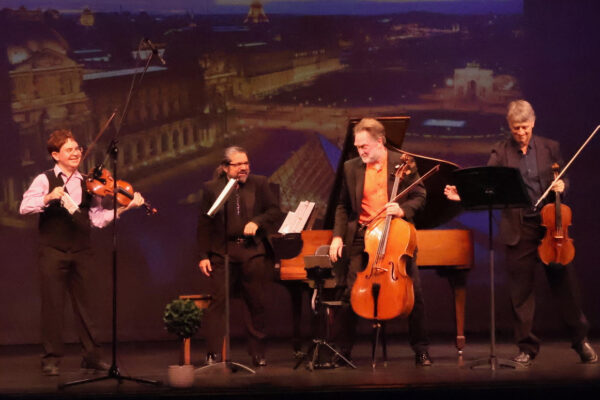
As the Arlington-based National Chamber Ensemble prepares to mark its 20th anniversary, the organization’s artistic director sees a healthy future for classical music.
The organization “has become a sustained Arlington-based cultural institution, presenting seasons year after year, working with outstanding local and international artists,” Leo Sushansky told ARLnow in an interview coinciding with announcement of the organization’s 20th-anniversary schedule.
He highlighted its efforts “commissioning and presenting new music, collaborating with major cultural organizations, and developing educational and community programs.”
The five-concert season will run from November to June. Its theme is “A Season of Masters from Baroque to Soul.”
Sushansky, who founded the organization and performs on the violin, said its growth has in some ways tracked with the original vision. But there have been surprises along the way.
“What wasn’t necessarily part of the original plan was how much the organization would evolve beyond simply presenting chamber concerts,” Sushansky said, adding:
“Over time, it has become much more community-oriented and educational, with young-artist programs, school connections, cultural partnerships, multimedia presentations, virtual programming, and programming that intentionally connects classical music with different cultures and communities. It’s gone far beyond presenting classical concerts by presenting different genres like jazz, Broadway, spirituals, opera, ballet, modern dance, tango and more.”
The National Chamber Ensemble was inspired in part by the Chamber Music Society of Lincoln Center in New York City, creating a “society” of acclaimed musicians residing in the D.C. area and supplementing that talent with guest artists from outside the area.
To make that concept viable, “we did receive some great guidance from Arlington Arts in the beginning and continued support from Arlington Dept. of Cultural Affairs, the Arlington Arts Commission and the Virginia Commission for the Arts,” Sushansky said.
The 2026-27 season will open Nov. 7 with “Romantic Masterworks: Mendelssohn, Schubert and Brahms” featuring soprano Karin Paludan.
A seasonal highlight is expected to be a Feb. 13 pre-Valentine’s Day tribute to Arlington’s Roberta Flack. Vocalist Alison Crockett will join the ensemble to perform Flack classics, including “Killing Me Softly,” “Feel Like Makin’ Love” and “The First Time Ever I Saw Your Face.”
A holiday concert is set for Dec. 19. It will include participation by winners of the 2026 Nancy Peery Marriott Young Artist Competition as well as the Voce Chamber Singers. An April 10 concert will feature music by Beethoven, Saint-Saëns and Leclair, along with a world premiere by Grammy- and Emmy-winning composer Michael Patterson.
The season concludes June 12 with a focus on Vivaldi. Returning as a special guest host for the concerts is actress/singer Lynda Carter.
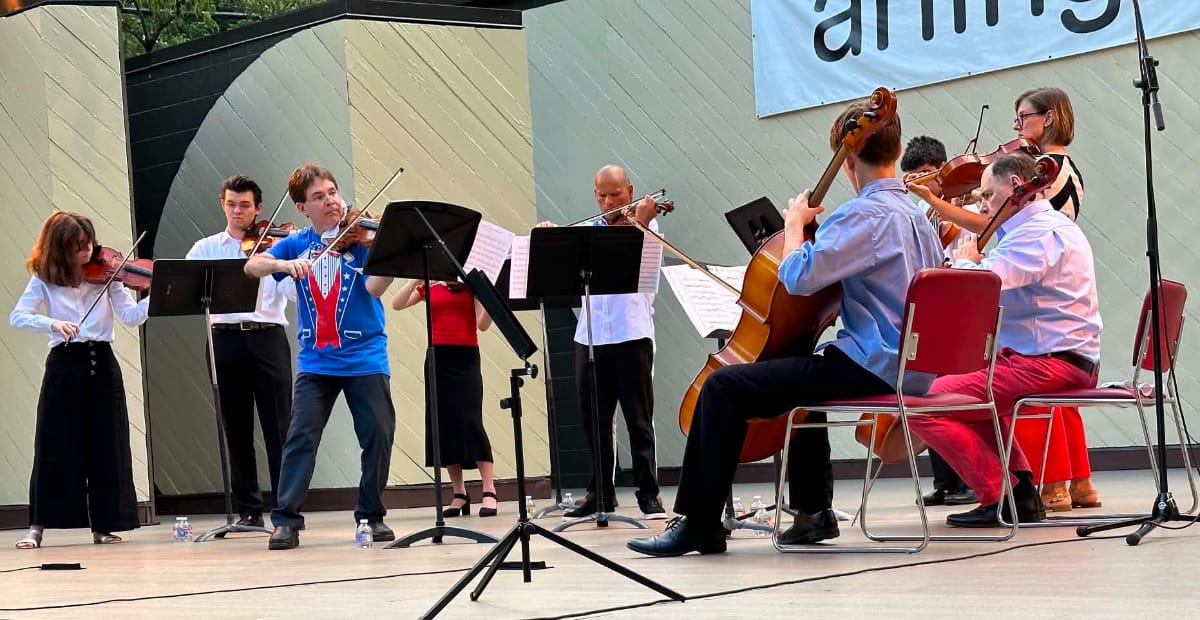
From the interview with Sushansky:
Think back to the founding of the National Chamber Ensemble (NCE). Was there a long-term plan for the future and, if so, how closely, or not, have things turned out?
Looking back at NCE’s founding in 2007, there was a long-term vision, although it was probably more of an artistic and organizational philosophy than a detailed 10- or 20-year strategic plan.
The original vision also emphasized something very specific about the audience experience. NCE was created to make chamber music more intimate, welcoming, and accessible — to break down the formality and distance that can sometimes exist between performers and audiences.
In many ways, the 20-year reality has exceeded that original vision. The organization has also demonstrated remarkable adaptability: when its longtime Spectrum Theatre home closed in 2017, NCE found new venues and continued its programming rather than allowing the disruption to derail the organization. We are grateful to have formed wonderful partnerships with Gunston Arts Center, Marymount University and Unitarian Universalist Church of Arlington, which have afforded us great performance spaces as well as other venues across the region, including the Smithsonian Institution, the Kennedy Center and the Phillips Collection.
Perhaps the biggest surprise is that something envisioned as a new chamber ensemble in 2007 is now entering its 20th season in 2026-27. NCE’s own materials still describe it as “Making Classical Music Fun since 2007,” which is a pretty remarkable continuity of purpose.
How has your audience evolved through the years?
I think this is an important part of NCE’s story, because the audience has changed considerably over 20 years but the core audience relationship has remained remarkably strong.
In the early years, NCE’s audience was primarily the traditional chamber-music audience — people who already loved classical music and were looking for high-quality performances in Arlington. But over time, the audience became broader and more diverse. The programming became more adventurous and accessible, incorporating multimedia, narration, dance, jazz, contemporary music, international artists and cultural connections. That helped NCE reach people who might not ordinarily consider themselves chamber-music audiences. The goal has always been to create closeness between performers and audience, and build a sense of community, which remains central to NCE’s mission.
I also think the audience became much more personally connected to NCE. The receptions after concerts, conversations with artists, educational programs and community partnerships created an experience that was more than simply sitting in a concert hall and listening to music. That has been particularly important in Arlington, where NCE has developed a loyal local following while also attracting patrons from Washington, Maryland and throughout Northern Virginia.
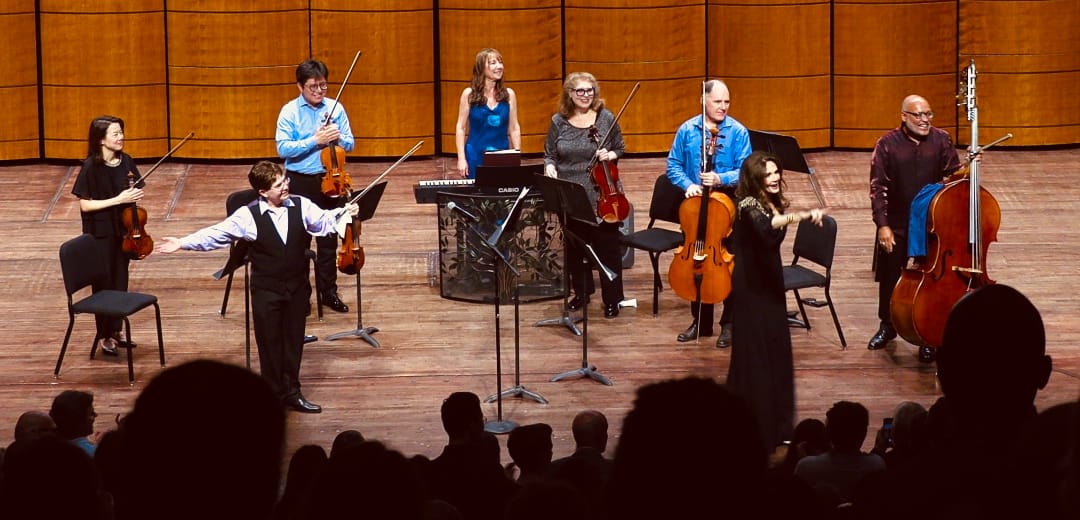
How did the organization survive Covid, and what changes did it experience post-pandemic?
Covid was obviously the greatest disruption NCE had ever faced. The last two concerts of the 2019–20 season were cancelled, and the entire 2020–21 season moved online. Rather than simply disappear for a year, however, NCE created a full virtual season.
That actually taught us something valuable about our audience. People didn’t want to lose their connection with NCE just because they couldn’t come into a concert hall. We sold season subscriptions to virtual concerts, maintained donor support, and even held Zoom wine-and-cheese receptions and conversations with the artists. You also found that the virtual format allowed an entire family to watch together with one ticket and allowed people who didn’t live locally — including people in other states and even England — to experience NCE.
The challenge came when live performances returned. Some audience members were understandably hesitant to come back, while others had developed new habits during the pandemic. So COVID changed the definition of what it means to “attend” an NCE concert. Instead of viewing virtual programming as merely an emergency substitute, NCE recognized that it could be an additional way of serving its audience.
That is why I think one of the most lasting effects of COVID is that NCE now has both a live audience and a virtual audience. Even in the 2026–27 20th Anniversary Season, NCE continues to provide ticket purchasers with a professionally produced recording they can watch at home.
Is it a challenge to recruit performers?
Through my many years of performing and collaborating with so many amazing artists, it has not been a problem finding wonderful performers for various concerts. We live in an area rich with great talent and getting internationally acclaimed artists to come as a visiting guest performer has not been a problem based on NCE’s fine reputation for presenting quality concerts.
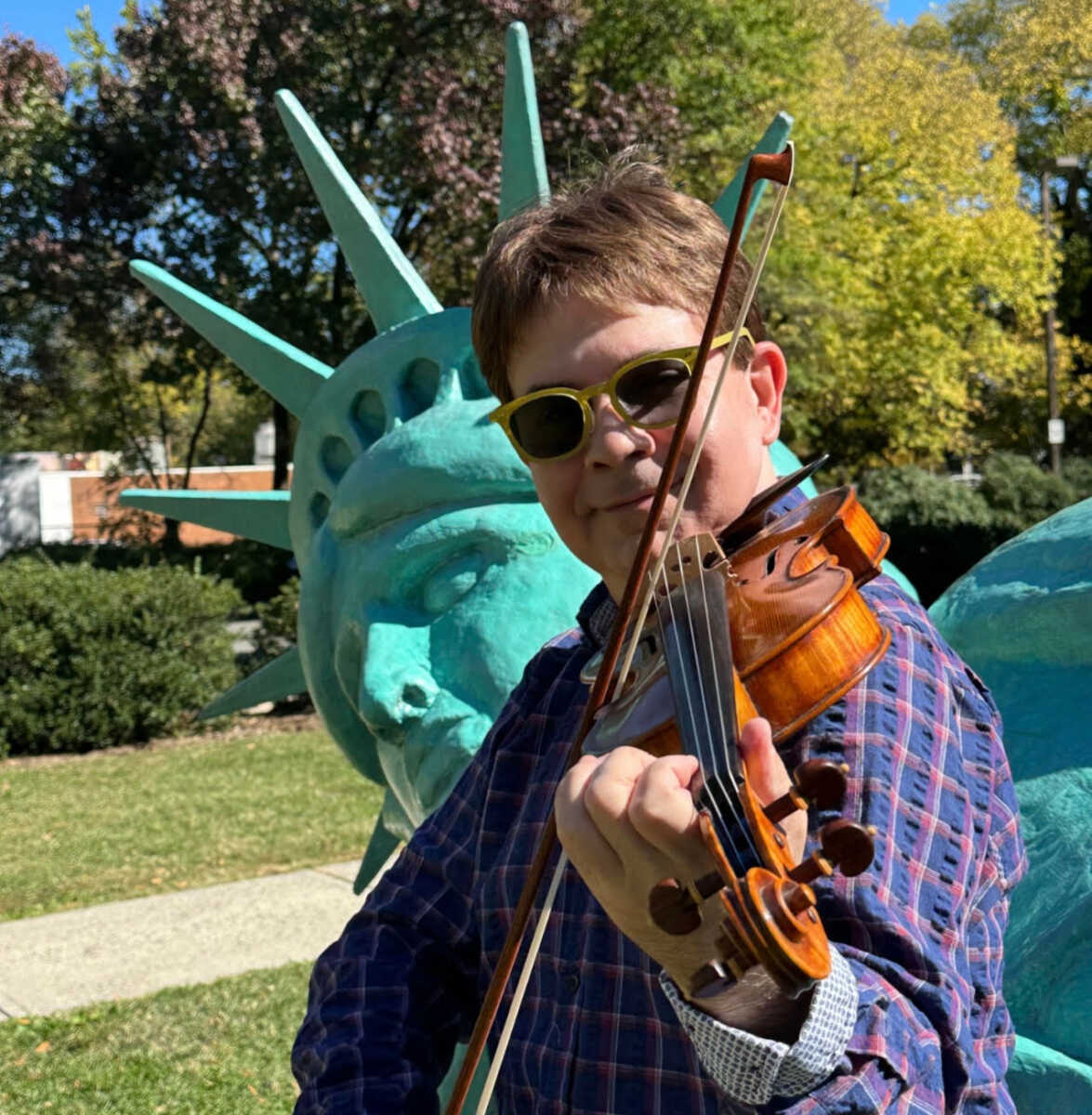
One facet of the organization has been fostering the talents of youth. How would you gauge efforts, and are there any specific plans for the future?
NCE’s commitment to fostering young talent has grown significantly over the years through our Young Artist Competition, educational programs, and opportunities for emerging musicians to perform alongside established professionals. Last year, we renamed the competition the Nancy Peery Marriott Young Artist Competition in honor of our longtime supporter and honorary board member, Nancy Marriott, whose involvement has helped us expand this important initiative. Looking ahead, we plan to continue strengthening the competition, expanding educational outreach, and creating more opportunities for young musicians to learn, perform, and connect with professional artists.
Looking ahead to the next 20 years, do you have thoughts about the state of the classical-music scene overall, and in the local area specifically?
I’m optimistic about the future of classical music. In Arlington especially, there is a vibrant and growing arts community, but we must continue making classical music more accessible, diverse and relevant to new generations. Our 20th-anniversary season reflects that vision, bringing back audience favorites from the past two decades while introducing new programs. I believe NCE’s future is about combining the great masterworks with fresh programming, exceptional young artists, and stronger community connections.
Sushansky began musical studies with his mother, Rimma Sushanskaya, a violinist and pupil of the legendary David Oistrakh in what then was the Soviet Union. He gained recognition at age 12 while appearing on a Marvin Hamlisch television special, performing Mendelssohn’s Violin Concerto.
At the age of 13, Sushansky became a student at the Juilliard School, studying for seven years under the tutelage of Dorothy DeLay.
