

The Arlington library system has developed a creative tool to bring the county’s Black history to life.
Using photos taken of youth participating in recreation activities during the era of segregation, library officials have commissioned a number of jigsaw puzzles to engage children and youth alike.
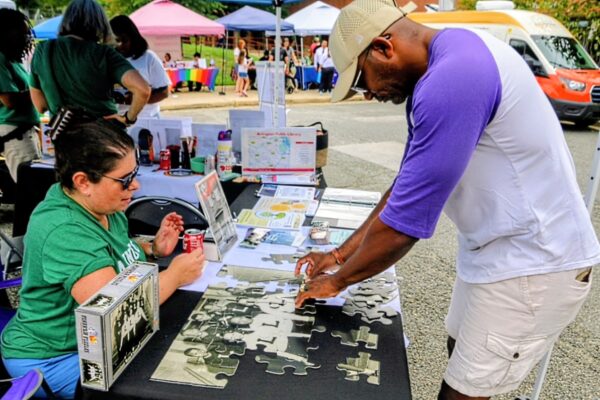
At the Sept. 19 Green Valley Day celebration, library archivist Heather Crocetto was encouraging attendees to take a shot at solving one of the 48-piece puzzles.
Undated but likely from the early 1950s, the photograph used for the puzzle features youth at Langston Recreation Center, which served as a gathering spot for Black youth who were, at the time, denied access to all-white county recreation facilities.
Among those taking a turn attempting to solve the puzzle at Green Valley Day was local civic leader Terron Sims. Unlike some who tried but gave up, Sims completed the assignment.
Other puzzles have been created using photos of a Black baseball team and accordion players from the era, Crocetto told ARLnow.
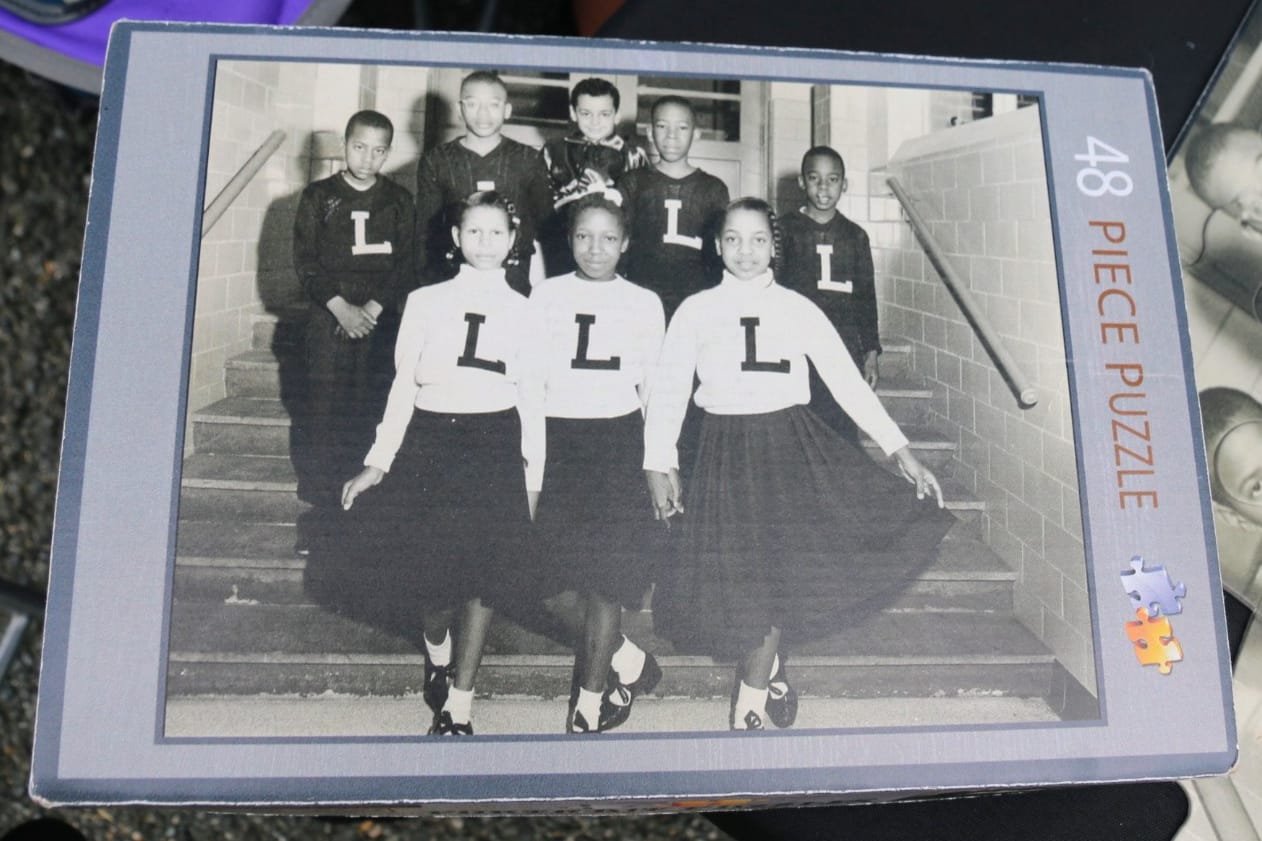
The photos come from the collection of Ernest E. Johnson, who from 1948-62 was the supervisor of the Negro Recreation Section of what then was known as the Arlington Department of Recreation and Parks.
While programs were segregated, there were significant — if unequal — opportunities for African-American youth in Arlington. Baseball, football, softball and basketball competition, track meets, dance lessons, beauty pageants and plays were among the offerings.
Events typically were held at the Langston facility, now Langston-Brown Community Center, or at Hoffman-Boston High School, then the county’s segregated high school and now an elementary school.
In 1962, when Arlington integrated its parks and recreation programming, Johnson became a supervisor for community centers, later adding responsibility for playgrounds.
Johnson died in 1992. In 2001, his collection of photographs was donated to the library system by his widow, Mignon Johnson.
Library officials use public events like Green Valley Day to showcase the jigsaw puzzles and display them to colleagues across the region when library officials meet.
Though there are no plans for the county government to market the jigsaw puzzles for sale, there might be consideration of partnering with a community organization, such as the Arlington NAACP, on such an effort.
Given the amount of time that has passed since their creation, it appears the photographs may be in the public domain, unless the county government renewed copyright protection before it expired.
