

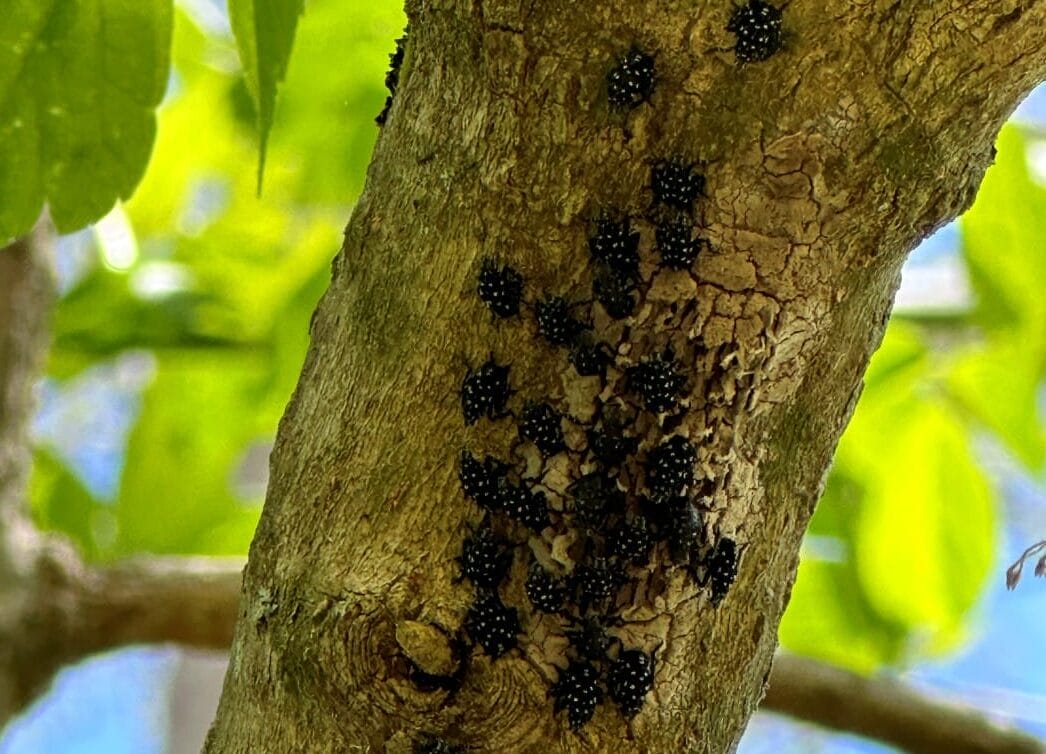



One of Arlington’s least favorite insects is back for the spring, as invasive as ever.
Spotted lanternflies have begun hatching after their annual winter die-off and are currently in their nymph stage, Alonso Abugattas, Natural Resources Manager for Arlington County, informed ARLnow.
“Warmer weather causes them to emerge earlier each year,” he said. “Community members can help by removing egg masses when found, squashing them whenever possible, and reducing populations of the invasive Ailanthus (Tree-of-Heaven) where possible.”
The tree of heaven, also an invasive species, is the bug’s favored host plant.
This year, spotted lanternflies’ first confirmed hatch in Virginia took place the week of April 13, according to the Virginia Department of Agriculture and Consumer Services.
Spotted lanternflies can’t bite or sting humans or pets, and they aren’t known to kill plants, according to a county webpage on the arthropods.
“It is considered a plant stressor that may weaken established plants and trees over time and is primarily viewed as a nuisance pest in residential areas,” the page says.
Nymphs start off black with white spots, then turn red as they develop before finally growing wings and flying around Arlington en masse. Lanternflies’ populations are expected to trend upwards for the next year or two, before stabilizing as predators like birds, mantises, wasps and assassin bugs realize they can eat them.
“One thing preventing more predators from eating lanternflies is that lanternflies become unpalatable when they feed on invasive Tree-of-Heaven trees and absorb toxins from the tree,” Abugattas previously told ARLnow. “As we reduce the number of Tree-of-Heaven locally, the lanternflies will become more edible to local predators.”
Besides killing tree of heaven plants, residents are advised to do the following to slow the spread of the insects.
Regular Checks: Inspect your trees and plants for signs of this pest; the insects tend to gather in large groups on trunks and stems.
If You See It, Squash It: If you’re certain you’ve identified a spotted lanternfly, help stop the spread by squashing them on sight. We caution against insecticides just because they can cause harm to beneficial insects nearby.
Destroy Eggs: Look for egg masses in your trees (in particular, tree-of-heaven), bricks, stones, and other smooth surfaces. If you find eggs, smash them and scrape them into a plastic zippered bag filled with hand sanitizer or rubbing alcohol to kill them. Then, zip the bag shut and dispose of it in the trash.
Traveling this Summer?: Learn where SLF has not yet been detected. If you’re traveling through infestation free areas, thoroughly check your vehicle to avoid moving the pest from your land to other locations. Check doors, sides, bumpers, wheel wells, grills, and roofs. If found, destroy any eggs or insects you find.
Inspect Items Being Moved: If your business involves moving items, check shipping containers, propane tanks, pallets, and other items being stored outdoors before they’re moved offsite. Inspect incoming goods for egg masses and insects.
