

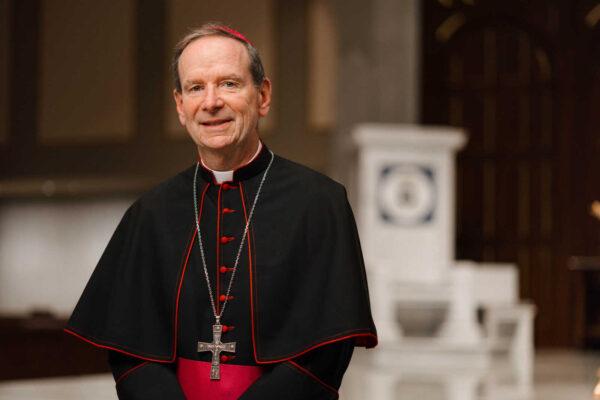
Arlington’s Roman Catholic bishop is emphasizing both border security and humanitarian issues after helping to write a rare rebuke of immigration enforcement nationwide.
In an interview on the Diocese of Arlington’s podcast this week, Bishop Michael Burbidge defended the special statement on immigration that the United States Conference of Catholic Bishops approved in a 216-5-3 vote last week — but particularly stressed the need to safeguard national interests while supporting immigrant communities.
The bishop referred to “fear and anxiety” over “the perception that some laws are not being administered justly,” while underscoring the role that law enforcement plays in upholding the common good.
“Today in America, there is a growing unrest due to unprecedented migration, and we all know it’s impacted American life — including our nation’s ability to maintain our borders, to assimilate the immigrants into our culture and protect immigrants themselves from exploitation and abuse,” the bishop said.
Burbidge was one of four church leaders on the drafting committee for a statement lamenting conditions in detention centers, “the vilification of immigrants,” and “a climate of fear and anxiety around questions of profiling and immigration enforcement.” The message called for “meaningful immigration reform” and enforcement that respects immigrants’ human dignity.
“We oppose the indiscriminate mass deportation of people,” the bishops wrote. “We pray for an end to dehumanizing rhetoric and violence, whether directed at immigrants or at law enforcement. We pray that the Lord may guide the leaders of our nation, and we are grateful for past and present opportunities to dialogue with public and elected officials.”
The message earned a defiant response from White House Border Czar Tom Homan — who declared that “the church is wrong” and that the bishops’ message encourages illegal border crossings — but strong support from Pope Leo XIV.
“I would invite all Catholics — and also people of good will — to listen carefully to what they have said,” the pope said. “I believe we must seek ways of treating people with humanity, with the dignity that is theirs.”
Burbidge emphasized immigrants’ contributions to communities across the nation and called for “the end to harsh rhetoric and violence, whether it’s against an immigrant or law enforcement” in an interview with the Catholic TV network EWTN last Friday.
“We’re representing those who seek no harm to our country, who only want to do good, and we want them to be treated with the respect that is necessary,” he said. “Again, we also say this does not have to be in conflict with a country protecting itself.”
Speaking on the Arlington diocese’s podcast on Monday, Burbidge said that the bishops’ message “should be read in the spirit of a pastor’s concern for his flock.”
“This USCCB message is a pastoral statement that obviously, of course, has political consequences, but it’s not a partisan statement,” he said. “The bishops’ statement is intended to encourage migrants and immigrants, priests and religious civil authorities, and the lay faithful.”
In the political arena, Burbidge — who was appointed to his role in 2016 — has previously championed hardline stances against in vitro fertilization and state funding to access contraceptives like birth control pills, IUDs and morning-after pills.
He has tended to walk a careful line on immigration. Shortly after President Donald Trump took office, he issued a statement on the church’s mission to “defend and protect the most vulnerable, even as we defend the rights and duties of nations to govern themselves and to safeguard the common good.”
Still, the bishop publicly criticized a social media post by Trump following Pope Francis’ death, which depicted the president in a white cassock and miter.
In his most recent podcast, Burbidge returned to a call for common ground between immigration enforcement and the welfare of all.
“We all want public order in keeping with the laws of the nation,” he said. “We support the laws of the United States of America. National security, including immigration enforcement, and human dignity — I’ll say it again — need not be in conflict. In fact, I would say they depend on one another.”
