

A local restorative justice organization is approaching its fifth anniversary with a continued emphasis on expanding options for victims of crime and abuse in Arlington.
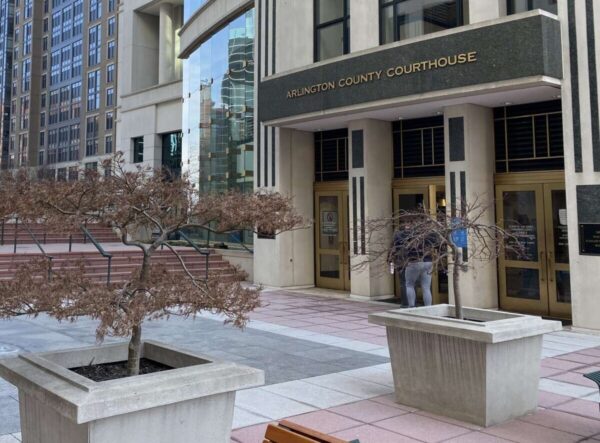
Restorative Arlington, a nonprofit that supports victims seeking justice and accountability outside the traditional criminal justice system, has been building its presence both inside and outside the courthouse. In addition to promoting diversion programs, the group has been working with survivors of abuse through a partnership with Doorways and running a pilot program that trains community leaders in restorative justice practices.
The pilot program launched last year and is currently recruiting participants for a spring training week.
“This is a years-long, slow, deliberate, careful process, and that’s because, ultimately, restorative justice is meeting people at some of their most vulnerable moments, and some of the most important moments of their life,” Robert “Roman” Haferd, executive director of Restorative Arlington, told ARLnow in a new podcast episode.
While restorative justice looks different depending on the offense, it typically begins with crime victims having a conversation with a prosecutor about the outcome that they want a case to have.
“A victim might say something like, ‘Can I just talk to the person?’ or … ‘I wish I could talk to their parents,’ or ‘I wish I knew why this happened to me,'” Haferd said.
The goal, Haferd said, is moving toward a perpetrator taking meaningful accountability for their actions and an end result that leaves a victim genuinely satisfied. It often takes months of preparation that culminates in conversation between the two parties and consensus on a path forward.
Haferd recalled a particularly extreme example of a case he facilitated in Prince William County, where a man was arrested on a charge of attempted homicide — and the victim was his best friend. The offender had already been behind bars for three years.
“The victim, who miraculously survived, is saying … ‘Here I am, moving on with my life. I’ve gotten engaged, I’m going to have a baby and there’s this person, who was so important to me, that is rotting in jail, and I haven’t even had a conversation with them,'” Haferd said.
What the victim said he wanted more than anything, Haferd said, was closure.
“‘I want this person to know that I’m moving on, and I want to talk about what happened between us,'” he recalled the victim saying. “‘I want to grieve our friendship that has been altered by this totally unexpected horror.'”
Restorative justice requires all sides to consent and involves a very small portion of cases in Arlington right now. Restorative Arlington has about a dozen facilitators who each handle around two or three cases at a time, involving disputes such as school fights, bar fights and even high-profile crimes, such as an incident where a U.S. Army soldier was accused of a series of Pride flag thefts at a Penrose home in 2024.
ARLnow’s interview with Roman Haferd is available in its entirety as a podcast episode on iTunes, Spotify, Amazon, Audacity, TuneIn or your favorite listening app.
