

In the mid-1700s, most of modern-day Fairlington and Shirlington was part of a plantation called Torthorwald, a rural retreat for the wealthy Carlyle merchant family of Alexandria.
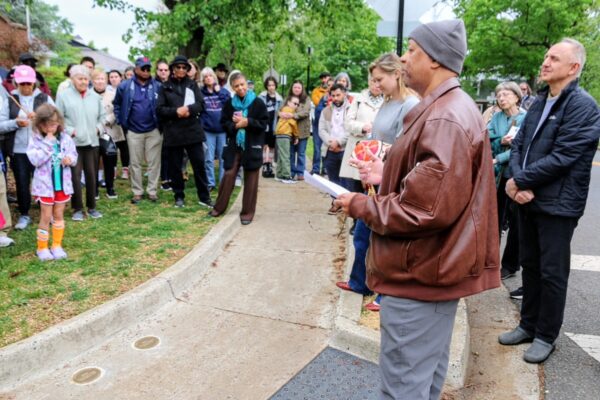
When patriarch John Carlyle died in 1780, Torthorwald was home to an enslaved population totaling more than 40. And on Sunday, two of them were honored with the placement of new “stumbling stones” near the Fairlington Villages Community Center.
Honored with brass commemorative markers embedded in the sidewalk at the corner of S. Abingdon Street and 29th Street S. are Milley and Harry, who were enslaved on the plantation at the time of Carlyle’s death.
Their mention in his will is the only reference thus far that has been found to Milley, who was an adult at the time, and Harry, a youth. Being honored with stumbling stones brings their lives back to public attention, said speaker Craig Syphax.
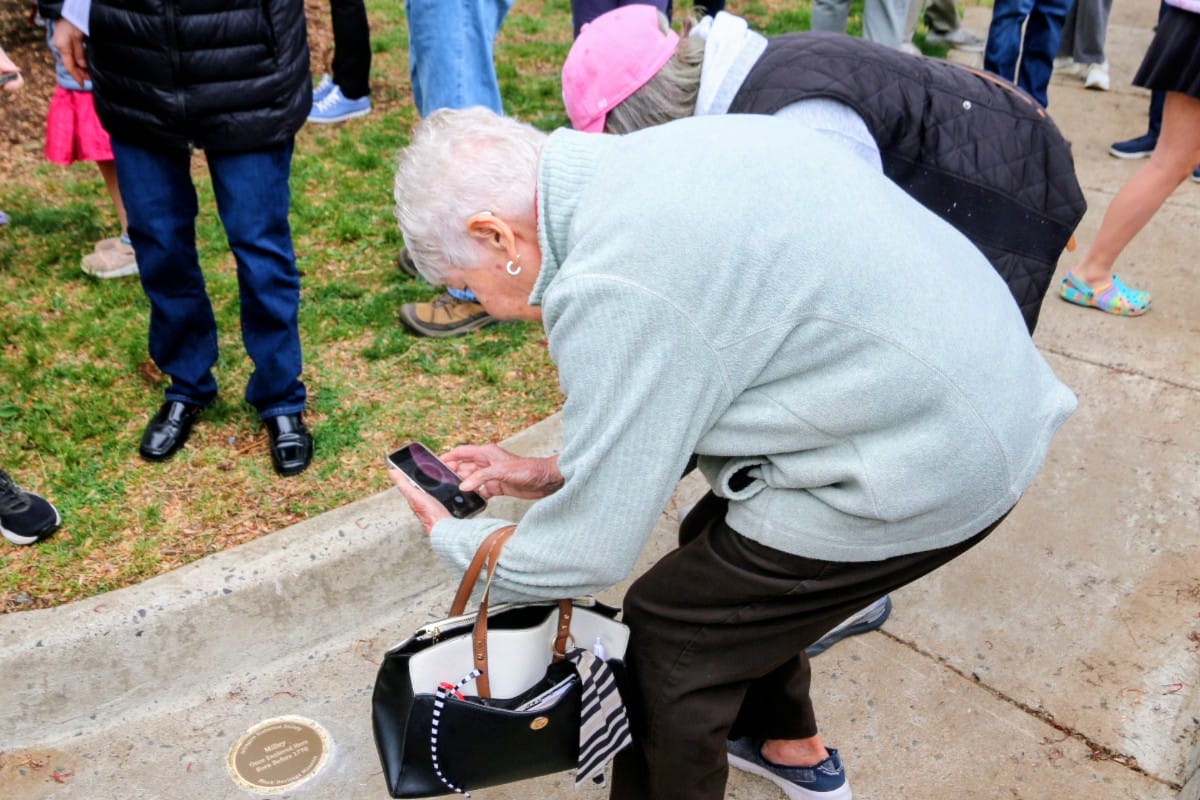
“The lives that we honor here today truly never ended,” Syphax said at the dedication ceremony. “They live on … in the strength that has been passed on, generation after generation. We have said, clearly and unapologetically, they matter.”
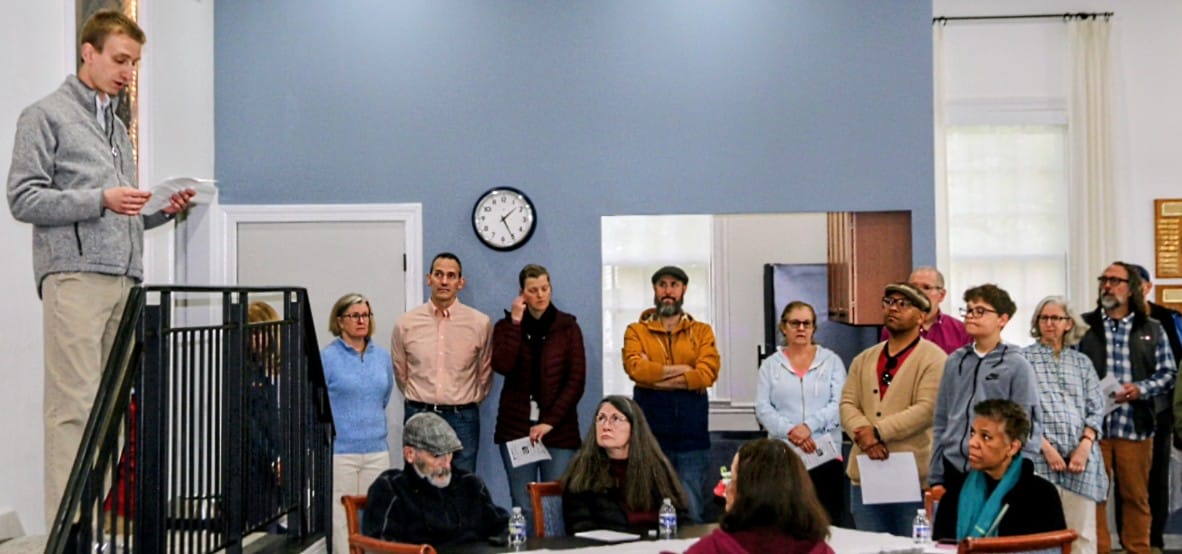
About 100 people, mostly Fairlington residents, turned out for the dedication ceremony.
“We are a very tight-knit community. This is a product of residents and engagement and community,” said Fairlington Citizens Association president Jennifer Davies.
The civic association partnered with the Fairlington Historical Society, Arlington Historical Society and Black Heritage Museum of Arlington in selecting the honorees and choosing the location of the markers.
Davies said the civic association’s ultimate goal is to honor all of those enslaved at Torthorwald.
“We need to know the past so we can understand the present,” she said.
The Arlington Historical Society and Black Heritage Museum collectively supervise the stumbling-stones effort. Over the past two years, the markers have begun appearing in neighborhoods across the county.
Research on some of those honorees has uncovered a family lineage down to the present day. The lives of others, like Milley and Harry, remain largely undocumented, but serve as “representative of all enslaved people” who lived in the Fairlington/Shirlington area.
“Their names, once lost to history, are now permanently etched in this ground,” said Tim Aiken, a co-coordinator of the Memorializing the Enslaved in Arlington initiative.
Carlyle’s will listed those who were enslaved as property, which was customary at the time. A value, ranging from $10 to $110 in Virginia currency, was placed on each individual.
In the late 1700s, the Torthorwald plantation boasted 250 acres of arable land and 80 acres of meadow. Its name came from the Carlyle family’s ancestral lands in Scotland. Later in its history, the name changed to Morven.
Thoroughbred horses were raised on the grounds, with dairy and wool production also major endeavors.
As for those who toiled in bondage, “we know very little about them, but we can try to imagine their day-to-day lives,” Burd said.
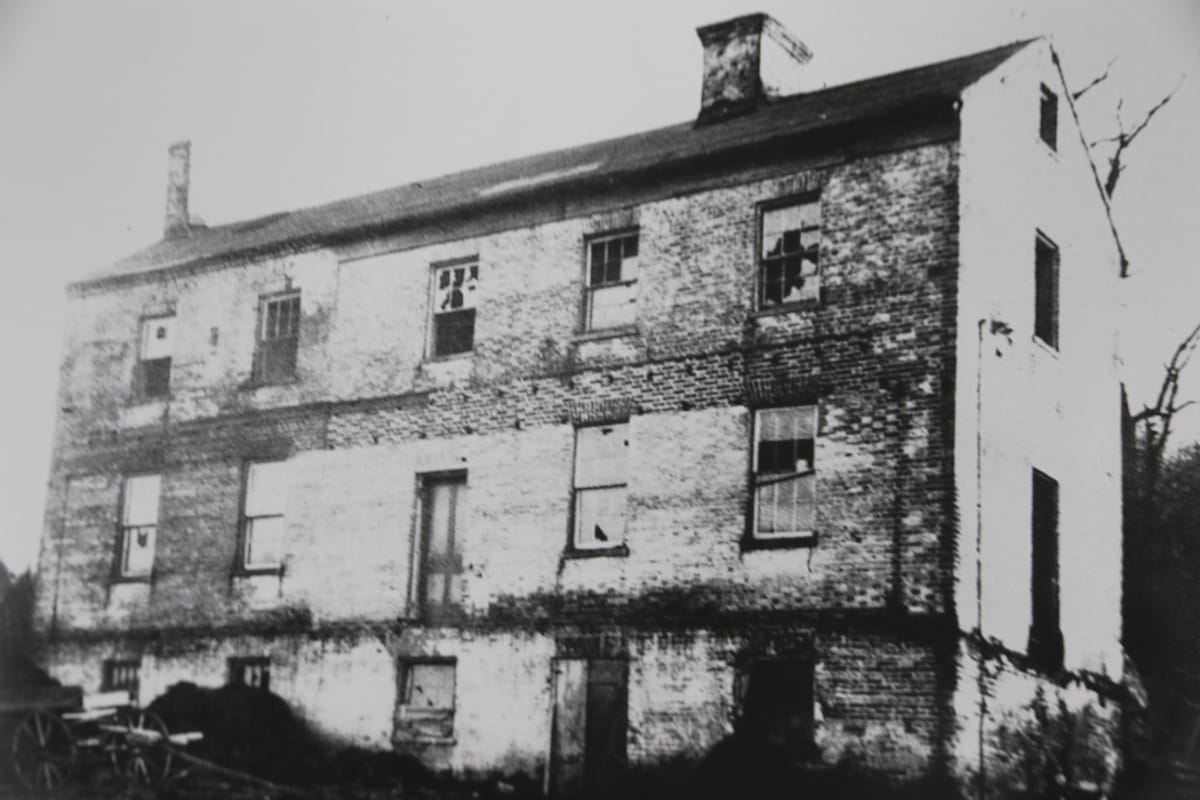
The plantation house was constructed circa 1770 near what is now the Fairlington Office Park at 4820-4910 31st Street S. By the 1930s, the property was long neglected and in a dilapidated state.
It was subsequently torn down and replaced with apartments, which later became condominiums in what is now Fairlington.
County Board member Takis Karantonis, who attended the event, said the large turnout was heartwarming.
“It makes me very optimistic about our future as a county,” Karantonis said, asking attendees to “ask ourselves what we can do to use the lessons [of the past] to build a better place.”
Arlington’s stumbling-stones initiative is based on the German Stolpersteine, which beginning in the 1990s placed small markers across 31 countries with names and brief biographies to designate the last places where more than 100,000 Holocaust victims resided before being taken by the Nazis.
