

Tensions already are appearing among Falls Church’s elected and staff leadership, even before planning for a major affordable housing plan starts to take shape.
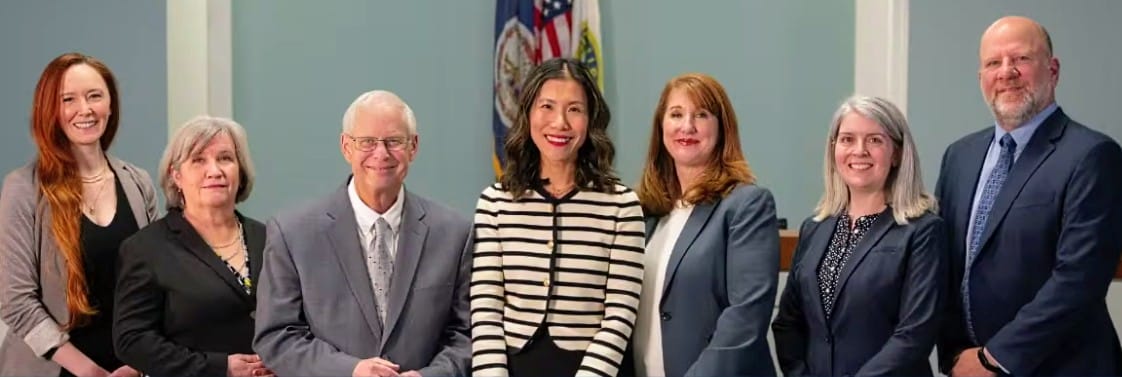
Council members voted 5-1 on April 27 to authorize spending up to $175,000 on a consultant to help guide potential redevelopment in portions of the Virginia Village community. Even then, however, leaders disagreed over how the process should move forward and how many potential development scenarios should be considered.
“We don’t want to have 13 different options, but there will be different options that we’re going to have to evaluate,” Council member Marybeth Connelly said in the lead-up to the vote.
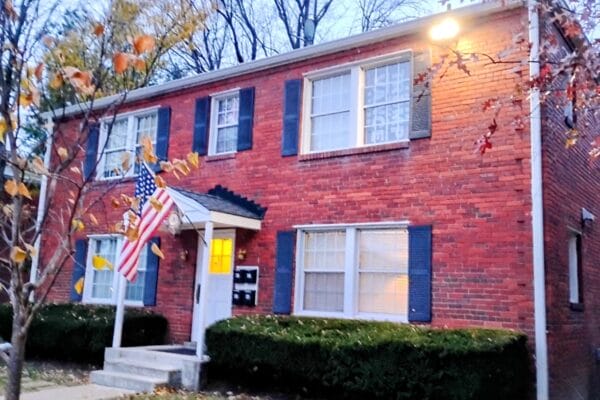
Those options could include tearing down a number of the 1940s-era fourplex apartment buildings at Virginia Village that already are in the hands of the city government or could be acquired in coming months for up to 150 units of new affordable housing.
At the other end of the spectrum, the ultimate plan could simply be to renovate the existing units, with no additional construction on the site.
To help guide the process, Council members voted to contract with the consulting firm Jones Lang LaSalle to develop a broad framework that would help guide a request for proposal (RFP) the city would issue, seeking development partners.
The firm’s work will “help us understand the economics” of various alternatives, City Manager Wyatt Shields said.
At the meeting, Council members David Snyder and Erin Flynn pressed for defining the most plausible development options when the RFP is developed and sent to the City Council for issuance.
“If we’re not on the same page [by then] … there’s going to be a gulf that continues to grow, as opposed to a disconnect we are somehow able to narrow,” Flynn said.
Both Snyder and Flynn pushed for a preservation option among the alternatives. Shields said that while it was “reasonable” to include such an option, it would then be necessary to decide where else in the city affordable-housing units could go, to make up for new units that would not be added at Virginia Village.
Like Connelly, Shields said having too many options on the table at this stage would not be beneficial.
“I have some caution of having too many variations on the theme. It becomes sort of confusing,” he said.
Mayor Letty Hardi concurred that getting too bogged down in details at this stage would be counterproductive.
“At some point, we have to start somewhere,” she said. “We have lots of community input; we also have public-policy goals we’re trying to accomplish. We have to start the process to figure out how all those fit together.”
By the end of discussion, for which Council member Justine Underhill was absent, Snyder cast the lone dissenting vote. He suggested that staff were tipping the scales in favor of a 120-to-150-unit redevelopment at the Virginia Village site.
“I’m not on board with that,” he said.
Council members will next take up the issue at a meeting in mid-May.
“We’re going to have quite a discussion,” predicted Council member Arthur Agin.
Nine of the 20 fourplex apartment buildings are currently owned by the city’s Economic Development Authority. The rest are in private hands.
While one property owner has expressed interest in becoming part of a redevelopment project, assembling a parcel large enough to permit redevelopment would require the city government to acquire many of the remaining lots, either via purchase agreements or through the politically thorny and potentially legally ambiguous use of eminent-domain powers.
City officials hope to have a development partner selected by the end of the year, allowing any project to compete for vital housing tax credits in 2027.
