

A new court filing alleges that federal investigators may have violated a court order shielding records from the cellphone of an activist who distributed flyers about Stephen Miller in his Arlington neighborhood last year.
The filing was submitted Tuesday by Arlington Commonwealth’s Attorney Parisa Dehghani-Tafti. At more than 80 pages, it formally closes her office’s investigation of activist Barbara Wien without charges.
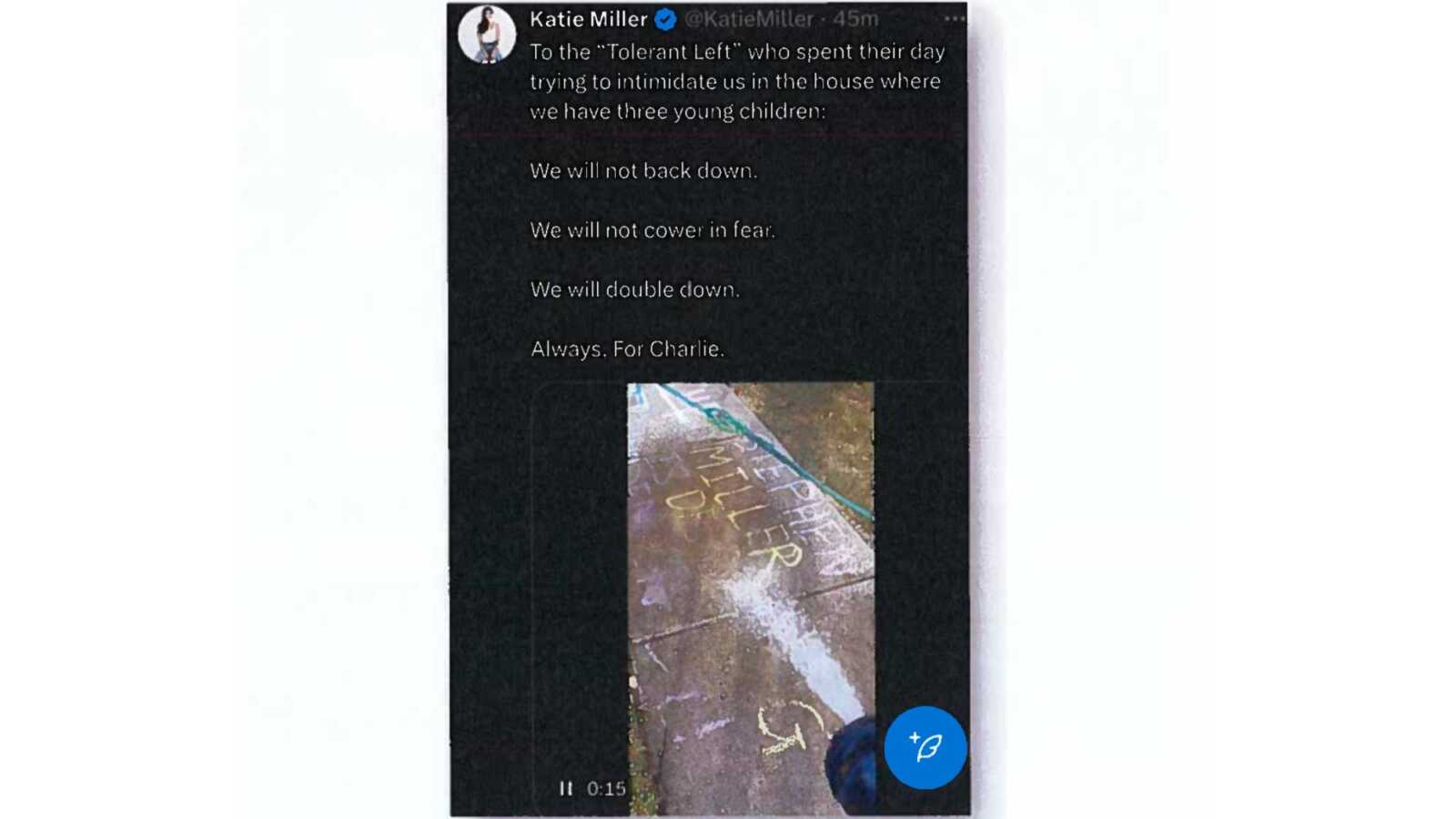
The decision not to charge was reported by the Washington Post and several other outlets. The filing also lays out previously unreported details about how the case unfolded — including how Stephen Miller’s wife, the podcaster Katie Miller, herself directed Arlington police to the obscure state statute that became the basis for the investigation.
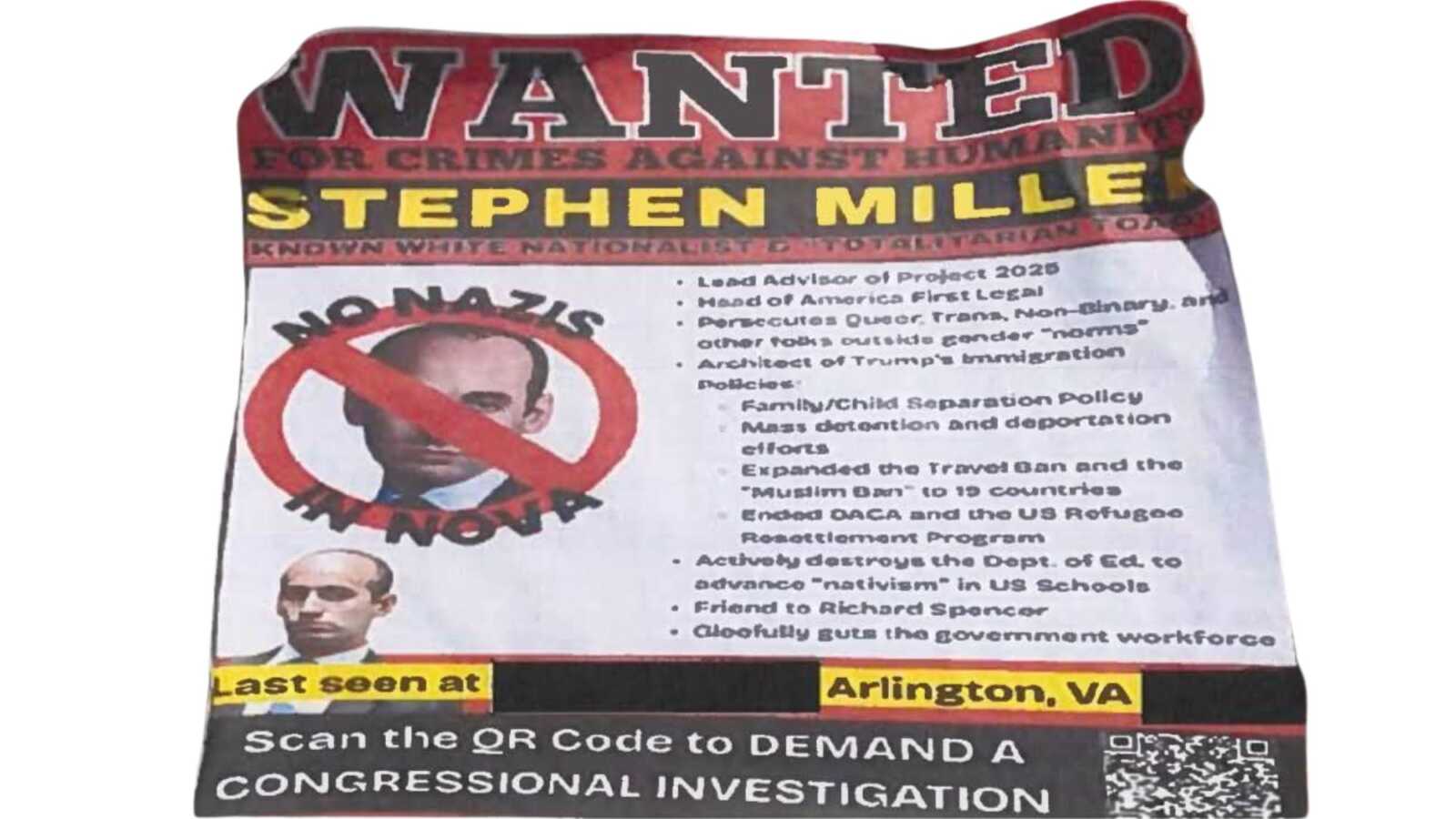
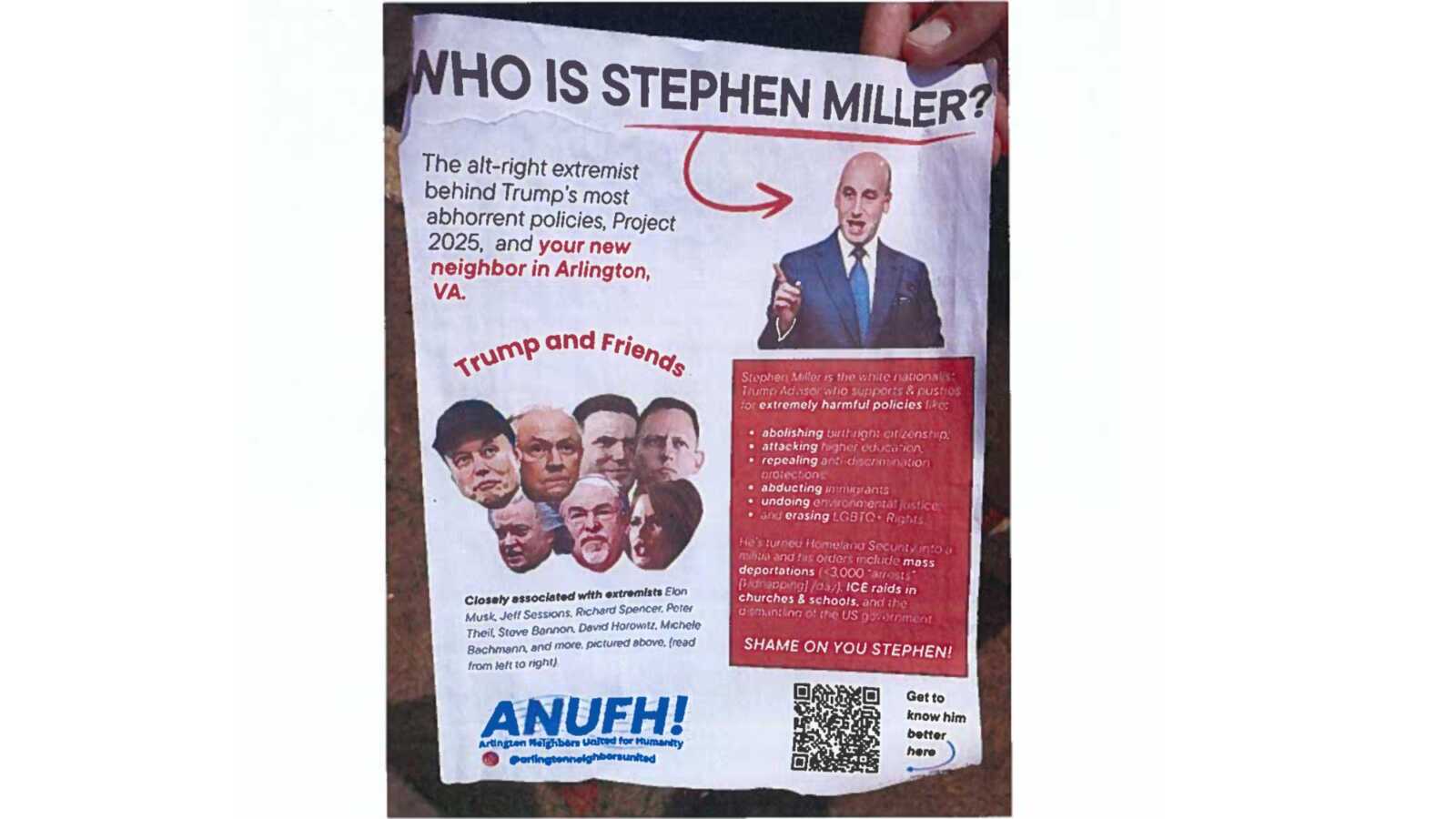
Wien, a retired peace studies professor, distributed manila envelopes containing copies of a “wanted” flyer with Miller’s home address to homes near the Millers’ residence in north Arlington in August and September 2025.
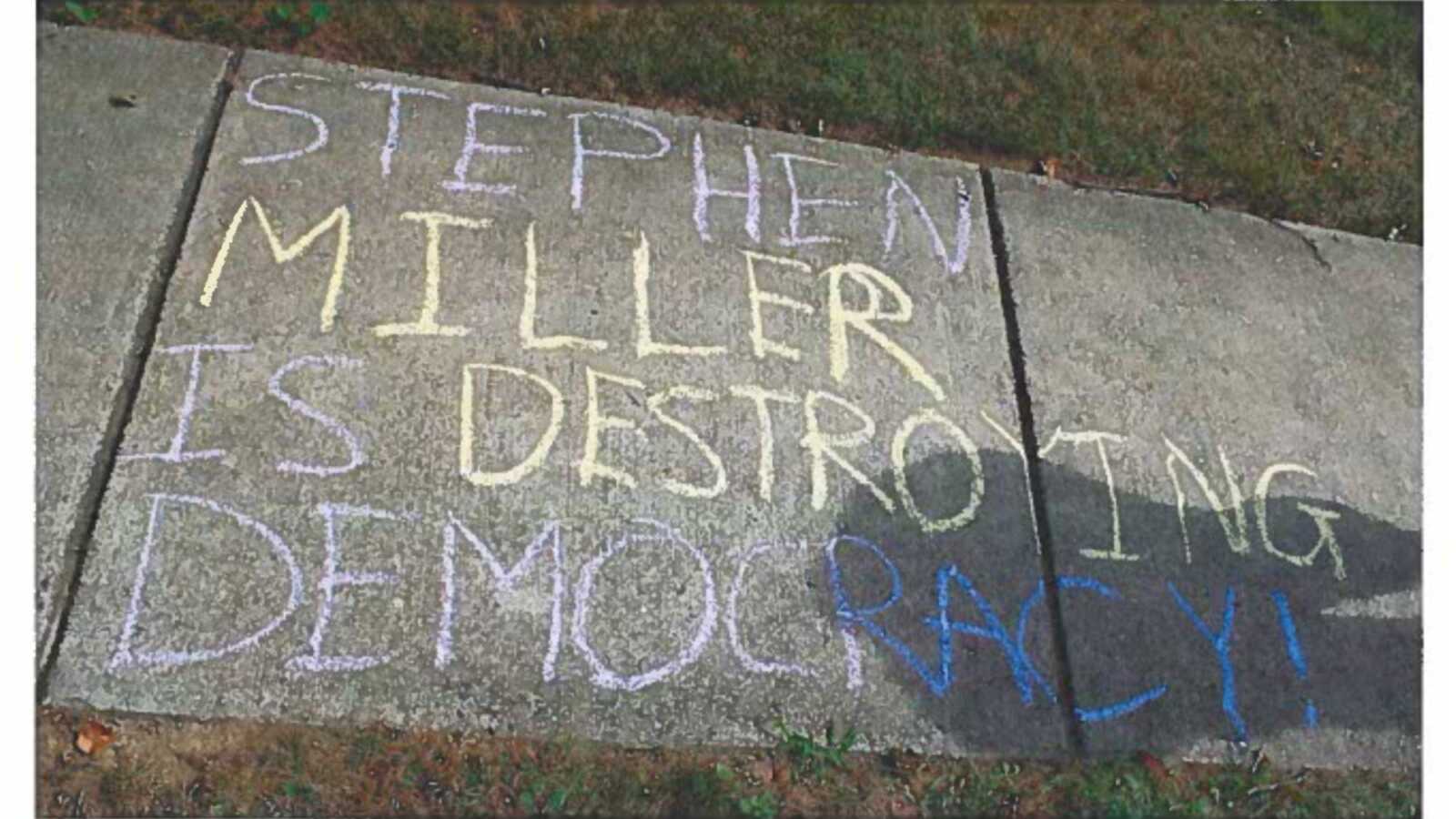
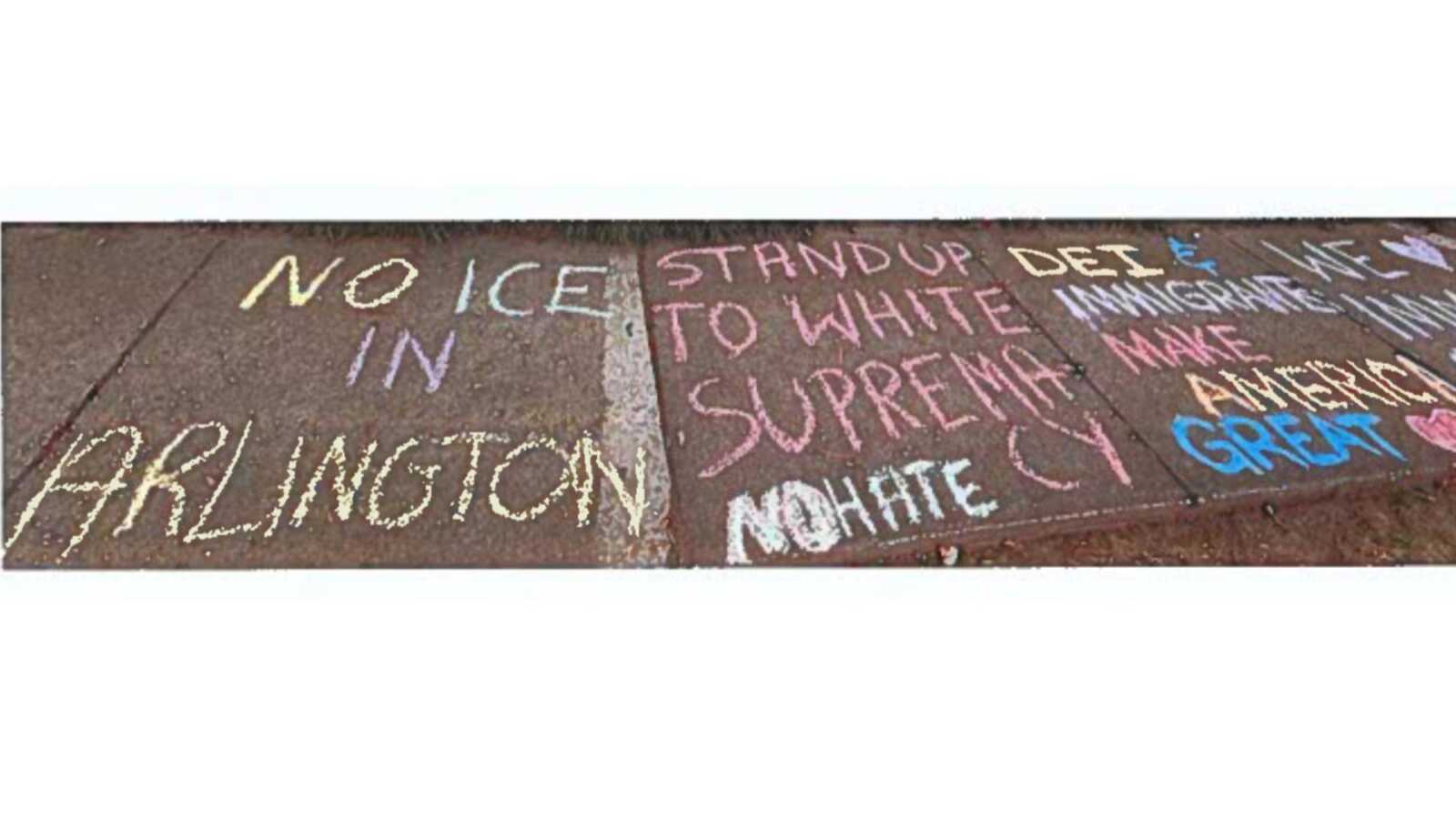
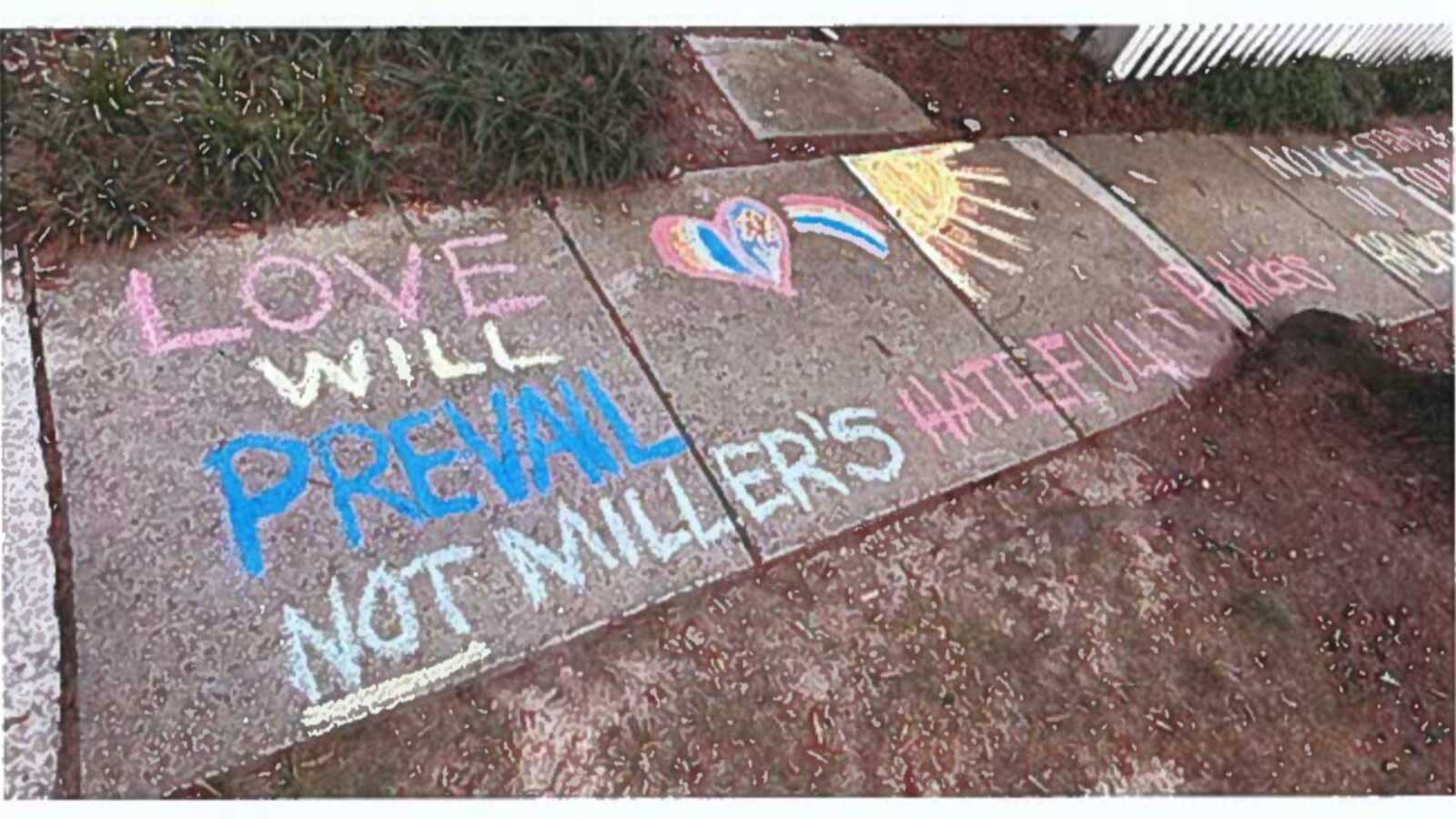
Arlington Neighbors United for Humanity, a group with which Wien is affiliated, also organized a sidewalk chalk protest outside Miller’s house in mid-September. The event drew condemnation from senior Trump administration officials and conservative commentators.
The Miller family subsequently listed their home for sale and moved into military housing in D.C.
Wien faced potential charges under Va. Code § 18.2-186.4, a misdemeanor statute that makes it unlawful to publish a person’s name or photograph along with identifying information “with the intent to coerce, intimidate, or harass.” Dehghani-Tafti concluded that Wien’s actions did not meet that standard and that prosecution would likely violate her First Amendment rights.
According to the filing, Katie Miller first reported the flyers to the Arlington County Police Department on Aug. 4, 2025. During that initial report, she specifically cited the statute by code number and read it aloud to officers.
“I love obscure statutes. That’s my thing… Isn’t that great? I love a good obscure statute,” she told them, according to the filing.
One responding officer agreed the law was indeed obscure, while the other said he had “never heard of this statute.” Miller told police she had been in contact with the U.S. Secret Service and the head of the Virginia State Police, and was expecting calls back from then-Gov. Glenn Youngkin (R) and then-Attorney General Jason Miyares (R).
The Secret Service had instructed her to file the report personally, the filing says, because the agency could not bring the matter to ACPD itself.
Miller also told officers she would normally “roll with it” when activists distributed flyers about her family — but not when those flyers contained the home address.
State-federal tensions
Virginia State Police opened its investigation in the weeks that followed. A special agent obtained a search warrant for Wien’s phone on Oct. 1, 2025.
When the warrant was served, federal agents from the FBI and Secret Service accompanied state troopers — something the prosecutor’s office says it learned only from Wien’s attorney.
State police had assured the Commonwealth’s Attorney that the investigation was “local and independent,” according to the filing. They had not disclosed that the FBI had previously sought search warrants for Wien’s phone — and been denied twice by a federal magistrate judge — before state authorities became involved.
At the Commonwealth’s request, the Arlington Circuit Court issued an order on Oct. 10, 2025 narrowing the search to a specific Signal group chat during a defined time window. The order also barred state police from sharing any data from the phone with federal authorities or any other agency.
The Office of the Attorney General, then led by Miyares, attempted to intervene to overturn that order — a move the Commonwealth’s filing characterizes as an improper intervention in a local criminal matter. The court rejected the OAG’s request.
What the search produced
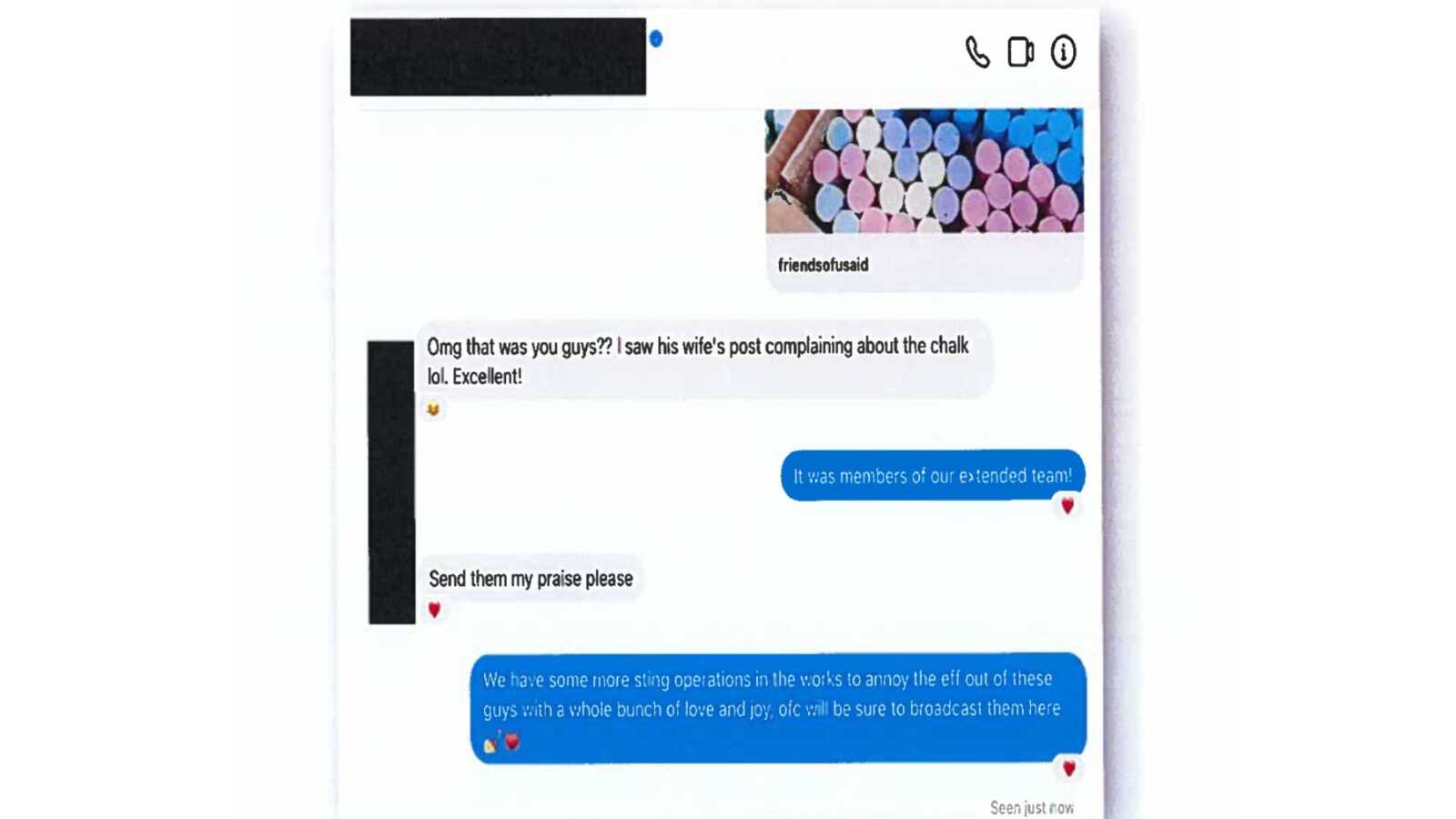
A subsequent search of Wien’s phone, limited to the chat group affiliated with the Northern Virginia chapter of Showing Up for Racial Justice (SURJ), produced what the Commonwealth describes as minimal evidence of intent to harass. The most significant items recovered were three screenshots of messages — two from X and one from Facebook Messenger — none of which were sent by Wien herself.
The filing also documents a Google drive folder of materials related to the Sept. 14 sidewalk chalk protest. A planning document for the event led with an instruction in red, all-caps text: “NO THREATS OR INSULTS.”
The guide directed participants to focus on policy criticism, with “Investigate Stephen Miller” listed as the only suggested call to action regarding Miller himself.
The same planning document included a section titled “Ask Katie Miller about,” with bullet points referencing “weaponizing DOGE to fire 30,000 Virginians,” “being Elon Musk’s lackey,” “trad-wife cosplay,” “firing her neighbors,” and “podcast propaganda.” Katie Miller, who hosts a podcast and previously worked for the Department of Government Efficiency, has been a focus of the protests in her own right.
Another exchange in the same Signal chat referenced an earlier sidewalk chalk protest the group held outside the south Arlington home of Office of Management and Budget Director Russell Vought, about a week before the Miller demonstration. Group members noted in the chat that the Vought protest hadn’t drawn national news coverage, with one suggesting that was because “Vought didn’t make a big deal about it.”
(Earlier this year, a man was arrested and charged in an alleged plot to kill Vought at his home in August 2025.)
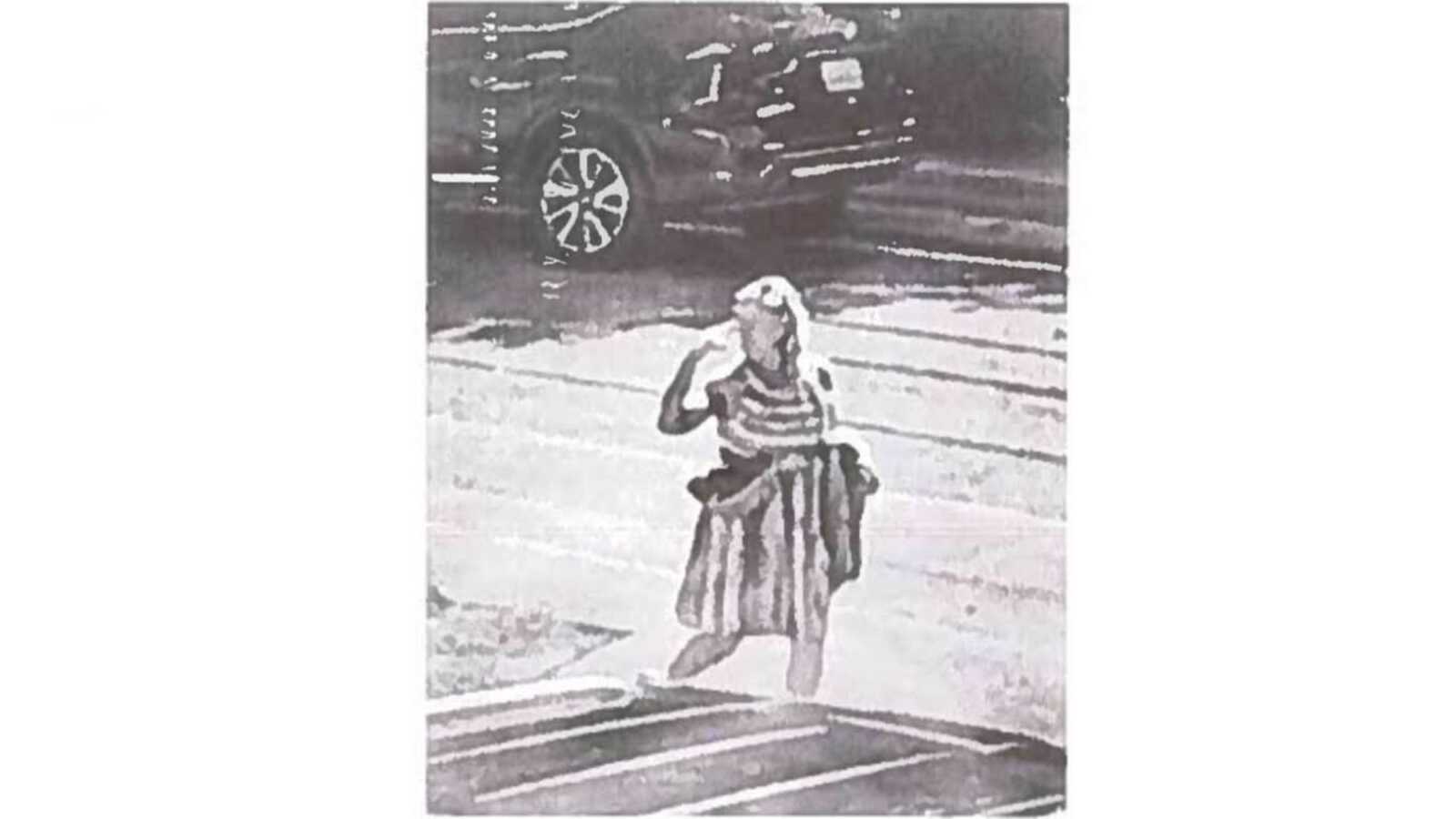
Investigators documented an “I’m watching you” gesture Wien reportedly made at Katie Miller while walking past her residence, and a message Wien sent in April 2025 stating that her SURJ chapter “intends to make his life hell.” The filing includes a surveillance camera image of Wien allegedly making the gesture.
The Commonwealth concluded that — taken together with the other evidence — none of those acts amounted to criminal harassment under the statute.
“[T]he wanted flyer called neither for any action at or near his residence, nor for any action by the viewer against Mr. Miller. Rather, the sole call to action was to a traditionally and clearly protected political activity, encouraging residents to petition Congress to investigate Mr. Miller’s actions based on the wanted flyer’s allegations.”
The filing distinguishes Wien’s case from a 2002 federal appeals court ruling that found “wanted” posters depicting abortion providers — alongside their photographs and addresses — constituted true threats unprotected by the First Amendment. That case rested on a documented pattern of named providers being murdered after appearing on similar posters, and on the fact that defendants there had explicitly endorsed violence against the doctors.
The Wien flyer, Dehghani-Tafti argues, contains no such context.
The filing also draws an extended comparison to a 2020 incident in which Brandon Howard, then-chair of the Hopewell, Virginia Republican Committee, arrived at the home of then-Del. Mark Levine (D) with a semi-automatic shotgun and pistol. Before the visit, Howard had posted a video disseminating Levine’s home address and calling on others to come to the lawmaker’s home in armed protest.
Howard was not charged with any crime, the filing notes.
FBI follow-up visits
A notable new allegation in the filing concerns events that took place after the search warrant was executed. According to the Commonwealth, on or about Dec. 22, 2025, FBI agents visited at least two Arlington County residents to ask about Wien.
The agents either explicitly stated or strongly implied that they were working from information found on Wien’s phone, including her phone logs and contacts. That information should have been off-limits to federal authorities under the court’s October order, the filing argues.
Both the FBI and Virginia State Police have refused to share their communications with the Commonwealth’s Attorney about the matter, citing an ongoing federal investigation.
Dehghani-Tafti is asking the court to require state police to certify under oath that they have destroyed the data extracted from Wien’s phone and that no copies were shared with any other agency.
The Commonwealth’s Attorney has separately received letters from House Judiciary Committee Chair Rep. Jim Jordan (R-Ohio) demanding documents and accusing her of “stymying” the federal investigation. She has responded to both, and the new filing devotes significant space to refuting Jordan’s characterizations.
Katie Miller responded to the filing in a text message to the Washington Post, criticizing Dehghani-Tafti and pointing out that the prosecutor had received campaign support from liberal donor George Soros in her two successful runs for office. She told the Post the situation reflects a broader pattern involving Soros-backed prosecutors and judges.
The Miller family’s Arlington home, listed for sale in October at $3.75 million, was still on the market as of late last month.
