

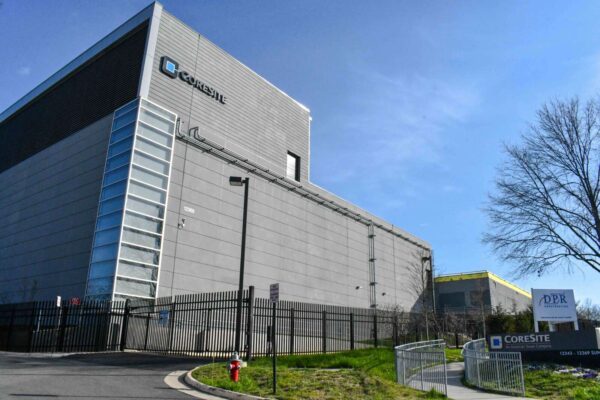
Sen. Mark Warner (D-Va.) is throwing support behind legislation intended to address the impacts of data centers on rising prices of electricity for Virginia residents.
The Power for the People Act, which Warner is co-sponsoring, aims to address cost and reliability issues associated with data centers’ power needs. The legislation directs states to look into new rate classes for data centers, seeks a new Federal Energy Regulatory Commission rule to ensure data centers are paying for infrastructure upgrades that would not be otherwise needed, and seeks to increase accountability in local electricity infrastructure.
“Virginia is the data center capital of the world, and new data center proposals are popping up all the time across the Commonwealth,” Warner said in a release. “If corporations are going to run data centers in Virginia, they should cover the cost of them. I’m proud to support the Power for the People Act to ensure that huge corporations are not pawning off costs to working Americans.”
Federal legislators want to create incentives for data centers to offset their electric grid impact through their own power generation and battery storage systems, use clean energy to mitigate pollution, pay prevailing wages and use registered apprenticeship programs for construction, and provide resources to better predict the data center power demand.

Virginia’s electricity prices jumped 14.5% in the last year, according to an analysis by Visual Capitalist.
Dominion Energy, Virginia’s largest electric utility, implemented new rate increases in 2026 after approval by Virginia’s State Corporation Commission. Dominion Energy spokesperson Aisha Khan previously told ARLnow those rate changes would reflect a $11 to $13 monthly bill increase per 1,000 kilowatt hours.
The SCC approved an additional $2.36-per-month average hike to take effect in 2027.
The presence of data centers is growing as use of artificial intelligence services increases. Virginia has over 600 data centers, with the largest concentration in an area of Loudoun County nicknamed “Data Center Alley.”
Data centers require significant electricity to operate — topping 100 megawatts for “hyperscale” data centers.
Virginia is part of the PJM Interconnection electric grid, which sets the power capacity costs for 13 states in the Mid-Atlantic region. Those costs get passed onto customers through electric utility companies such as Dominion Energy.
According to a National Resources Defense Council estimate, an average family served by the PJM grid could pay $70 more on their monthly bills to accommodate data center growth. The power grid’s reliability is also a concern if power plant completion can’t keep up with data centers’ energy demands.
“Starting next summer, PJM will have just enough power to keep the grid reliable,” the NRDC report said. “But data centers take 18 to 24 months to build, while new fossil fuel plants take many years, so PJM will continue to fall further behind. If nothing changes, starting in June 2027, the region may fall below reliability standards.”
Suzanne Glatz, the former director of strategic initiatives and interregional planning at PJM, backed the federal legislation.
“This timely and comprehensive legislation provides a clear path for data center development, securing new economic growth while implementing crucial safeguards that protect the affordability and reliability of electricity for average residential and small customers,” said Glatz, who is now the principal consultant at Glatz Energy Consulting.
One cost-related ask in the federal legislation will soon be addressed to Dominion Energy customers. Starting in 2027, Dominion Energy will charge a new rate class for large-scale energy users such as data centers. Certain large-scale users will also have to pay at least 85% of distribution and transmission demand, and 60% of generation demand.
A representative for the Data Center Coalition told ARLnow the industry is “committed to paying the full cost of the energy it uses,” and Dominion Energy’s new rate class will offer more protection for residential customers.
“Nonpartisan studies by JLARC, the Lawrence Berkeley National Laboratory, and others have consistently found that data centers do not raise energy prices and that data centers pay for all the power they use, just like any other customer,” Nicole Riley, director of Virginia government affairs for the Data Center Coalition, said. “In fact, research shows that large load users like data centers can actually keep costs down for residential customers by absorbing more of the grid’s fixed costs.”
ARLnow has also reached out to Dominion Energy for comment on the federal legislation.
Amid the growing demand for electricity, Dominion Energy could be merged with another energy company. NextEra’s proposed $67 billion acquisition of Dominion Energy would create the world’s largest regulated electric utility business.
NextEra is pursuing action in the 12 to 18 months from the Federal Energy Regulatory Commission, Virginia’s SCC and similar commissions in North Carolina and South Carolina.
