

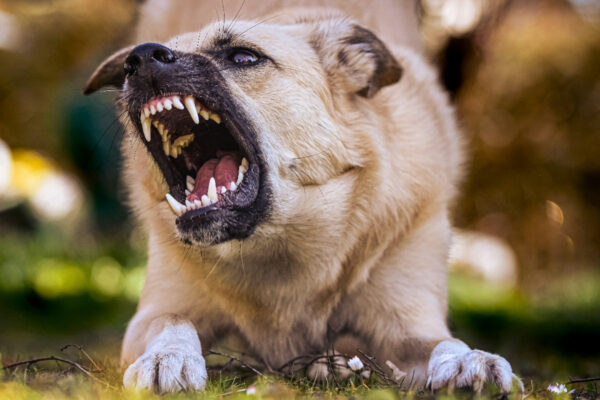
County officials are defending local processes for handling complaints of dangerous dogs, despite criticisms from Arlington residents who say they’ve struggled to feel heard.
Those responsible for handling such complaints say they work to make the community safer while following strict guidelines set down in state law.
“It’s a very serious process,” said Jennifer Toussaint, who has served as chief of animal control for the county since 2016.
Toussaint spoke at length to ARLnow after several readers raised concerns about what they perceived as a lack of attention to dangerous dogs in the community.
“There are residents who believe that dangerous dog designations are rarely pursued or granted, even in situations where they feel the facts warrant further action,” two local residents wrote earlier this summer.
“Some families who have experienced incidents first-hand feel their concerns have not been adequately addressed,” they wrote.
Another local resident expressed frustration that one neighborhood dog had been involved in a number of incidents before the case was referred by AWLA to Dehghani-Tafti’s office.
“The confirmation [of the referral] came only after a formal complaint, 400+ community signatures, a donor withdrawal and repeated follow-up — not in response to two years of documented attacks,” the resident wrote. “Why did it take all of that?”
Toussaint said the Animal Welfare League of Arlington (AWLA) evaluates reports of dangerous dogs under a process laid down by state code. About 10 to 15 cases per year are considered for “dangerous dog” designation out of approximately 85,000 dogs in the county, she said.
Toussaint acknowledged that an interaction with a dog can be traumatizing even if it doesn’t meet state standards to move forward with the formal proceedings.
“Even the minor cases can seem very scary,” said Toussaint, who has been active in crafting statewide legislation on the issue during 14 years with AWLA.
State law requires cases of suspected dangerous behavior by dogs be turned over to the office of the commonwealth’s attorney for follow-up. The office is “highly responsive,” Toussaint said.
Since Commonwealth’s Attorney Parisa Dehghani-Tafti took office in January 2020, local prosecutors have dealt with 35 charges stemming from 32 cases, said Kara Simon, the office’s community-engagement specialist.
“The office works closely with Animal Welfare throughout the entire process, from the initial response,” Simon said. “Charges are filed when the facts meet the requirements of the code.”
Cases that get that far are heard in General District Court as civil cases. When a dog is designated as “dangerous” following a court hearing, an action plan is laid out for its owners to follow, and the canine goes on the Virginia Department of Agriculture and Consumer Services’ Dangerous Dog Registry.
The registry is searchable by locality. At present, two dogs in Arlington are included.
The requirements “are very intense,” Toussaint said, while penalties for noncompliance “are severe” — including the potential of felony charges if the dog is involved in further incidents.
Toussaint did not discuss specific incidents, but said there are many factors at play in making determinations.
“My team is very highly versed” in managing the process within state guidelines, she said.
Each incident is evaluated on a case-by-case basis, Toussaint added.
Also speaking generally rather than to specific cases, Simon said local residents will help the process by making formal complaints about interactions with dogs as quickly as feasible.
“Timely reporting is important because delays of weeks or months can make it difficult to take action,” she said.
Acknowledging that there always are exceptions, Toussaint said that most local dog owners act responsibly. If their pets are involved in altercations with humans or other animals, they typically follow the corrective actions imposed, she said.
“People in Arlington are pretty proactive pet parents,” Toussaint said.
Photo via Alexas_Fotos/Unsplash
