

This reporting was supported by the ARLnow Press Club. Join to support in-depth local journalism — and get an exclusive early morning email with a preview of that day’s planned news coverage.
The death of an Arlington civic leader earlier this year closed the history books on one of the most interesting political campaigns in county history.
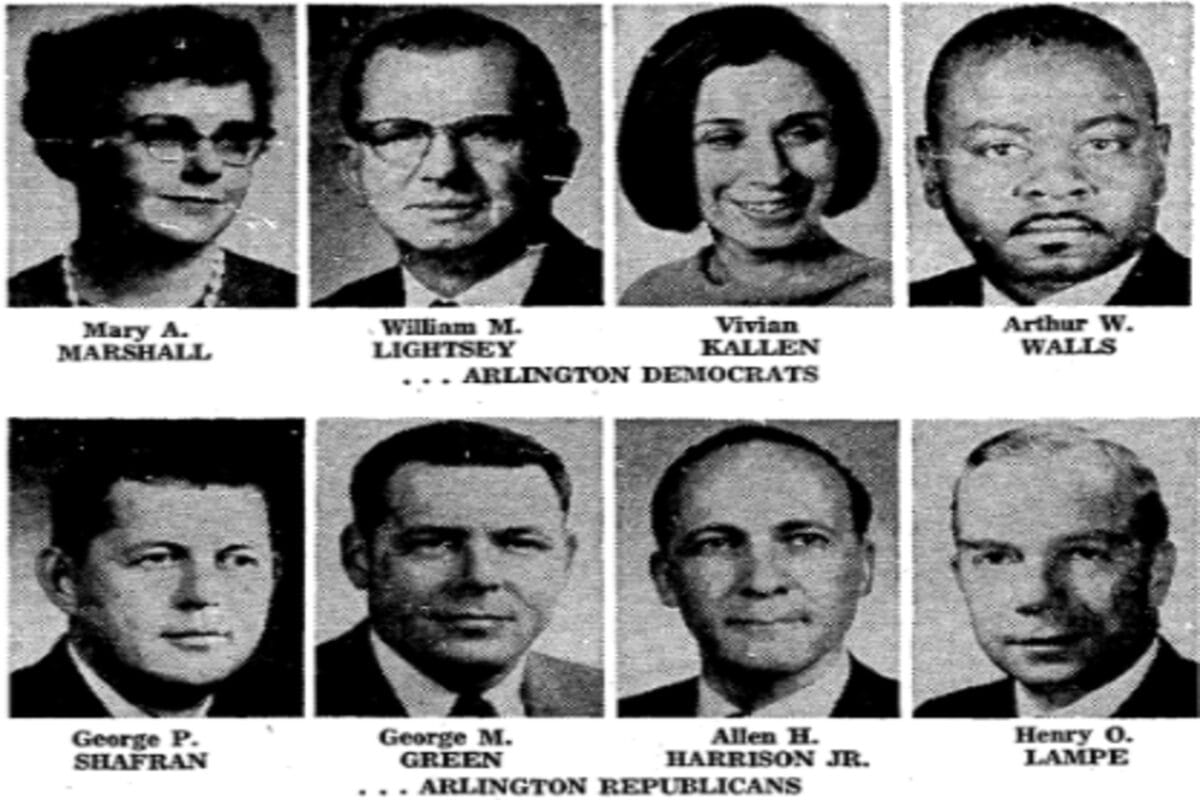
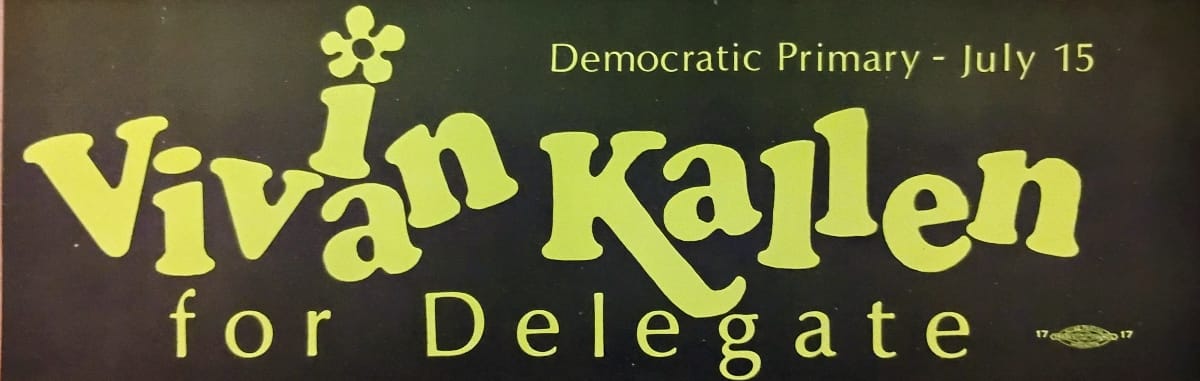
Vivian Kallen, who died Jan. 9 at age 96, was one of four Democrats defeated by an equal number of Republicans in the 1969 House of Delegates race in Arlington.
At the time, the entire county was grouped into one House district, the 9th. The general-election race featured:
- Kallen and fellow Democrats Mary Marshall, William Lightsey and the Rev. Arthur Walls
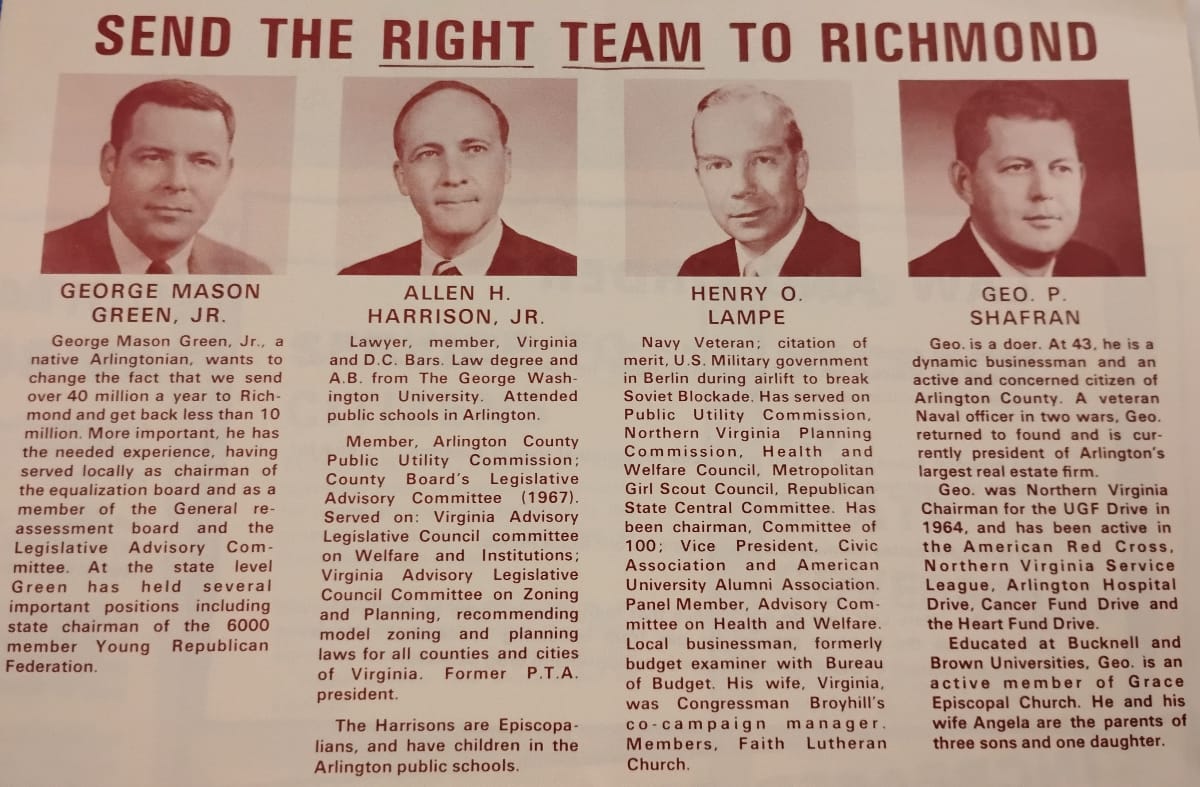
- Republicans George Mason Green, Allen Harrison, Henry Lampe and George Shafran
It played out amid a “tumultuous year in state politics,” said John Milliken, a veteran county civic leader. At the state level, Democrats were split into conservative, moderate and liberal factions — with local consequences.
“The bitter split in the statewide Democrats played out on the local level as well, and the feuds begun in 1969 lasted into the early 1970s, finally patched over by Watergate,” Milliken said.
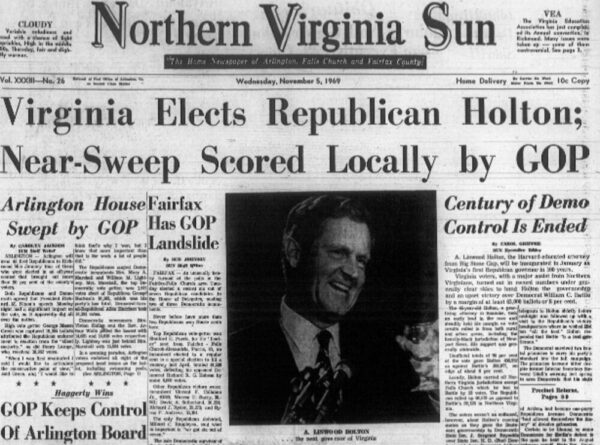
Those Democratic fractures helped Linwood Holton emerge as Virginia’s first Republican governor since Reconstruction, and while Democrats maintained large majorities in the General Assembly, 1969 also marked the beginning of the end of the party’s dominance in Richmond that had been uncontested for a century.
For Arlington Republicans, the legislative victories of 1969 coincided with the successful re-election of County Board member Dr. Kenneth Haggerty. Haggerty remains the only County Board member elected to two terms as a Republican.
The victory, at least for Arlington’s new Republican delegation to the General Assembly, was short-lived. Democrats regained three of the four House of Delegates seats in 1971.
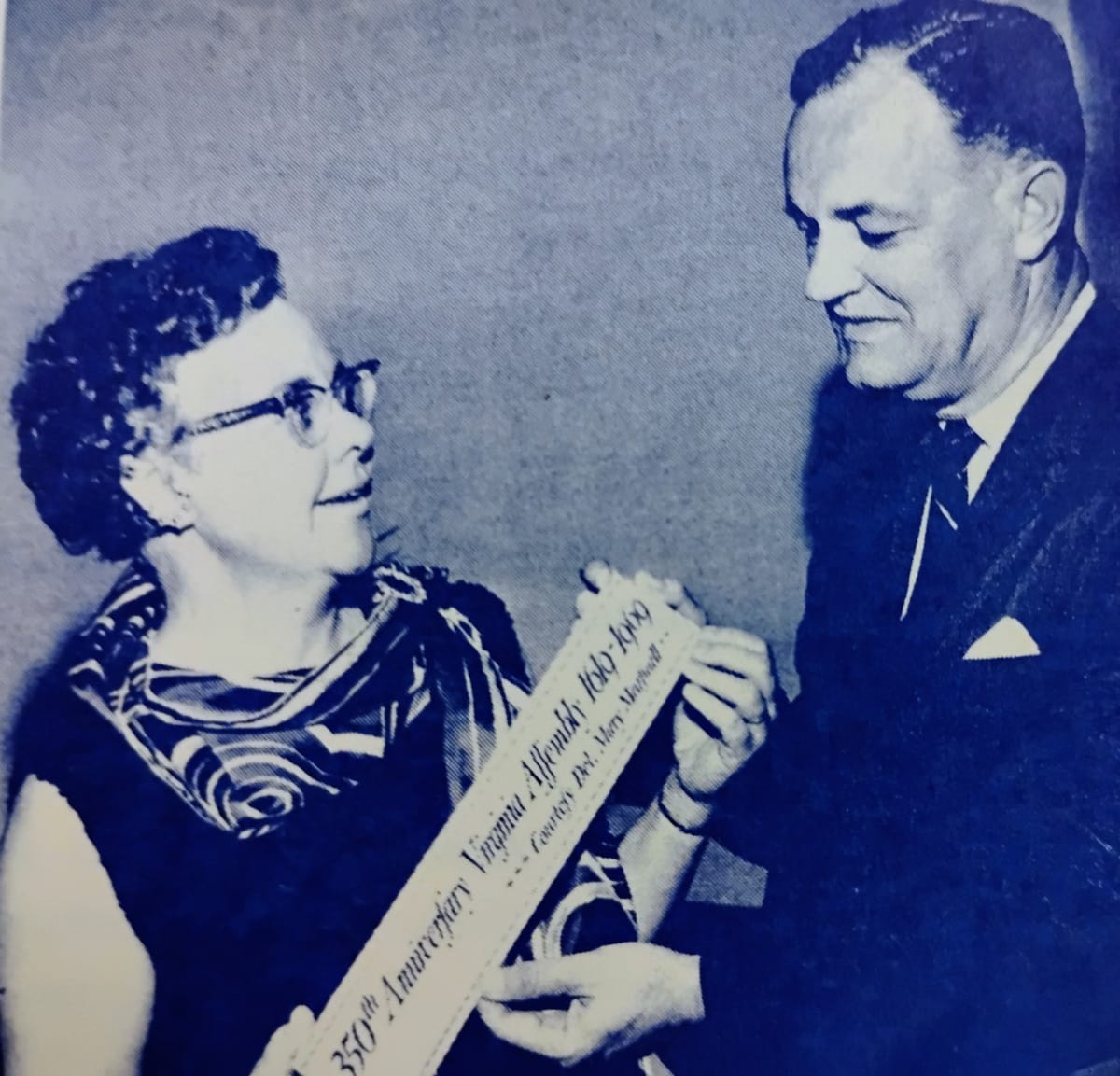
While Walls, Lightsey and Kallen never again sought elected office, Marshall regained her seat that year and would go on to serve another two decades in Richmond.
The history below draws on archives of the Charlie Clark Center for Local History, which includes papers both of Marshall and the Arlington County Democratic Committee.
It also draws upon the archives of the Northern Virginia Sun through the Virginia Chronicle project of the Library of Virginia, as well as the archives of the Northern Virginia Sun, Washington Star and Washington Post.
Early upheaval in Democrats’ ranks
At the start of 1969, Arlington’s House district was represented in Richmond by Democrats Marshall, Lightsey, Harrison Mann and Wallace Dickson.
Mann and Dickson opted out of re-election bids, instead seeking to contend for the seat of Sen. Charles Fenwick, a Byrd Democrat who had served in the General Assembly since 1940.
After Fenwick’s death in February 1969, Mann became the Democratic nominee and expected successor. But he was defeated by Republican M. Patton Echols, a former Democrat who switched parties in 1963.
Perhaps sensing trouble ahead, some prominent Arlington Democrats besieged Mann and Dickson, asking them to reconsider their plans not to seek new terms. Neither budged from their positions.
The Democratic field materializes
With two of four incumbents out of the House of Delegates race, jockeying began among those interested in seeking the Democratic nomination alongside Marshall and Lightsey.
When the filing deadline passed, the field stood at six, essentially grouped into three factions, to compete in the July 15 primary:
- Incumbents Marshall, then 49 years old, and Lightsey, 58
- Moderates William Moore, 35, and Edward Holland, 29
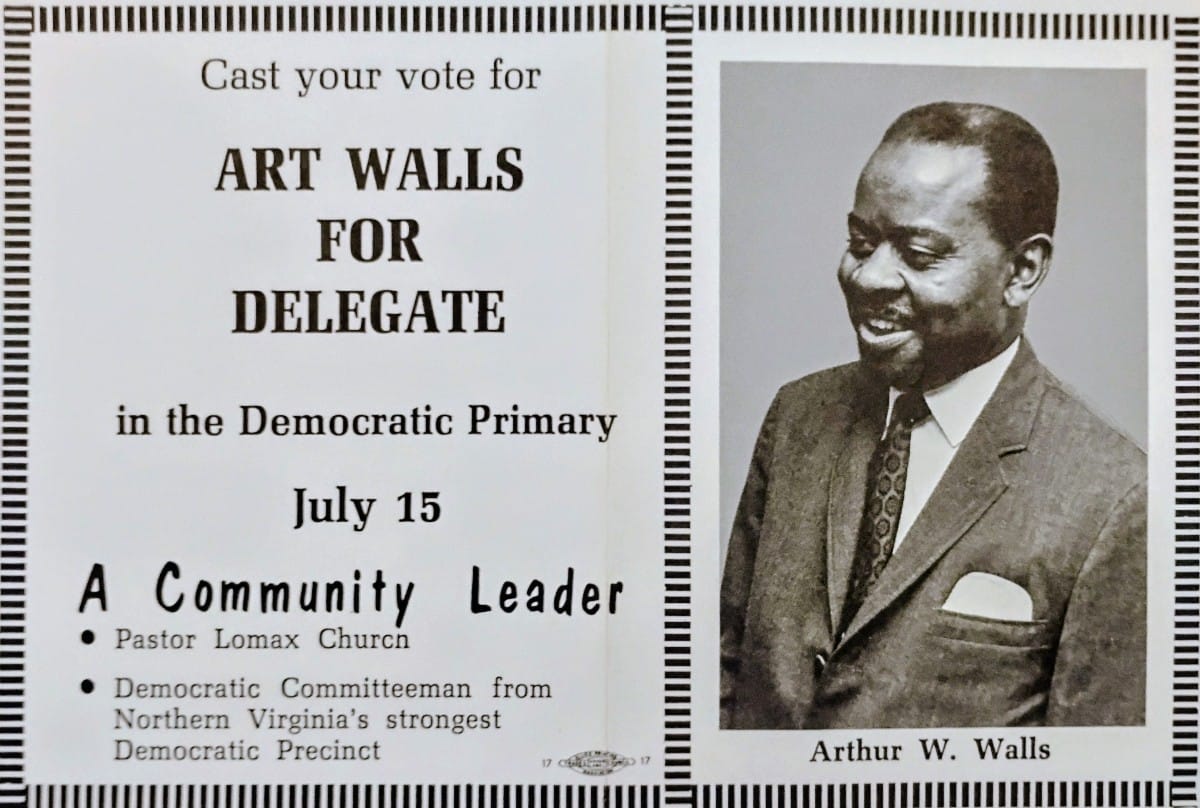
- Liberals Kallen and Walls, each 40
Two who had been expected to run, Robert Weinberg and Joseph Wholey, opted against it. Assistant Commonwealth’s Attorney Donald Caruthers also was expected to make a bid, but did not.
Candidates in the race had to walk a political tightrope, as for nearly the entirety of the 1960s, liberal and conservative factions had been fighting for control of the Arlington County Democratic Committee.
While the more progressive wing had captured control of the party in 1965, the votes of conservative Democrats could still make the difference in close political races. Candidates couldn’t afford to discount them.
During the primary, candidates delivered their views on a variety of issues.
Speaking before a state panel, Walls said Virginia leaders “should double our effort in bringing in new industry into Virginia.” He also pressed for tax relief for seniors.
In Washington Star coverage of the 1969 Democratic primary, staff writer Nancy Beckham wrote:
“The race so far has been marked by an absence of issues or controversy. The candidates, almost to a man, have stuck to safe statements — favoring education, for instance, and opposing crime. Because of the low-key nature of the campaign, practically no one is venturing guesses about probable winners and losers.”
Less than a week before the primary, the Northern Virginia Sun’s election coverage included the headline “Only 1 ‘Shoo-In’ is Seen as Arlington Democrats Choose 4 House Contenders.”
Unfortunately for readers, due to an error in the physical composition of the news page, the article below the headline was completely unrelated, and a search of future editions found no update to determine which candidate — probably Marshall — the paper saw as the shoo-in.
The (primary) results are in
On July 16, 1969, Northern Virginia Sun owner/publisher/editor Herman Obermayer was at Cape Kennedy, as Cape Canaveral was then called, covering the planned launch that day of the Apollo 11 mission to the moon. The morning newspaper went out in his absence, with the banner headline, “Arlington Liberals Sweep House Race.”
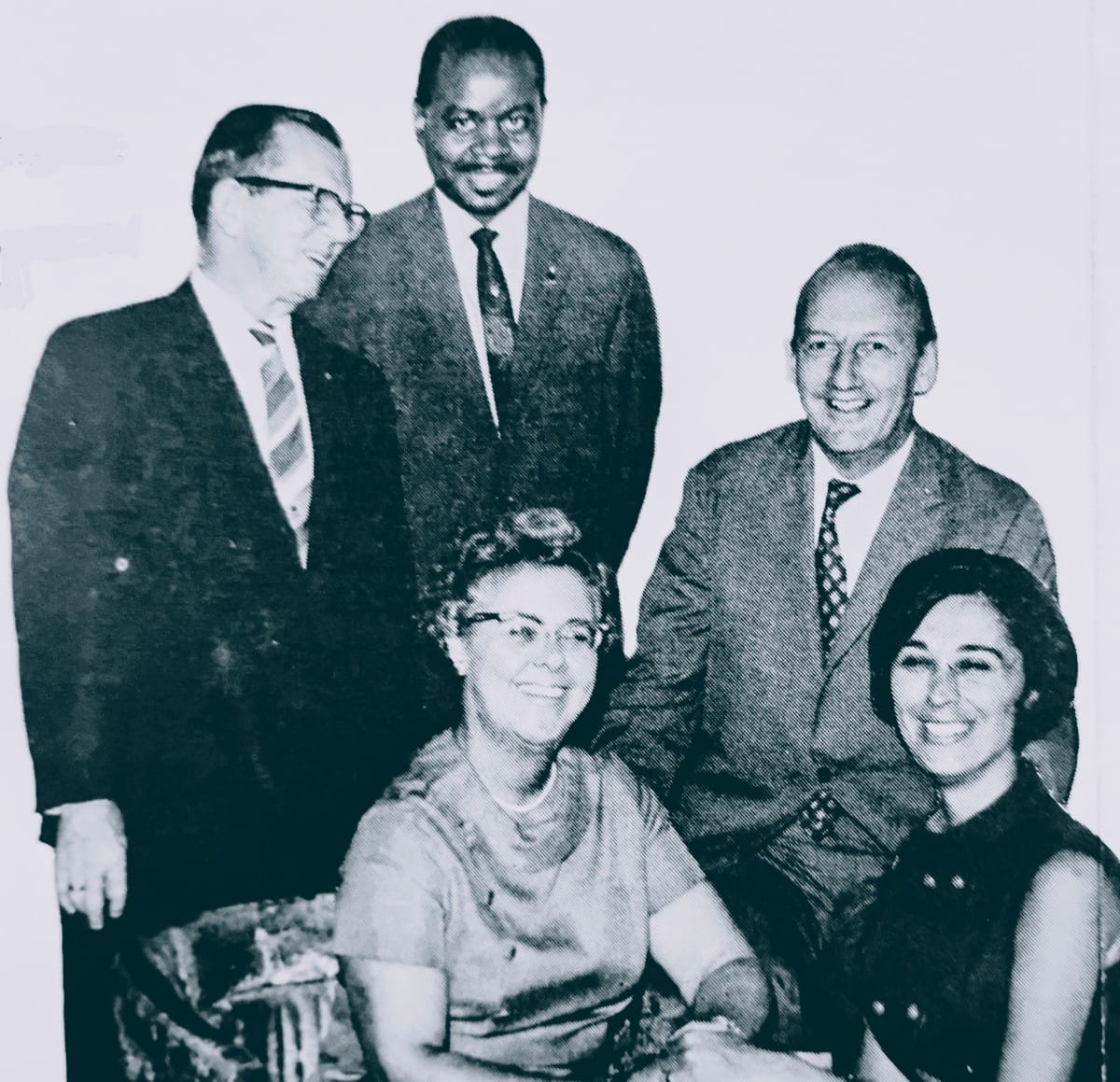
Final results in the primary, with the top four Democrats moving on to the general election:
- Marshall (incumbent): 8,201 votes
- Lightsey (incumbent): 7,426 votes
- Kallen: 6,305 votes
- Walls: 6,298 votes
- Holland: 5,600 votes
- Moore: 5,120 votes
According to Washington Post coverage, both Kallen and Walls “received strong and, apparently, decisive support from members of the powerful liberal caucus of the party.”
The paper noted that Walls, the pastor of Lomax AME Zion Church, was “the first Negro to be nominated to a House seat since Arlington was formed as a county in 1920.” The reporter’s history was a little off — Arlington received its current name in 1920 but had been an independent county since 1870.
After the votes were counted, the winners and losers took stock of the situation.
“There’s nothing like winning to make you feel very happy,” Kallen told the Sun. “I am extremely grateful to my people who worked for me, and to the people who voted for me.”
With the primary battle behind them, Kallen preached unity in the Democratic ranks:
“It will be terrifically important to pull together in November. We fight our differences in the primary, and I believe we fought an issue-oriented campaign.”
Holland, who two years later would win election to the Virginia Senate and remain there for decades, agreed that unity was the best policy.
“We are behind them 100%,” he said of the winning ticket.
“It was a good, hard-fought battle, and I enjoyed it — and plan to wholeheartedly support the winners,” Moore said.
Sun coverage the day after the primary noted that, in addition to the four Republicans, the Democratic ticket would also face independent R.C. Fields in the general election. But Fields seemed to fall off the historical radar at that point, and is not included in any tallies of November 1969 election results.
Several weeks after the primary, newspapers reported on candidates’ campaign spending. The Holland campaign expended more than all other campaigns combined, at $10,645. Walls spent $2,784, Lightsey $2,218, Kallen $1,878, Moore $1,379 and Marshall $929.
Sales tax takes center stage
In early October, with the election just a month away, the four Democratic candidates unveiled a “unity platform” with 10 priorities, The Washington Post reported.
Even then, however, opinions were split on several issues, including the best way to exempt food and medicine from Virginia’s 4% sales tax that had been imposed in 1966.
Walls and Kallen said the sales tax on those items could be eliminated by increasing taxes on cigarettes and alcohol. Marshall and Lightsey said they weren’t sure about that, but were open to ways to reduce the sales-tax burden.
Attempting to appeal to the electorate, the Republicans running for House of Delegates proposed a $9 rebate for every Virginia taxpayer, to help offset the cost of the annual sales tax on food and medicine. They introduced the proposal even though it was not sanctioned by Republican gubernatorial nominee Linwood Holton.
Candidates square off
At a debate sponsored by Organized Women Voters of Arlington on Sept. 24, 1969, Shafran said that Virginia would benefit from the emergence of a two-party political system statewide.
“It becomes so easy to serve the party and not the people” when one political party dominates, he said in coverage reported by The Washington Star.
On Oct. 24, 1969, candidates from both parties participated in a debate sponsored by civic groups in the Arlington Forest area.
About 70 people attended, according to Northern Virginia Sun coverage, as did all candidates except Marshall, who was in Roanoke at the time.
Republicans lodged a criticism that remains used by local political leaders today — that Arlington was being shortchanged on state aid for transportation and education.
Shafran said he wanted to see higher pay for police. “The first issue in this campaign is law and order,” he said.
Harrison and Lampe said Democrats who controlled the General Assembly were indifferent to transparency, often failing to record votes and operating in secrecy.
Also at the forum, Kallen said it was Republicans who were indifferent — to consumer protection, she said.
In a press statement put out in September 1969, Marshall blasted the idea of legalizing gambling to help fill state tax coffers.
“Every state that has legalized gambling has a tremendous problem with organized crime,” she said.
In August 1969, Marshall had written to then-Gov. Mills Godwin (D), urging him to appoint a Black attorney to what then was known as the Virginia Supreme Court of Appeals. Godwin wrote back that there were five such candidates among the 30 possibilities being considered.
Endorsement time
The Northern Virginia Sun’s political endorsements in the 1960s-70s never followed a pattern that was easily discernible to readers or even candidates themselves.
The paper’s owner, Obermayer, was hard to pin down on the political spectrum, perhaps best described as neither a Democrat nor a Republican, but a contrarian. As he followed his own muse, no one could be sure how the endorsements would fall until the presses rolled.
In the 1969 House of Delegates race, the Sun split the difference, endorsing Democratic incumbent Marshall, Democratic newcomer Walls and Republican challengers Lampe and Shafran.
While Lightsey was an incumbent, he was, at the time, mired in questions about whether he violated the federal Hatch Act in 1967 by running for House of Delegates while employed by the federal government.
Lightsey had since left federal employment to become executive director of the Northern Virginia Regional Park Authority, but his Hatch Act case had not been adjudicated before the 1969 campaign. That may have impacted the Sun’s decision not to endorse his re-election bid.
The editorial’s view of Kallen was to the point — “Mrs. Kallen has shown us little depth in this campaign,” it said — which drew a rebuking letter to the editor some days later.
The letter writer, William Graham, said the endorsements represented “silly season” and said the newspaper wasted “ink and effort” with its “bad reasoning.”
As for its dismissal of Kallen, Graham said her “commitment to Arlington has been complete, her understanding and insight into our community needs is demonstrated by the diversified responsibilities thrust upon her by a variety of citizens’ groups.”
A little last-minute levity
Election season was approaching in late October when something strange happened.
The campaign of Linwood Holton, the Republican candidate for governor, sent letters to Democrats Kallen and Walls, congratulating them on being the Republican candidates for House of Delegates in Arlington.
The error drew front-page notice in the Sun, with a humorous reaction from Walls.
“We certainly appreciate Mr. Holton’s kind words. However, [Democratic nominee] Bill Battle is our man, and we look forward to working with him,” Walls said.

Countdown to Election Day
On Nov. 2, Washington Post reporter Kevin Klose provided an overview of the race for Post readers.
Evaluating the 9th House District race, Klose said it had “perhaps the toughest Republican slate seen in Arlington in recent years.”
The 13 House of Delegates’ seats representing Northern Virginia were being fought out on issues that included law and order and other pocketbook issues, the Post coverage said.
Washington Star coverage of Nov. 2, 1969, added some flavor to the race:
“Democrats claim they have a more varied team and boast that they represent all the geographical areas of the county. [Republicans] are all successful business and professional men with a conservative bent, who live in the prestigious North Arlington area.”
Coverage continued:
“Green and Harrison have taken more conservative positions, but Lampe and Shafran have joined them in statements attacking ‘the rising influence of the radical left’ in the state Democratic Party and such things as ‘permissive’ behavior codes for high-school students.”
The Star’s coverage said the race appeared to be a toss-up.
“Because of the low-key nature of the campaign, practically no one is even venturing guesses about probable winners and losers,” it said.
But there was a hint provided in the article, which noted that factionalism was “deeply rooted” in the Arlington County Democratic Committee.
Ballots are cast
In 1969, nearly all votes cast by Virginians were at their polling places on Election Day. State law of the day allowed only rare exceptions; among the few groups permitted to cast absentee ballots were widows of Civil War veterans.
The vote count in the House of Delegates race was as follows:
- Green: 18,365 votes
- Harrison: 18,303 votes
- Lampe: 18,282 votes
- Shafran: 18,362 votes
- Marshall: 16,351
- Lightsey: 15,924
- Kallen: 14,665
- Walls: 14,616
In Arlington, Holton came out on top in the five-candidate field for governor, winning 18,418 votes to 17,097 for Democrat Battle.
Replicating his success statewide, Holton became the first Republican governor of Virginia since Reconstruction.
Also on the 1969 ballot locally, Republican Dr. Kenneth Haggerty won a second four-year County Board term. He won 61% of the vote against independent Charles Wood, who had the backing of Democrats and Arlingtonians for a Better County (ABC).
Haggerty’s reelection meant Republicans would retain their 3-2 margin on the County Board for 1970.
Making sense of the wipeout
In the immediate aftermath of the election debacle, Democrats had varying views of what had happened.
Kallen told the Northern Virginia Sun that she and her ticket-mates “never succeeded in making our case as strong as possible.”
Marshall had two explanations, suggesting first that the D.C.-based newspapers had not paid sufficient attention to the race.
But she also placed some of the blame on Democrats themselves, acknowledging that the ticket the party put together was “unacceptable” to many Arlington voters.
Del. Harrison Mann, who avoided being part of the political carnage by not being on the ballot, said his party needed to focus on finding “attractive, acceptable candidates and issues with which the majority of voters agree.”
Republicans outspent Democrats in the general election, but not by huge margins.
For the GOP, Lampe’s campaign spent $3,491, Harrison’s $3,086 and Green’s $2,823, according to Washington Post coverage. Democratic spending was $1,137 by the Walls campaign, $1,099 for Lightsey and $625 for Kallen. Marshall had yet to file her paperwork when the Post reported the totals.
Battle, the Democrat who lost the governor’s race to Holton, wrote to Marshall on Nov. 18.
“I was truly distressed at your loss,” he said in the letter, found in Marshall’s papers at the Charlie Clark Center for Local History. “I find the actions of the voters of Arlington almost unbelievable.”
A further post-mortem
The Dec. 2, 1969, edition of the Northern Virginia Sun offered front-page coverage looking at the reasons for the Republican victory in Arlington.
The verdict: The Democratic Party at both the local and state levels hemorrhaged conservative voters in the run-up to the 1969 election.
It was the group that, just days before the election, President Richard Nixon termed the “silent majority” in a nationwide televised speech.
Locally, “heavy vote for Holton” carried over to down-ballot races, Lightsey said, with voters irked by fears of crime, inflation and high local taxes.
While Democratic campaign strategist Ira Lechner contended that local Democratic committees didn’t need the conservative vote to win, an unnamed party moderate blasted the lurch to the left in the Sun.
“The party brought down disaster on itself,” the commenter said, calling the four party candidates “a totally unacceptable ticket” for Arlington.
The article related the tale of an unnamed candidate, most likely Marshall:
“She knew the handwriting was on the wall when she saw an inordinate number of strangers at the polls, and more than a few acquaintances who couldn’t look her in the eye.”
Kallen told the paper that local Democrats had been “living on borrowed time” as Republicans made inroads across Northern Virginia.
She noted that the 10th Congressional District, which then included all of Arlington, had been represented since 1953 by Republican Joel Broyhill, and local voters more often than not would support Republicans for president.
Ted Weihe, who grew up in Arlington in a politically active family, said some of the problems for Democrats dated to the rough-and-tumble August 1969 gubernatorial primary runoff between the centrist Battle and more progressive Henry Howell, after the two had emerged on top over the more conservative, Byrd Democrat Fred Pollard, in July.
In response to Howell’s defeat in the runoff, some Democrats “stayed home in protest,” said Weihe, who in that campaign earned $100 a week as a Democratic campaign staffer. He eventually would become close friends with Republican Lampe, who remained a moderate Republican for the rest of his long life.
Milliken agreed that the Democratic runoff between Battle and Howell had effects lingering all the way to the November general election:
“Battle won the runoff but in a way that left Howell telling his supporters they could be free spirits in the upcoming Battle/Holton general election. Holton — a truly moderate, so-called Mountain-Valley Republican — became the beneficiary. He received the full financial support of many of the former Byrd loyalists in the business community and was endorsed by both the state AFL-CIO and the Crusade for Voters, the state’s largest and most active Black voters group.”
Republicans slowly make inroads
The Virginia General Assembly immediately before the 1969 election included 86 Democrats and 14 Republicans. Owing to the GOP victories in Arlington and elsewhere, the 1970 legislature would include 75 Democrats, 24 Republicans and one independent.
Because there were no Virginia Senate races in 1969, Democrats retained their 34-6 margin in the upper house.
Ever since Reconstruction, Democrats had been the dominant political party statewide.
Democrats won their first post-Civil War majority in the House of Delegates in 1883, and by 1893 controlled the body by a 97-3 margin. Between 1921 and 1963, Democrats never held fewer than 90 seats in the 100-member body.
While the 1969 election was the beginning of the end of Democratic dominance of state politics, Republicans still had an uphill climb.
The party did not reach majority status in the House of Delegates until 1992. After that, Republicans retained their majority, often growing it to huge numbers due to creative redistricting efforts, for more than a quarter-century.
Democrats won control in 2019, and Republicans regained it in 2021 but lost it again in 2023. After the 2025 gubernatorial wipeout of the Republican statewide ticket, Democrats now hold 64 of the 100 seats.
Kallen doesn’t let loss get her down
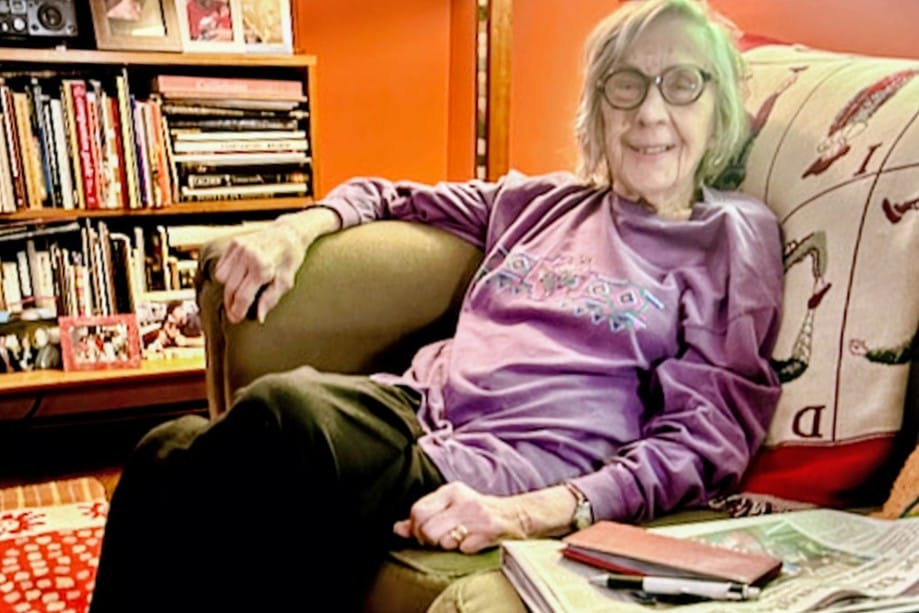
While Vivian Kallen lost the 1969 race, she continued to impact Arlington civic life for more than half a century.
Vivian Margaris was born March 11, 1929, in Astoria, N.Y., and grew up in Chicago. Her parents — Haralambos “Bobby” Margaris and the Greek-American author Theano Papazoglou Margaris — were active in the Greek community.
She met Arthur Kallen while earning a master’s degree in political science at the University of Chicago. They married in 1953 and lived in Arlington until Arthur Kallen’s death in 2016.
According to an obituary:
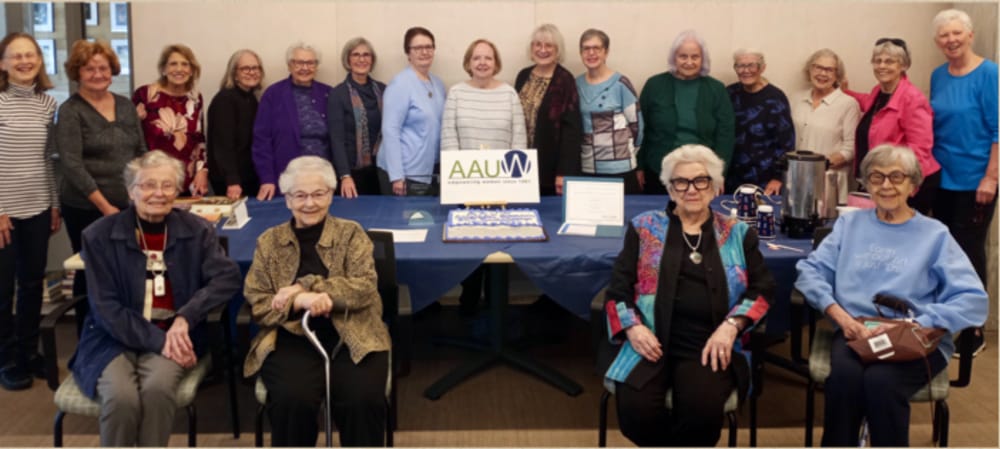
“After doing further graduate work at American University, Vivian embarked on a teaching career at Northern Virginia Community College, where she was an associate professor of political science. While there, she started The Northern Virginia Review literary magazine and was president of the Faculty Senate. She was active over many years in the American Association of University Women (AAUW). In 2012, she received the Award for Notable Support for the Arts from the Arlington branch of the AAUW, and in 2025, at the age of 96, she lectured [to] that group on the legacy of Del. Katherine Stone, an Arlingtonian who served in the General Assembly in the 1950s.”
Kallen was also a fan of the arts and local theater, serving on the Arlington Commission for the Arts and the board of Washington Shakespeare Company.
Politically, Kallen became active in the movement to repeal the poll tax in the 1960s and served as the first president of the Northern Virginia Women’s Democratic Club.
Just weeks before her death, she completed an extensive oral history interview with the county library system. It is currently being curated and will be made available later this year.
Kallen remained a staunch Democrat her entire life. She made sure her obituary noted that she cast an in-person ballot for Democratic gubernatorial candidate Abigail Spanberger in November 2025 and that she “despised Donald Trump and everything he stood for until her dying day.”
Well into her 90s, Kallen remained a vital force of Arlington civic life. She chaired the Arlington AAUW and was active in the Arlington Committee of 100 (now Advance Arlington).
Kallen “was truly a force of nature who dedicated her life to making our society better for all,” Arlington AAUW co-president Terry Bratt said upon her death.
“Vivian lived a very fulfilling life and will be missed by all who knew her,” Bratt said.
Another Kallen continued the political tradition
In 2017, Kallen took part in another political campaign, as her granddaughter Alicia Kallen challenged veteran Republican Terry Kilgore for a House of Delegates seat in southwest Virginia.
The district encompassed Lee, Scott and portions of Wise County, plus the city of Norton.
The grandmother, granddaughter and their supporters knew it was an uphill battle. About three of four voters had supported Donald Trump in the 2016 presidential election.
Among those cheering on the first-time candidate was Del. Patrick Hope, a longtime friend of Vivian Kallen.
“While I haven’t met Alicia Kallen, if she has half of her grandmother’s energy and passion, Del. Terry Kilgore is in the fight of his life to keep his seat,” Hope told the Sun Gazette as the campaign unfolded.
The race unfolded as anticipated: Kilgore was re-elected with 76% of the vote, in line with Trump’s margin the year before.
Upon her death earlier this year, the General Assembly unanimously ratified a resolution, patroned by Hope, honoring Vivian Kallen’s lengthy life and saluting her service as “an esteemed educator and a dynamic leader in the Arlington community.”
Thanks as always to the Charlie Clark Center for Local History, Library of Virginia, Washington Post and D.C. Public Library (Washington Star archives) for assistance with coverage.
