

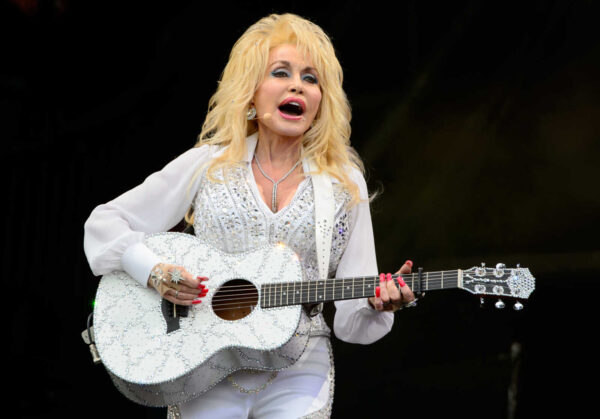
Mary Jo Jaynes, a classified-ad sales representative at the Northern Virginia Sun newspaper, was adamant she’d come in on her day off to answer the phones on a Saturday morning back in early November 1996.
The Sun that day was getting a phone call from Dolly Parton, and Mary Jo wanted to be the one to field it.
Why was the little ol’ Northern Virginia Sun being called by Ms. Parton? Even back then, she was a beloved, iconic legend in the American consciousness, and the Sun was just trying to hold on as a daily news operation.
The story actually starts about eight months earlier in Myrtle Beach, S.C., where I was working as the front-page editor for the Sun News newspaper of the Knight-Ridder chain and, on occasion, knocking out feature coverage when time was available and the mood struck.
That spring, I thought it would be a good idea if somebody from our daily newspaper made the trek to Pigeon Forge, Tenn., for the annual opening of the Dollywood theme park.
It’s not like the Sun News was hurting for the money to cover the cost — it was the most profitable publication, on a percentage basis, in the now deceased Knight-Ridder chain, earning about 40 cents in profit on every dollar in revenue. Those were the days!
When nobody offered to make the trip, I volunteered myself. And, for going that extra mile, I got chastised by editor Sue Deans when I later submitted the mileage-reimbursement request and one-night motel bill. But that’s a story for another day.
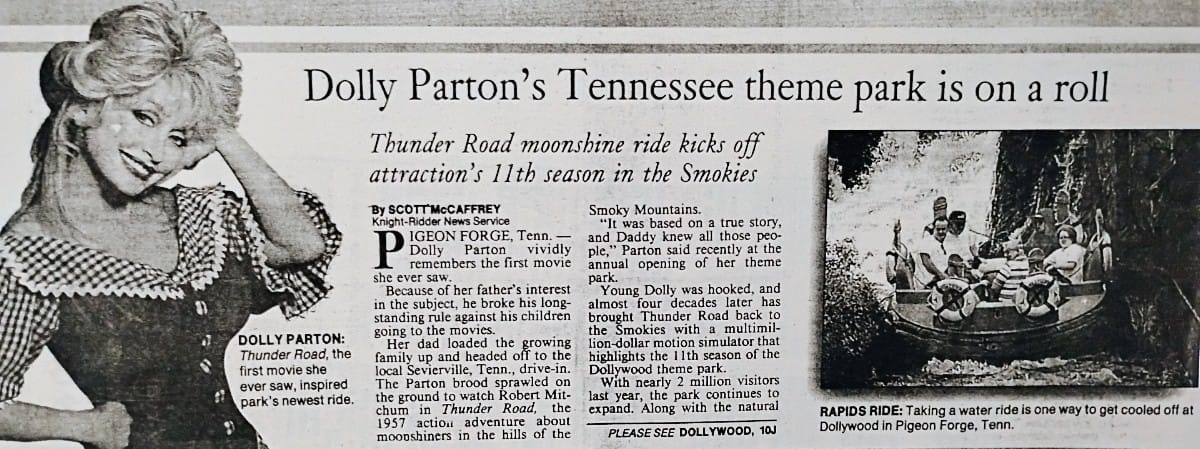
Ms. Parton didn’t own Dollywood outright, but she was a partner in it, and made appearances each opening weekend in March and then occasionally throughout the year. The connection helped propel what once had been a small-time operation into one of the larger regional theme parks in the nation by the 1990s.
I went, covered the opening, took some photos and had a good time having breakfast with rotund funnyman Dom DeLuise and actress Sandra Dee, who had been recruited to attend the opening.
It was my interaction with Ms. Dee that saved me with editor Sue Deans. As a child, she had been a big fan of the actress, whose star had faded by the 1990s but was still a nice interview. If memory serves, she had a little dog in her large purse along on the Dollywood trip.
Upon returning to Myrtle Beach, I filed the package of coverage with the editors.
Here is an excerpt:
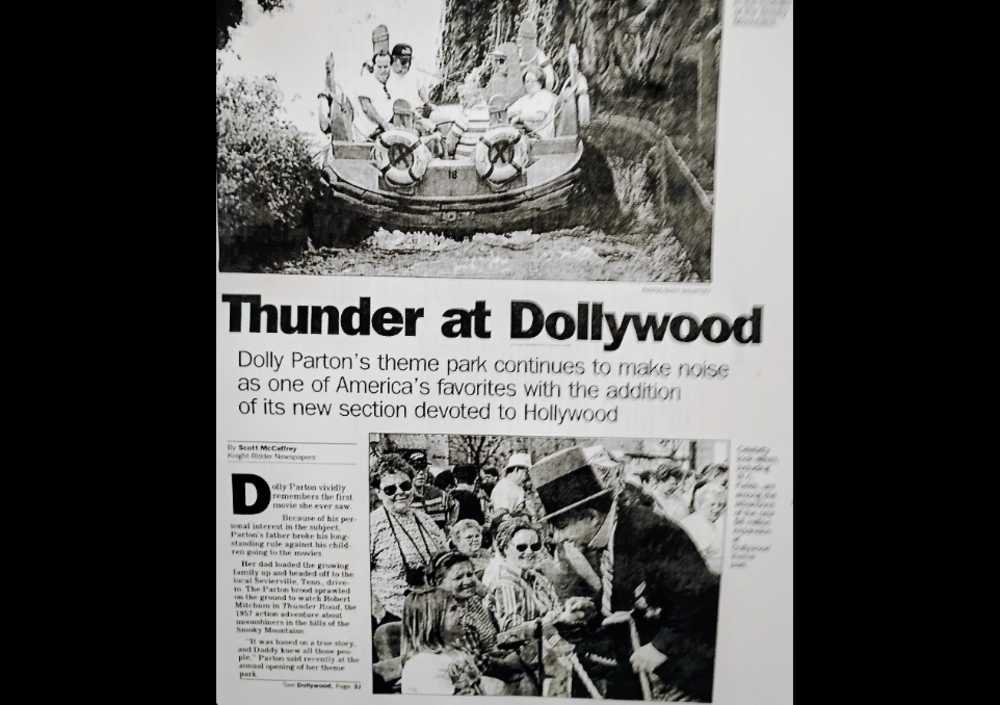
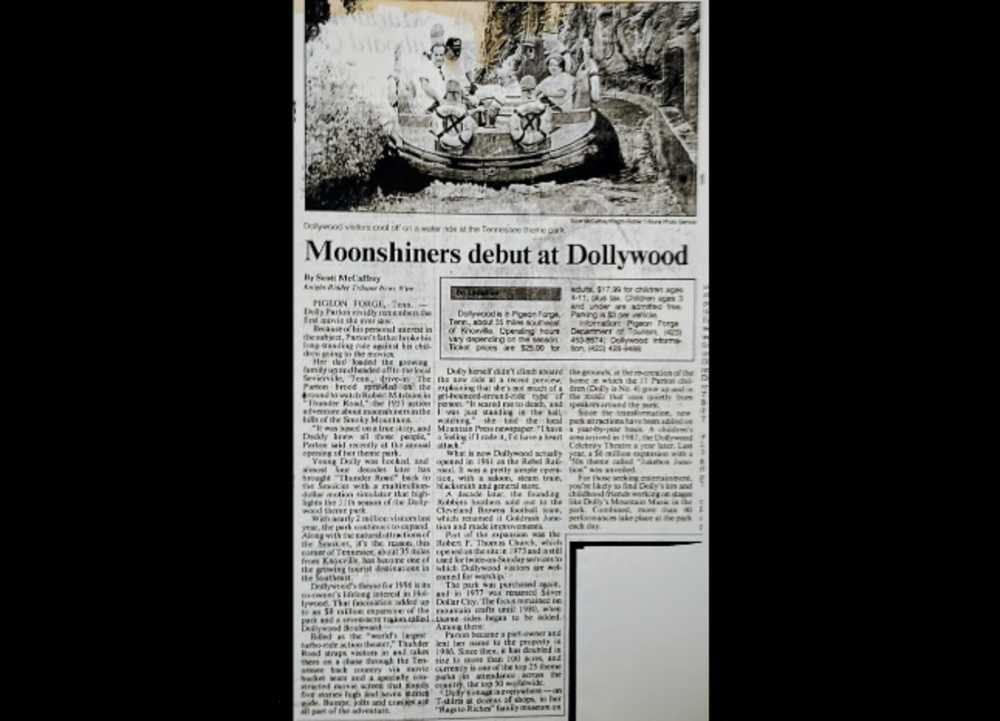
Dolly Parton vividly remembers the first movie she ever saw.
Because of his personal interest in the subject, Parton’s father broke his long-standing rule against his children going to the movies.
Her dad loaded the growing family up and headed off to the local Sevierville, Tenn., drive-in. The Parton brood sprawled on the ground to watch Robert Mitchum in “Thunder Road,” the 1957 action adventure about moonshiners in the hills of the Smoky Mountains.
“It was based on a true story, and Daddy knew all those people,” Parton said recently at the annual opening of her theme park.
Young Dolly was hooked, and almost four decades later has brought “Thunder Road” back to the Smokies with a multimillion-dollar motion simulator that highlights the 11th season of the Dollywood theme park.
With nearly 2 million visitors last year, the park continues to expand. Along with the natural attractions of the Smokies, it’s the reason this corner of Tennessee has become one of the growing tourist destinations in the Southeast.
Billed as the world’s largest turbo-ride action theater, Thunder Road straps visitors in and takes them on a chase through the Tennessee backcountry via movie bucket seats and a specially constructed movie screen that stands five stories high and seven stories wide. Bumps, jolts and crashes are all part of the adventure.
Dolly herself didn’t get strapped in and ride — she’s not much of a get-bounced-around-ride type of person.
“It scared me to death, and I was just standing in the hall, watching,” she said. “I have a feeling if I rode it, I’d have a heart attack.”
Perhaps not surprisingly given the popularity of the subject, my coverage was picked up by the Knight Ridder-Tribune News Service, and was reprinted across the land.
Months later I received a folder from the Dollywood public-relations department with news clippings from dozens of daily papers, ranging from some of the nation’s biggest — Los Angeles Times, Philadelphia Inquirer, Miami Herald — to the more modest Warren, Ohio, News Chronicle and St. Joseph, Mo., News-Press.
The spring of 1996 turned to summer, and I ended up moving back up to the local area to resume editorship of the Northern Virginia Sun that I had given up two years before to take the Myrtle Beach job. Interesting career decision, but it turned out OK, I guess.
Despite the move, the Dollywood people had not forgotten about me. As the park was gearing up for its Christmas season, they tracked me down and said that they’d be happy to arrange a one-on-one phone interview with Ms. Parton, in part as a thank-you for all the coverage they’d gotten out of that single article.
Interview Dolly Parton? One doesn’t have to be asked twice, even if the reach of Northern Virginia Sun coverage wasn’t likely to extend quite as far as the earlier article.
We set the date and time, and back then there were no direct numbers to individual newsroom personnel at the Northern Virginia Sun. It had to go through the front desk.
When we let Mary Jo know, she jumped at the opportunity to take the call at the main switchboard, even if it meant coming in on a Saturday.
The appointed time came. Dolly called. Mary Jo answered. I believe just for fun, she said something over the intercom to the newsroom like, “Scott, Dolly Parton on Line 3 for you” as if it was an everyday occurrence.
However the handover was accomplished, I picked up for the person who, even now in 2026, remains by far the biggest celebrity I’ve ever interviewed.
The conversation itself remains a little hazy in my memory, but I do remember Ms. Parton saying she was in her home in Los Angeles and it was raining outside there. I’m sure we talked about Christmases of her childhood back in rural Tennessee.
My brief time with her seemed to confirm she was as nice as everyone said, and she certainly was a pro with interviews, having done them since her move to Nashville around the time of my birth.
I’d wager the routine on her end was always the same: Listen to the question, answer the question, repeat the process a few times, charm the interviewer, say thanks and get back to her day in L.A., or Nashville, or wherever she happened to be at the moment.
Trying over the past day or so to track down my coverage that resulted from the interview has been a little tricky.
The Northern Virginia Sun archives have been digitized by the Library of Virginia, but only up to the late 1970s. I may, or may not, have a copy of the article boxed away somewhere, but it wasn’t part of the manila envelope with the clippings from that spring.
If anyone really wants to see it, the most likely place to find it would be in the microfilm archives held at the Charlie Clark Center for Local History at Arlington Central Library. I’m not going to make a special trip, but next time I’m there I may take a peek and see if it can be found.
We only shared about 10 minutes, at best, in one-on-one conversation, plus another 15 minutes when I was part of the press gaggle at the Dollywood annual opening. But like just about everyone, I was truly saddened to hear of Dolly Parton’s death this week.
Anyone who followed celebrity news was aware she had not been feeling her best, but the news of her death seemed to take everyone by surprise. And those are the deaths that hurt the most.
It’s quite a journey she had in those 80 years, and quite a legacy she leaves for generations to come. Glad to have spent that very small but, to me, meaningful time with her.
And one final note, this one about Mary Jo Jaynes, a lovely person who died in 2010.
The five-day-a-week Northern Virginia Sun was not awash in advertising back in the late 1990s, but Mary Jo knew how to turn lemons into lemonade with her clients. Both sports editor Dave Facinoli and I remember overhearing her saying to one, “the great thing about advertising with us is your ad will never get lost among all the other ads,” like in more robust publications.
Mary Jo had meant it sincerely, but those in the newsroom probably took it with a dose of gallows humor, something of a harbinger of the decline to come for the print-news industry as a whole in the 21st century.
