

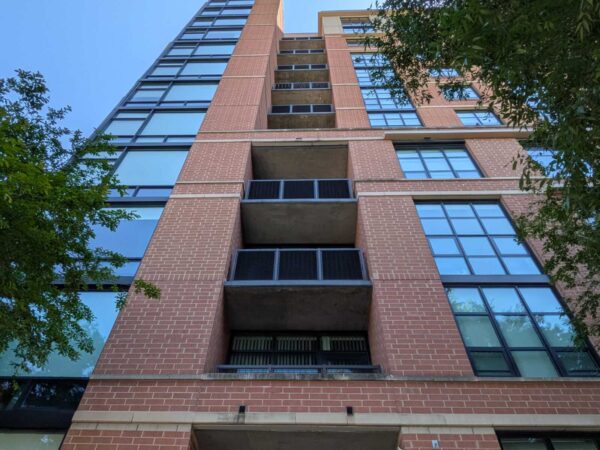
Arlington apartment rents declined year-over-year in August but are up 3.5% since the start of 2026, according to new data.
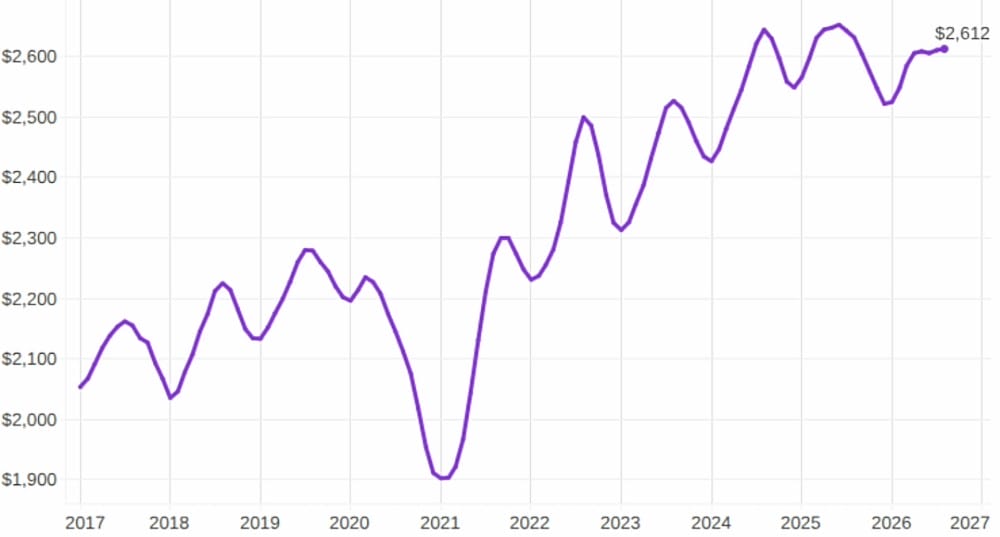
The median rental price for an apartment countywide was $2,460 for one-bedroom units, $2,973 for two bedrooms and $2,612 overall, according to figures reported Aug. 26 by Apartment List.
Arlington’s overall median rental rate was down 0.7% from August 2025, in line with a decline of 0.8% nationwide. Across the country, the median rent is $1,221 for one-bedroom units, $1,372 for two bedrooms and $1,390 overall.
The median rental rate in the D.C. metro area was $2,174 in August, according to the data.
Arlington retained its position as the fifth most expensive rental market among 100 urban areas tracked by Apartment List, and the most expensive outside California.
The only areas surpassing the county price-wise were San Francisco ($3,844), San Jose ($3,132), Irvine ($3,092) and Fremont ($2,968).
On the other end of the spectrum, the lowest median apartment rates for the month were in Toledo ($916), Wichita ($1,039) and Cleveland ($1,045).
Apartment List analysts say the August figures suggest the market should be poised for a modest upturn nationally:
“Rents are still falling, but not as fast as they used to be,” they said. “Year-over-year rent growth has now been trending up for four straight months, after bottoming out at -1.6% in April. That April figure matched a record low in our estimates, going back to 2017, as demand stagnated amid a backdrop of macroeconomic uncertainty. But we now appear to have hit an inflection point, signalling that the rental market may finally be stabilizing as construction slows and a recent influx of new units gets absorbed.”
August’s national median rent was up 0.1% compared to July.
“While modest, this month’s increase is notable because it’s the first time we’ve observed positive rent growth in August since 2022,” analysts said, adding:
“In recent years, rents had dipped slightly in August, as the rental market’s off-season shifted earlier in the year amid soft conditions. By bucking that trend, this month’s data offer another sign that the rental market is turning the corner. At the same time, we are still at the tail end of the peak moving season, and as such, rent growth is currently decelerating. Prices will likely begin their off-season dip in the next month or two in line with typical seasonal patterns.”
A “historic surge” in multifamily construction peaked in 2024 with 600,000 new units hitting the market, the most added supply since 1986. Construction has slowed since, and the market is beginning to absorb the available inventory.
Arlington ranks 7th in Zumper data
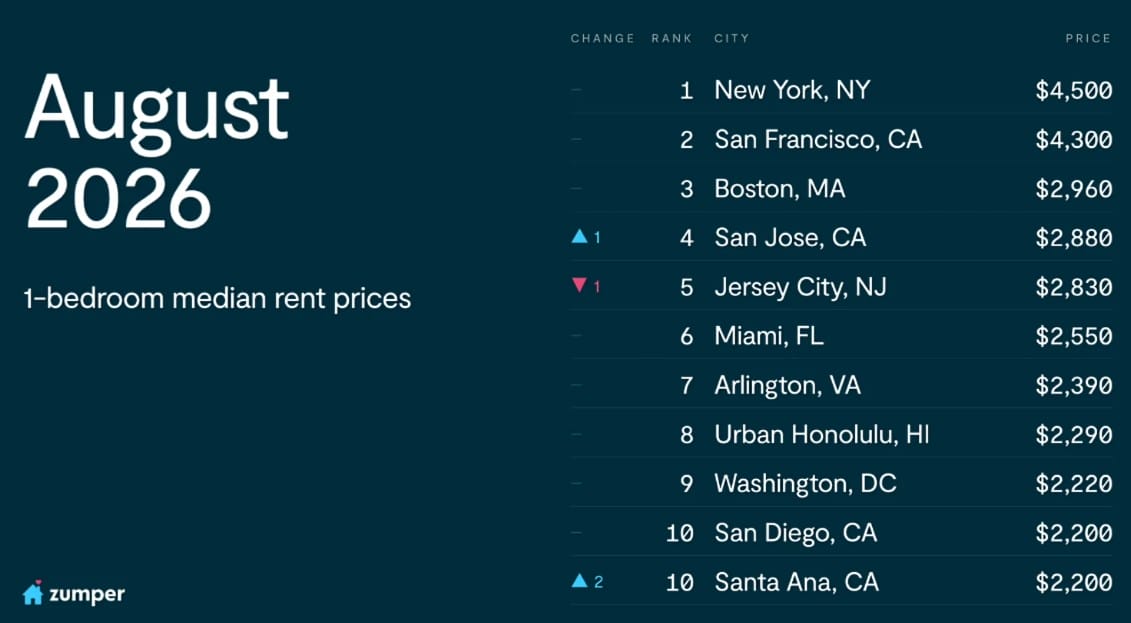
Arlington ranks as the seventh most expensive rental market nationally in new data from Zumper, having held that position for much of the year.
In August, Zumper reported that the median rental rate of one-bedroom units in Arlington fell 1.6% to $2,390, while the median cost of two-bedroom units was down 0.3% to $3,300.
Nationally, according to the company’s calculations, median rents were $1,515 for one-bedroom units, down 0.1%, and $1,907 for two-bedroom units, up 0.5%.
“The national numbers are starting to look more constructive, but I still wouldn’t call this a broad recovery,” Zumper CEO Shawn Mullahy said. “Supply remains the dividing line. Markets that worked through their inventory are beginning to tighten, while places that absorbed enormous amounts of new construction are still giving renters meaningful leverage.”
Manhattan led the pack in August with a median one-bedroom rent of $4,500, while San Francisco, boosted by a 26% year-over-year increase, stood second at $4,300.
Boston was third at $2,960, while San Jose ($2,880) traded places with Jersey City ($2,830), rising from fifth to fourth place.
Nashville and Memphis had some of the largest annual rent declines in the country outside of Texas this month, with one-bedroom rents both down 10% year-over-year to medians of $1,520 and $890, respectively.
Both cities are working through the same dynamic playing out across much of the Sun Belt, where a multi-year wave of new apartment construction that outpaced demand is still being absorbed, Zumper analysts said.
Nashville alone has gained nearly 35,900 units since 2023, with deliveries peaking in 2024 and staying elevated in 2025.
