


Falls Church city leaders are beginning to mull the implications of splitting real-estate taxes into separate rates for land and improvements.
That could fundamentally change tax bills for property owners and is not something the city should rush into, one veteran City Council member says.
“This has to be approached very carefully, and we have to think how we roll out this discussion,” said Council member David Snyder, who chairs the Council’s legislative committee.
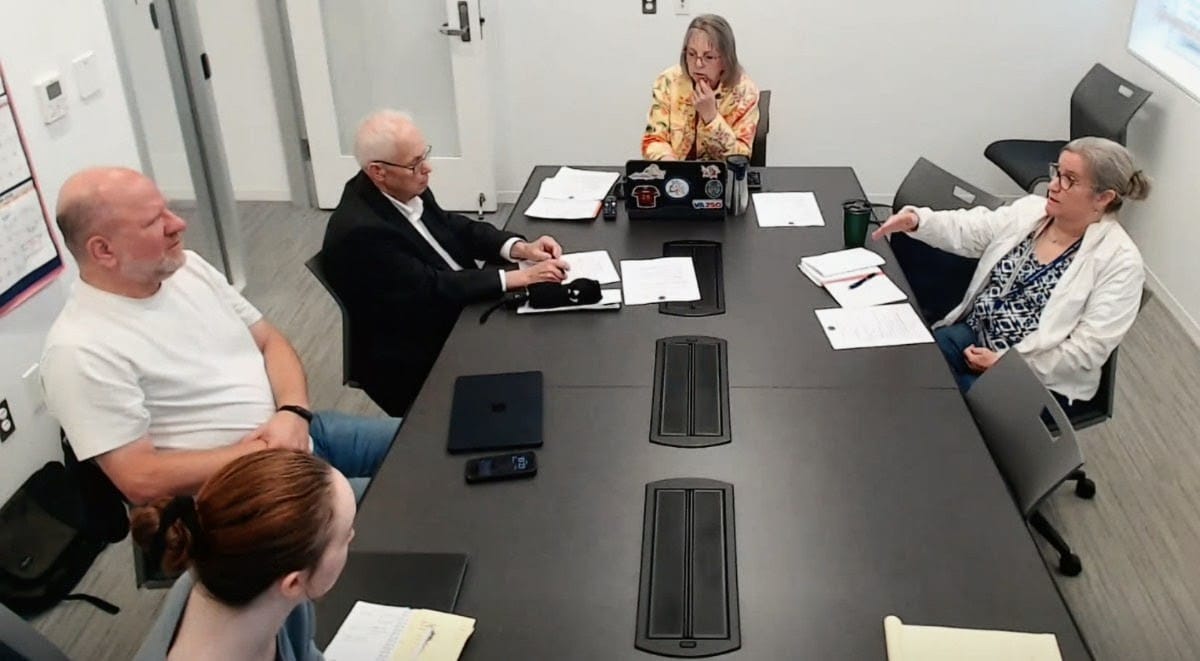
That three-member committee met Oct. 16 with staff to consider positions in advance of the 2027 General Assembly session, which opens Jan. 13 and is expected to run for 45 days.
Most Virginia localities are required to tax real estate with the same rate for both buildings and land. Earlier this year, Falls Church was added to a small list of communities allowed to charge different rates.
As a result, “we have the authority to have a split tax rate, if the [rate] on a dwelling is lower than the [rate] on the land,” Council member Marybeth Connelly said.
Falls Church is joined by the cities of Charlottesville, Fairfax, Fredericksburg, Newport News, Richmond and Roanoke in having that authority.
While those jurisdictions have the authority to tax land and improvements separately, none appear to do so at the moment, based on publicly available taxation rates.
At the Oct. 16 committee meeting, Council member Arthur Agin pushed for a legislative change giving Falls Church even more powers. He referred to Poquoson, the only city in Virginia that has legislative authority to set a tax rate on land lower than that on buildings.
Such a power would give Falls Church more flexibility, said Agin, who does not sit on the legislative committee but joined in the discussion.
His proposal drew pushback, partially for the intent but more for its timing. Cindy Mester, a senior staffer who handles Falls Church’s lobbying efforts in Richmond, said the city had too much on its legislative wish-list to add this topic in 2027.
“It’s a short session and it’s a session before an election. Taxation will not be a discussion,” she said.
Council member Justine Underhill said taxing land at a lower rate than that of buildings likely would be regressive and would not meet city housing goals. It could also pick up opposition in Richmond and hinder goodwill for the city’s other legislative priorities.
Agin countered that he simply wanted the city to have the authority; a decision on whether to use it would only come after a community process that could follow. He has suggested using tax policy to help out Falls Church homeowners, who have seen assessments and tax bills rise at a higher rate than those on commercial property.
After some back and forth between Agin and Underhill, chair Snyder called a halt, saying the discussion of decoupling tax rates was best addressed later.
“Taxation is not something we want to move on quickly without a thorough community conversation,” he said, and that “cannot adequately happen before this legislative session,” Snyder said.
“I don’t mind talking about it if you want to talk about it, but you’re talking about something that is absolutely fundamental and could split this community apart,” he said.
Connelly agreed that any split-taxation proposal should be a topic for a later time.
“It’s going to take a while to figure out,” she said.
Falls Church’s current tax rate on real estate is $1.185 per $100 assessed valuation, applicable to both residential and commercial properties and to both land and improvement valuations.
The city’s 2027 legislative priorities package will go to the full City Council for review and adoption next month.
