


Falls Church city and school leaders head into planning for the fiscal year 2027 budget with many unknowns to contend with.
David So, the city government’s new budget director, sketched out a number of budget scenarios at a Monday (Dec. 1) work session between members of the City Council and School Board. Depending on the scenario, his projections leave a budget gap of between $2.7 million and $5.4 million that will have to be addressed before a final budget is adopted next May.
So forecast a total revenue of between $129.9 million and $134.5 million, and total expenses of between $135.3 million and $137.2 million.
“It’s difficult for me to predict where we’re going to land,” said So.
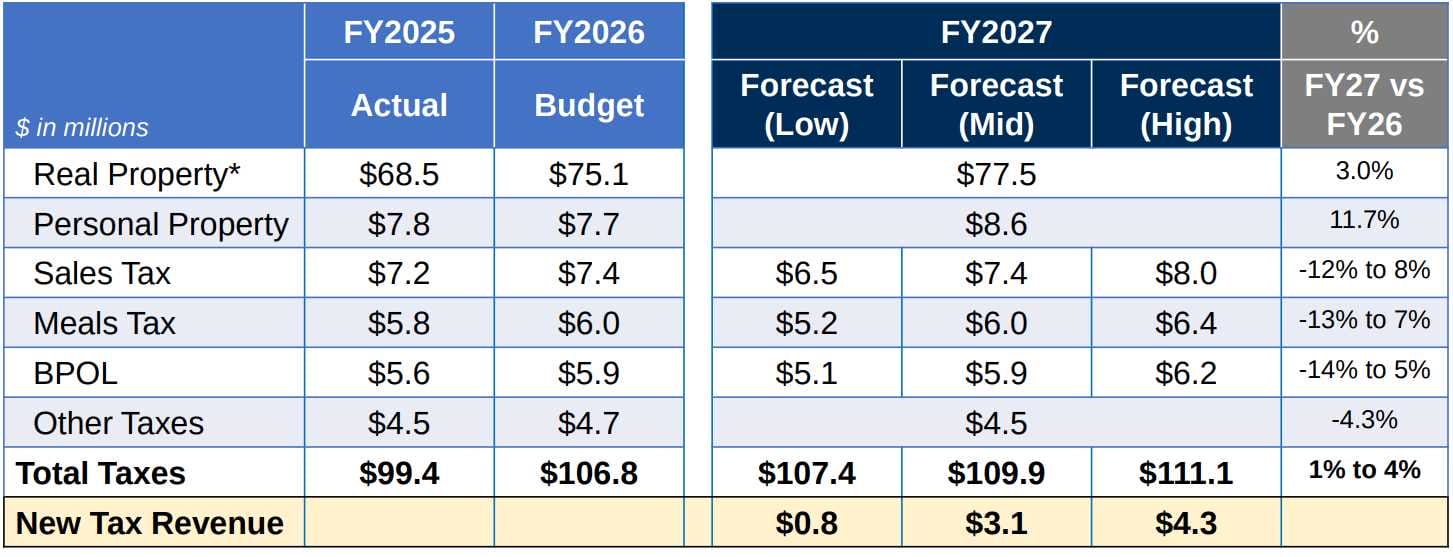
A shaky regional economy and federal cutbacks will impact the final numbers, but city officials don’t yet have a firm grasp of how much.
“There’s a lot of uncertainty,” Mayor Letty Hardi said at the joint work session, held at Meridian High School.
“Half of the [city’s] workforce is tied to the federal government,” whether through direct or indirect employment, Hardi said.
Despite economic concerns, Northern Virginia “could escape relatively OK,” said Keith Waters of the Center for Regional Analysis, which is used by the city school system for consulting services.
The region’s cluster of defense contractors could allow Falls Church and surrounding communities to escape the worst of federal downsizing that could more significantly impact D.C. and the Maryland suburbs, Waters said. But Virginia won’t escape unscathed, he acknowledged.
“We’re a company town, we really are,” Waters said. “The air has been let out of our region’s economy.”
“This could go a bunch of different ways,” he said of the economic impact. “I suspect that, by March, we’ll have better clarity where all this is headed.”
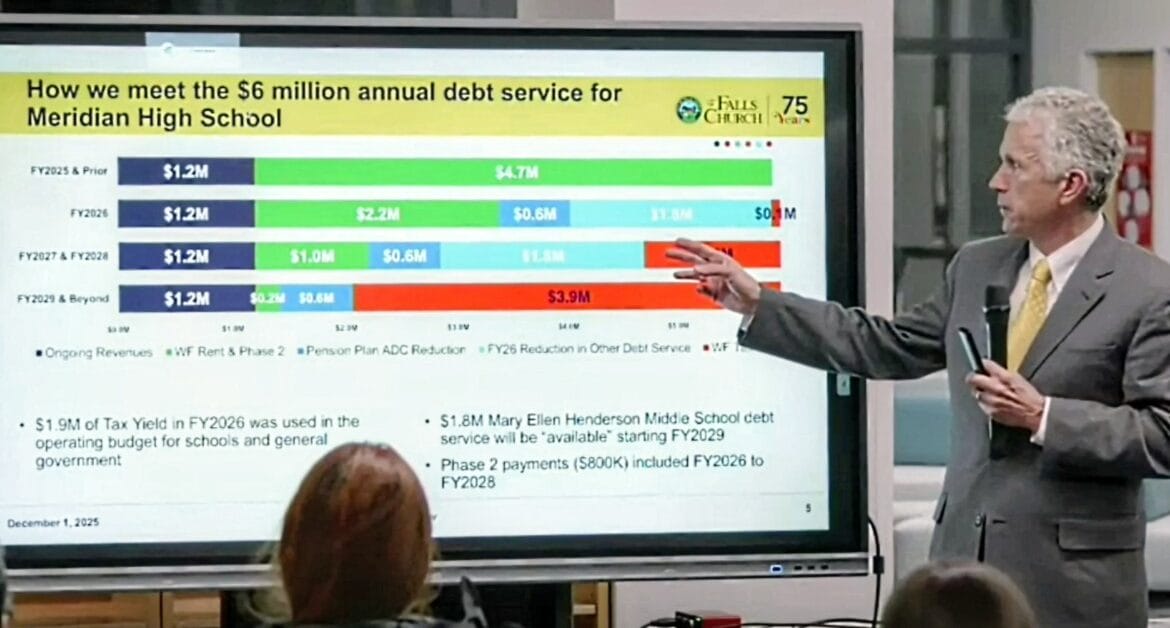
So said that economic data available in the spring, before approval of the city budget, will be more helpful in clarifying the overall picture.
Because of recent growth in mixed-use development in Falls Church, “we’re in a better spot than our neighbors,” Hardi said.
But that might not save homeowners from the sting of higher taxes in the fiscal year that begins next July.
Council member Erin Flynn sketched out an undesirable scenario where the owner of a typical $1 million Falls Church single-family property, already paying more than $12,000 a year in property taxes, would pay $700 more due to home appreciation.
If the current $1.185 per $100 tax rate has to rise to close a budget gap, the impact on homeowners would increase further, she said.
City officials also have to deal with uncertainty in school enrollment, which unexpectedly fell this fall after hitting an all-time peak in the spring, Waters said.
There was growth in students coming from the new mixed-use projects that are opening across the city, but declines in the number of students from Falls Church’s single-family neighborhoods.
