

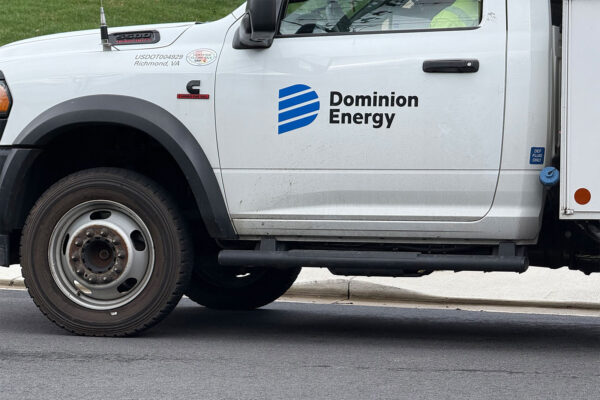
A proposed merger between Dominion Energy and NextEra Energy raises new possibilities and further questions in the race to match Virginia’s booming energy demand.
NextEra, which seeks to create the world’s largest regulated electric utility business through the $67 billion acquisition, has framed the plan as a path toward reducing energy costs in an era of rising need, driven in part by the construction of new data centers to power AI.
“We are bringing NextEra Energy and Dominion Energy together because scale matters more than ever — not for the sake of size, but because scale translates into capital and operating efficiencies,” NextEra President and CEO John Ketchum said in a press release announcing the plan last week. “It enables us to buy, build, finance and operate more efficiently, which translates into more affordable electricity for our customers in the long run.”
Seeking to close the transaction in the next 12 to 18 months, NextEra is pursuing approval from the Federal Energy Regulatory Commission and the Virginia State Corporation Commission (SCC), in addition to similar commissions in North Carolina and South Carolina.
As of yesterday (Tuesday), a formal application still hadn’t been filed with Virginia SCC. However, some Northern Virginia lawmakers say they will be keeping a close watch on this merger, seeking to ensure that creating such a large utility actually has the promised effect of driving down energy costs — a key policy goal, but a notoriously difficult one to achieve.
“Virginia is facing unprecedented energy demand and needs to consider every possible solution,” Del. Alfonso Lopez (D-3) told ARLnow. “However, any proposed merger must have appropriate oversight and help protect ratepayers — not leave them vulnerable to increased rate hikes. My colleagues and I will closely monitor these developments and continue working to bring down energy costs for Virginia families.”
Energy affordability is top of mind
After dominating Gov. Abigail Spanberger’s (D) messaging on the campaign trail, improving Virginia’s affordability has remained a core focus for lawmakers this legislative session. Energy affordability, in particular, came into the spotlight over the winter amid spiking electric bills and increased scrutiny of data centers’ power usage in the commonwealth.
“Virginians know energy costs have been skyrocketing in recent months,” Spanberger said in a press release. “But even before the Trump Administration’s reckless war in Iran disrupted global markets, the truth is that monthly bills have been hard to manage for a long time.”
A package of bills aimed at improving energy affordability received Spanberger’s signature earlier this month, mostly focused on making it cheaper and easier for consumers to invest in solar, while also allowing the state’s largest energy consumers to count nuclear and fusion toward clean energy goals.
Senate Majority Leader Scott Surovell (D-34), who introduced three of the four bills, referred to the legislation as “true energy affordability bills” that “not only address high costs but also expand generation opportunities at a time where we know there is pressure on our grid.” He told ARLnow that he sees a shift toward renewable energy as essential for establishing stability in consumers’ energy bills, making them less susceptible to fluctuations in fuel prices.
Despite the bills passed this year, however, he sees Virginia as a long way from building up its energy capacity enough to meet expected demand.
“They’ll be drops in the bucket compared to the amount of capacity that we need,” Surovell said. “Most people understand that the only way we’re going to meet that need is nuclear [power].”
Professor Terry Clower, professor of public policy in the Schar School of Policy and Government at George Mason University, told ARLnow that he supports removing red tape for solar and counting nuclear as clean energy. But he argued that the recent energy bills are still “in many ways baby steps” — a far cry from supporting the level of energy production that Virginia needs.
“We need state government to push for new energy research, policy support, new skills training for facility operators and other actions and investments to support Virginia as the home of power innovation,” he said.
How much would the merger help?
NextEra has argued that the merger with Dominion — increasing the scale of operations, procurement, construction and financing — would benefit consumers and legislators’ affordability goals long-term.
“The combined company will have a broader opportunity set, more ways to grow and the scale, balance sheet and best-in-class operating, supply chain, construction and technology capabilities to deliver the generation, transmission and grid investments needed to serve customers, support economic growth and cost-effectively meet surging power demand while keeping bills affordable,” the company said in announcing the plan.
Lawmakers have given mixed reactions. Arlington’s congressman, U.S. Rep. Don Beyer (D), declined to comment, but Rep. Suhas Subramanyam expressed skepticism in a statement to Loudoun Now.
“This merger needs to be strongly scrutinized for how it will impact energy bills,” Subramanyam said. “A company that specializes in building energy infrastructure just bought a company that likes to increase rates for new infrastructure. That’s bad news for ratepayers. Energy costs are already too high due to lack of competition and policy failures. I will continue to communicate with Dominion and NextEra to make sure our community does not pay any unfair costs.”
State Sen. Barbara Favola (D-40) told ARLnow that the Virginia SCC will be reviewing the capital needs, profits, investment strategies and customer services that any merger would offer Virginians.
“As a lawmaker, I will be paying particular attention to how this merger affects some of our traditionally underserved pockets in Virginia,” she said. “I am also interested in knowing if NextEra Energy has policies in place that humanely address situations where ratepayers face the inability to pay for life saving services such as heating in the winter and air-conditioning in the summer.”
“I will work to ensure that the SCC has the necessary authority and tools to ensure that this new merger results in customers receiving reliable services at a fair rate,” Favola added.
Greg Weatherford, director of information resources at the SCC, said that the commission typically schedules a public hearing and examination of evidence in cases like this, accepting public comments either in writing or under oath.
“The Commission then has the authority and responsibility to review all the evidence that has been presented — including public comments — and make a ruling (“Final Order”) in the case, which generally includes a detailed analysis and explanations,” he said. “The Commission is bound by the law and under the Virginia Constitution to weigh the effect its decisions have on the Commonwealth as a whole, including ratepayers (customers) and the business health of the Commonwealth.”
