


A drought watch went into effect throughout the D.C. area today (Wednesday), responding to below-average rainfall and historically low flow in the Potomac River.
Despite the stretch of wet weather that the region received last month, all of Arlington is currently classified in either “moderate” or “severe” drought, while some portions of the Potomac Basin have been designated in “extreme drought.”
Noting that the D.C. area is at a two-year precipitation deficit of almost 8 inches, the Drought Coordination Committee of the Metropolitan Council of Governments (COG) declared the drought watch in order to support more coordination, monitoring and public communication regarding the region’s water supply.
“Recent rains brought temporary relief from the area’s long dry spell that dropped the flow in the Potomac to 130-year lows for this time of year,” said Michael Nardolilli, executive director of the Interstate Commission on the Potomac River Basin. “Since then, however, the rains have stopped.”
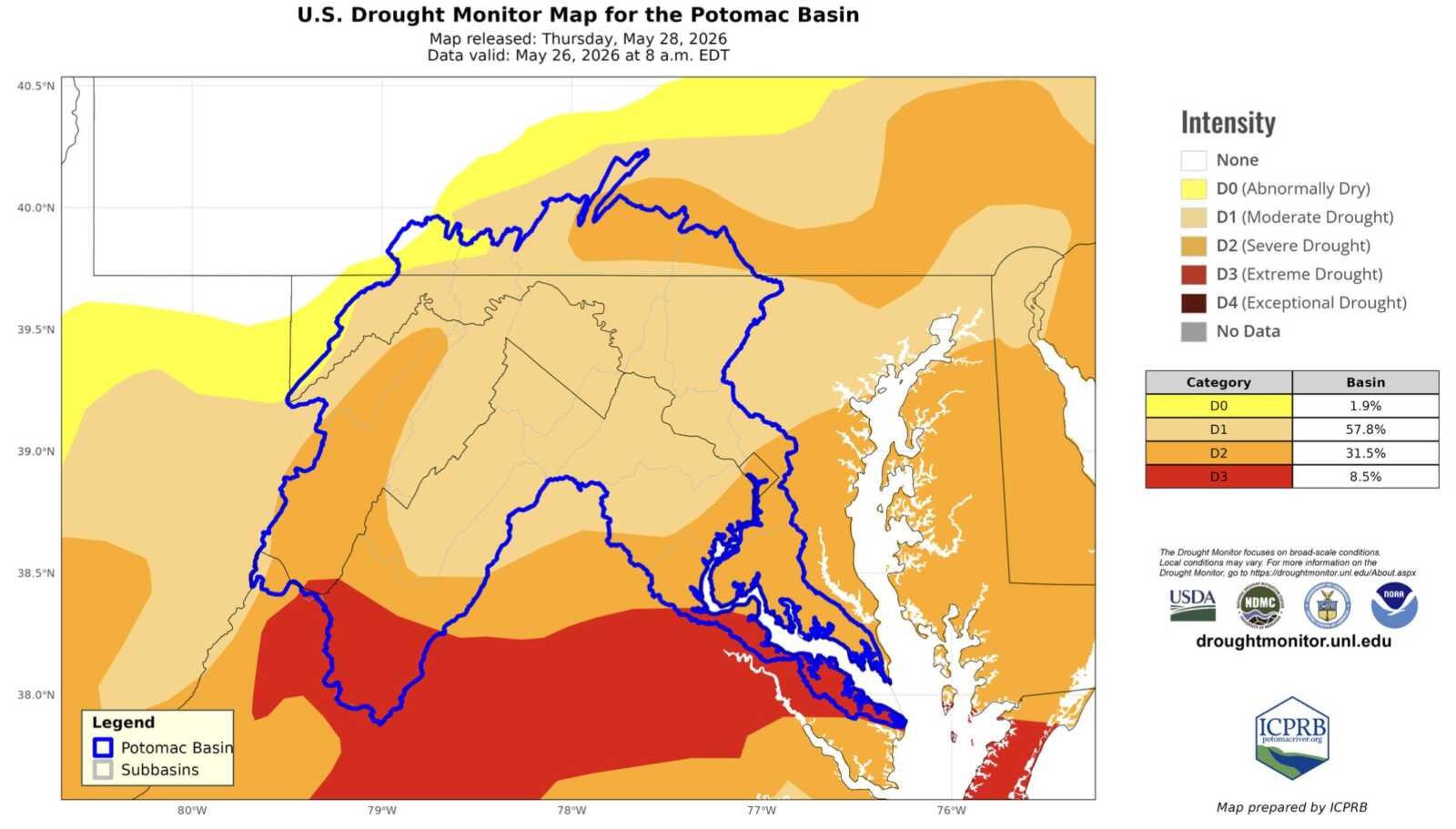
The region’s last drought watch lasted between July 2024 and June 2025.
The D.C. area’s upstream reservoirs are still full, and the last drought-related reservoir release occurred in 2010. Still, authorities are asking residents to take the following steps to limit water use:
INDOOR
- Reduce shower length to under 5 minutes;
- Turn off water while brushing your teeth/shaving;
- Wash only full loads of dishes and clothes; and
- Fix any plumbing leaks – especially toilets and faucets.
OUTDOOR
- Monitor watering lawns, plants, and shrubs;
- Sweep sidewalks and driveways (instead of using a hose); and
- Avoid washing your car or instead use a commercial car wash that recycles water.
“Our region hasn’t seen extremely dry conditions like this in about two decades when local leaders and COG first established a drought response plan to support coordination and communication regionwide,” said COG Executive Director Clark Mercer. “During the Drought Watch, we’re asking the public to help by incorporating simple, water-saving actions into their daily routines.”
A drought watch calls for “voluntary water conservation through wise water use,” according to COG’s Regional Drought Response Plan.
A drought warning, the next step up, would call for voluntary water restrictions, while mandatory water restrictions would go into effect during a drought emergency.
“We’re working closely with our regional partners to actively monitor conditions and protect our shared water resources,” WSSC Water General Manager and CEO Kishia Powell said. “While our water supply remains stable, now is a great time for all of us to practice wise water use. By making simple, voluntary changes in daily routines, our customers can save water and money.”
