


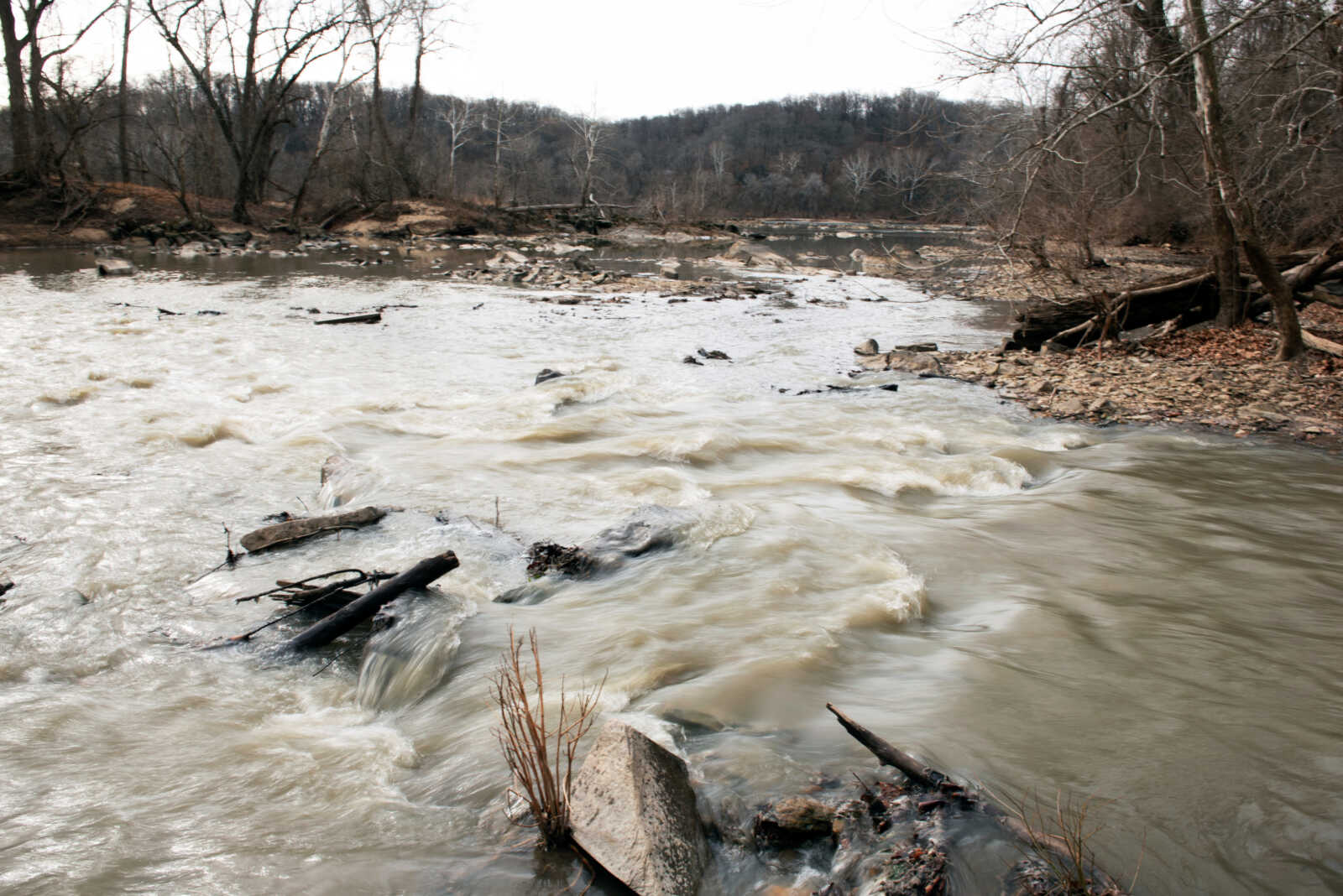
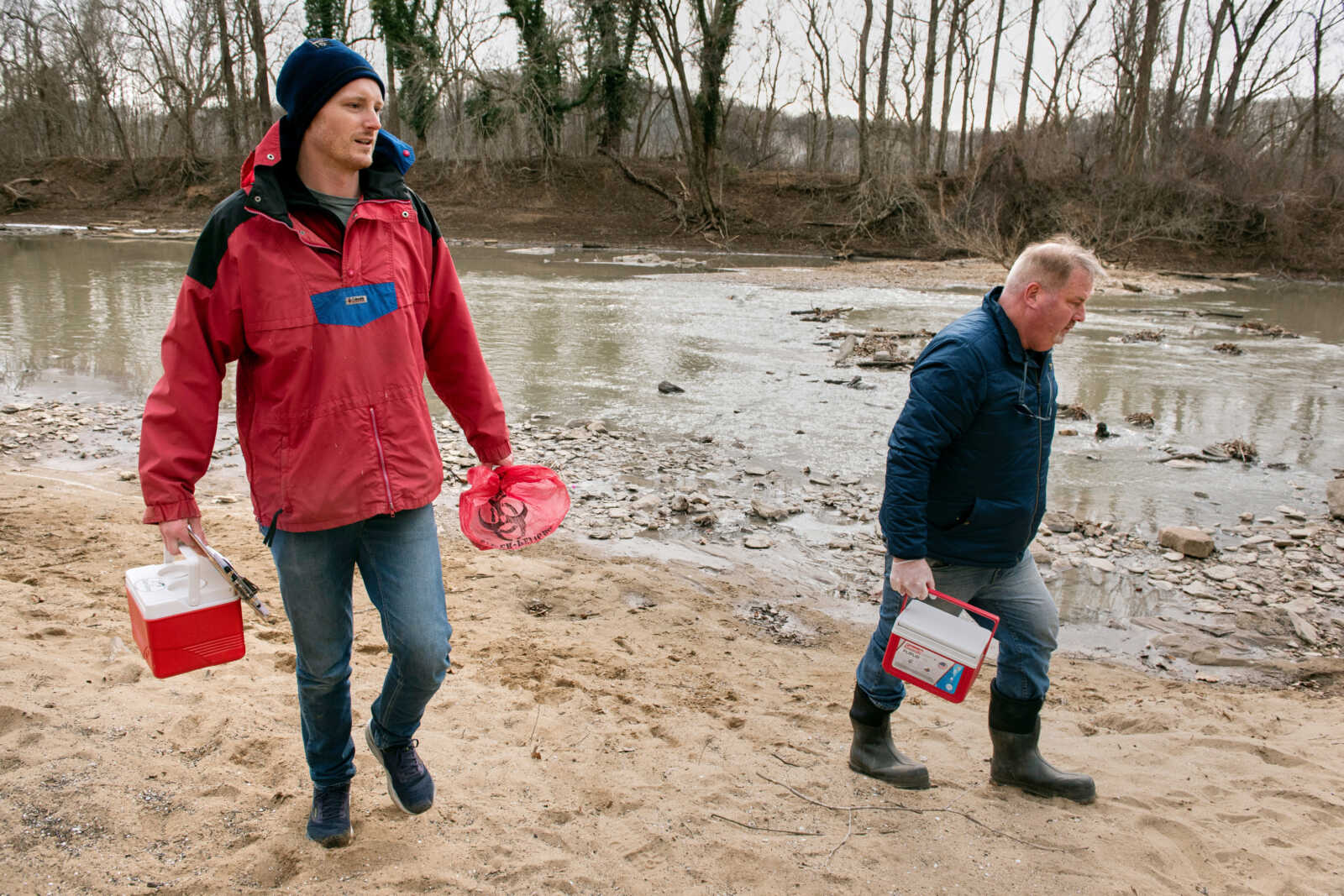
Tests of water samples from the Potomac River are reporting dangerously high levels of E. coli following a rupture in a sewage pipe upstream from Arlington.
The Potomac Riverkeeper Network recorded bacteria levels 60 times higher than what is considered safe for human contact in a sample taken at Fletchers Cove on Friday, the organization announced in a press release yesterday (Monday). This is in D.C., across the river from Potomac Overlook Regional Park.
Arlington is about 4 miles downstream from a 6-foot-diameter sewer pipe that collapsed last week, spewing millions of gallons of raw sewage. A water sample taken near the site of the rupture found far higher levels of E. coli: about 12,000 times higher than the recommended limit for human contact, the Riverkeeper Network said.
Last week, DC Water spokesperson John Lisle said the utility estimated the overflow at about 40 million gallons each day — enough to fill about 66 Olympic-size swimming pools — but it’s not clear exactly how much has spilled into the river since the overflow began.
Potomac Riverkeeper Dean Naujoks told ARLnow that the discharge has slowed but hasn’t yet stopped as of yesterday evening. He expressed grave concerns about ecological consequences as well as potential public health impacts, although much remains unclear at the moment — in part because a sewage spill on this scale is extremely rare, perhaps unprecedented, he said.
“If this was in the summer, I do know that they would literally have to shut the river down, and there’s be public health notifications all over the place,” Naujoks said.
As it is, Naujoks said he’s concerned about the absence of public health notices across Maryland, D.C. and Virginia, contributing to what he feels is a lack of urgency on a disaster that spans several jurisdictions. While much of the sewage may be locked in ice at the moment, the riverkeeper said he’s unsure what the effect will be when it’s released later — or what will happen in the summer, if the sewage has settled into sediments and gets stirred up.
Naujoks said he has already received word of a small fish kill near the spill, which is very rare in the wintertime.
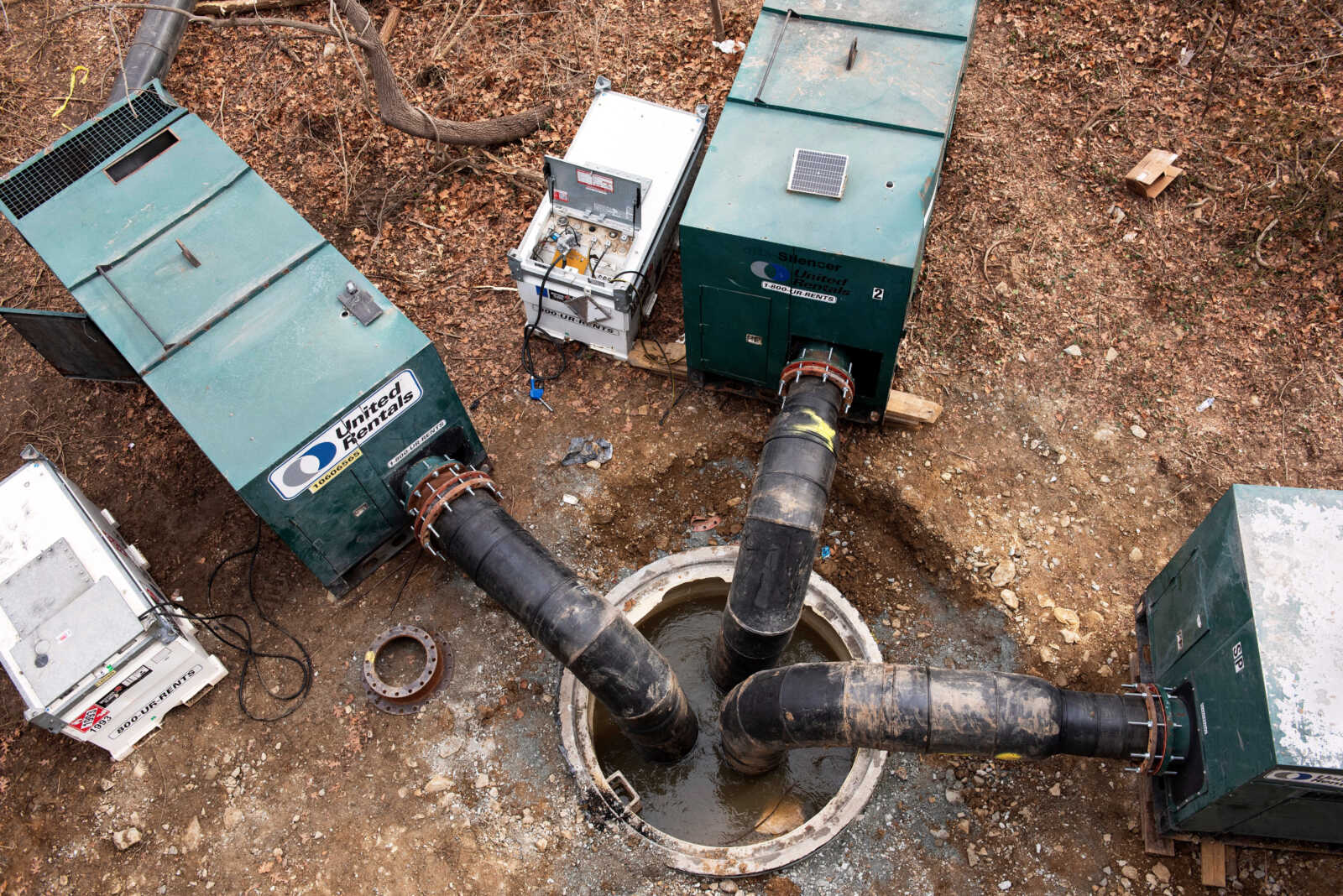
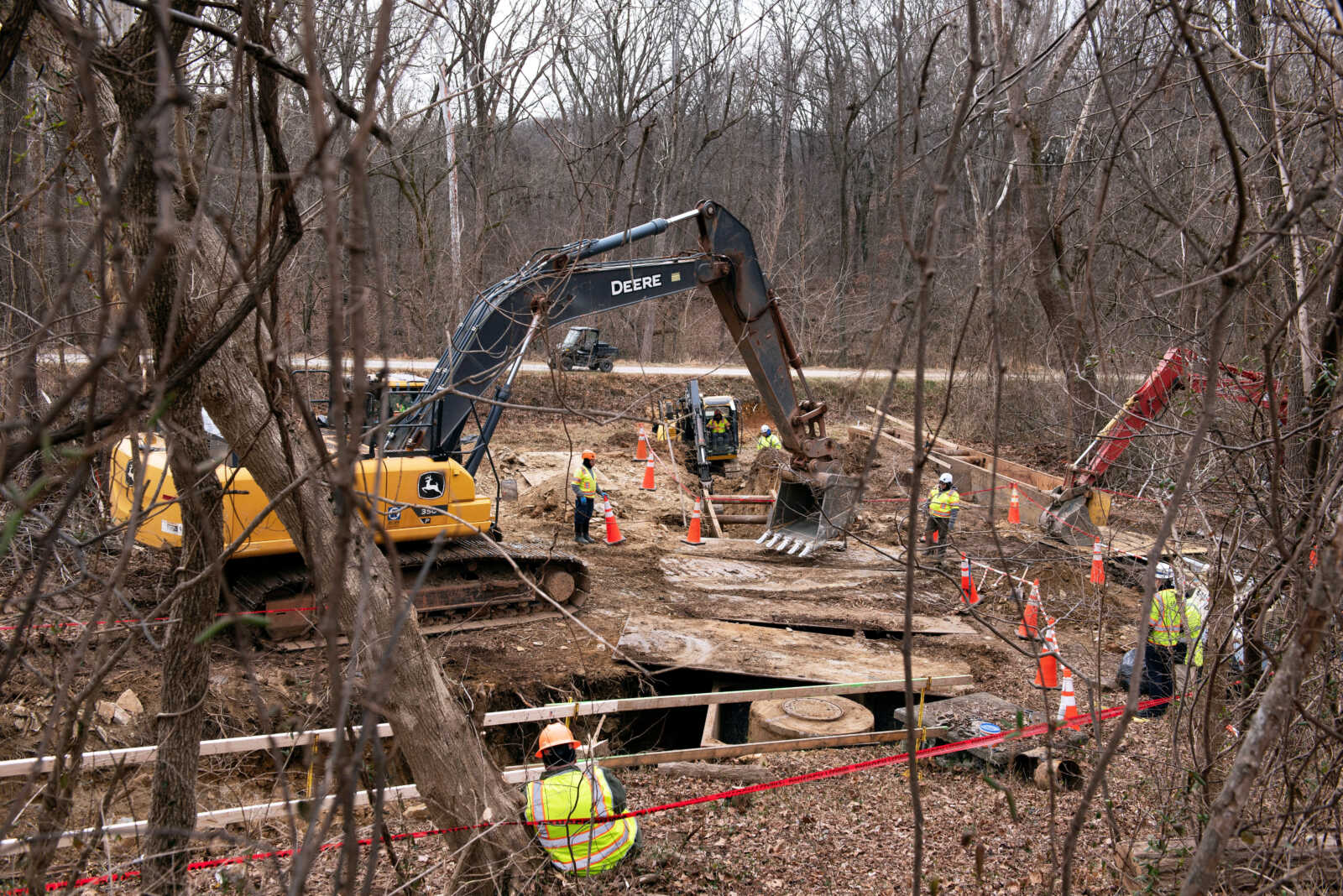
As of Friday, DC Water, which operates the sewer system, was hooking up pumps to divert sewage around the rupture and allow crews to make repairs. It has cautioned people to stay out of the area and to wash their skin if exposed.
Crews were removing lock gates on the C & O Canal and planned to set up pumps to divert the sewage into the canal, rerouting it away from the river and back into the sewage system downstream. The pumps have enough capacity to capture all of the sewage flow in dry weather, said Lisle, but they could be overwhelmed by a surge in stormwater.
The spill does not impact drinking water, which is a separate system, DC Water said. Arlington receives its water from one of D.C.’s two water treatment plants.
“We haven’t seen any impacts to Arlington at this time,” Katie O’Brien, a spokesperson for Arlington’s Department of Environmental Services, told ARLnow.
The spill occurred in Montgomery County, Maryland, along Clara Barton Parkway, which hugs the northern edge of the Potomac River near Chesapeake and Ohio Canal National Historic Park.
Naujoks said the spill is happening at time when the river is low. He went out to look at it Wednesday and was “kind of stunned.”
“Sewage is just bubbling up like a small geyser, maybe 2, 3 feet into the air,” he said. “Sewage water is running in every direction.”
The District of Columbia Department of the Environment did not immediately respond to an Associated Press request for comment, including whether it is testing the river’s water.
DC Water knew the pipeline was deteriorating, and rehabilitation work on a section about a quarter-mile from the break began in September and was recently completed, Lisle said. Repair work on additional “high priority” sections of the pipeline is expected to start later this year, according to the DC Water website.
The pipeline, called the Potomac Interceptor, was first installed in the 1960s.
There’s a huge funding gap for water infrastructure in the U.S., said Gary Belan, a senior director with American Rivers, an environmental organization that advocates for clean waterways.
“I know a lot of the wastewater folks are trying to catch up as best they can, but this is something we see and will continue to see, where these pipes fail and these massive sewage dumps occur,” Belan said. “This is why we can’t defer maintenance of our wastewater infrastructure. Too often, we’re dependent on these disasters to prod us forward.”
Kelly Offner, a U.S. Environmental Protection Agency spokesperson for the mid-Atlantic region, said the agency was coordinating with DC Water, the Maryland Department of the Environment and other federal, state and local authorities to assess the impact on the environment from the Potomac Interceptor sanitary sewer overflow. The federal agency oversees DC Water’s sewer operations under a 2015 federal consent decree.
“DC Water has provided daily updates since the overflow was discovered on January 19, 2026, and has been coordinating efforts to contain the overflow, monitor environmental impacts, and communicate with the public,” Offner said in an emailed response to questions.
An EPA survey of wastewater infrastructure needs from 2022 estimated that the District of Columbia needs roughly $1.33 billion to replace or rehabilitate structurally deteriorating sanitary or combined sewers within the next 20 years.
Nationally, hundreds of billions in infrastructure investment is needed over the next two decades for clean water problems like aging sewer pipes. In other places where sewer breaks are persistent, it can lead to backups into homes and regular flooding.

