

Falls Church city officials have started talking with potential partners about what could be one of the largest housing projects in the city’s history.
In discussing possibilities with four nonprofit or governmental housing organizations, the city has “laid out a road map” for what could happen to the Virginia Village community, including the construction of a substantial amount of affordable housing, City Manager Wyatt Shields told City Council members at a Jan. 27 meeting.
“We did learn some things,” Shields said. “We’ve begun to think through some options.”
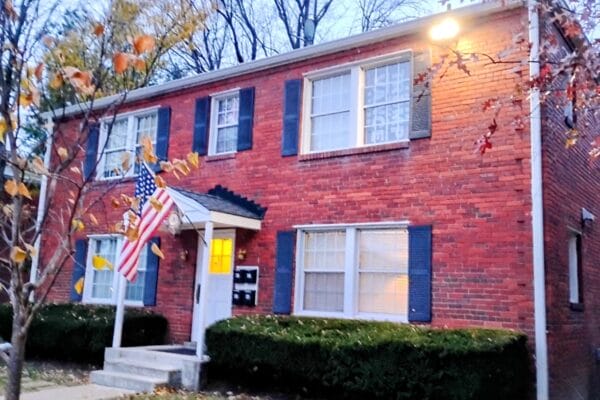
The city government already owns some of the fourplex properties in the Virginia Village neighborhood, and would be interested in obtaining the rest. Under very preliminary planning, the city’s Economic Development Authority would continue to rent out those 1940s-era apartments to tenants until a redevelopment plan for the entire site is in place.
“It’s important that we get going,” Shields said in discussing what he acknowledged was an aggressive timetable. Under the framework, the city would begin seeking a partner in the summer, select one in the fall and have an agreement in place by early 2027 in order to compete for grant funding that year.
Council members first discussed the possibility of acquiring the remaining duplexes late last year. At the Jan. 27 meeting, Council member Erin Flynn said any timetable must allow sufficient time for public engagement and include a plan to relocate any existing tenants to other housing.
Council member Marybeth Connelly said the timeline proposed by Shields was a good aspirational goal, even if it is not met.
“We may as well start and aim for 2027 and see what we can do,” she said.
Shields acknowledged that having already held discussions with housing organizations could raise concerns that public input was taking a back seat in the process. He said discussions with outside agencies had been focused on generalities of the development process.
“We did not talk about density or building heights or what the mix of uses should be,” he said.
The city manager said public input would guide the process, and “it would be useful for the community to be engaged sooner rather than later.”
Further details of that engagement and other facets of the plan likely will be considered at a future City Council work session.
Connelly said the city has the opportunity to create housing for a range of income levels in addition to commercial or retail components, depending on how the project is financed.
“We don’t want this to be just affordable housing,” she said. “We’ve talked about this being a mixed-income housing community.”
To smooth the process, Shields suggested hiring a consultant with experience in affordable-housing projects. Also necessary would be changes to the city’s Comprehensive Plan to allow for the type of public-private partnership that city officials envision.
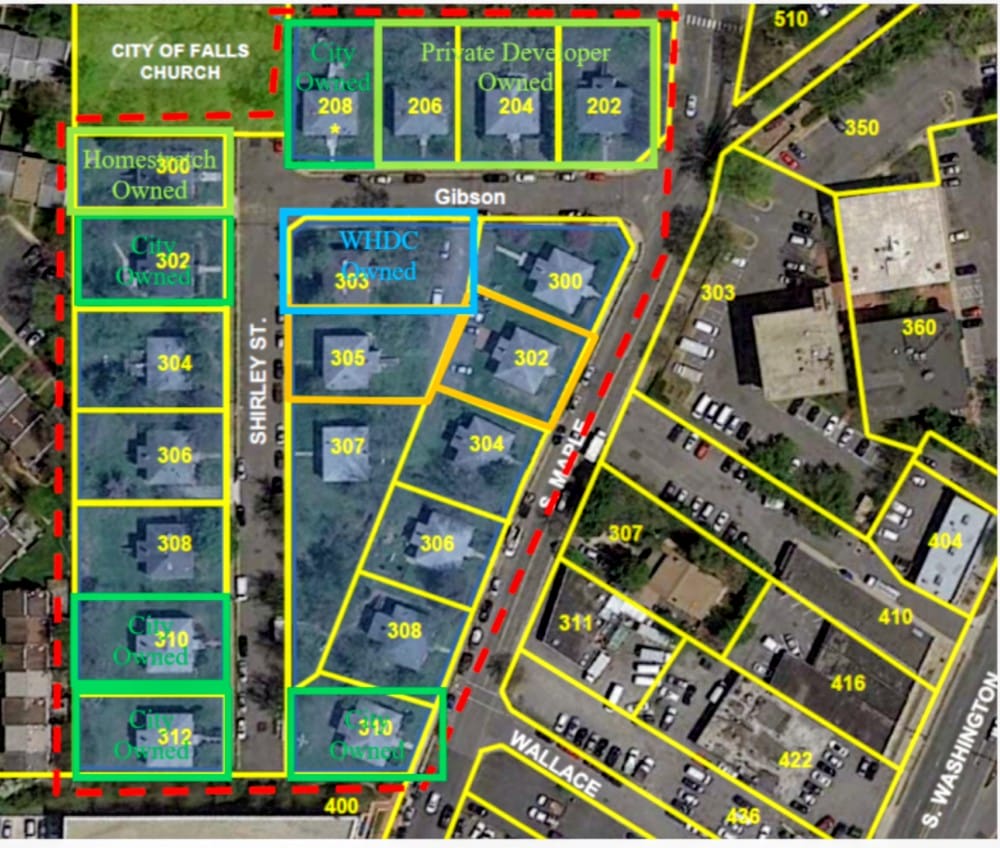
Properties owned by the Economic Development Authority include 302, 303, 310 and 312 Shirley Street; 202, 204, 206 and 208 Gibson Street; and 310 Maple Ave.
These have been purchased at different times and for varying prices. Among them: An early-1940s quadplex at 208 Gibson Street was acquired for $650,000 in 2008, while a nearby quadplex of similar vintage at 302 Shirley Street was purchased for $925,000 in 2021.
