

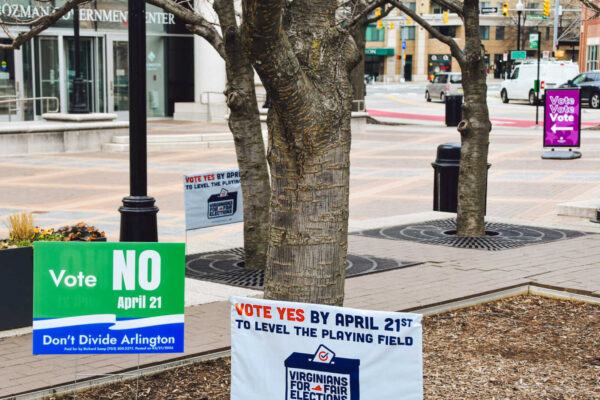
A supporter and an opponent of Virginia’s April 21 congressional redistricting referendum found themselves in agreement on at least one thing during an April 8 forum sponsored by Advance Arlington.
Del. Marcus Simon (D-13), speaking in favor of the referendum, and former Arlington Electoral Board member Richard Samp, who opposes it, both suggested that an ever-escalating national political tit-for-tat on gerrymandering is not the way to run a country.
“I don’t approve of what went on in Texas, I don’t approve of what went on in California — I just hope that we in Virginia are better than that, that we can rise above,” Samp said during the forum.
The two states he mentioned are among those that have embarked on mid-decade redistricting to gain a partisan advantage in November’s congressional election. Republicans in Texas and Democrats in California both aim to gain seats after redrawing their districts.
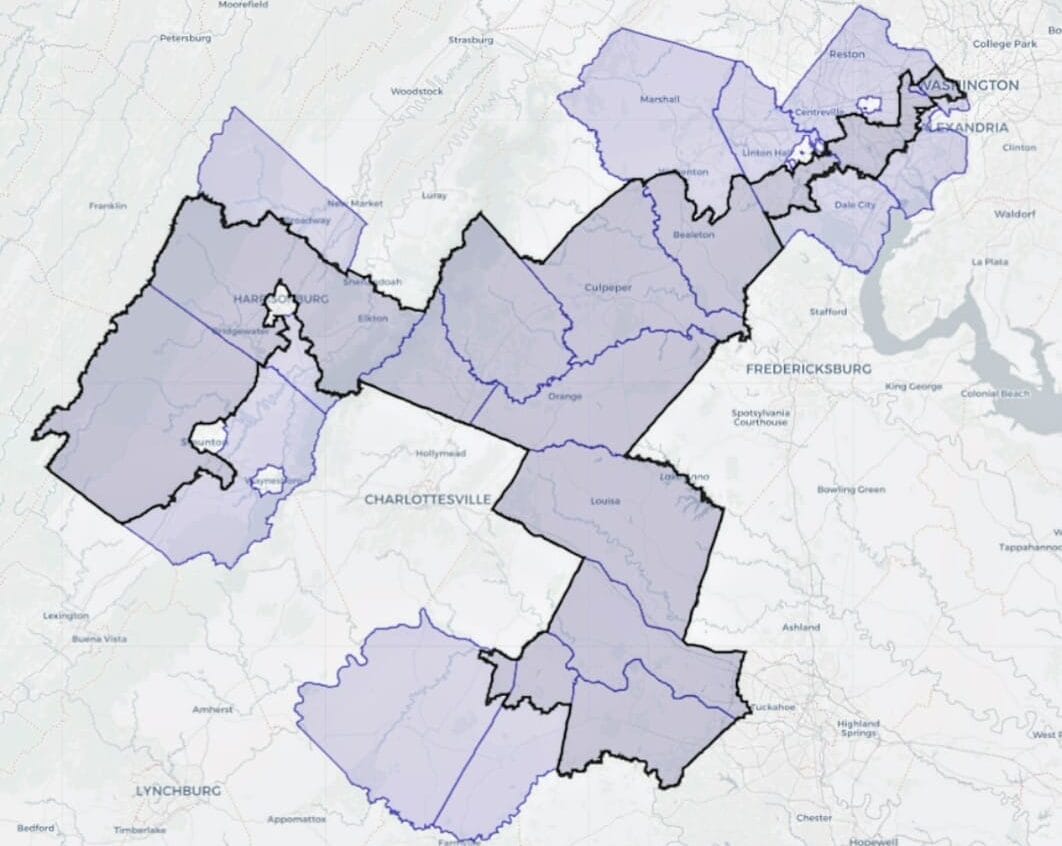
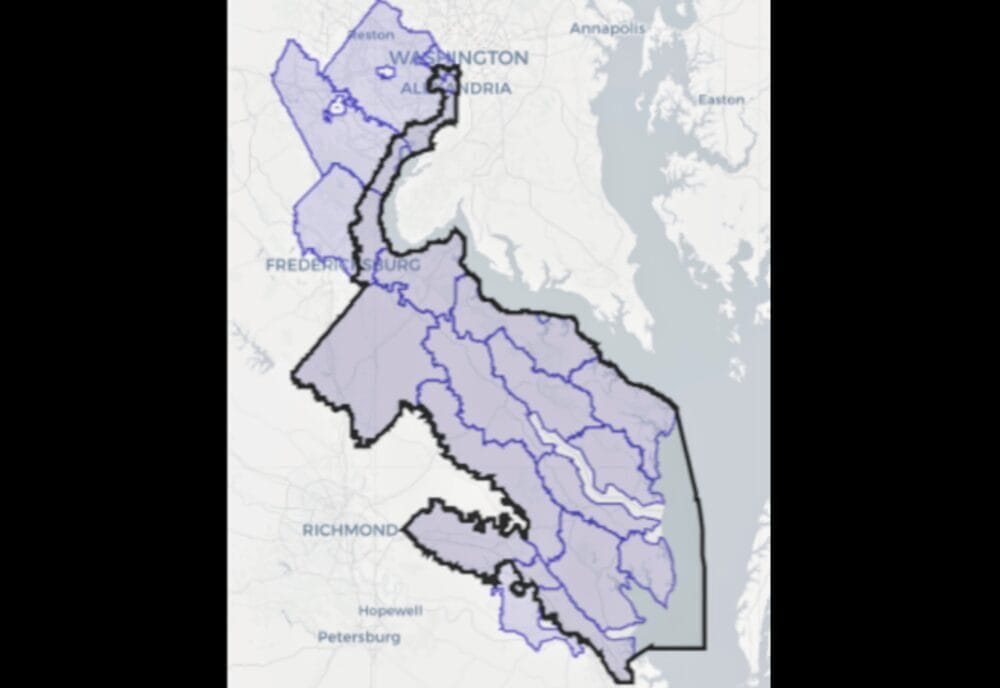
Virginia could be the next to follow, if voters approve the referendum and the Virginia Supreme Court lets the result stand. What is now a 6-5 Democratic split in the state’s congressional delegation could potentially become 10-1 Democratic under the maps sent to voters for review.
Simon said Democrats, who won the governorship and a large House of Delegates’ majority last November, proposed the referendum in order to level the playing field with Republican-led states that already have redistricted in advance of the midterms.
“The new rules of the game are, we don’t just redistrict after the census,” he said. “In states that have Democratic legislatures, the same rules ought to apply.”
Simon suggested that continual escalation at the state level might eventually bring both parties to the table in Congress to codify a set of national election rules.
Until then, he said, “Democrats have to be willing to show that we can do [what Republicans are] doing, and do it better and smarter — a willingness to fight fire with fire.”
Samp, however, said that ongoing escalation has implications beyond a few seats flipping from one party to the other.
“The more you accelerate your retaliation on each side, the more you get the other side believing the elections are not fair,” he said, adding:
“Many Democrats think the 2016 election was unfair. Many Republicans think the same about 2020. I don’t believe either of those things, but so long as you have people thinking elections are unfair, the answer is not to try to add new unfairness to the election — the answer is to try to stop it.”
Political analyst Sam Shirazi, who moderated the hour-long forum, said the redistricting battles nationally were not doing the political system much good.
“There’s a sense, frankly, among both sides that American democracy is not functioning the way it is supposed to be functioning,” he said.
Just as Texas’ redistricting caused California leaders to jump in with their own changes, Samp cautioned Democrats that a successful referendum in Virginia was likely to lead Republican-led Florida to take action in the coming months.
“If what you want is more gerrymandering [nationally], by all means vote yes,” he said.
If Virginia redistricting occurs, Arlington will for the first time in at least a century — and most likely ever –be split into two congressional districts:
- The new 7th District would comprise the upper 60% of the county, running west to the Appalachian Mountains and southwest to areas in the Richmond metro area
- The new 8th District would include the southernmost 40% of the county, then run south to the Williamsburg area.
Incumbent Rep. Don Beyer is seeking re-election in the 8th District and is the odds-on favorite in both the Democratic primary and general election. In the 7th District, where there is no Democratic incumbent, a host of candidates of both political parties are lining up in advance of the May 26 filing deadline.
There is no guarantee the 7th District would be represented by someone from Arlington or even Northern Virginia, Samp said. Simon countered that Arlington being split into multiple districts might prove beneficial for the county’s residents and leaders.
“On balance, it could be a very good thing,” he said. “You get two congressmen for the price of one.”
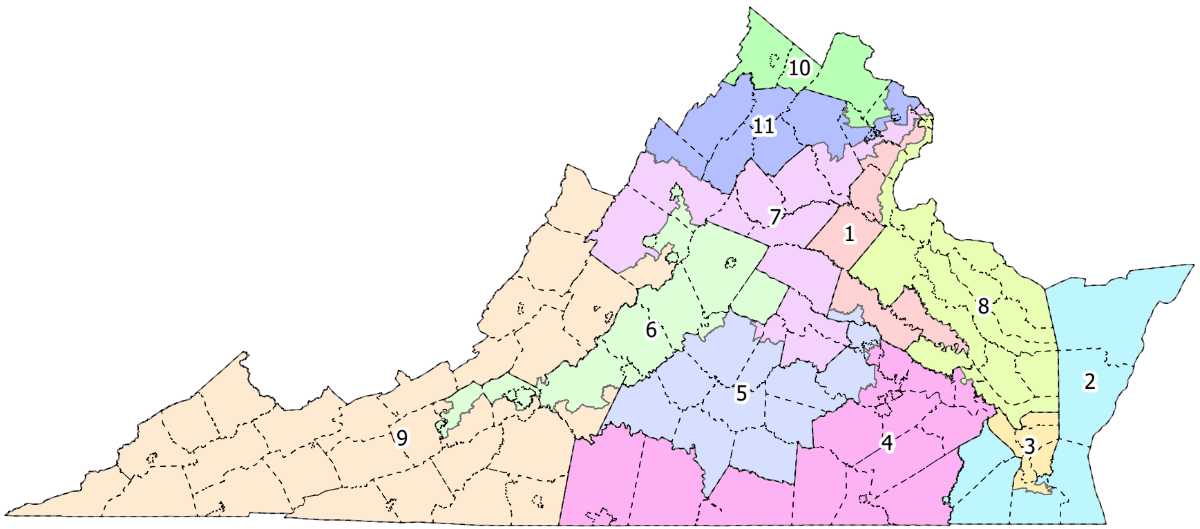
Patrick “Mike” Condray, an election researcher, said Virginia’s current congressional maps have won praise for being about as nonpartisan as possible. He lamented that the state had been pulled into a national political fight where redistricting “is being used as an openly accepted political weapon.”
Having started, he didn’t know where the situation would end.
“We get into an environment where the states are going tit-for-tat, back and forth,” Condray said.
If the referendum passes, it still faces legal challenges that will be decided by the Virginia Supreme Court.
Samp, an attorney, said he believes there’s a “good chance” the justices would invalidate redistricting because of wording in the ballot question.
Advance Arlington treasurer Moshin Syed, who introduced and concluded the forum, praised panelists for keeping rancor out of the discussion and staying focused on the facts despite the issue’s controversial underpinnings.
“This is what Advance Arlington stands for,” he said. “There’s no reason the rest of the commonwealth and rest of the country can’t be this way.”
Local political parties promise full-court presence as vote looms: Arlington’s two main political parties are ramping up efforts as the April 21 referendum approaches.
“Virginia and Arlington are going to show the country what we think about [the Trump] administration and this Congress,” Arlington County Democratic Committee chair Paul Ruiz said at the party’s April 8 meeting.
Ruiz said Democrats needed to step up and volunteer for the final push.
“We don’t take a single vote for granted,” he said. “Our team is out educating voters, doing everything e can in this moment to make sure we get the word out.”
To date, county Democrats have distributed 60,000 campaign newspapers and knocked on 9,000 doors in support of the effort, Austin Locke told party members.
The party’s message to those working for rejection of the referendum was “we will outwork you, we will out-organize you,” Locke said.
Though outnumbered in Arlington, Republicans are working to turn out voters against the referendum.
Local party members can participate in a “wide range of productive, voter-mobilizing activities,” county GOP chair Matthew Hurtt said.
They include writing postcards, making phone calls, knocking on doors, showing up at festivals and community events, investing in various advertising efforts.
“I encourage you to jump in where you can,” Hurtt said in an email to party members.
