

This reporting was supported by the ARLnow Press Club. Join to support in-depth local journalism — and get an exclusive early morning email with a preview of that day’s planned news coverage.
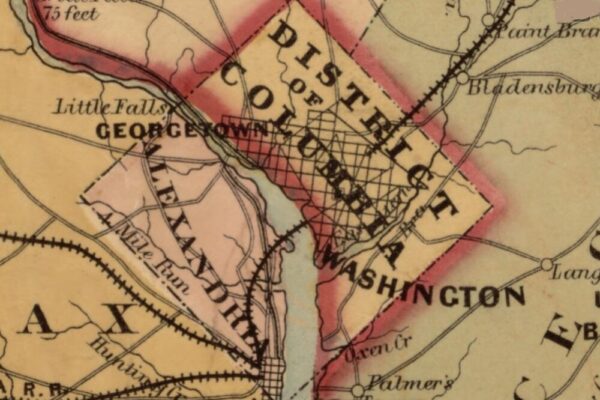
Arlington is set to reach a historic milestone in September — the 180th anniversary of its return from the District of Columbia to Virginia sovereignty.
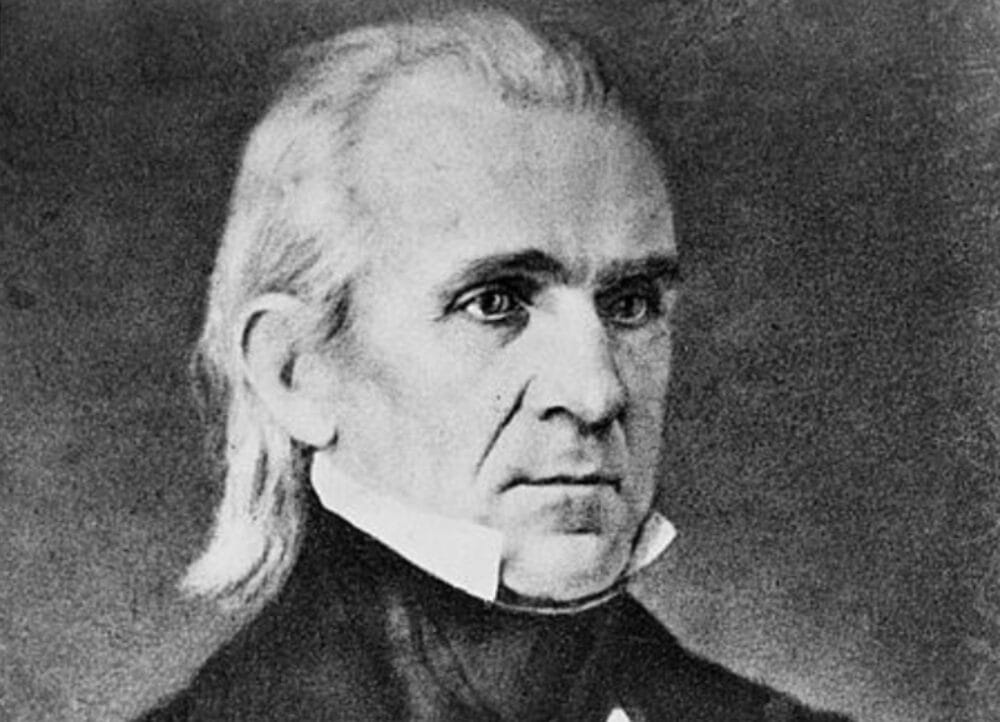
President James Polk issued a proclamation putting what was called “retrocession” into “full force and effect” on Sept. 7, 1846. It came after passage of congressional legislation and a vote of the local electorate — then limited to freeborn, white, property-owning men — in support of returning what was then “Alexandria County” to Virginia.
Which begs the question: Could, or should, “Alexandria County,” which today is split into Arlington County and the city of Alexandria, ever go back to D.C.?
U.S. Rep. Rich McCormick (R-Ga.) captured the media spotlight last month with a proposal to do that. His bill, the “Make DC Square Again Act,” came in the wake of Virginia voters approving a redistricting referendum to benefit Democrats’ representation in Congress.
Prompt outcry came from Rep. Don Beyer (D-8) and Del. Eleanor Holmes Norton (D), D.C.’s non-voting congressional representative — with Beyer calling the bill “an embarrassing legislative tantrum” and “unconstitutional” in a statement to ARLnow.
Nevertheless, McCormick’s legislation follows several past attempts to reunite the jurisdictions.
More on that is below. But first, a little historical context.
To D.C. and back in less than 50 years
Article I, Section 4 of the U.S. Constitution provided that Congress would exercise “exclusive Legislation in all Cases whatsoever” over a federal district “not exceeding ten miles square” either donated or sold by a state, or states, for the federal capital.
Virginia and Maryland agreed to turn over a combined 100 square miles spanning both sides of the Potomac River. In 1801, Congress passed the District of Columbia Organic Act, formally organizing the new federal district and putting it under federal control.
The Maryland side included the thriving community of Georgetown, while on the Virginia side, the town of Alexandria dominated the landscape.
What is now Arlington, which wouldn’t take its current name until 1920, was mostly farmland, some small homesteads and others more substantial plantations. The population in 1801 was likely less than 1,000, including both free and enslaved people, compared to about 5,000 in the town of Alexandria.
Congress says, so long and good luck
For a variety of reasons, Alexandria County never quite integrated into the broader District of Columbia. As early as 1803, there were efforts in Congress to send all the lands not needed by the federal government back to Maryland and Virginia.
Those early congressional efforts failed, as did an 1832 referendum in which a majority of Alexandria county and town voters opted to remain part of D.C. But on July 9, 1846, Congress passed legislation allowing for its return to Virginia.
There was a catch. As with the effort in 1832, voters in the affected areas would have to decide in a referendum. (Voters in other parts of D.C. got no vote.)
Arlington today may be more populous than Alexandria, but the reverse was true in 1846. The final vote split this way: Alexandria County (today’s Arlington) voters opposed retrocession by a lopsided 106-to-29 vote. But in the town (now city) of Alexandria, the vote was 734 in favor, 116 opposed.
Polk’s proclamation laid out the process in the comprehensive detail one would expect of a 240-word sentence:
“On the 17th day of August, 1846, after the close of the late session of the Congress of the United States, I duly appointed five citizens of the county or town of Alexandria, being freeholders within the same, as commissioners, who, being duly sworn to perform the duties imposed on them as prescribed in the said act, did proceed within 10 days after they were notified to fix upon the 1st and 2nd days of September, 1846, as the time, the court-house of the county of Alexandria as the place, and viva voce as the manner of voting, and gave due notice of the same; and at the time and at the place, in conformity with the said notice, the said commissioners presiding and deciding all questions arising in relation to the right of voting under the said act, the votes of the citizens qualified to vote were taken viva voce and recorded in poll books duly kept, and on the 3d day of September instant, after the said polls were closed, the said commissioners did make out and on the next day did transmit to me a statement of the polls so held, upon oath and under their seals; and of the votes so cast and polled there were in favor of accepting the provisions of the said act 763 votes, and against accepting the same 222, showing a majority of 541 votes for the acceptance of the same.”
That proclamation set the legal framework for the transfer back to Virginia, accomplished over the ensuing year. Formal return to Virginia can be dated to 1847.
In Virginia as in many states at the time, voting remained, as Polk’s resolution noted, “viva voce” — by voice rather than by secret ballot. But it was falling out of favor and by the end of the Civil War, the method was practiced only in Oregon and Kentucky. (Both retained it into the 1870s.)
As for the retroceded areas, Virginia’s control lasted only 15 years before Alexandria County was occupied by federal troops during the Civil War. After Virginia won readmittance to the Union in 1870, state leaders split the town (now city) of Alexandria from the more rural Alexandria County, with each having its own government.
In 1920, to avoid further name confusion, the General Assembly renamed Alexandria County as Arlington County, with the new name honoring the Custis and Lee families that had presided over the Arlington House plantation.
Retrocession lawsuit goes to Supreme Court
News and opinion articles pop up from time to time suggesting that Arlington and Alexandria should be returned to D.C., in a process some call “re-retrocession.”
It is hardly a new idea. In fact, questions about the legality and good sense of returning Arlington/Alexandria to Virginia cropped up not too long after the deed was done in 1846.
In the 1870s, a county resident filed suit in federal court, seeking to have Virginia’s collection of state taxes in the former parts of D.C. ruled unconstitutional. The plaintiff argued that it was unconstitutional to return those lands once they had been incorporated into the federal district.
The case — Phillips v. Payne — went all the way to the U.S. Supreme Court, which in 1875 largely punted on the constitutional issues involved, but ruled that Virginia had the authority to collect taxes in the disputed areas.
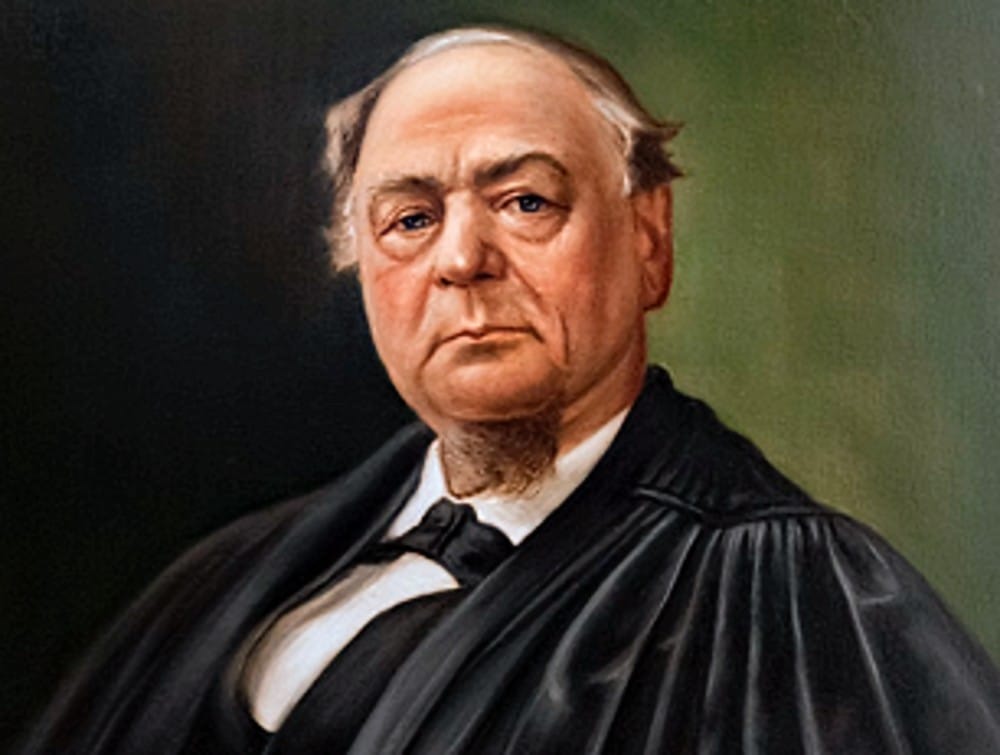
The final opinion was written by Supreme Court Justice Noah Swayne, an Abraham Lincoln appointee who, in 1862, had been the first Republican ever tapped for the high court. It focused more on the realities of the day than the constitutional questions raised.
In the decision, Swayne wrote:
“The State of Virginia is de-facto in possession of the territory in question. She has been in possession, and her title and possession have been undisputed, since she resumed possession in 1847 pursuant to the act of Congress of the preceding year. More than a quarter of a century has since elapsed. During all that time, she has exercised jurisdiction over the territory in all respects as before she ceded it to the United States. Congress has, by more than one act, recognized the transfer as a settled fact.”
With neither the Virginia state government nor the federal government raising objections to that settled fact, the plaintiff had no legal standing to contest the matter, the court ruled.
“He cannot, under the circumstances, vicariously raise a question nor force upon the parties to the compact an issue which neither of them desires to make,” the ruling found.
Thirty-five years later, however, Congress and the executive branch began to take another look at the situation.
In 1910, a legal opinion requested by the U.S. Senate suggested that the 1846-47 retrocession should not have occurred, given that the federal district created in the U.S. Constitution set the boundaries. The opinion intimated that a constitutional amendment might be required to make everything legal.
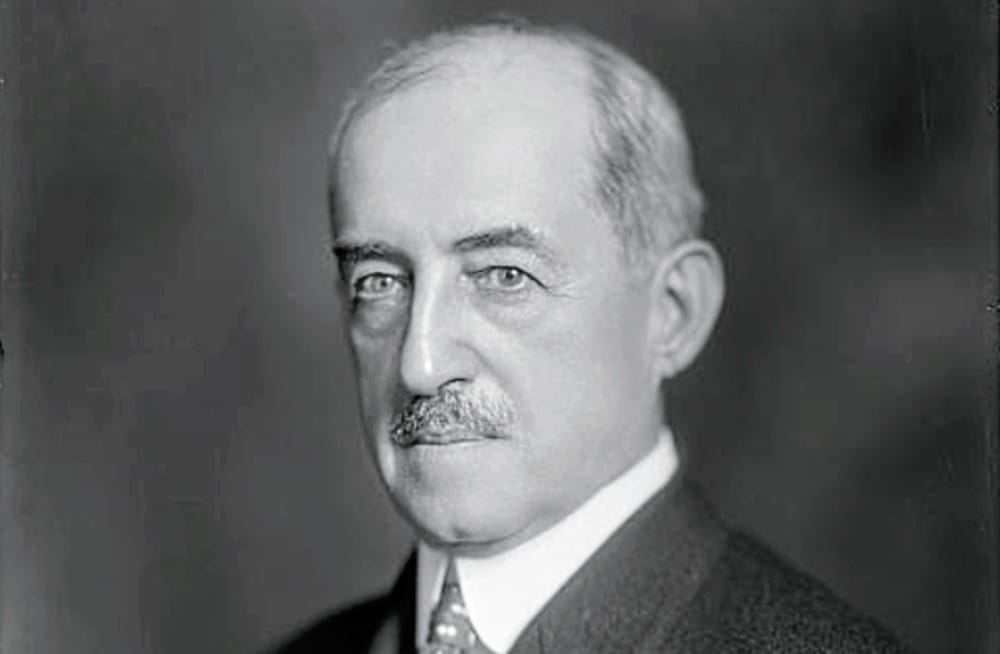
That same year, President William Howard Taft weighed in. He expressed support for re-retrocession — or at least, for moving federal facilities then located in the disputed areas back to D.C.
In the end, the 1910 discussion was dropped for bigger concerns. But it would resurface over the years.
‘Back to the District’ movement of 1920s
In 1929, a group of newer Arlington residents began what was called the “Back to the District” movement, espousing the desire to return at least the county, and maybe Alexandria city as well, to D.C.
That effort also never quite took off. At the time, the local area’s member of Congress — 8th District Rep. R. Walton Moore — said proponents could give it a try, but should not rely on challenging the 1846-47 return of land to Virginia.
“Personally, I have never had any doubt that the retrocession act is valid,” Moore was quoted in The Washington Post.
In 1930, Howard “Judge” Smith was elected to succeed Moore in the 8th District. Just months after his swearing-in, Smith came out swinging against any move to send Arlington and Alexandria back to D.C.
“I am personally and politically opposed to the ceding of any part of Virginia to the District of Columbia — or to anyone else,” Smith told the Arlington County Civic Federation during a May 1931 meeting in Lyon Park.
Smith, who lived in Alexandria, had as much to lose as his constituents if the move took place.
“I spent a hard year in being elected to Congress, and I do not propose to favor anything that will tend to cut the limb to which I have climbed,” he said with a degree of candor remarkable in a newly elected politician.
Smith would continue to represent the 8th District in Congress until being defeated in a 1966 Democratic primary. In 1952, however, Arlington was moved into the newly created 10th Congressional District, represented until 1974 by Republican Joel Broyhill. Arlington would remain in the 10th District for four decades until being moved back to the 8th.
Nevada senator jumps into the fray in 1940s
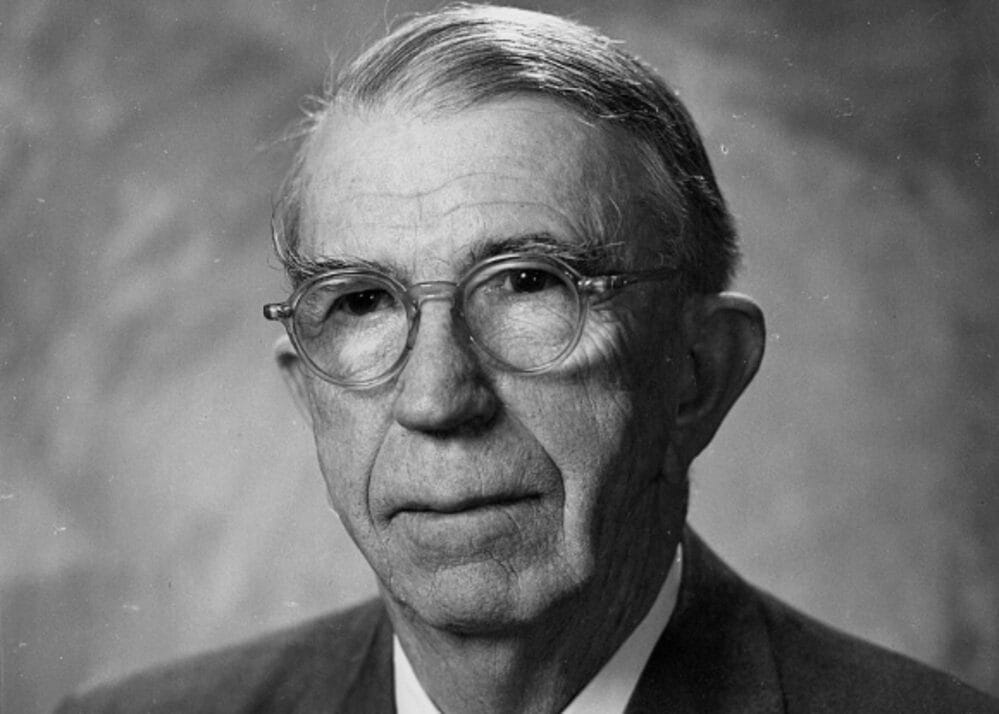
As the 1940s dawned, a legislator from the other side of the country took up the effort to bring Arlington and Alexandria back into D.C.
Sen. Pat McCarran (D-Nevada) in 1941 made the issue one of his pet projects. During his two decades in the Senate (1933-54), McCarran amassed power but also would be something of a gadfly.
In an August 1941 news story about McCarran’s efforts to bring the localities back within the District of Columbia, Washington Post reporter Gerald Gross said it would be an uphill battle at best.
“Don’t hold your breath,” Gross wrote, listing the hurdles involved. “Indomitable scrapper though he is, the gentleman from Nevada is going to have his hands full.”
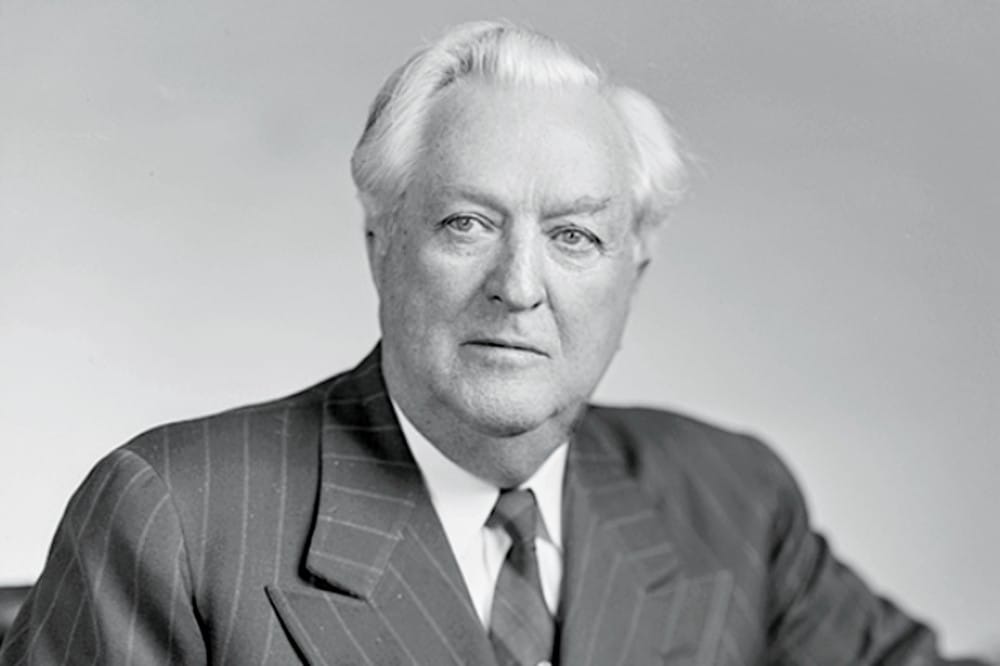
Not the least of those challenges was firm opposition from powerful Virginia political leaders, who didn’t want to give up the land and tax revenue it brought in. Washington Post coverage also found a mix of views among county residents.
Emma Legg of 924 N. Irving Street, who had lived locally for 19 years, said she thought being moved into D.C. might be a net plus, given that the District was then under the full authority of Congress, not a locally elected government.
“Arlington has built up so much that it’s no longer nice and quiet as it used to be,” she said. “If the District took this territory, we probably would get more improvements.”
But a woman identified as Mrs. Fred Pierson Jr., who lived at 1400 N. Buchanan Street, was among those pointing out that Arlingtonians would lose both congressional representation and a vote for president if moved back to D.C.
“The people of Arlington County never will consent to go into the District,” she predicted. “We are jealous of our vote.”
In the same article, Arlington County Civic Federation President D.A. Adams of 3102 2nd Street N. said the Civic Federation likely would take “some action” on the proposal the following month.
In general, Adams said, sentiment seemed to be against changing the status quo. He also cited the lack of voting representation.
“Moreover, I think the State would have some say about whether Congress could annex this great source of revenue,” he added.
Civic curmudgeon makes his case in 2001
In 2001, Arlington celebrated its bicentennial — basing the celebration on the 200th anniversary of the community’s incorporation into the District of Columbia.
Many events took place throughout the year, although the celebrations were more muted after the 9/11 terror attacks focused attention on other matters.
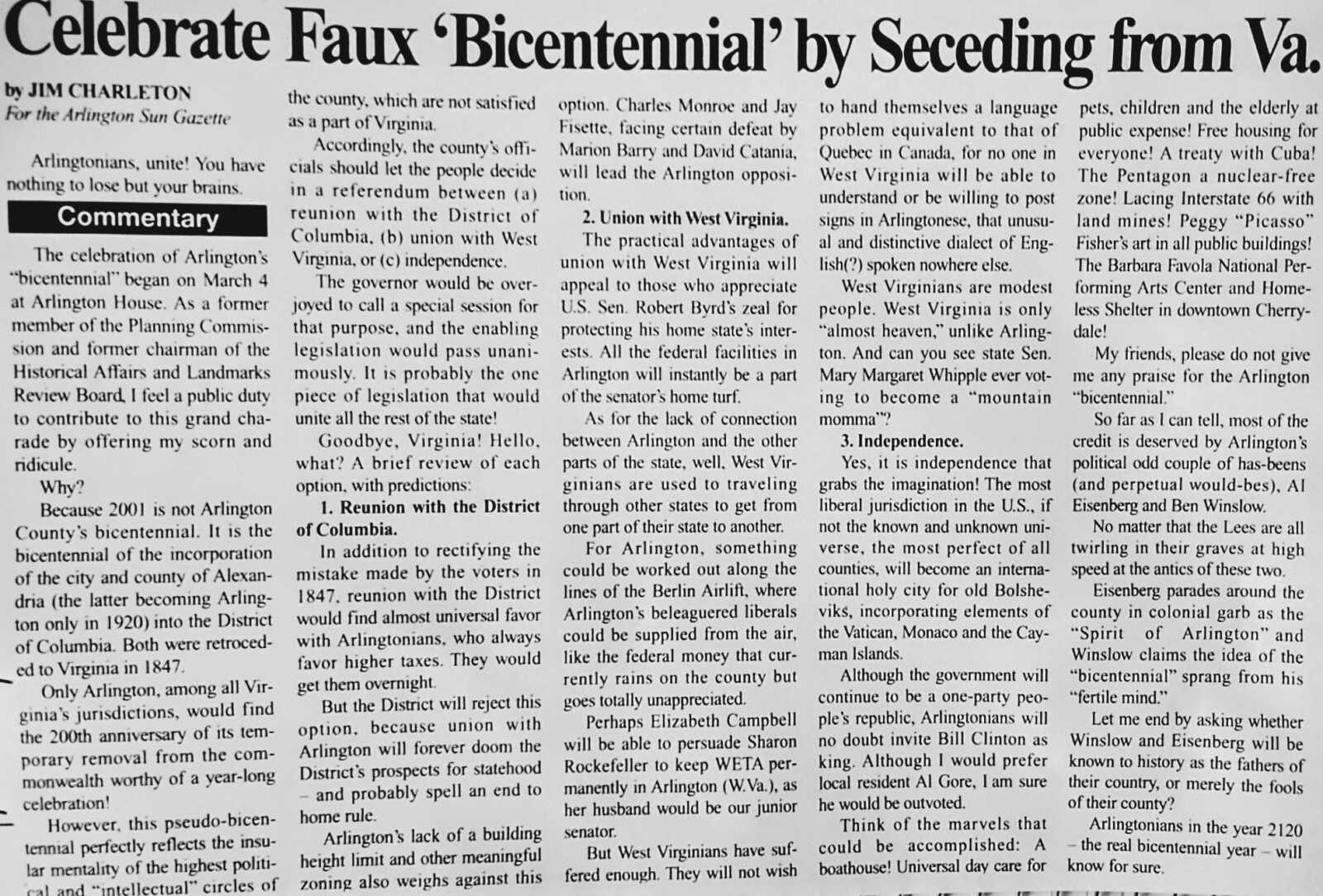
In May 2001, local resident Jim Charleton lambasted the celebration in a half-page opinion piece published in the Sun Gazette.
“Only Arlington, among all Virginia’s jurisdictions, would find the 200th anniversary of its temporary removal from the commonwealth worthy of a year-long celebration,” wrote Charleton, a former member of the Planning Commission and one-time chair of the Historical Affairs and Landmark Review Board.
Using his disdain as a jumping-off point, Charleton proposed three possible changes to the status quo in increasingly unlikely scenarios: reunion with D.C.; union with West Virginia: and declaring unilateral independence.
As for returning to D.C. sovereignty, Charleton’s op-ed says there were some advantages:
“In addition to rectifying the mistake made by the voters in [1846], reunion with the District would find almost universal favor among Arlingtonians, who always favor higher taxes. They would get them overnight.”
But, Charleton predicted, D.C. leaders would reject the idea.
After discussing the merits of joining West Virginia — largely centered on winning federal funding through the efforts of then-Sen. Robert Byrd — Charleton warmed to the idea of declaring unilateral independence, just like the nation’s Founding Fathers did in 1776.
“The most liberal jurisdiction in the U.S., if not the known and unknown universe, the most perfect of all counties, will become an international holy city for Old Bolsheviks, incorporating elements of the Vatican, Monaco and the Cayman Islands,” he said.
“Although the government will continue to be a one-party people’s republic, Arlingtonians will no doubt invite Bill Clinton as king — although I would prefer local resident Al Gore,” he added.
Touching on controversial local topics of a quarter-century ago, some still around today, Charleton further sharpened his rhetoric:
“Think of the marvels that could be accomplished: A boathouse! Universal day care for pets, children and the elderly at public expense! Free housing for everyone! A treaty with Cuba! The Pentagon a nuclear-free zone! Lacing Interstate 66 with land mines! Peggy ‘Picasso’ Fisher’s art in all public buildings! The Barbara Favola National Performing Arts Center and Homeless Center in downtown Cherrydale!”
Summing up his written comments, Charleton said they were no less rooted in reality than the 2001 bicentennial celebration — he called it a “grand charade” devised by the “political odd couple of has-beens and perpetual would-bes: Al Eisenberg and Ben Winslow.”
“The Lees are all twirling in their graves at high speed at the antics of these two,” Charleton said of the two former County Board members, Eisenberg a Democrat and Winslow a Republican.
Nothing ever came of the proposals. Jay Fisette, who was chairing the County Board in 2001, replied that he didn’t remember the article when it was forwarded by ARLnow for his review about a month ago.
As for Charleton, he died in 2008 at age 61 — perhaps taking to the grave with him how much of his proposal of 2001 was serious and how much was simply an effort to poke the powers that be.
Republicans tried to resurrect issue in 2020
The idea returning Arlington to the District of Columbia is not exactly a hot-button idea. But, said Arlington County Civic Federation president Nicholas Giacobbe, it makes for an “interesting discussion point.”
“As I look at the debate, it appears to be more downstaters trying to get rid of us northerners rather than a local effort to rejoin the District,” he told ARLnow.
In 2020, downstate Republican state Sen. Mark Obenshain sought to introduce legislation that would have ceded Arlington and Alexandria back to D.C.
To move the legislation forward, Obenshain attempted to gain unanimous consent from his 39 Senate colleagues. Democrats balked, and before the 2020 General Assembly session wrapped up, attention had shifted to the Covid-19 pandemic.
While it’s unlikely anyone, including Obenshain himself, took the proposal too seriously, Arlington’s own Sen. Barbara Favola said she’d be ready to fight it tooth and nail if it somehow had succeeded in Richmond.
“We have the most number of lawyers per capita of any jurisdiction in the entire country, so if you move forward with this motion, we will tie you up in court from now until kingdom come,” Favola was quoted by the Urban Turf newsletter in covering the spat.

Is the matter worth taking up in 2026?
The concept of re-retrocession was not part of the Civic Federation’s TiGER (Task Force in Governance and Election Reform) discussions, which has proposed changes to the county’s nearly century-old governance structure.
McCormick, the Republican congressman from Georgia, introduced legislation on Wednesday to return Arlington and Alexandria to D.C. The idea seems to have bubbled up from talk radio, Fox News commentators and right-wing pundits, but chances of it going anywhere in Congress probably are close to nil.
Like county residents interviewed by The Washington Post in 1941, Arlingtonians of 2026 and beyond may see the potential elimination of congressional representation as a major sticking point.
That “would be a bitter pill for the Northern Virginia voters to swallow, and would have to be a part of the conversation,” Giacobbe told ARLnow.
“I guess the ship has sailed,” Giacobbe said of re-retrocession proposals. But if they ever make a serious return, the Civic Federation “would definitely be a part of the debate,” he said.
Thanks as always to the Charlie Clark Center for Local History (notably the Arlington Community Archives’ Gail Baker Collection) and the Library of Virginia for access to research materials. Map of D.C. region circa 1861 via Library of Congress Geography and Map Division.
