


Rep. Don Beyer (D-Va.) says President Trump’s trade war with Canada is doing damage that may take years to undo — if it can be undone at all.
Trump threatened today to impose a 50% tariff on Canadian automobiles, auto parts and steel starting next year. That came days after the U.S. levied 50% tariffs Saturday on about $20 billion worth of Canadian goods.
Canada has said it will retaliate dollar-for-dollar beginning Sept. 8.
Beyer, the senior House Democrat on Congress’ Joint Economic Committee and a member of the House Ways and Means trade subcommittee, issued a statement today calling the tariffs a threat to a foundational alliance and a coming shock to consumer prices.
“Trump’s trade war with Canada is doing lasting damage to one of our oldest and most important strategic alliances. It may take years to fix what Trump is breaking if it can be fixed at all, especially with his Cabinet members adding to his moronic ’51st state’ references by giving brainless, ill-informed public commentary needlessly insulting the Canadians. In the meantime, Americans will see much higher prices on goods from our second largest trading partner. The stupidity of Trump’s tariffs and trade policies truly boggles the mind, and it is getting worse.”
Beyer spent most of his career in the car business before Congress. His family’s Northern Virginia dealership group, which sold Volvo, Kia, Land Rover and Subaru vehicles, was sold to a Fairfax investment group in 2024 after 51 years; he had sold his stake to his brother in 2019.
Trump’s broadest tariffs were struck down by the Supreme Court in February, a 6-3 ruling covering levies imposed under an emergency powers law. Administration officials said at the time they expected to keep the tariff framework in place under other authorities.
Beyer is the sponsor of the Congressional Trade Authority Act, which would rein in presidential power under Section 232 of the Trade Expansion Act of 1962 — the provision behind tariffs on steel, aluminum, autos and auto parts. He also co-leads a bill with Rep. Suzan DelBene (D-Wash.) targeting tariff authority under the International Emergency Economic Powers Act.
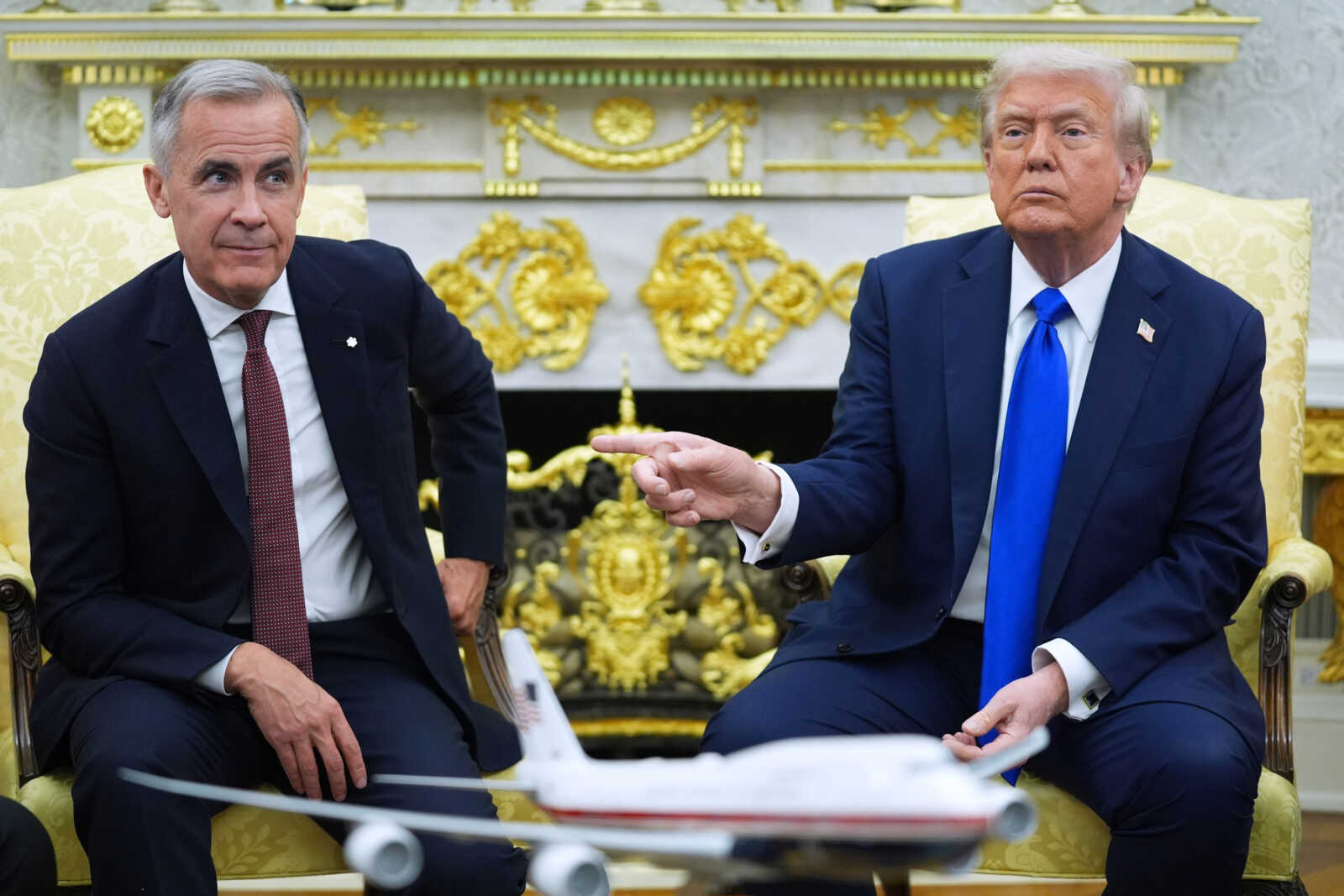
In Canada, Prime Minister Mark Carney said today that the U.S. demands confirmed his government’s fears that Trump is trying to dismantle the country’s auto industry. Canada remains willing to negotiate, he said, but only if Washington treats the talks as a partnership between sovereign countries.
“An attitude at the negotiation table that Canada is a subsidiary of the United States” is “not something we’re going to accept,” Carney said.
Carney, who walked away from negotiations late Friday, said the U.S. auto proposals would “gradually dismantle” Canadian production. He said Canada is the largest customer for U.S. automobiles and questioned what the tariffs would mean for autoworkers in Ohio, Kentucky and Alabama.
Ontario Premier Doug Ford, whose province is the center of Canadian vehicle manufacturing, told the Associated Press that Canada could cut off electricity and critical minerals to the U.S.
“He underestimates Canada. We’re all in,” Ford said. “Up here, we’re at a fever pitch, everyone’s in for an economic war.”
Ford said “everything is on the table,” citing high-grade nickel shipped south and uranium refined in Ontario, and raised the prospect of using oil and potash as leverage. Ontario imposed a 25% surcharge on electricity exported to Michigan, Minnesota and New York during an earlier round of the dispute.
U.S. Trade Representative Jamieson Greer, whom Beyer questioned at a 2025 Ways and Means hearing on tariff policy, said “the only reason Canada has auto production in the first place” was the 1960s Auto Pact, under which Canada traded market access for vehicle production north of the border.
Analysis from the Joint Economic Committee found earlier this summer that American families have spent more than $3,500 extra under Trump, driven largely by tariffs and the war with Iran.
The Associated Press contributed to this report.

