Welcome to Kami’s Korner where we’ll take a deep dive into Arlington’s condominium market by focusing on what’s coming next. From emerging developments to shifting trends, this space will spotlight the opportunities and insights shaping the future of condo living in Arlington.
I had the opportunity to visit Miami last week and immerse myself in its condominium market. And let me tell you, there is a lot happening down there.
A few trends caught my attention, particularly when viewed through the lens of our own DC metro market.
There are more than 90 condominium projects in the pipeline across the Miami/Fort Lauderdale market. Yes, 90! That includes projects in planning, under construction, or actively selling. By comparison, the DC metro area has roughly 10 major condominium projects at similar stages.
That’s a pretty staggering difference. So why is South Florida experiencing such a development boom while our market remains comparatively underinvested?
A few factors help explain what’s working in Miami—and what continues to challenge developers here.
1. Super-luxury is thriving. The middle is struggling.
One of the clearest takeaways is that the super-luxury market remains remarkably strong, particularly in prime locations.
Interestingly, the middle of the market is where things get much more complicated from a development standpoint. We’ve explored this in previous columns, but the challenges are familiar: land prices that don’t always align with achievable sales prices, escalating construction costs, higher financing expenses (yes, those pesky interest rates again), limited investment capital, and approval processes that seem to take longer rather than shorter over time.
At the high end, the math can work a little better. Wealthy buyers continue to invest in real estate, and developers have more room to generate viable returns at higher price points.
In other words, building a $6 million residence in a desirable location can be a more workable proposition than trying to deliver a well-designed, moderately priced condominium. That’s a tough reality for the middle of our market.
2. Florida’s philosophy: Produce, don’t constrain.
Florida has done an impressive job attracting businesses, encouraging relocations, and promoting investment and economic growth. The state’s pro-growth approach has helped create an environment where developers see opportunity and are willing to take risks. Our DC metro region hasn’t enjoyed quite the same momentum, although Virginia has been a bit of an exception.
The difference isn’t simply about demand. It’s also about the environment in which developers are operating. Confidence, predictability, and a willingness to encourage new investment matter.
3. Miami has an international buyer pool. DC has a local one.
Here’s another major distinction: Who is actually buying these residences?
A significant share of Miami’s high-end condominium buyers are international or part-time residents. South Florida attracts substantial investment from Central and South America, among other international markets. For some buyers, a Miami residence may be a vacation home used only a few weeks a year. For others, it’s a way to establish a foothold and invest capital in the United States.
The appeal is easy to understand: a desirable climate, an energetic lifestyle, an international culture, and a welcoming environment for global investment.
DC may be an international city, but our residential market operates differently. People generally come to Washington to work, build careers, and establish roots. We’re much more dependent on local and regional buyers who need a primary residence rather than a second home in the sun.
That distinction has a significant impact on the depth and diversity of the buyer pool.
4. Buyers are helping finance the buildings.
One of the more interesting differences is the condominium deposit structure in Florida.
In many cases, developers can use purchaser contract deposits to help fund construction. Some of the projects I visited require cash deposits totaling 65%, paid in stages:
-
20% at contract
-
20% at groundbreaking
-
15% at building top-off
-
The remaining balance according to the contract’s closing schedule
That’s a substantial amount of capital committed by buyers before the building is even complete.
It also explains why a developer’s reputation is so important in this market. Buyers are putting significant money on the line years before receiving their keys. Established developers with a proven track record have a meaningful advantage, while newcomers may find it considerably harder to gain buyer confidence.
It’s a very different development financing environment from what we’re accustomed to seeing in the DC market.
And now, for the eye candy.
If you’ve been frustrated by the limited selection of new luxury condominiums in the DC area and have ever considered relocating somewhere a little warmer (and considerably more expensive), I have a few properties worth putting on your radar.
I had the opportunity to tour some impressive projects, and two in particular stood out.
Cipriani Residences | Brickell
Developed by Mast Capital
https://ciprianiresidencesmiami.com
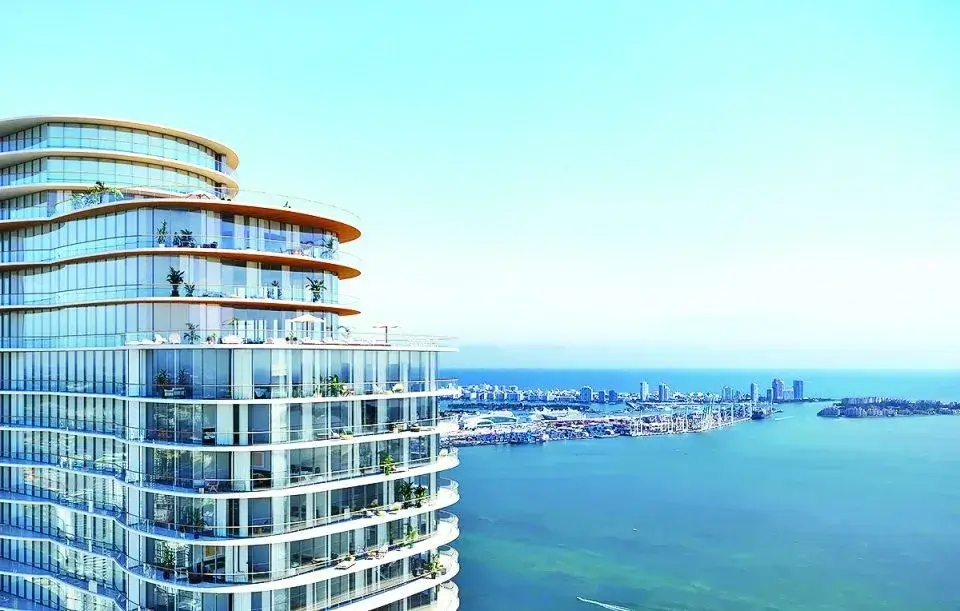
Eighty-five stories of Italian hospitality in the heart of Brickell, Miami’s energetic financial district.
Cipriani will feature 397 residences and approximately 50,000 square feet of amenities, with delivery anticipated in Q3 2027.
I had the opportunity to ride a construction elevator all the way to the 79th floor. Not your average Tuesday afternoon! The views were exhilarating, to say the least.
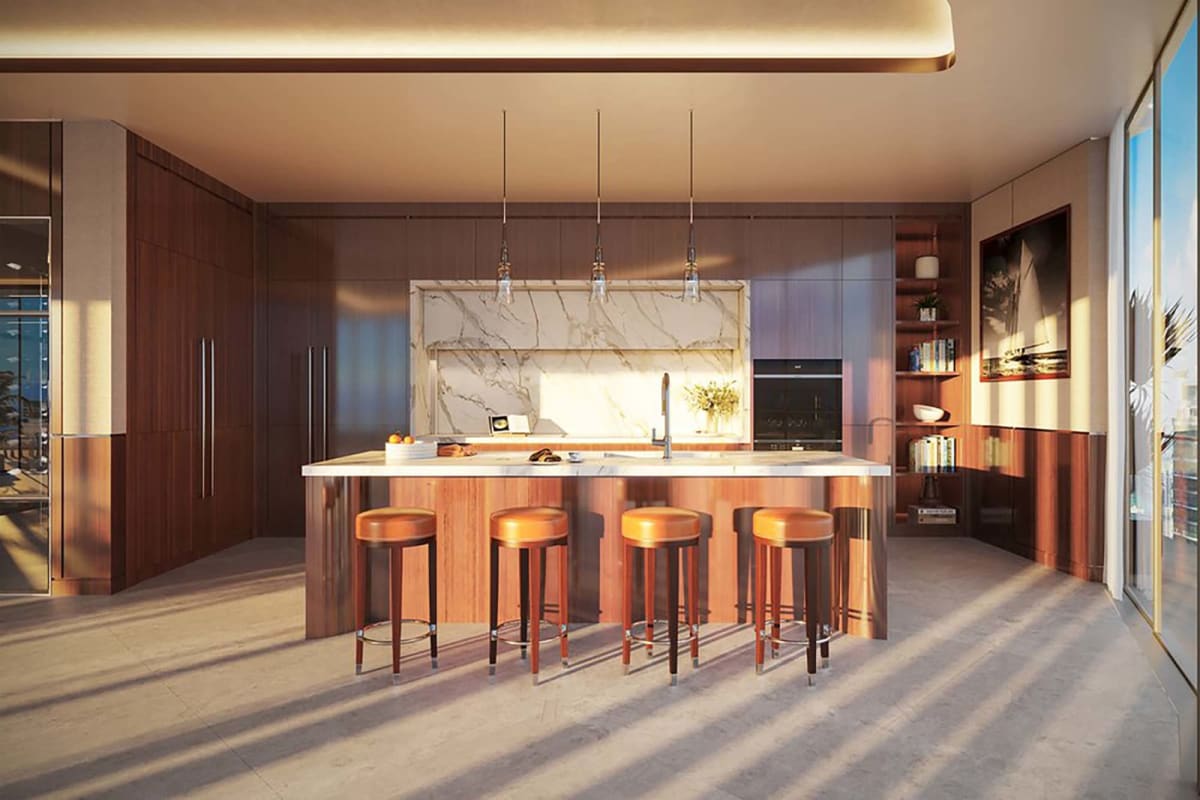
I particularly appreciated the nautical-chic aesthetic of the interiors, including lacquered walnut walls and door frames inspired by the craftsmanship and detailing of antique boats. It’s sophisticated without feeling overly formal, and very much in keeping with the Cipriani brand. International food and beverage names are the next trend in branded residences.
Pricing starts at approximately $6 million.
The Residences at Mandarin Oriental | Brickell Key
Developed by Swire Properties
https://theresidencesatmandarinorientalmiami.com
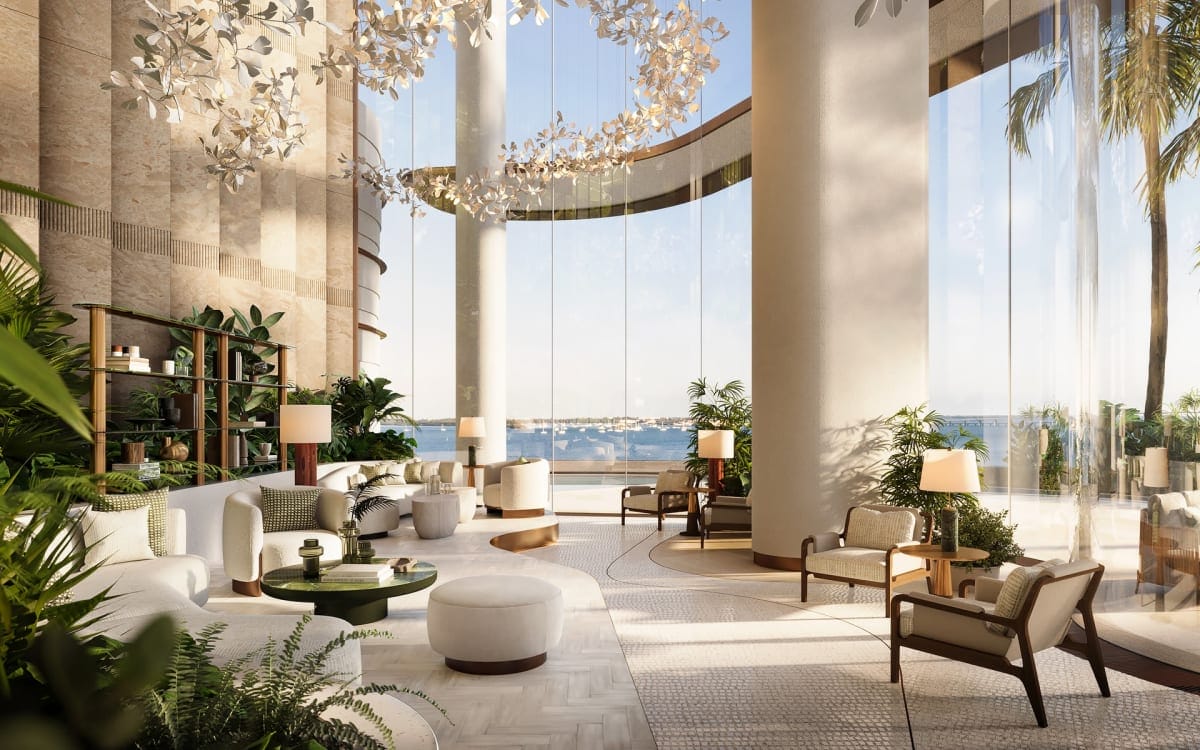
If Cipriani is all about Italian glamour, Mandarin Oriental is a masterclass in Asian understated luxury.
Located on the private island of Brickell Key, with bridge access to the Brickell financial district, this development will feature two towers ranging from 33 to 90 stories and more than 300 residences.
The project promises world-class hotel services alongside approximately 80,000 square feet of beautifully landscaped amenities. With the new Mandarin Oriental hotel incorporated into the development, the appeal of a full-service luxury residential experience is hard to miss. I was greeted by unassuming staff in uniform with trays of champagne and a soft bow.
Delivery is anticipated in Q3 2027, and the former Mandarin Oriental hotel on the site was demolished to make way for this new development — wow. And apparently, buyers aren’t waiting around: two $50 million penthouses had already sold before my visit.
Pricing starts at approximately $5 million.

So, what does this mean for DC?
Miami and Washington are very different markets, and we shouldn’t necessarily expect our development landscape to look the same. But there’s something to learn from a market where developers, capital, and buyers are actively coming together to create new housing opportunities.
Our region, particularly Arlington, has tremendous fundamentals: employment, wealth, educated buyers, established neighborhoods, and a strong long-term appeal. The challenge is translating those fundamentals into projects that make financial sense and can actually get built.
Until then, I’ll be keeping an eye on Miami. If nothing else, the views from the 79th floor were a pretty compelling reminder of what we’re missing!
Do send along your questions, inquiries, and design preferences for the next generation of condominiums to our market. My personal email is: [email protected]