

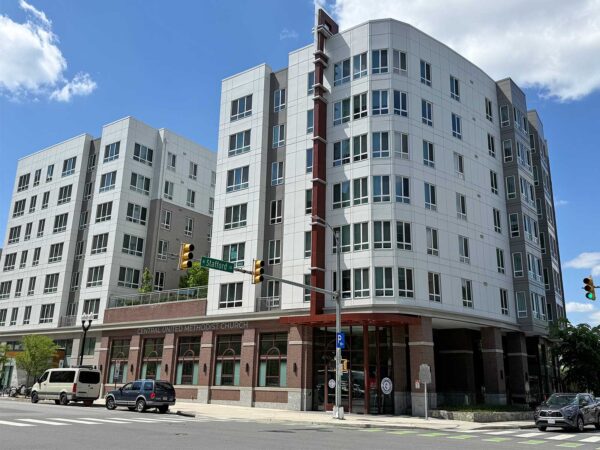
Arlington leaders are still working through the implications of a change to state law making it easier for religious organizations to build affordable housing.
The Faith in Housing Act removes some, but not all, local regulatory approval for affordable housing constructed on land owned by nonprofit organizations, including religious groups. Despite some concerns from various local governments around the commonwealth, the measure had the backing of Democrats in the General Assembly and ultimately was signed by Gov. Abigail Spanberger (D).
The measure’s requirements go into effect next January, giving local governments limited time to evaluate the ramifications.
“I understand why this may concern some. The details of the legislation are very important,” Board chair Matt de Ferranti said at the May 16 meeting. “There were some changes in the latter part of adoption of that legislation that, frankly, I am still working to fully consider.”
The legislation seemed largely targeted at areas outside Northern Virginia, where some local governments have put up hurdles to creation of affordable-housing projects. In the local area, county leaders said, most county and city governments are prioritizing affordable housing, although sometimes in the wake of community pushback.
Board member Susan Cunningham said that in Northern Virginia “we have been getting this right, largely.”
She argued that the local area seemed to be being penalized with the one-size-fits-all requirements handed down from the state government.
“Our position as a Board was, please don’t take away local control,” Cunningham said. “It’s a bad idea for Richmond to try and manage each of the localities.”

Cunningham said the county government would soon release a list of parcels that would be eligible for by-right affordable housing, and would provide information on the impacts of the new legislation.
“As we get into the summer, there will be a lot more conversations,” she said. She suggested that amendments by Gov. Abigail Spanberger made the act more palatable for some local governments.
“I think we’re in a better position than we could have been,” she said.
The issue was brought up at the Board meeting by political candidate Audrey Clement. She contended the changes enacted by the General Assembly represent a win for housing developers but “a major defeat for everyone else.”
Clement predicted “a glut of future housing,” with what she sees as negative implications for local neighborhoods.
“Neighborhoods can expect more congestion, runoff, heat islands, overcrowded schools and reduced tree canopy — a lower quality of life,” Clement said.
Board member Julius “J.D.” Spain Sr. supported the legislation but acknowledged it may have unintended consequences.
“Is it perfect? Perhaps not,” Spain said. “We’re still working through [the ramifications].”
Despite his own concerns, de Ferranti said the new legislation could end up being a net positive.
“If the details are right, I think there are significant benefits,” he said.
Several Board members noted that having the authority to build affordable housing with fewer regulatory impediments was one thing. Actually getting those projects financed and constructed was a harder hurdle to surmount.
“Any affordable housing project is like a bundle of magic that may or may not ever come together,” Cunningham said.
The legislation signed by Spanberger requires that at least 70% of a development’s square footage be residential, with the remainder allowed to be used for ancillary purposes.
At least 60% of units in a development must be available to households earning no more than 80% of the area median income for rental units or 120% for for-sale units. Restrictions must remain in place for a minimum of 30 years.
[Updated to reflect date of implementation of Faith and Housing legislation.]
