

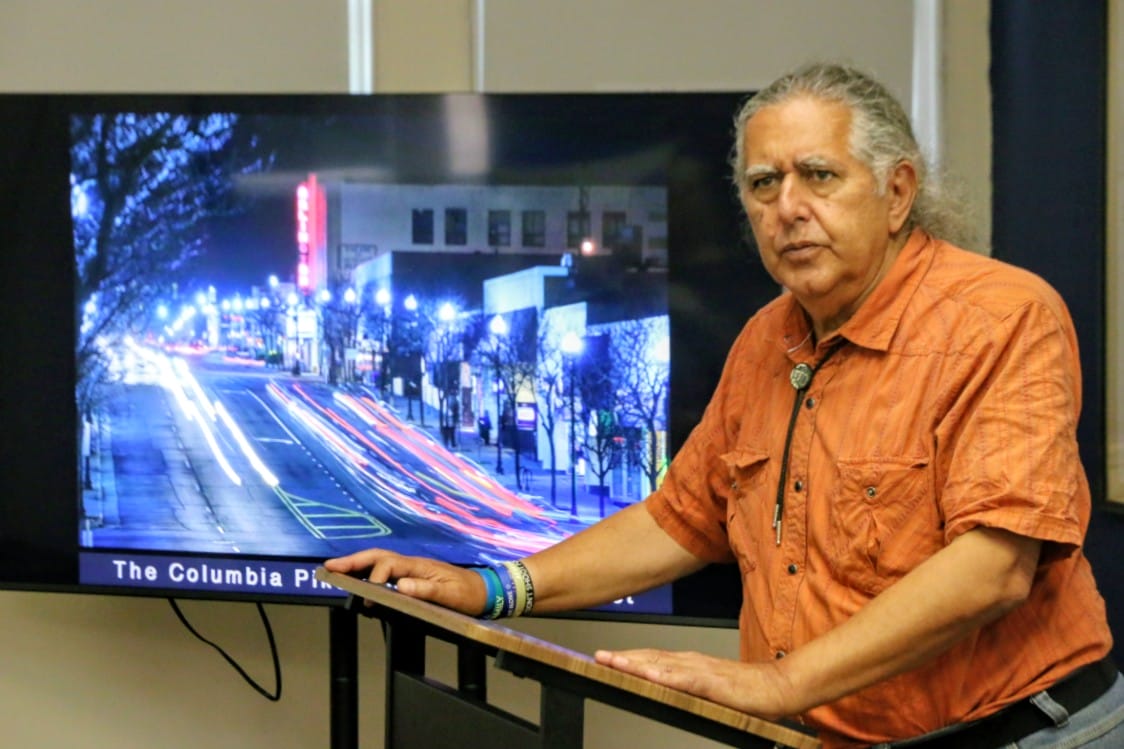
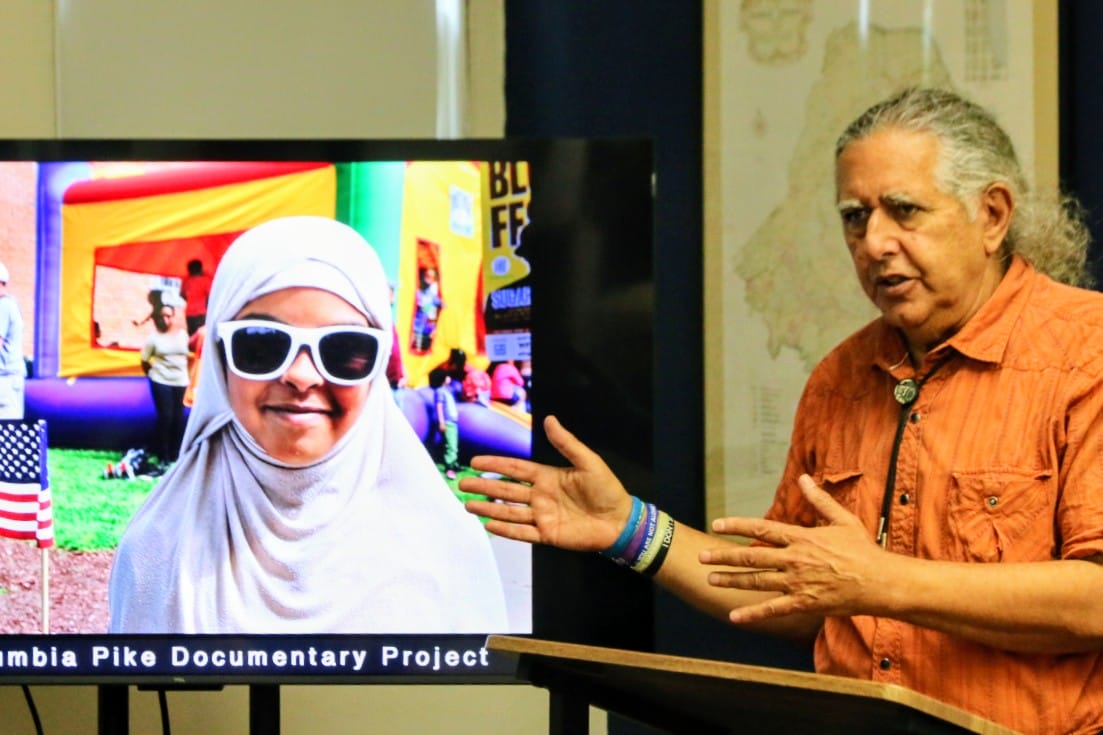
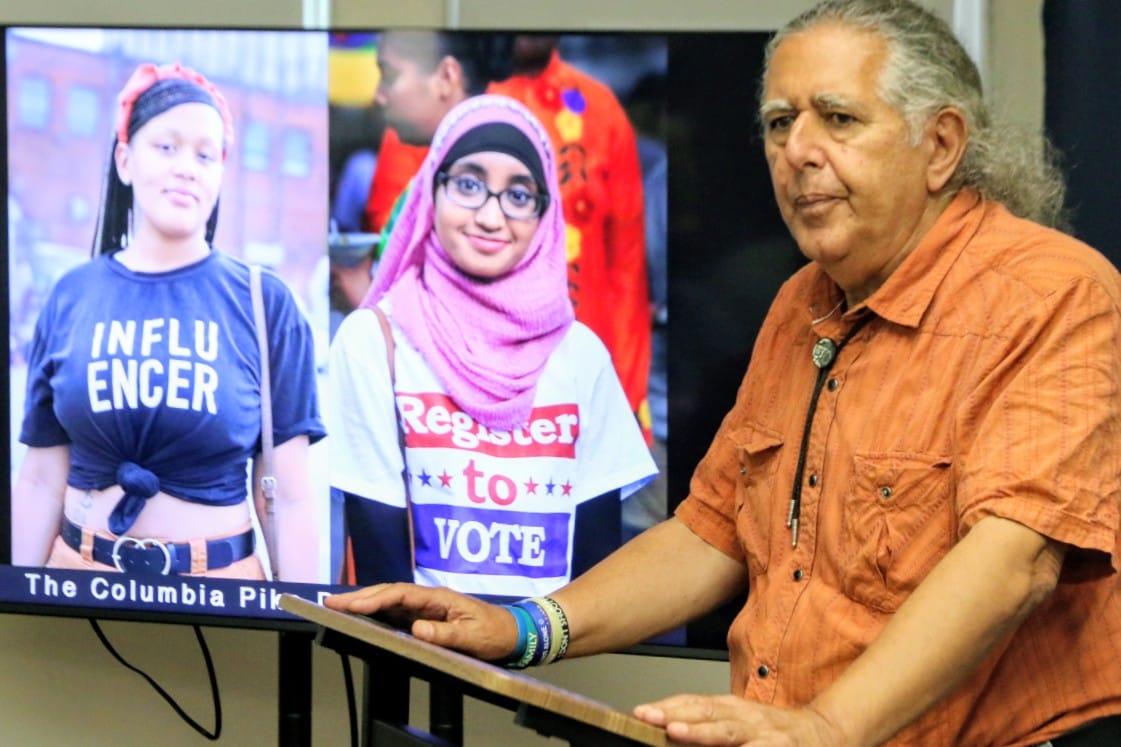
Nearly 20 years after its founding, the Columbia Pike Documentary Project has never run out of people, places and events to chronicle.
“The community is still in transition,” Lloyd Wolf, one of the initiative’s founders, said during a July 26 presentation at the Arlington Historical Society.
Wolf and Paula Endo founded the documentary effort between 2006 and 2007. Supported by the Columbia Pike Partnership, it chronicles daily life and special events in the diverse corridor known as “the world in a ZIP code.”
“The Pike isn’t much to look at — it’s who lives there that makes it interesting,” Wolf said to a packed audience. “I like pictures that cause you to question a little bit.”
His presentation was held in conjunction with the museum’s presentation of “We the People: The World in Our Commonwealth,” a traveling exhibition sponsored by the Virginia Museum of History & Culture.
Four of Wolf’s photographs are included in the traveling presentation. Eighteen are displayed as part of the main exhibition, running through Sept. 7 in Richmond.
Wolf and Endo began collaborating on photography in the 1980s when they were both Arlington educators. They decided to focus their efforts on the Columbia Pike corridor in the mid-2000s, when major transitions were occurring.
That evolution continues today, as new buildings supplant older ones.
“At one point, I went and photographed every building on the Pike,” Wolf said. “I need to do that again.”
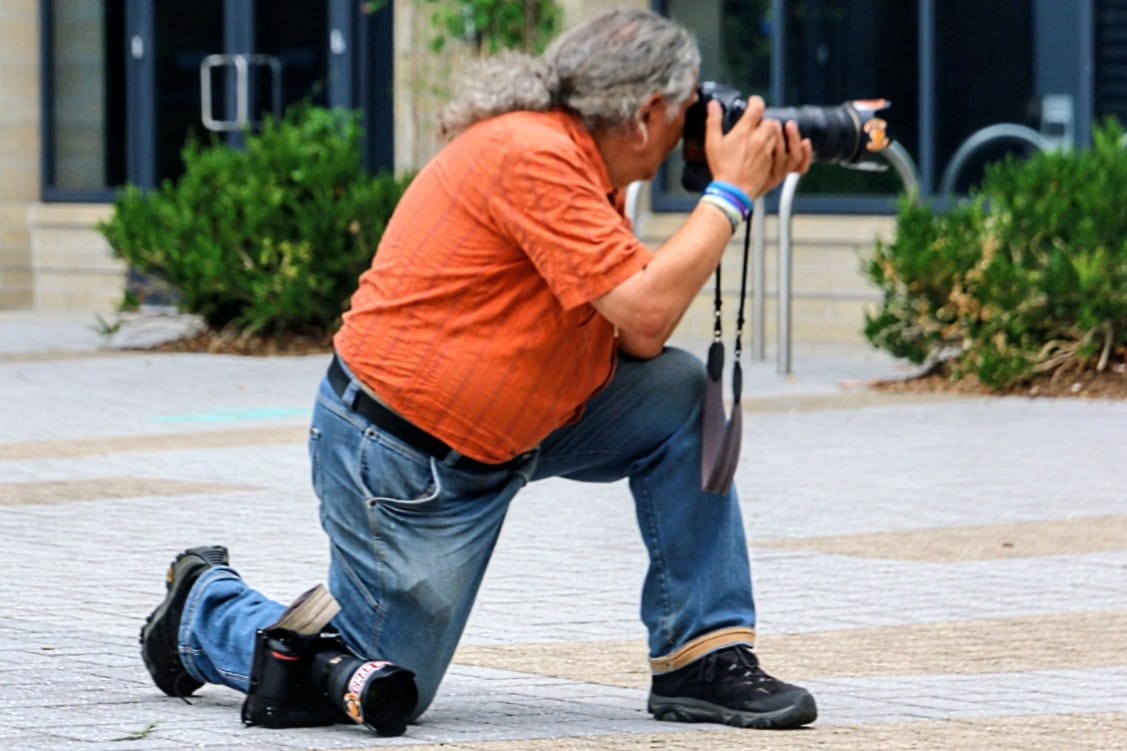
In addition to Endo and Wolf, photographers working on the project have included Mimi Xang Ho, Duy Tran, Aleksandra Lagkueva and Lara Ajami. The project has produced three books: “Transitions,” “Living Diversity” and “The Road Ahead.”
Wolf said that while there are challenges in gaining trust among immigrant communities in the Columbia Pike area, the payoff when that happens is rewarding.
The effort chronicling their lives has “helped them feel validated as community members,” he said.
The photographers shoot primarily in color using digital cameras; Wolf said he last shot in film in 2003. Photographers have avoided using video in their documentary efforts, however.
“It’s a different creature,” Wolf said of the skill sets needed for video work. It’s also expensive, compared to photography.
“If someone dropped a hundred grand on us, sure, but that’s not going to happen,” he said of moving into videography.
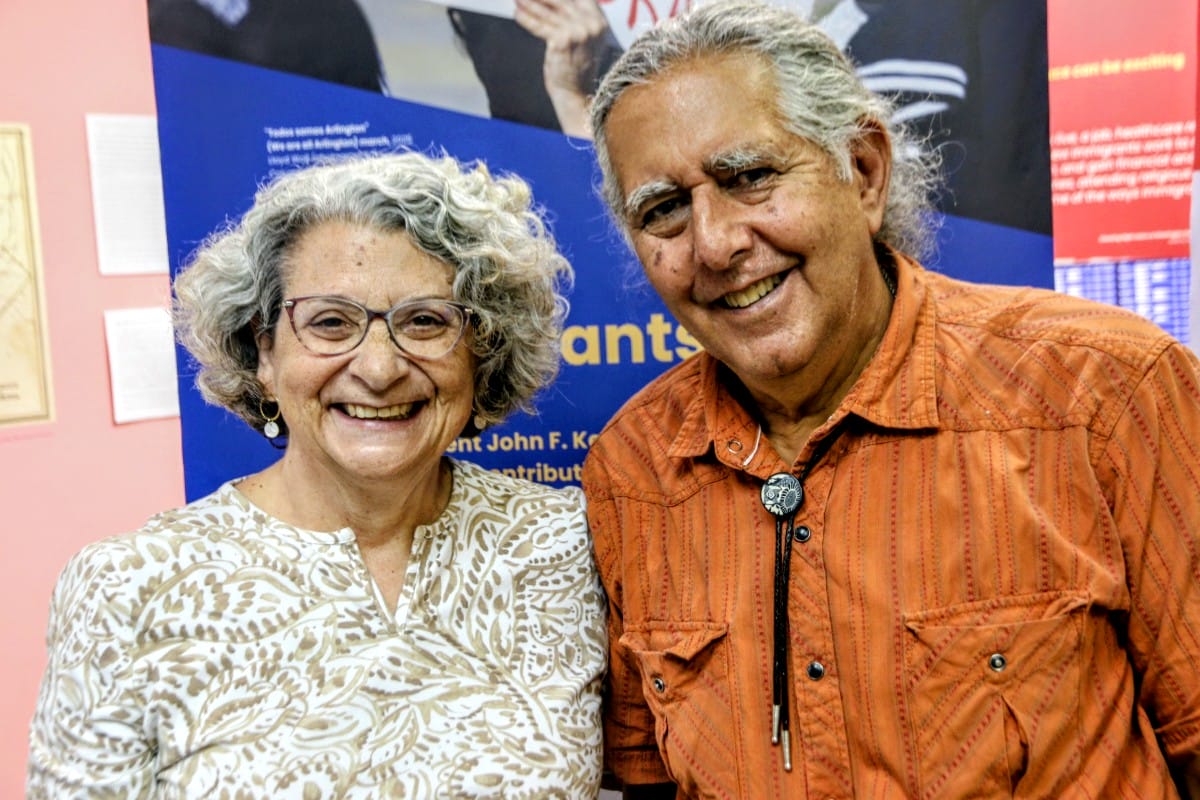
Wolf grew up in the Bailey’s Crossroads area at a time when Northern Virginia consisted of “southern whites, southern Blacks and government workers,” he said. His parents were among the last group.
Wolf watched as waves of immigrants arrived in the local area — Asian Americans in the 1970s, then Central American immigrants, “then everybody else,” he said.
“There are so many groups, you can just be who you are,” Wolf said. “This is a model for how people can live.”
Peter Vaselopulos, president of the historical society, said Wolf has become an institution through his efforts chronicling civic life.
“I’ve always been a great admirer of the work that Lloyd is doing,” he said. “Photography speaks in such a volume of words. A single image really does capture history.”
