

 This sponsored column is by Law Office of James Montana PLLC. All questions about it should be directed to James Montana, Esq., Janice Chen, Esq., and Taryn Druge, Esq., practicing attorneys at The Law Office of James Montana PLLC, an immigration-focused law firm located in Falls Church, Virginia. The legal information given here is general in nature. If you want legal advice, contact us for an appointment.
With Thanksgiving upon us, we really wanted to write about What We’re Grateful For. Unfortunately, the Trump Administration terminated Temporary Protected Status for Burma this week, so we’ll have to save gratitude for a later date. Right now, we want to make sure that our understand the nature of the termination, so Burmese TPS holders can consider next steps and everyone else understands the Trump Administration’s aggressive approach to TPS terminations.
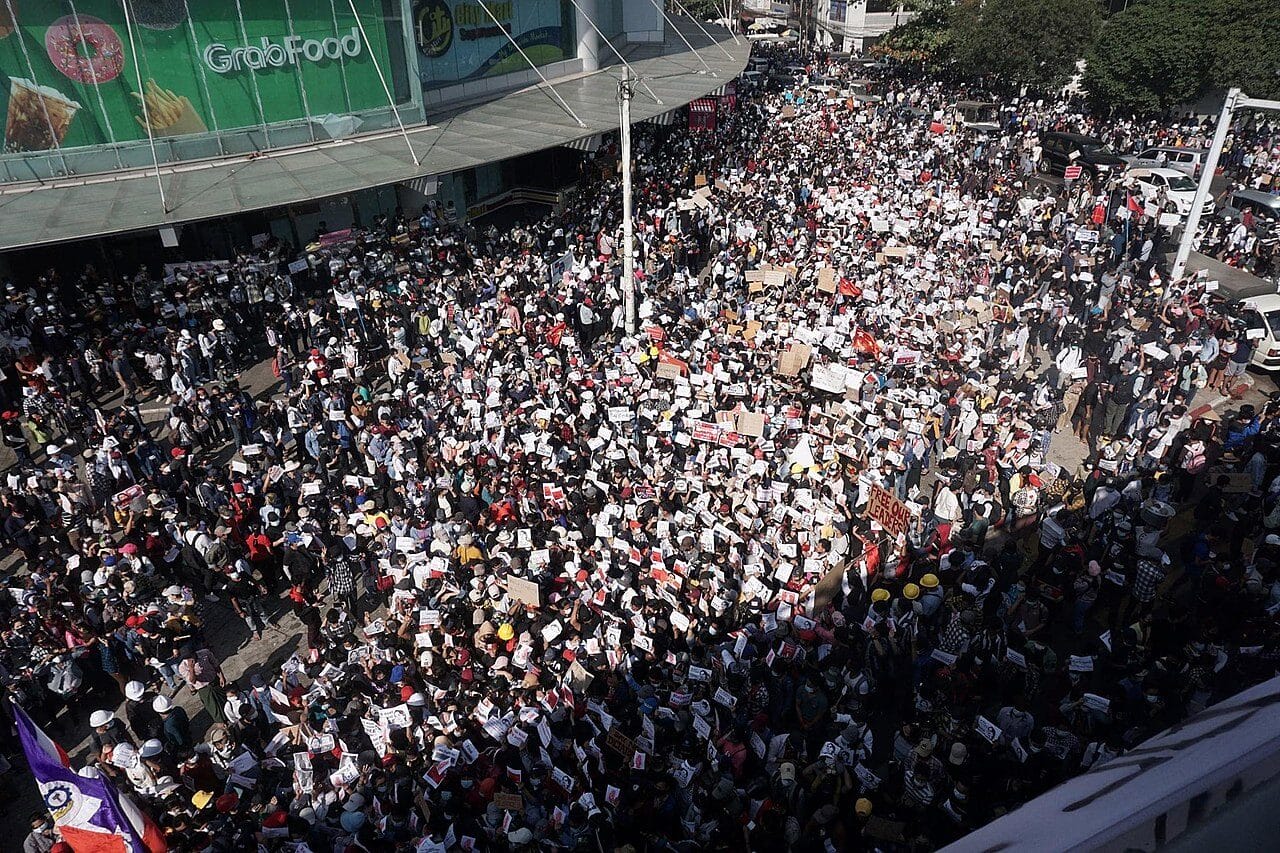
Burma – also known as Myanmar – suffered a coup d’etat in February 2021. (Those of us who spend too much time on the internet may remember the exercise instructor, Khing Hnin Wai, who demonstrated an exercise routine while a military convoy sped down the highway behind her.) The coup nullified the results of the 2020 elections and put a military government fully in control of the government; the country’s top elected leaders, including Aung Sang Suu Kyi, were jailed on false charges. Protests against the junta mushroomed into a full-scale civil war between the regime and its opponents. The civil war is still ongoing today.
Temporary Protected Status is supposed to be temporary. When conditions in a particular country make it impractical or impossible to return its nationals, the Secretary of Homeland Security may designate that country’s nationals for Temporary Protected Status. When the crisis passes, a future Secretary of Homeland Security may choose to de-designate the country. Here, the Trump Administration has de-designated Burma despite no real progress towards peace in Burma. Secretary Noem cites the following in her announcement concerning de-designation:
- “On July 31, 2025, Burma’s state of emergency officially ended.”
- “In line with constitutional requirements, the military government dissolved the State Administration Council, transferred power to the National Defense and Security Council, and announced that free and fair elections will take place in four phases in December 2025 and January 2026.”
These assertions simply reproduce the propaganda of the military regime. The regime intends to legitimize its rule by implementing a new ‘proportional representation’ system which allows it to govern the country without a large electoral base. The main Burmese opposition party is boycotting the election because it regards the proportional representation system as antidemocratic; in response, the Burmese military simply dissolved the opposition party. Moreover, whatever the military regime may say, the civil war is still ongoing and Burma is still in no condition to receive its nationals. The State Department still warns Americans not to visit Burma due to regime airstrikes against civilians and the widespread use of artillery in civilian areas.
If the Trump Administration had wished, they could have extended TPS Burma for six months, after the elections that are planned for December 2025 and January 2026. Then, if the fantastical predictions about ‘free and fair elections’ actually came true, a de-designation might have been justified. But the Trump Administration did not do this. The real reason for the de-designation of Burma TPS is political, not factual – the Trump Administration simply does not like TPS, which it regards as a form of administrative amnesty.
Burmese TPS holders have until January 25, 2026 to apply for a change of status or adjustment of status. Given the facts on the ground in Burma, many Burmese nationals in the United States will seek asylum. Our office is open to help, both with referrals to organizations and with direct representation.
As always, we are happy to answer any questions from the commentariat.
