

Falls Church city leaders appear to have a little more budget breathing room over the coming months compared to surrounding jurisdictions.
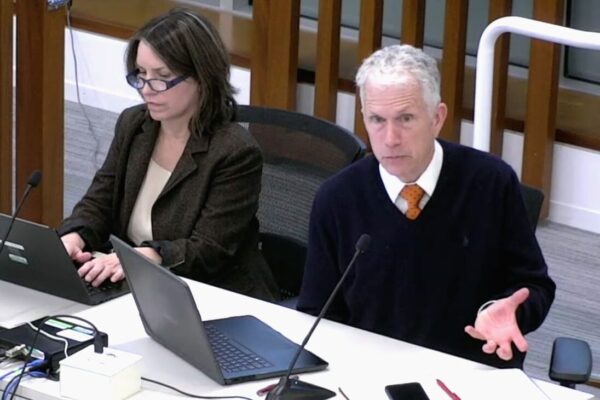
At a Feb. 23 City Council meeting, finance officials estimated 4% revenue growth in fiscal year 2027 without increasing tax rates. It was a figure Mayor Letty Hardi called “very, very rosy” compared to the situations in Arlington, Alexandria and Fairfax County.
“This is sort of a good news/bad news situation,” Hardi said after presentation of current fiscal indicators. “While local revenues are looking better, overall I remain pretty cautious.”
City Manager Wyatt Shields will present his draft fiscal 2027 spending plan in March. The city’s budget season typically runs a few weeks behind neighboring localities, giving officials a chance to see what those other jurisdictions are facing and how they are addressing challenges.
Based on budget presentations in Arlington and Fairfax, “it is a pretty sobering picture of what the region is facing,” Hardi said.
Falls Church currently has the highest unemployment rate in Northern Virginia, owing to a large concentration of federal workers and contractors — some of whom have been laid off. The city is also facing declines in hotel taxes, owing in part to a decline in federal activity.
On the plus side, Falls Church is seeing higher home values and increases in sales-tax and meals-tax revenue.
Shields said the city is expected to end the fiscal year in June without tapping into reserve funding. It’s forecast to end up with about $200,000 left over in a budget of slightly more than $120 million.
“The Falls Church economy is proving resilient against the headwinds that we see in the region,” Shields said.
Hardi, who was re-elected mayor by her colleagues in January on a split vote, intimated her preference for seeing a budget package that does not increase real estate tax rates. She urged colleagues to “really challenge ourselves on the expense side” to avoid tax-rate increases on top of assessment increases that hit most Falls Church property owners this year.
The budget season will also challenge Falls Church leaders to determine how aggressive they wish to be in moving forward on affordable-housing proposals.
Council members additionally discussed the possibility of leaving some funding out of the longstanding revenue-sharing agreement with the county school system.
That is the tack being taken by Arlington County Manager Mark Schwartz, whose budget presentation on Feb. 21 called for a 1.5-cent increase in the county’s real estate tax rate, but excluding the extra revenue from the revenue-sharing agreement with Arlington Public Schools.
Hardi called that “a notable approach that’s being taken by our neighbors.”
The Fairfax County government does not have a revenue-sharing agreement with its school system. In his proposed budget, detailed Feb. 17, County Executive Bryan Hill proposed slightly less funding than was being sought by Superintendent Michelle Reid.
The same situation played out in Fairfax last year, with the Board of Supervisors and School Board tangling over spending amounts throughout the budget season.
In the end, the Fairfax school system received less than had been sought from supervisors, requiring last-minute cuts to its budget.
