

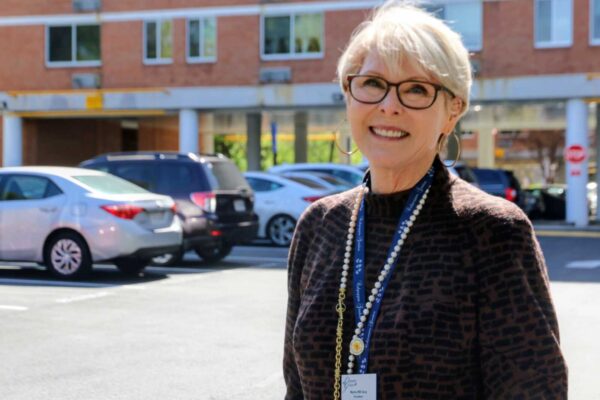
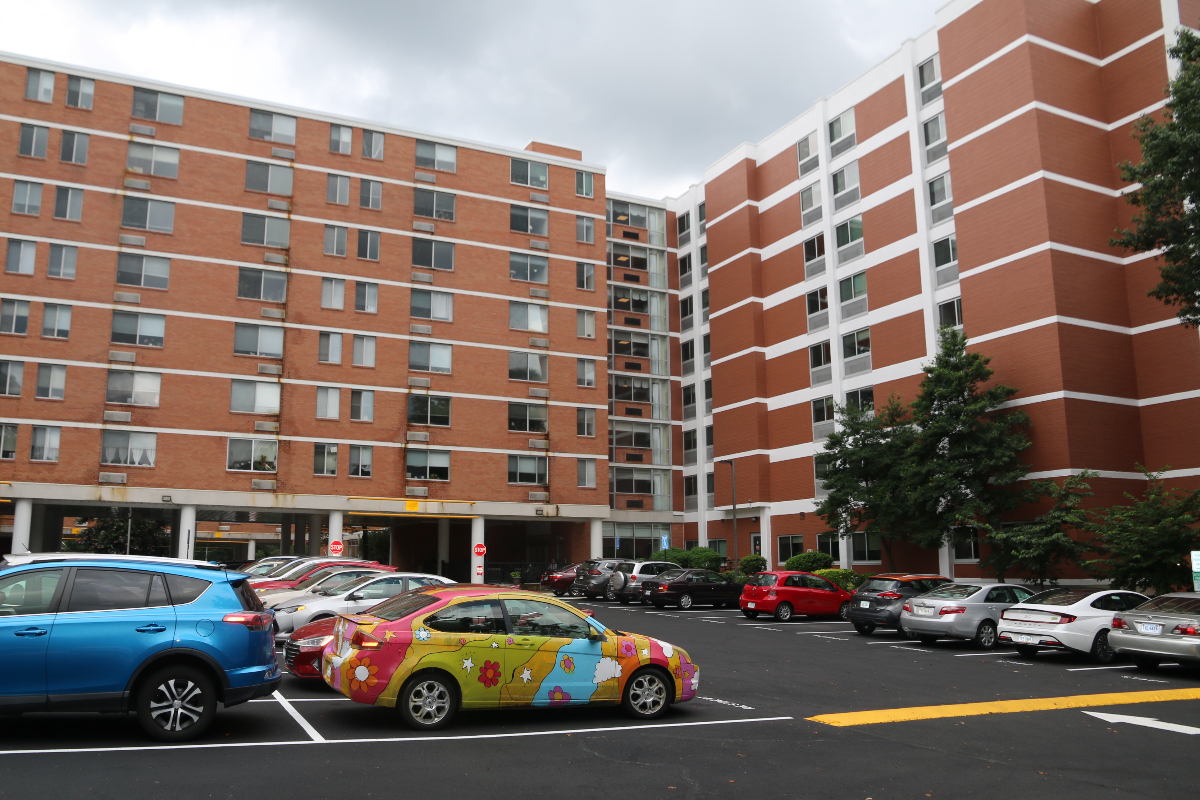
The Culpepper Garden housing complex for low-income seniors is on track to fully phase out assisted-living services by June 30.
“We are looking forward to having all our residents settled [in other housing arrangements] by that day, which is what we promised,” Culpepper Garden CEO Marta Hill Gray told ARLnow.
Only 18 of the complex’s original 73 assisted-living units are still serving that purpose — down from 59 last June, when the nonprofit housing provider’s board of directors opted to eliminate the assisted living services it has provided for a quarter century, citing cost issues.
Some of those in assisted living, which opened in 2000, have transitioned to Culpepper Garden independent-living apartments with additional support services. Others have moved to facilities that can better address their needs.
A total of 27 one-bedroom former assisted-living units have now been filled with independent-living residents.
Assisted living is a middle step between independent living and facilities such as nursing homes.
The decision to eliminate assisted living drew concern and some criticism from county officials. But critics also acknowledged it was part of an emerging gap in services for seniors with high needs but limited assets.
Last July, then-County Board Chair Takis Karantonis said the decision should serve as “a wake-up call for everybody” from the national to the local level.
The county government has provided $1.2 million to support Culpepper Garden’s services to at-risk seniors this fiscal year. However, that subsidy was not enough to make a dent in the deficits run by the assisted-living program, Gray told ARLnow.
“We looked at many, many options” over the course of more than two years, she said.
The decision to provide only independent living facilities “was painful” but necessary to maintain financial stability, Gray said.
“It’s irresponsible to think you can continue to do this at the expense of the future,” she said. “Our job is to protect this place for generations to come.”
To support those moving from assisted living to independent living, Culpepper Garden has partnered with Cherry Blossom PACE, an Alexandria firm that provides a range of health-care and support services for seniors.
Those services are provided without charge to seniors who have Medicaid or are eligible for it. There are fees involved for those only eligible for Medicare.
While the $1.2 million annual subsidy goes away with the start of the new fiscal year in July, the county government will continue to provide some health-care and social services to eligible residents.
“We’re enormously grateful” for the county’s ongoing support, Hill said. “We appreciate them working with us and supporting us these many years, we appreciate them helping with this transition. There are so many places in Virginia that do not offer the many services to low-income seniors that we have here in Arlington.”
Gray — who was tapped to lead Culpepper Garden in 2020 — said she understood eliminating the assisted-living facilities would lead to controversy, but she asked critics to put themselves in the shoes of the board of directors.
“It just wasn’t sustainable,” Hill said of the financial situation. “This [decision] was made by a board that spent a lot of time on the issue.”
By eliminating the financial and operational issues surrounding assisted living, Gray said the organization could return to its roots of focusing primarily on housing. In doing so, “we can do more for more people,” she said.
Culpepper Garden dates back to 1975, when the initial eight-story, 210-unit independent-living apartment building with efficiency through two-bedroom units opened to serve low-income seniors over age 62. A new wing with 63 additional units opened in 1992.
The 73-apartment assisted-living facility that opened in 2000 was created as part of a partnership with the U.S. Department of Housing & Urban Development.
The properties and programs at Culpepper Garden were developed by the nonprofit Arlington Retirement Housing Corp., which grew out of an initiative of the Unitarian Universalist Church of Arlington.
The church’s housing initiative in the early 1970s purchased the 5-acre tract from Dr. Charles Culpepper, who had lived on it since 1926 but agreed to sell it at below-market rates for use as housing for low-income seniors.
Arlington Retirement Housing Corp. remains the parent of Culpepper Garden facilities.
