

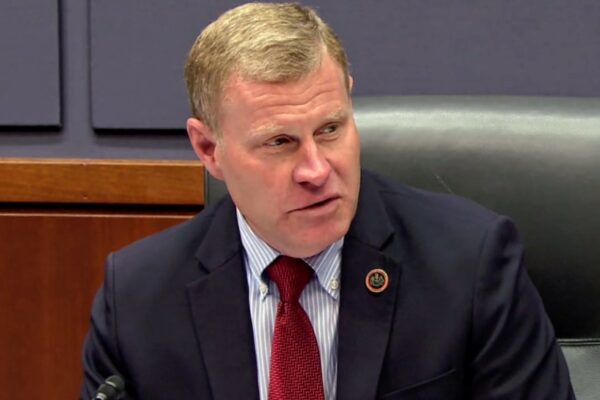
Arlington and Fairfax officials went in two different directions in adopting their fiscal year 2027 budgets.
The Arlington County Board on April 22 approved a 2-cent increase in the real estate tax rate, to $1.053 per $100 assessed valuation, to help fund the county’s $1.7 billion budget.
However, members of the Fairfax County Board of Supervisors went the other direction — voting at their April 26 budget-markup session to reduce the county’s tax rate 0.25 cents to $1.12 per $100 while funding a $5.9 billion spending package
Higher assessed property values mean most homeowners in both jurisdictions will pay more in property taxes, under the new budgets. But how did Fairfax County manage to reduce its rate while Arlington increased it?
Both faced similar budget pressures, including higher employee costs, in part due to new union contracts; an increasing push for affordable housing; increasing facilities costs; and spending on education, transportation and human services.
But this year there were two key differences between Arlington and Fairfax: a meals tax and the ratio of commercial to residential property.
Arlington long has had a meals tax for revenue generation; it is baked into budget calculations. But Fairfax County did not have one until Jan. 1, after county supervisors last year voted to impose an additional 4% meals-tax rate on top of the state sales tax.
At the time, Fairfax’s Democratic leadership said adding the meals tax would allow for a more diversified tax base and reduce reliance on real-estate taxes.
The new tax “has begun to deliver on its intended purpose,” Fairfax Board of Supervisors Chair Jeff McKay said at an April 26 meeting. At that meeting, supervisors voted 8-2 on the draft budget plan. A final vote, likely along the same lines, is slated for next Tuesday, May 5.
The other advantage Fairfax had over Arlington this year came in commercial real estate.
Arlington has a much larger share of commercial properties as part of its overall mix, and many of those properties continue to lose value.
Fairfax, despite larger commercial corridors in areas like Tysons and Reston, has less reliance on the commercial sector. In that county, that sector saw less of a market collapse in recent years, and has rebounded more substantially than in Arlington.
In both Arlington and Fairfax, one elected official objected that proposed real-estate tax rates were too high.

In Arlington, it was County Board member Susan Cunningham. She pushed for a rate of $1.048 per $100 — still higher than last year, but a half-cent lower than what her colleagues settled on.
A lower rate would help homeowners and renters who “are navigating rising costs and increasing uncertainty,” Cunningham said just before budget adoption.
In Fairfax, it was the Board of Supervisors’ lone Republican — Pat Herrity of Springfield District — who said the small rate reduction “doesn’t cut it.”
“Here we go again — tax bills are still going up,” Herrity said. “Our taxpayers have not been a priority.”
Herrity’s view was shared by Supervisor Dan Storck (D-Mount Vernon). But Storck said his desire for cutting the rate further was outweighed by community needs, so he voted with his Democratic colleagues in support of the 0.25-cent reduction.
The other “no” vote on the Fairfax budget came from the opposite direction — Supervisor Walter Alcorn (D-Hunter Mill) opposed any tax-rate cut, citing social-service and school needs.
Throughout the budget cycle, elected officials in both localities pointed fingers at their counterparts at the state and federal levels.
Northern Virginia leaders long have been critical of not getting back services for the tax dollars they send to Richmond, frequently zeroing in on underfunding in education. And over the past year, the Democratic-dominated local governing bodies have also laid into the Trump administration and Republican-controlled Congress.
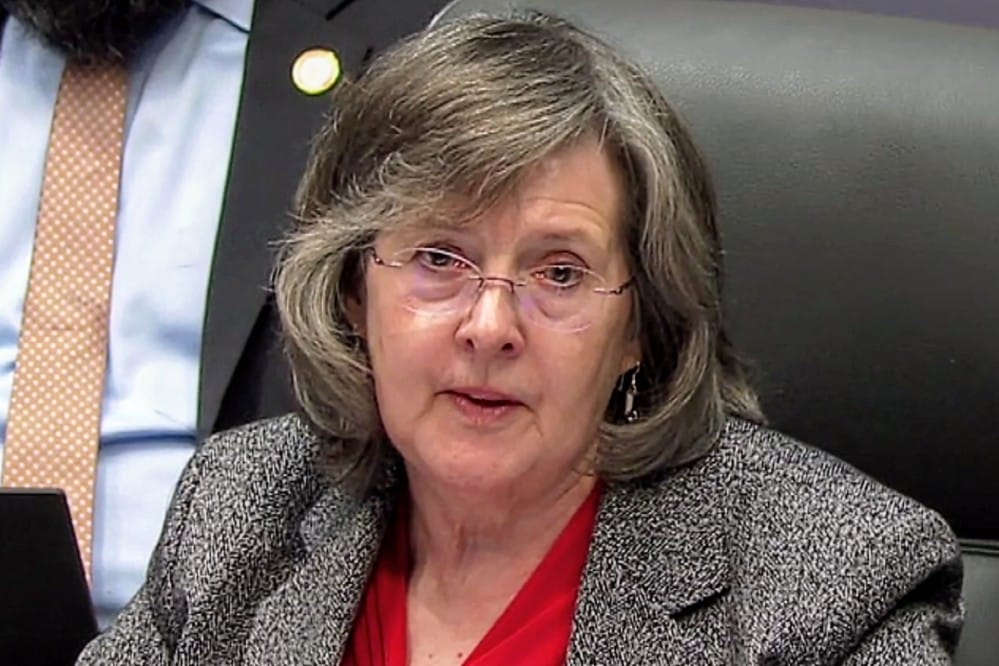
“We are in a time of chaos. We are the backstop for our community,” said Fairfax Supervisor Kathy Smith (D-Sully), that Board’s vice chair.
With the fiscal 2027 budget completed in Arlington and almost done in Fairfax, attention will soon begin turning to development of fiscal 2028 budget plans.
In a comment that probably would be echoed by her counterparts in both counties, Smith — in Fairfax — acknowledged that no budget would please everyone.
“You’re going to have half the people who love it, half who don’t,” she said.
There may be more forks in the road ahead for the neighboring jurisdictions. McKay has said his goal is to continue pushing down the real estate tax rate, while Arlington County Manager Mark Schwartz has warned that more rate increases may be on the horizon.
