


After months of buildup, County Board members have rejected a request to provide historic status to portions of a site approved for an affordable housing project.
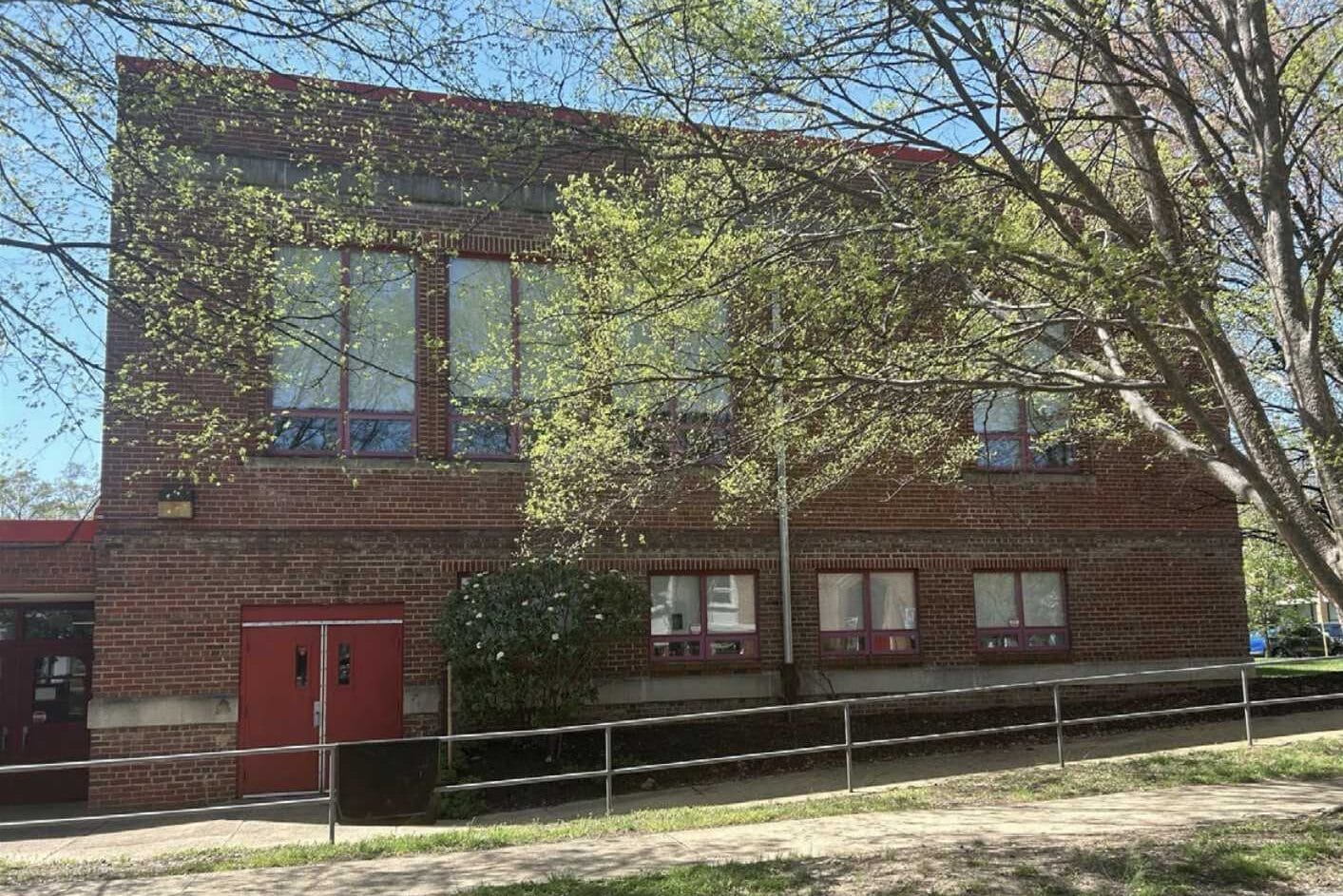
In a 4-0 vote last night (Wednesday), with one abstention, the County Board paved the way for development partners Melwood and Wesley Housing to move forward with plans for construction of a five-story, 105-unit mixed-use affordable-housing project in place of the former Nelly Custis School.
Some of the units will be reserved for those with developmental and other disabilities, and there will be 17,000 square feet of programmatic space to serve Melwood clients and residents.
After lengthy public comment on both sides of the issue, Board members said that in this case, the need for housing outweighed a desire for preservation.
“We should appreciate the characters of our neighborhoods, but we should also make room to innovate,” Board member Julius “JD” Spain, Sr., said. “Kicking the can down the road is not the answer when it comes to housing.”
The Melwood/Wesley development plan was approved by the County Board in February 2025, but has been on hold until a final decision on the historic-district nomination.
At the June 18 meeting, Board member Takis Karantonis said those seeking historic designation of the older parts of the former school needed to provide “salient, really striking reasons” for doing so.
“I just don’t see that,” Karantonis said.
Spain and Karantonis were joined by Maureen Coffey and Chair Matt de Ferranti in voting to reject historic designation. Board member Susan Cunningham abstained.
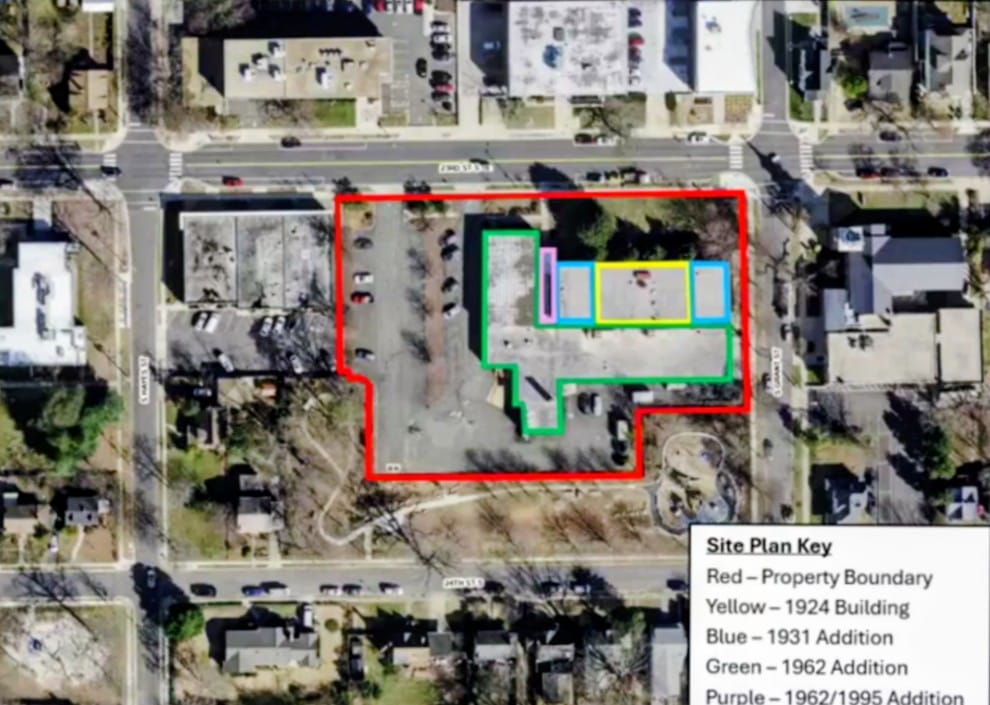
Despite opposition from Melwood and Wesley Housing, members of the county’s Historic Affairs and Landmark Review Board (HALRB) in March voted 7-4 to support designation of the 1920s-30s portion of the building as a local historic district.
HALRB members voting in support said the site met two of 11 criteria required for designation under the county’s zoning code. That was the bare minimum number of criteria required, but enough to move the proposal to the Planning Commission, which recommended denial of historic status on a 9-1 vote, with one abstention.
The public hearing preceding the June 17 County Board vote brought out those on both sides of the issue.
Eva Loser, an Aurora Highlands resident, said she supported Melwood but urged retention of the earliest parts of the Nelly Custis building in future development.
“Once it’s demolished, it’s gone forever,” she said. “We have an opportunity to adaptively reuse and historically designate this building.”
Another Aurora Highlands resident, Alison Trible, said an adaptive-reuse project combining the historic parts of the building with a downscaled housing project would be most appropriate.
The result would be a project that “becomes part of our community rather than sticking out like a sore thumb,” she said, arguing that Melwood’s “push for density is coming at the expense of those of us who live here.”
Other neighbors embraced Melwood’s plans for redevelopment.
Pamela Van Hine, the first public speaker during the lengthy meeting, said the benefits of new housing outweighed historic-preservation concerns.
“The opportunity to provide convenient, accessible, affordable housing, especially to those with neurological disabilities, should not be missed,” she said.
Van Hine said even the oldest sections of the building “have had significant modifications” that significantly degrade the building’s historic provenance.
Aurora Highlands residents were not the only ones speaking at the meeting.
Margot Greenlee said moving forward with an unaltered Melwood/Wesley plan for the site “will put Arlington on the map as a leader in inclusive housing.”
“You have the opportunity to make history by turning Arlington’s values into housing,” said Greenlee, executive director of Our Stomping Ground, a nonprofit focused on supporting adults with developmental disabilities.
As both midnight and a final vote were approaching, Spain said the best outcome going forward would be for those in the Aurora Highlands neighborhood who had supported historic designation, or opposed the development plan, to accept the final outcome.
“I hope the community comes around and works with Melwood, and we remove some of this tension,” he said.
After its closure as an elementary school in the late 1970s, the Nelly Custis building and grounds were transferred by the county government to the Sheltered Occupational Center (SOC) of Northern Virginia as part of a land swap. SOC later was rebranded as Linden Resources, and in 2018 merged with Melwood.
After the Board’s vote, Melwood president/CEO Larysa Kautz and Wesley Housing president/CEO Kamilah McAfee issued a joint statement praising the decision.
“We are grateful to the Arlington County Board for standing by a thoughtful, inclusive vision for this site,” Kautz said. “This decision recognizes that affordable housing and accessibility are essential to build a community where everyone belongs. We are eager to begin construction and create a community that will grow with Arlington.”
“At a time when affordable, accessible housing is desperately needed, we appreciate Arlington’s leadership in making this a priority,” said McAfee. “We thank the Board for thoughtfully weighing the merits of the recommendation and for supporting a path forward that brings this community-centered vision to life, consistent with the previously approved vision.”
As with the earlier battle to retain the Febrey-Lothrop estate on Wilson Blvd, some preservationists said rejecting historic status for portions of the Custis school would confirm a lack of interest by county staff and leadership on maintaining connections to the county’s past.
In a letter to Board members preceding the June 17 meeting, 15-year HALRB member and former chair Richard Woodruff called into question the county government’s commitment to preservation. Among his points:
“Now, in the wake of the Nelly Custis School debate, county staff are working to further undermine HALRB’s historic preservation mission with amendments to [the zoning ordinance], to raise the bar for historic protection when the property owners object. An amendment has been framed and advertised to require that a property meet a majority of the 11 conditions in situations where a property owner objects to a proposed designation. This can only be interpreted as putting a thumb on the scale for objecting commercial property owners, mostly developers.”
“This action follows steps taken administratively by historic preservation staff last year to impose new, up-front financial and bureaucratic burdens on citizens who file petitions to protect historic properties. These steps were taken in spite of concerns raised by members of the HALRB.
“The above findings call into question, and not for the first time, the commitment of the current Arlington administration to historic preservation. Previous County Boards have nearly always respected HALRB’s recommendations, and I urge you to do so with the Nelly Custis School. I also urge you to take a closer look at how planning and historic preservation work together — because it definitely doesn’t need to be as tortured as it was in this case.”
After the vote on the Nelly Custis site, Cunningham sought support from her colleagues in directing county staff to return later in the year to address concerns raised by HALRB members and others.
“It is my practice [that] when you see things that are not going well, you note it and you try to fix it,” she said. “I want us to have that conversation.”
Other Board members declined to go along, saying staff was working on proposals to update processes and should not be given arbitrary deadlines in getting recommendations to Board members.
“They have a work plan for that, they have a time horizon for that,” Coffey said.
