

More owners of low-valued vehicles could receive a full exemption from car taxes in Falls Church.
Vehicles assessed at $1,500 or less are currently exempt from the city’s car tax of $4.80 per $100 assessed valuation. Under a proposal brought to Council members by Commissioner of Revenue Tom Clinton and city staff, the exemption level would double to $3,000.
Increasing the exemption level would come at a cost to residents of vehicles that are assessed higher.
Under the proposal, vehicles assessed at more than $3,000 would receive a 31% rebate on car-tax bills for the first $20,000 of valuation this year. That would be down from a 35% rebate in previous years.
Rebates apply to personal vehicles covered by the Virginia Personal Property Tax Relief Act of 1998.
At a June 15 work session, Council members seemed supportive of the proposal.
“This helps people with the least expensive cars,” Council member Marybeth Connelly said.
While that likely would help lower-income residents most directly, “it could be anyone who has a beater,” said Connelly.
About 550 vehicles garaged in the city are valued at $1,500 or less and currently pay no tax. Doubling the threshold to $3,000 would exempt about 1,050 more vehicles from taxation.
Like other jurisdictions, Falls Church is working to find a fair way to allocate state grant funding or car-tax rebates. For the coming fiscal year, the city will receive about $2.02 million in state funds for the purpose.
Mayor Letty Hardi said concentrating those funds to help those with the lowest-cost vehicles, which often equates to lower income levels, will help offset “a higher tax burden elsewhere and cost of living in general.”
Council members are expected to take action at their July 13 meeting, giving Clinton the time to amend bills before they are mailed out to vehicle owners. The car tax is due in October.
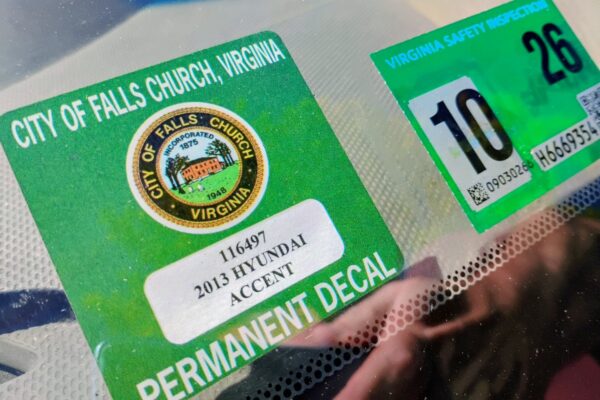
Neither Clinton nor Council members warmed to eliminating the $33 decal fee, which is charged on all vehicles, this year. But Hardi said it should be considered in 2027.
“I don’t think we love the decal fee,” the mayor said.
Sharing a sentiment likely held by most Virginians, Hardi acknowledged that “it’s very confusing how we do the car tax in Virginia.”
The rebate scheme emanated from the 1997 gubernatorial race, when Republican Jim Gilmore was elected to office on a “No Car Tax” pledge.
Fully limiting the personal property tax on vehicles proved more complicated than advocates thought, in part because local governments rely heavily on the revenue to keep their budgets balanced.
Instead of mandating that localities abolish the tax, the General Assembly in the 1990s began funding grants to localities, requiring that the funding be used to provide tax relief to vehicle owners.
The level of grant funding has stayed static through the years despite increasing numbers of people and vehicles. As a result, tax relief “started out as 70% [and] is dropping every year, every other year, with some jurisdictions, such as Arlington, really plummeting,” Clinton said.
In Arlington, County Board members earlier this year increased the tax-exemption threshold to $4,000 but significantly lowered the rebate percentage for the next $16,000 of a vehicle’s value.
County Board members also reduced the rebate that had applied to owners of clean-fuel vehicles. Now, both clean-fuel and gasoline/diesel vehicles will receive the same rebate percentage.
Arlington did away with its decal fee several years ago, years after it abolished the use of window decals for enforcement purposes. Falls Church continues to use a sticker for its enforcement.
