


The Arlington NAACP is being urged to stay engaged as proposals to revamp Arlington’s governance further percolate over the coming year.
“Everyone has ideas,” County Board member Julius “JD” Spain, Sr., said at the civil-rights organization’s Monday (June 29) meeting.
“Follow us, continue to have these conversations — pass the word,” said Spain, a former Arlington NAACP president.
Spain and Board colleague Susan Cunningham are the public faces of potential changes to Arlington’s nearly 95-year-old County Board governance structure.
Among possibilities that could be considered:
- Expanding the current County Board beyond five members
- Electing a County Board chair separately from other Board members and potentially expanding the chair’s powers
- Having some or all Board members elected in districts rather than at-large
- Moving away from the current practice, where every year brings at least one County Board race on the ballot
- Potentially moving from county to city status, an option that initially drew scant interest but seems to be gaining momentum
At the June 29 meeting, Spain said the process would not tackle governance issues related to the School Board. He said he and Cunningham would be maintaining a dialogue with the county’s five elected constitutional officers, some of whom have voiced concerns about potential impacts of governance changes.
Hanging over the NAACP briefing, as it may throughout the process, is the question of whether the governance-change effort represents a solution in search of a problem.
The county government’s recently released resident satisfaction survey found only 21% of respondents dissatisfied with the current form of governance. More than twice that number (43%) supported the structure with the remainder undecided.
Spain acknowledged there likely would be a portion of the community disinclined to embark on massive governance change. “Some may even say, ‘there’s nothing broke, don’t mess with it,'” he said.
But judging from the number of questions fielded at the meeting, there is a growing level of interest.
During a Q&A session, Leslie Atkins wanted to know if Arlington was “looking at similar sized jurisdictions and the effectiveness of their forms of government.” Christopher Concepcion sought clarification on ways residents could provide feedback. And Tanya Graham attempted to get more information on what 2027 would bring, given the announced timetable only runs through December 2026.
Last December, Board members set up a timetable that aimed to set up a community task force on the subject this summer, a delay from the previous schedule. At the time, county officials said the delay was necessary to get the government through the fiscal 2027 budget process and approval of a new capital improvement program.
But that timeline also has slipped. Now, Board members anticipate a consultant’s report by the end of the year, with no announced plan for how the process will continue into 2027.
Though just one of five votes, Spain said he continues to support creation of a community task force to look at the issue. But he acknowledged that “we don’t know exactly what actions we’re going to take.”
Governance change has been raised in the current County Board Democratic primary. All three candidates — incumbent Matt de Ferranti and challengers Julie Farnam and James DeVita — have expressed support for changes that could include expanding the Board’s size and moving at least some seats to districts.
Moving to district-based representation is seen by some as forward-thinking, but it also would represent a throwback to the 1870-1932 period.
During that 62-year stretch, Arlington was governed by a three-member Board of Supervisors elected in districts spanning the northern, central and southern parts of the county. Supervisors held executive, legislative and quasi-judicial powers.
In 1932, the first five-member, at-large County Board was elected. Members then selected Arlington’s first county manager, Roy Braden.
Any structural changes to that format likely will require approval of the General Assembly and Gov. Abigail Spanberger (D), and potentially could result in a community referendum — similar to the one that brought the County Board structure into being nearly a century ago.
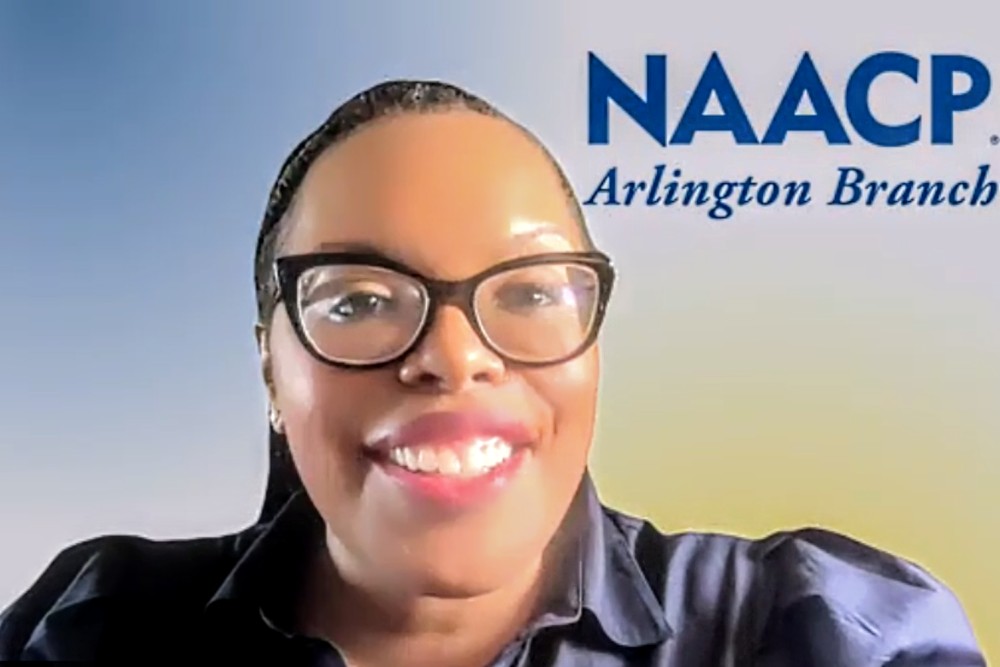
Arlington NAACP president Rev. DeLishia Davis said her organization would encourage members to stay engaged in the governance-change process as it moves forward.
“We look forward to continuing the conversation,” she said. “An informed community is an empowered community.”
