

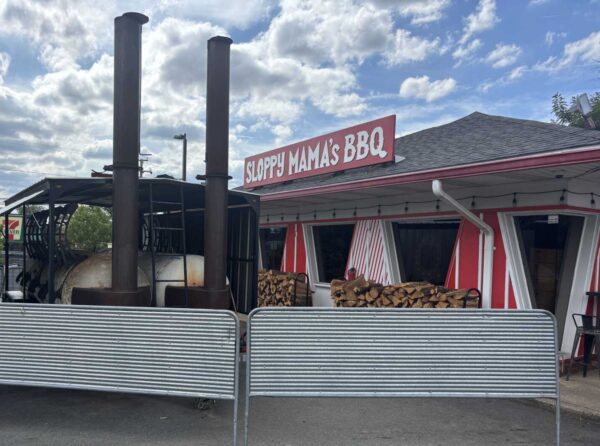
Brining rights are on the line at an upcoming pickling contest at a Langston Blvd barbecue spot.
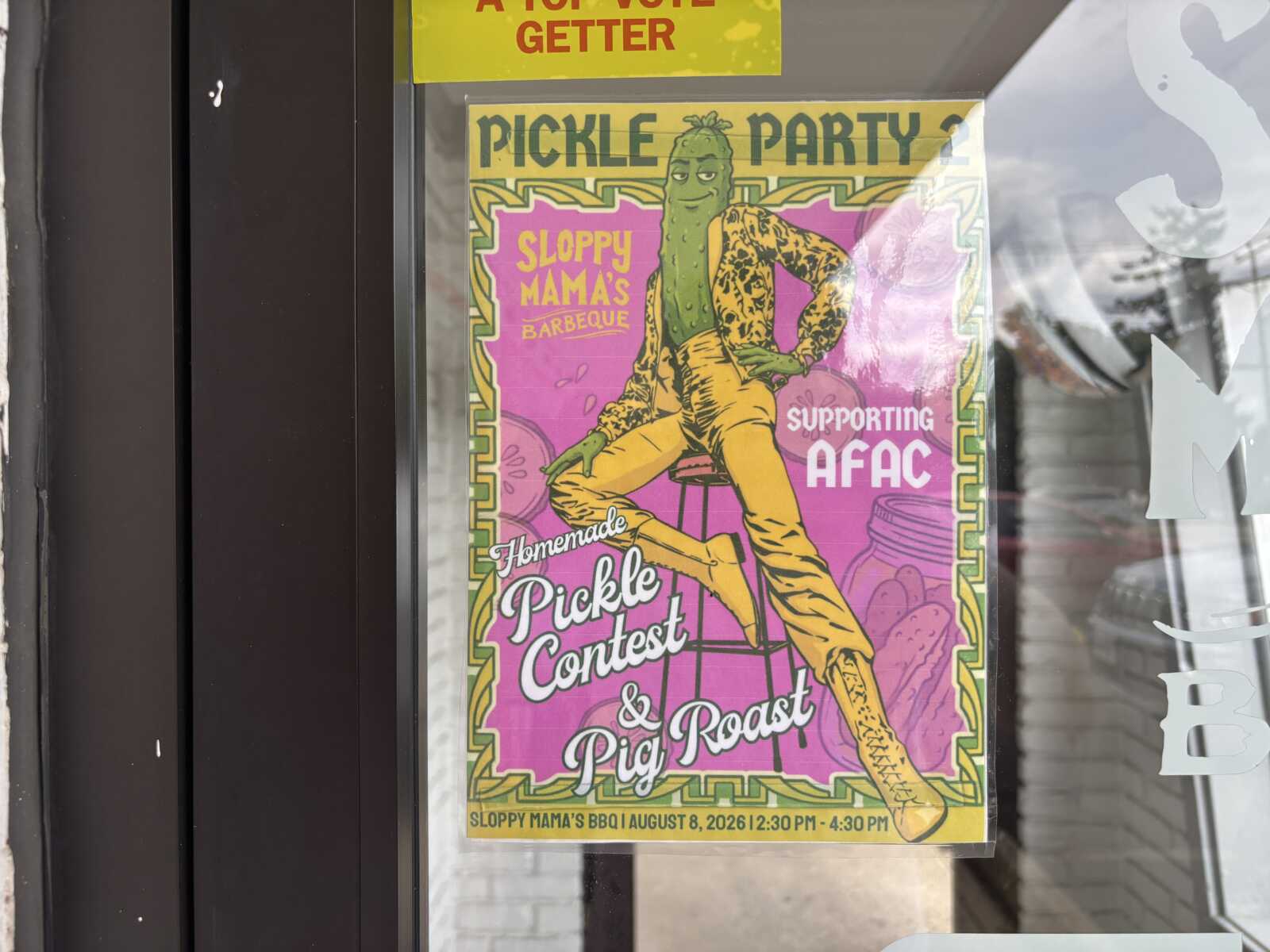
Sloppy Mama’s is hosting its second “pickle party” competition this Saturday from 2:30-4:30 p.m., inviting guests to vote on the quality of a brined bounty of pickled cucumbers, mangos and more.
“We kind of took a shot in the dark with a pickle party last year, and it ended up being super popular,” Sloppy Mama’s owner Joe Neuman told ARLnow. “It’s more than just cucumbers. People don’t always know, but you can pickle a lot of things.”
The event at 5731 Langston Blvd is a fundraiser for the Arlington Food Assistance Center (AFAC). It will feature two main categories — cucumber pickles and non-cucumber pickles — and upon entry, guests will receive two tokens to hand to their favorite from each category.
Last year’s non-cucumber category featured foods such as watermelon rind, beans and the defending champion, turnips.
Contestants’ creativity led Neuman to add a third category this year called, “You can pickle that?” Sloppy Mama’s will be the judge of that category.
Registration is available online. General admission is free, but it will not include any food, drink or merchandise.
A $60 ticket package includes all-you-can-eat pig roast, unlimited “Czexican” lager (a cross between Mexican lager and a Czech-style pilsner), novelty pickled food items and themed snacks.
A VIP “Very Important Pickle” package, for $150, includes everything listed above, as well as a “swag bag” with stickers, koozies and a custom “Dilly Briny” T-shirt featuring the party’s pickle mascot.
“He was inspired by David Bowie,” Neuman said of the snazzy pickle icon. “We have plenty of Dilly Briny merch, and it’s all pretty sweet.”
Winners this year will receive a $100 Sloppy Mama’s gift card, as well as a year of free pickles from the restaurant.
AFAC, the event’s beneficiary, is an Arlington nonprofit that provides food to community members experiencing food insecurity.
“It’s really fun, but this all started because I really wanted to do a fundraiser with AFAC,” Neuman said. “I think what they do is important because they’re helping people that need some help, and it starts with food access.”
