

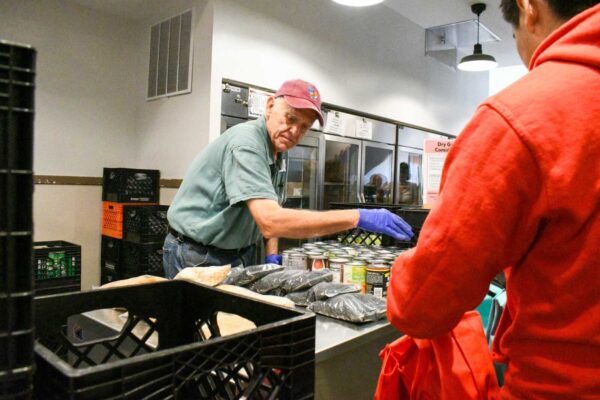
Visits to distribution sites at the Arlington Food Assistance Center (AFAC) have continued to grow, driving pleas for more county support.
During the safety-net organization’s 2026 fiscal year, visits to AFAC food-distribution sites were up 3.3%, to more than 206,000 from nearly 8,400 families.
Over a four-year period, the number of families served has grown 91%, with additional, but more modest, growth expected this year. Between 2020-26, the average number of annual visits by a participating family has grown from 18 to 25.
AFAC officials say they have written to county leaders, seeking consideration of additional government funding to support food purchases in the wake of a year-over-year increase in need.
“What we are seeing is a leveling off of the number of families who are food insecure, but those families are coming to us more often,” AFAC president/CEO Charlie Meng said. “For those already living in poverty, their situation has only worsened.”
The county government provides some funding to support AFAC’s food purchases. Given the growth in need, however, that funding has declined from 49% to 40% of the $3 million the organization sets aside for food purchases annually.
According to Meng:
“Arlington County’s support is the only government funding AFAC receives, and amounts to 10% of the $12.2 million it will take to operate AFAC in FY27. AFAC must raise the remaining 90% privately. We were able to avoid using our reserves last year, but fundraising will remain a significant challenge in FY27. This is why our Board has authorized the withdrawal of as much as $800,000 from reserves to cover an expected fundraising shortfall.”
County Board Chair Matt de Ferranti told ARLnow that the county government values its partnership with safety-net providers.
“The report from AFAC is striking,” he said. “I am sympathetic toward the notable burden it must carry to address this increased need. I will continue to talk with my colleagues and the county manager about this and will be mindful as we discuss supporting our most vulnerable residents over the coming months.”
De Ferranti said reductions to the federal Supplemental Nutrition Assistance Program (SNAP) and ongoing economic uncertainty are “results of the decision-making of this federal administration [and] are driving the increase in demand we are observing and creating painful funding gaps.”
“Those gaps have reverberated throughout the county’s budget, making this year particularly challenging,” de Ferranti said.
