

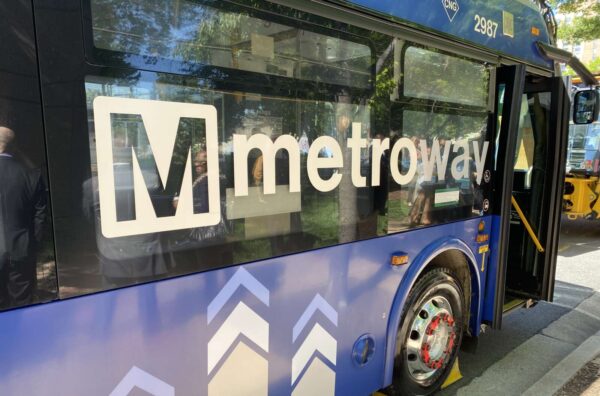
A blueprint for an expanded network of bus rapid transit (BRT) in Northern Virginia includes three lines passing through Falls Church.
The city was the last stop on a three-month tour for Northern Virginia Transportation Authority (NVTA) CEO Monica Backmon, where she has been explaining the BRT master plan and how area governments can support it.
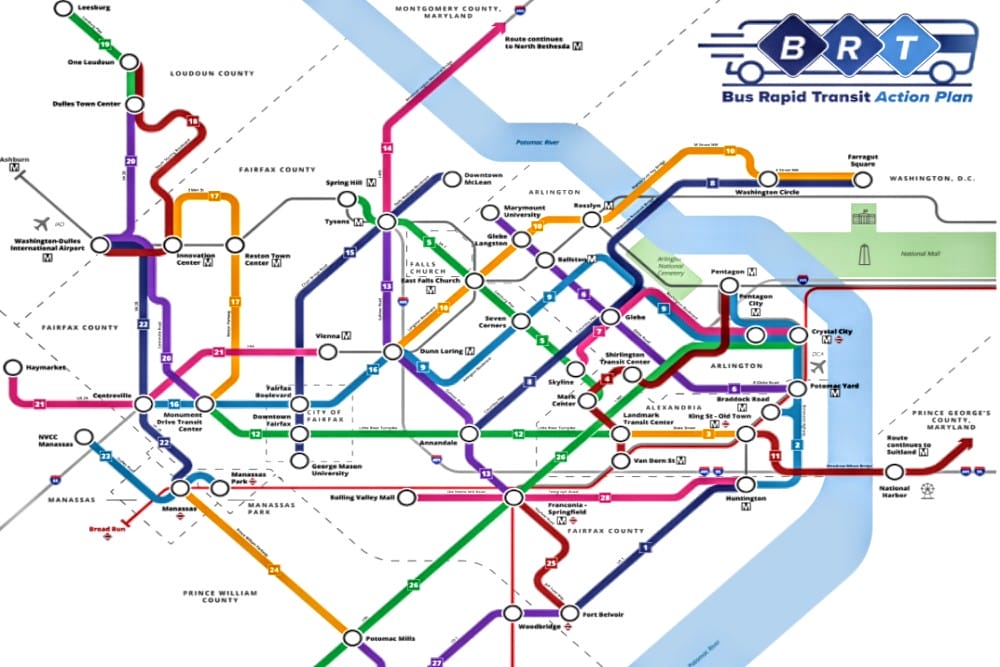
The proposal calls for three of the 28 lines to run through Falls Church:
- Leesburg Pike (Route 7) from Tysons to Mark Center
- Arlington Blvd (Route 50) from Dunn Loring to Crystal City
- Lee Hwy/Langston Blvd (Route 29) from Dunn Loring to Farragut Square
Based on the city’s population relative to Northern Virginia as a whole, “we’re certainly getting more than our share,” Mayor Letty Hardi said on Monday. However, Falls Church City Council members warned that plans need to be grounded in fiscal reality.
Operational costs of the proposed BRT network need to be addressed “right up front” as the 20-year development effort begins to take shape, Council member Arthur Agin said.
“It makes no sense to put something in and then you can’t run it,” he said.
NVTA has the ability to fund many of the capital costs, but is prohibited from paying operating or maintenance costs.
The goal is to develop a dialogue about “how we can help you and how you can help us,” Backmon said.
“The next step [is to] explore funding strategies,” she said. “We are looking at all pots of funding to help support this system.”
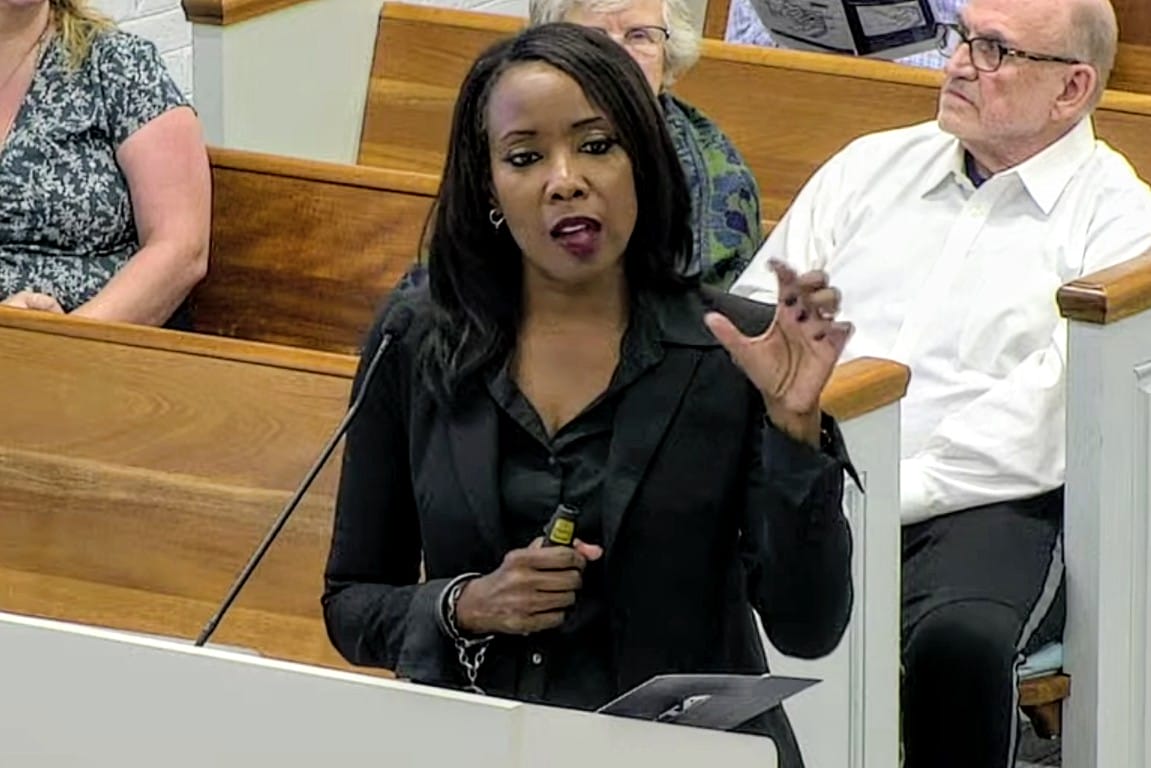
The overall plan calls for a 28-route BRT network to operate across Northern Virginia by 2045. Some of the lines potentially could cross into Maryland and D.C.
Hardi was generally upbeat about the broad strokes of the proposal.
“Transportation certainly aligns with our economic-development goals, housing, climate and quality of life,” she said.
BRT systems take several forms. The only one currently operating in the immediate area — Metroway in Arlington and Alexandria — uses dedicated lanes.
Others may use regular travel lanes but benefit from signalization priority. Upgraded bus stops and more frequent service are hallmarks of BRT service, as well.
No matter how it is implemented, a system needs to be “convenient, reliable and fast” or it faces the potential of a “death spiral,” Council member Justine Underhill said.
Backmon estimated that if the 28-route network is completed by 2045, it could host ridership of 143,000 per day or about 47 million per year.
Council members on Oct. 5 will host a work session focused on the Envision Route 7 project, which aims to bring BRT service through the Route 7 corridor from Fairfax County to Alexandria by way of Falls Church.
