

Democratic leaders in the Virginia General Assembly reached an agreement on a state budget with a compromise on taxing data centers.
The proposed budget agreement, announced last Friday evening, kept the sales and use tax exemption for data centers, which has divided lawmakers in the Virginia Senate and House of Delegates. However, it adds a new data center electricity consumption tax, which would charge a rate of $0.011 per kilowatt hour based on the electricity a data center uses each month.
The Virginia Senate and House voted Monday to accept the budget agreement, and it will now head to Gov. Abigail Spanberger (D). The budget must be signed by June 30 to avoid a partial state government shutdown.
The budget agreement would give 4% raises to teachers each year of the two-year budget, provide 3.5% increases for state employees for each of two years, and increase General Assembly salaries to $50,000 in 2028.
Other key components include establishing a marijuana retail market, expanding the option to seek a 1% local sales tax for school construction and renovations by voter referendum, funding the new Employee Child Care Assistance Program, boosting Medicaid funds, and providing SNAP funding in response to federal reductions.
Under the budget, the state’s standard deduction would increase $8,750 to $9,200 for single filers and $17,500 to $18,400 for married filers in the 2027 tax year. The deductions would reach $9,300 and $18,600, respectively, through 2029.
“This budget agreement reflects our shared commitment to making Virginia more affordable for families,” Senate Finance Appropriations Chair L. Louise Lucas and House Appropriations Chair Luke Torian said in a joint statement. “At a time when too many households are feeling squeezed by rising costs and economic uncertainty, this conference report makes historic investments to lower costs, strengthen our schools, protect access to healthcare, expand economic opportunity, and maintain the Commonwealth’s strong fiscal foundation.”
Lawmakers estimate the new data center electricity consumption tax could generate $1.2 billion over the two-year budget cycle. Data centers and other large-scale energy users will also pay a new rate class on Dominion Energy electric bills starting on Jan. 1, 2027.
Josh Levi, president and CEO of the Data Center Coalition, argued that new taxes in the proposed budget will hurt Virginia’s reputation as a business-friendly state and drive away investments.
“With this sweeping package of regulations and tax hikes intended to claw back the state’s economic development agreements, the General Assembly is breaking its commitments to an industry that has invested hundreds of billions of dollars, pays billions in annual taxes, and supports tens of thousands of jobs, including many blue-collar union workers who face an uncertain future as businesses prioritize new investment in states with competitive and stable business environments,” Levi said.
Environmental advocates say the budget didn’t go far enough by keeping the sales and use tax exemption for data centers.
“The data center industry still received the better end of this deal,” said Brennan Gilmore, executive director of Clean Virginia. “A two-year, capped consumption tax does not come close to offsetting a nearly $2 billion annual tax giveaway with no end in sight. Governors in Ohio, Texas, Illinois, and Washington have already moved further and faster than Virginia on this issue. Virginia’s elected leaders have more work to do.”
Spanberger, meanwhile, lauded the budget in a statement (below) late Monday afternoon.
“Today, the General Assembly has moved forward with a budget proposal — and that means we are keeping our government open and delivering for the 8.8 million people who call our Commonwealth home.
“There is a lot to be proud of in this budget. It delivers raises for our teachers and public employees, makes new investments in our schools, includes a RGGI credit for residential customers and small businesses, and takes other tangible steps to make Virginia more affordable — all while protecting families from the devastating cuts in the so-called ‘One Big Beautiful Bill.’
“Importantly, this budget positions the Commonwealth to be a national leader on data centers. For the first time anywhere in America, Virginia will institute a statewide energy consumption tax on data centers — an idea I first proposed this spring — to ensure this industry pays its fair share and does not drive up costs for Virginia families.
“This is a compromise proposal — one my administration helped craft — and it builds a strong foundation for further discussions about the future of this industry in Virginia on issues like environmental and community impact.
“Failing to pass a budget would have been unprecedented in the history of our Commonwealth — and it was never an option. My focus remains exactly where it has always been: lowering costs for Virginians, delivering for our schools and communities, and supporting the families who count on their government to meet its most basic responsibilities.”
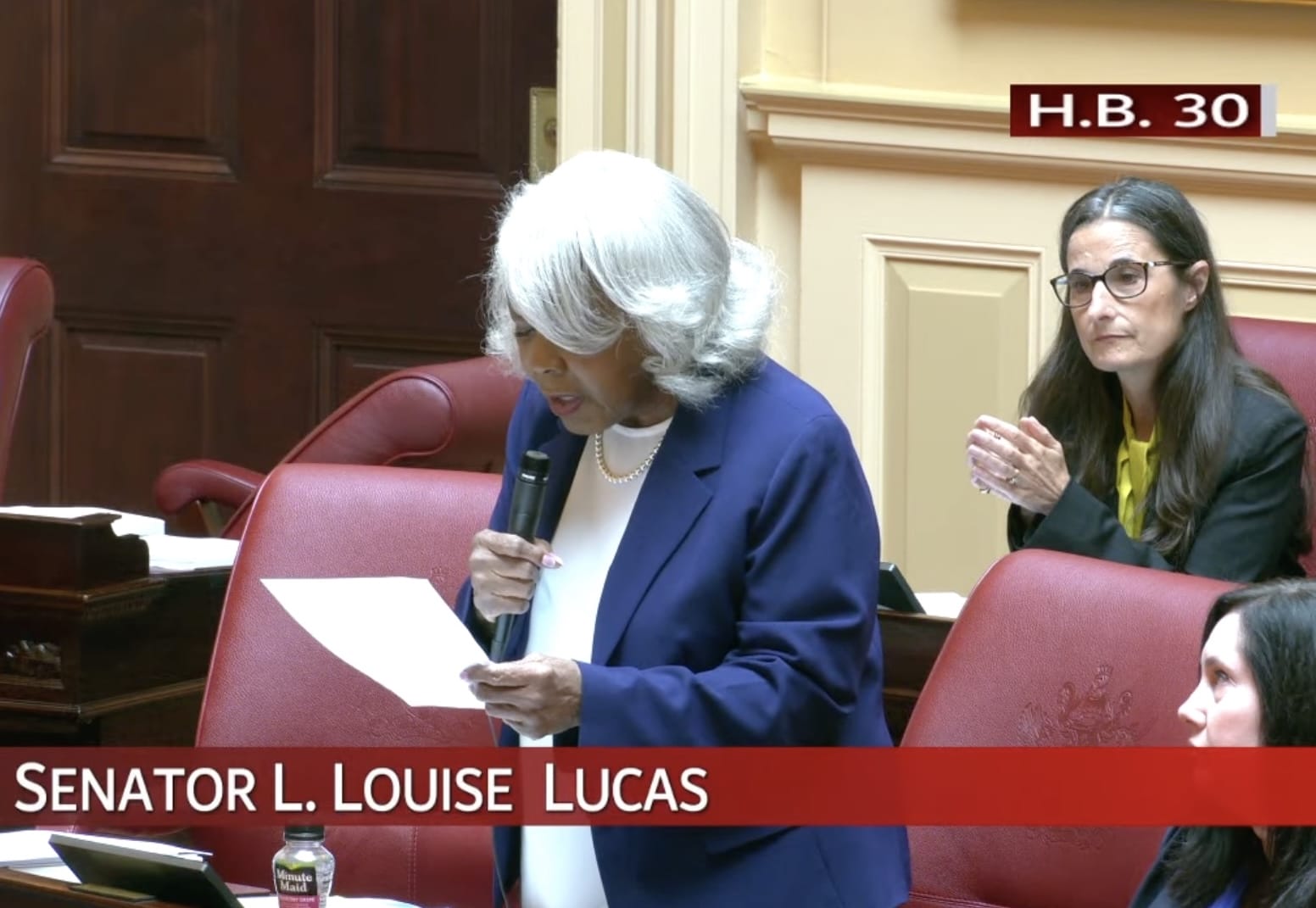
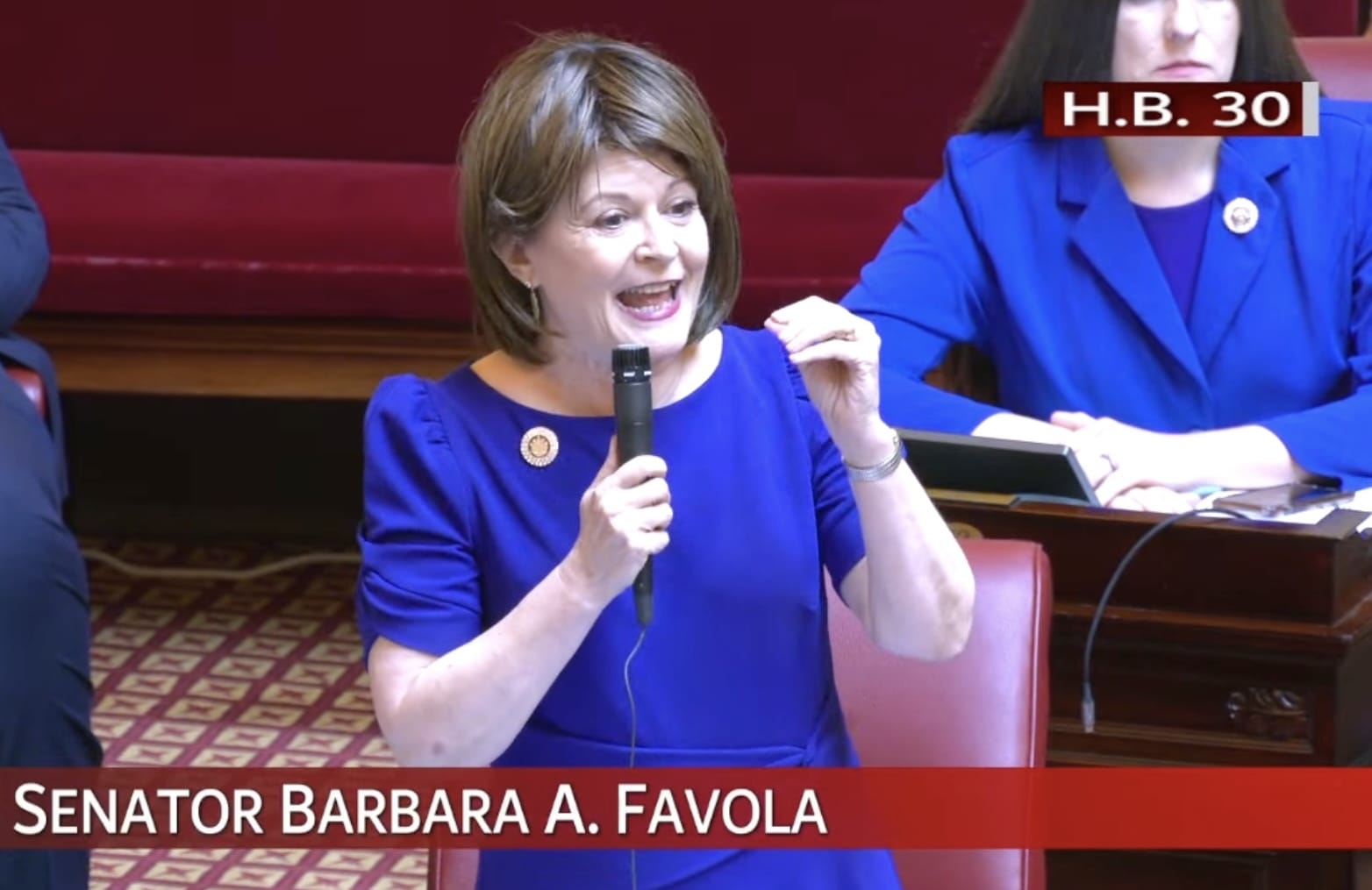
In remarks on the Senate floor Monday, Lucas said she will continue examining the data center revenue issue in a work group and will continue her data center listening tour with residents. The General Assembly’s Joint Subcommittee on Tax Policy was ordered to study the sales and use tax exemption and other data center revenue and make recommendations by mid-December.
“I still believe that expiring the data center sales and use tax exemption would be the best plan forward,” Lucas said. “However, this conference report provides an alternative path where data centers pay their fair share to support services for Virginia and ensure structural balance.”
