

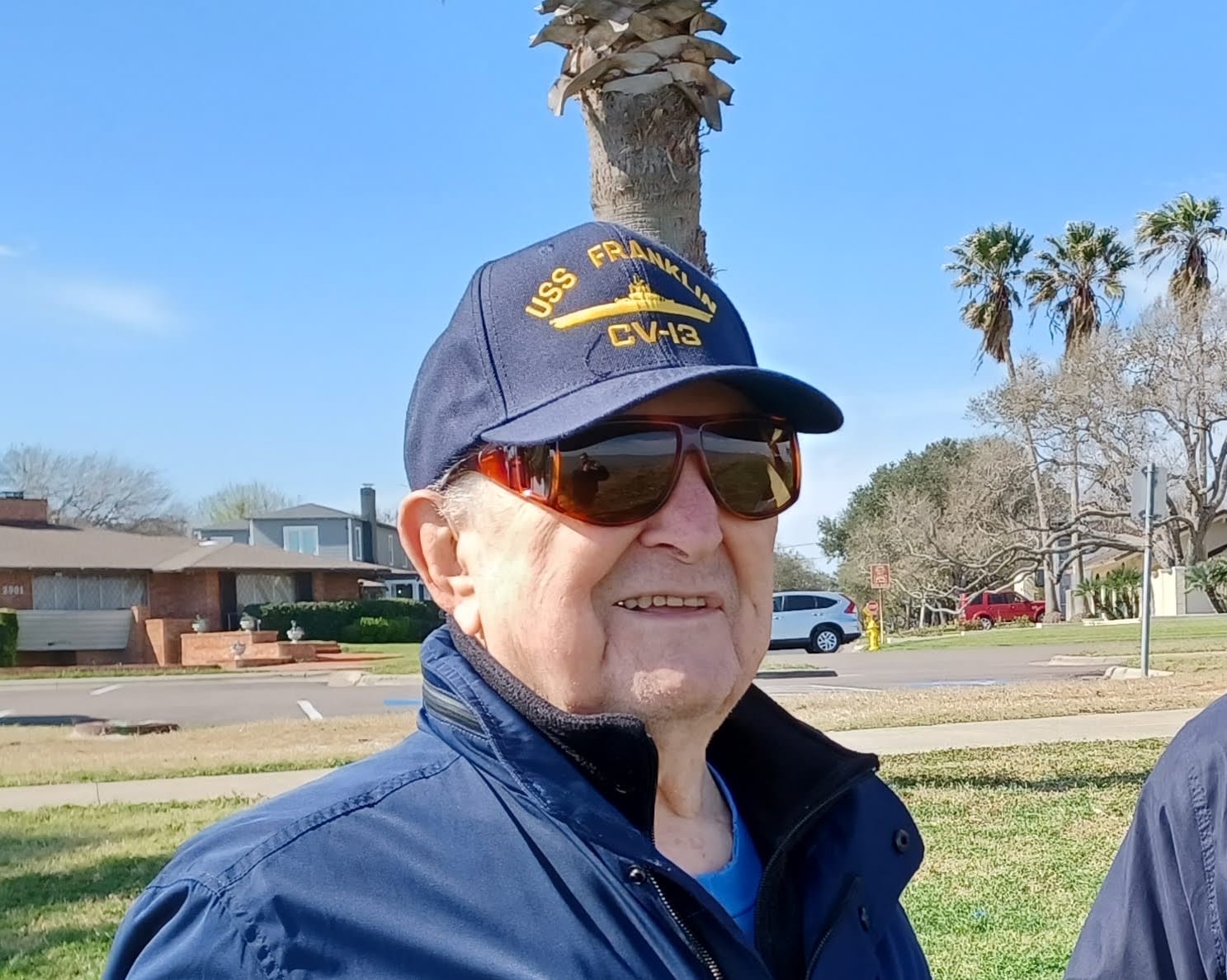
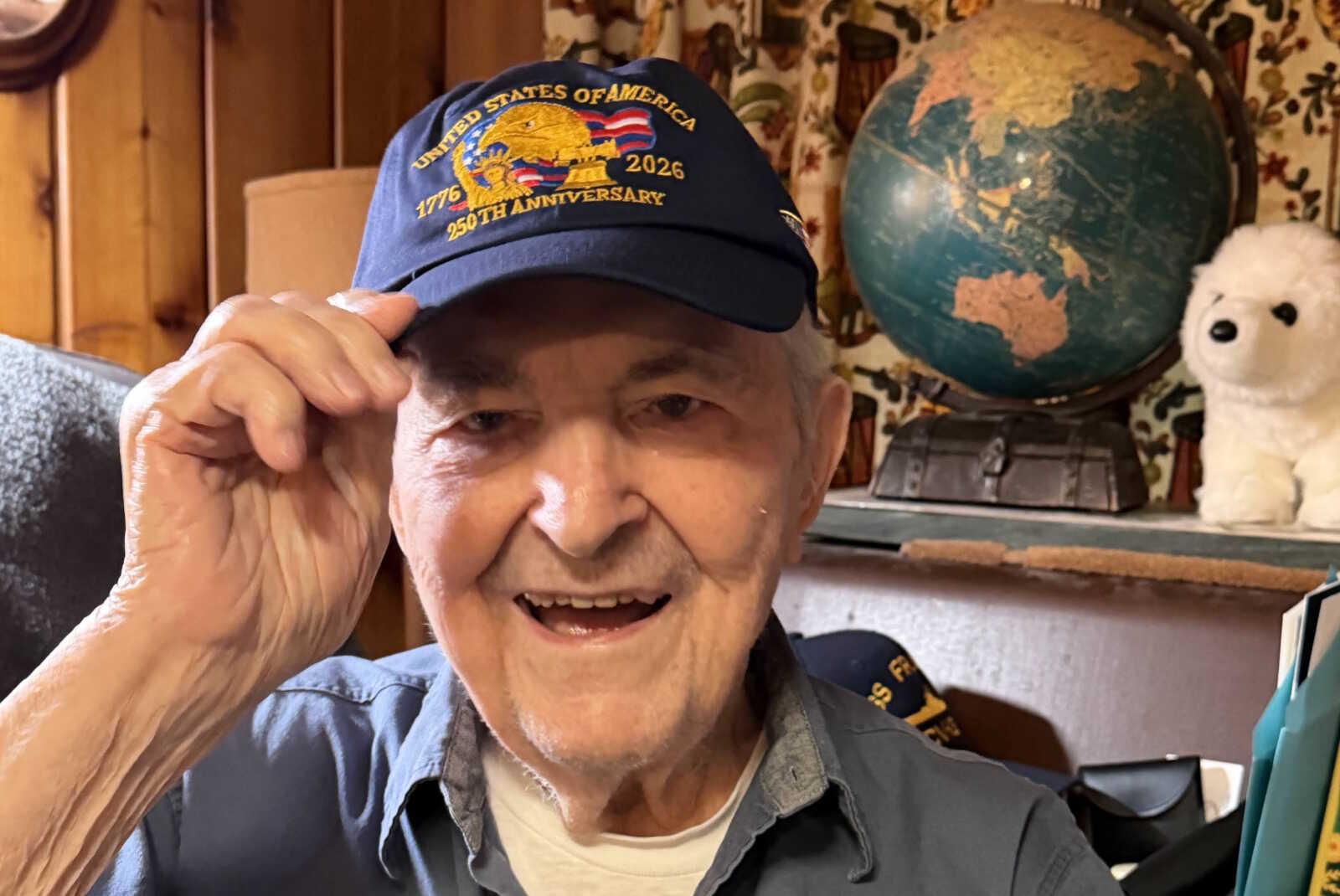
Walt Gallagher was asleep on a canvas cot three decks below the USS Franklin’s flight deck when a Japanese attack set the aircraft carrier ablaze in March 1945.
Gallagher, a Navy aviation ordnanceman who was 18 at the time, survived one of the deadliest days for any American warship in World War II. The Dover Crystal resident turned 100 on Oct. 29.
The March 19, 1945, attack killed 807 men aboard the Franklin and wounded 487, according to the National Museum of the U.S. Navy. Counting an earlier kamikaze strike, the Franklin lost upward of 924 crew members during the war, more than any other U.S. ship except the USS Arizona, according to the Naval History and Heritage Command.
Gallagher described that day, and the decades that followed, in a 2022 oral history recorded by the National Museum of the Pacific War and in written answers to ARLnow’s questions ahead of Veterans Day tomorrow (Wednesday), prepared with help from his daughter, Marie Gallagher.
Marines full, Navy next door
Gallagher, who grew up in New Jersey, set out to join the Marine Corps on his 17th birthday in 1943. When he got to the recruiting station in Newark, the Marines had already filled their quota for the month.
“They told me that the Navy recruiting station was right next door. I just went to the next door, and that’s where I signed up for the Navy,” he said in the oral history.
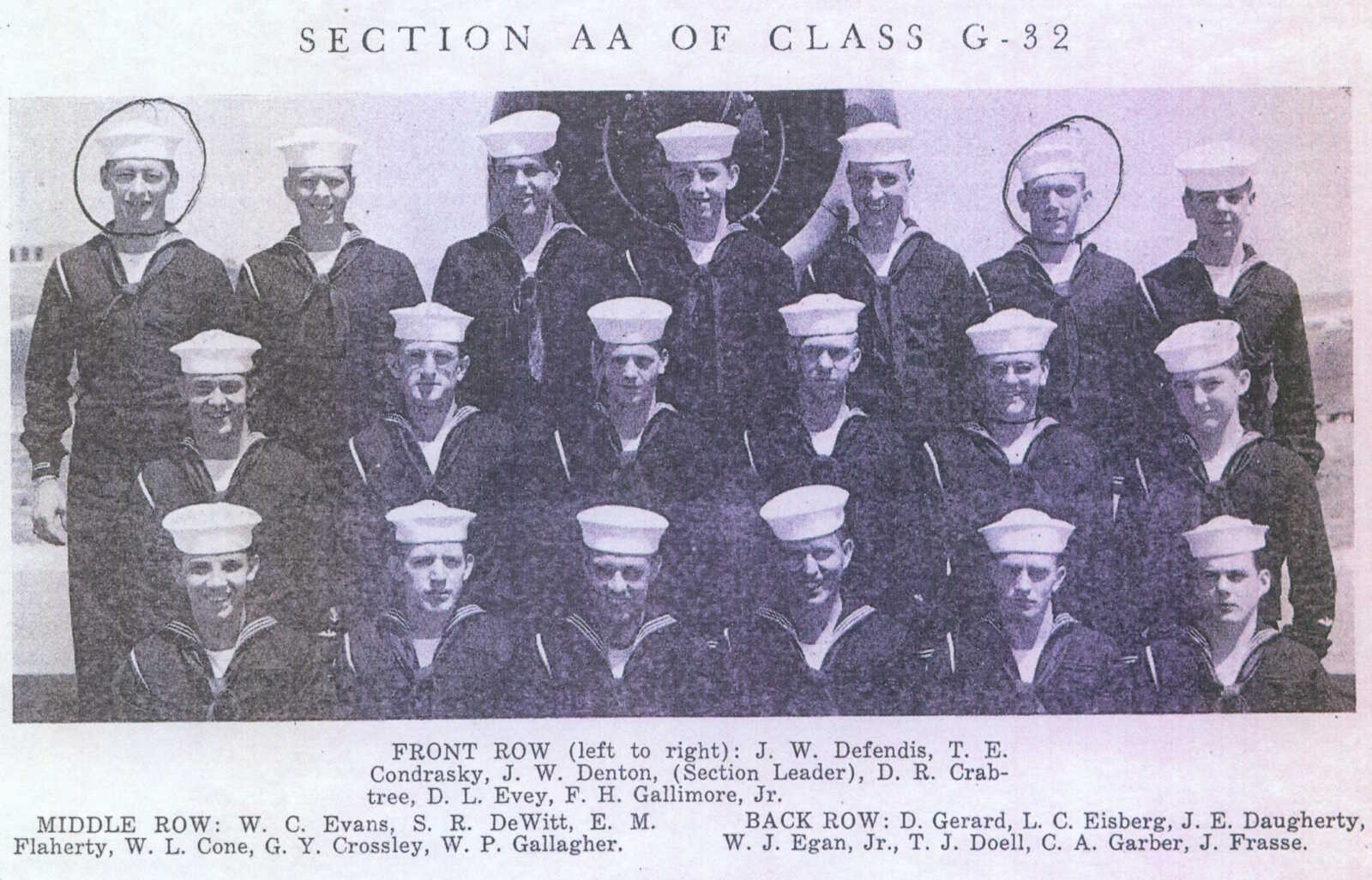
Because he was 17, his parents had to sign for him. After about seven weeks of basic training at the Sampson U.S. Naval Training Station in upstate New York, he went to the Navy’s Aviation Technical Training Center in Memphis for aviation ordnance school, graduating in early May 1944.
The Navy then sent him to San Diego. About five days after arriving, he learned he was one of 18 from his class of roughly 100 assigned to the Franklin, an Essex-class carrier tied up at a nearby dock and preparing to head for the Pacific. He went aboard around the start of June 1944 and was assigned to arm SB2C Helldiver dive bombers.
Over the next several months, the Franklin’s planes supported landings in the Mariana Islands, Peleliu and Leyte, according to the Navy museum. Kamikazes hit the carrier on Oct. 30, 1944, sending it to Puget Sound Navy Yard in Bremerton, Washington, for repairs.
March 19, 1945
The Franklin returned to the Pacific in March 1945 and joined Task Force 58 for strikes on the Japanese home islands.
Gallagher was by then in charge of the bomb elevators on the ship’s third deck. He said his crew spent about three days moving bombs up from the magazines to be loaded onto planes, with little rest. The night before the attack, the crew was called to battle stations 12 times, according to the Naval History and Heritage Command.
Early on March 19, Gallagher sent the other men off to sleep, straightened up the area and headed for his bunk. He didn’t make it past a canvas cot in the forward mess hall.
“I got on that cot, and I think before my head hit the canvas, I was sleeping,” he said.
Less than half an hour later, a single Japanese dive bomber hit the Franklin with two bombs. The first exploded in the forward part of the hangar deck, nearly above where Gallagher lay. The second hit among the fueled and armed planes lined up to launch farther back. That set off 126 secondary explosions of bombs, rockets and ammunition, according to the Navy history command.
The fires and blasts tore through much of the rear of the ship, but they didn’t reach his section of the third deck.
From the mess hall, Gallagher could see into the officers’ wardroom, where badly burned crew members were being brought in for triage. A friend came through and asked whether he wanted to head up to the flight deck.
“I said, no, I’ve got to stay here and take care of these bombs, I can’t leave them fused up like this,” Gallagher said.
The friend stayed with him. With a couple of other ordnancemen, they defused about a half dozen bombs still sitting at the elevators, putting the plugs back in and storing the fuses. On their way forward, they stopped to check on sailors who had been killed by the concussion.
On the forecastle, his friend Arthur Alameda found him a life jacket and a helmet. When they reached the flight deck, the ship was burning and exploding, with pieces of planes flying through the air.
“I just had to stop and watch a four-prop propeller going through like a boomerang out to the port,” Gallagher said. “It looked like it went out a half mile or so, and I was wondering if it was going to return like a boomerang to the ship, but it didn’t, of course.”
The ship’s Catholic chaplain, Lt. Cmdr. Joseph T. O’Callahan, was rounding up men to work the fire hoses. O’Callahan and Lt. Donald A. Gary were both later awarded the Medal of Honor for their actions that day. Alameda went with the chaplain, but Gallagher stayed put. The hoses had no water, he said, and soon the large “Tiny Tim” rockets carried by the ship’s planes began zooming down the deck.
The Franklin lost power and began to list.
“I thought it was going to sink,” Gallagher said.
The cruiser USS Santa Fe came alongside to fight the fires and take on the badly wounded, and Gallagher helped hold the lines linking the two ships. Several hundred Air Department crew members were standing on the flight deck. An officer began calling out the divisions not trained to fight fires and ordering them across to the Santa Fe. When he reached Gallagher’s V-5 division of ordnancemen, Gallagher crossed over.
The Santa Fe took on 826 men in half an hour, according to the Navy history command.
Gallagher called the order “the best thing to do at the time.” Years later, he met the officer who had shouted it, a pilot instructor named Red Morgan.
From the Santa Fe, Gallagher watched the Franklin fall into the distance with smoke still rising. The cruiser USS Pittsburgh eventually took the carrier under tow. He saw another Japanese plane attack, but it crashed into the sea.
He didn’t set foot on the Franklin again until Hawaii. The carrier stayed afloat and, after temporary repairs, made it to the Brooklyn Navy Yard. It was decommissioned in 1947 and sold for scrap in 1966.
After the war
Gallagher spent six months in Hawaii, mostly resting and recovering. He then took leave on the East Coast before reporting to a naval auxiliary airfield south of Coronado, near what is now Imperial Beach in the San Diego area. The war ended in September 1945.
He attended American University on the G.I. Bill. He then signed up for more military service and was sent to Rhode Island, where he learned to program in assembly language. He left the Navy as a Machine Accountant 2nd Class.
He met his wife, Judy, at American University. The couple moved from Boston to Arlington, her hometown, where they raised three children. They have four grandchildren.
Gallagher worked for Melpar/E-Systems before moving to the Library of Congress, where he finished his career as head of the Automated Systems Office. He was active with the Better Sports Club of Arlington and the Arlington Sports Hall of Fame. He also organized and coached youth wrestling and baseball for years. Later, he took up genealogy and, through DNA testing, met relatives he otherwise wouldn’t have known.
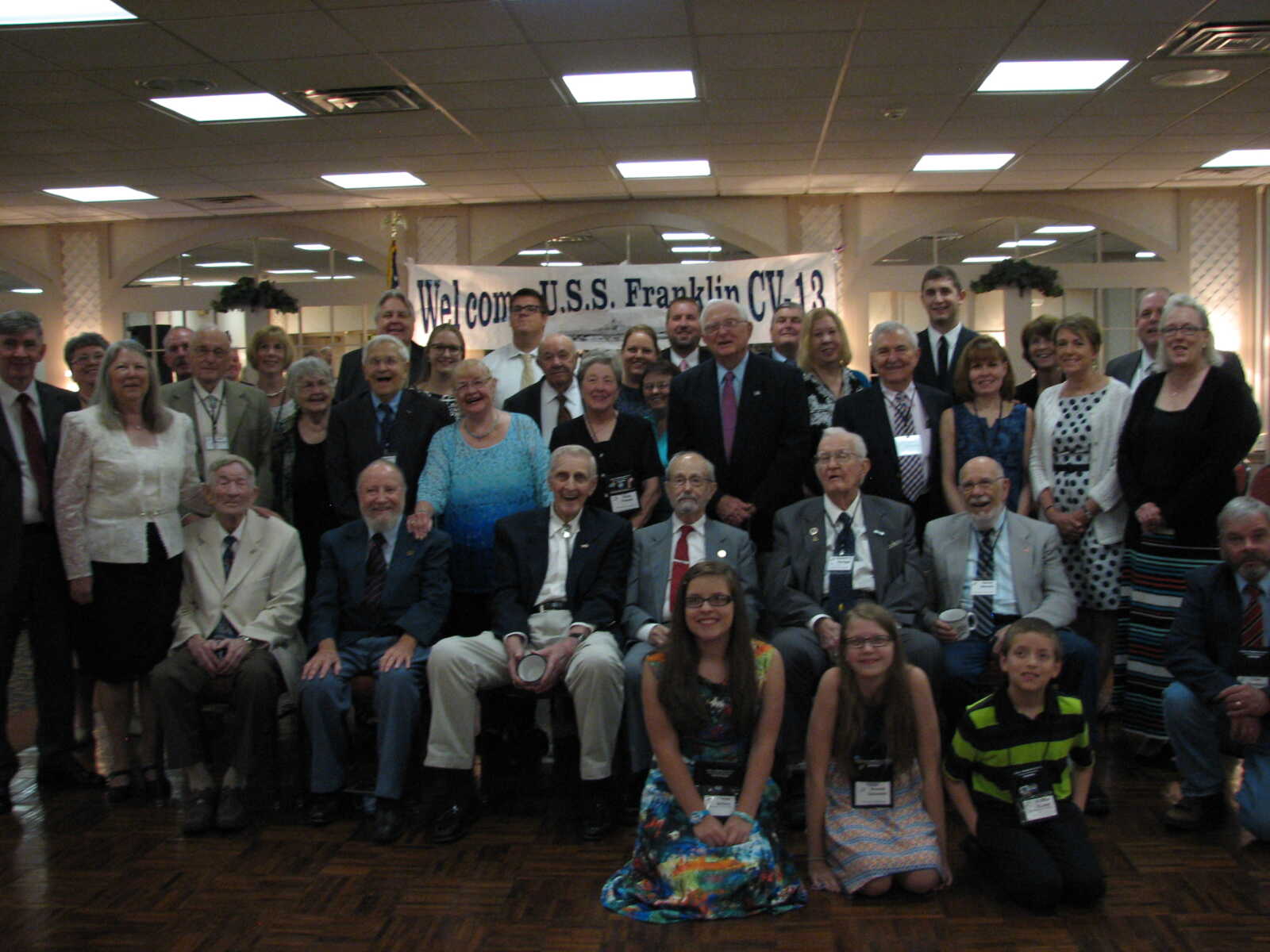
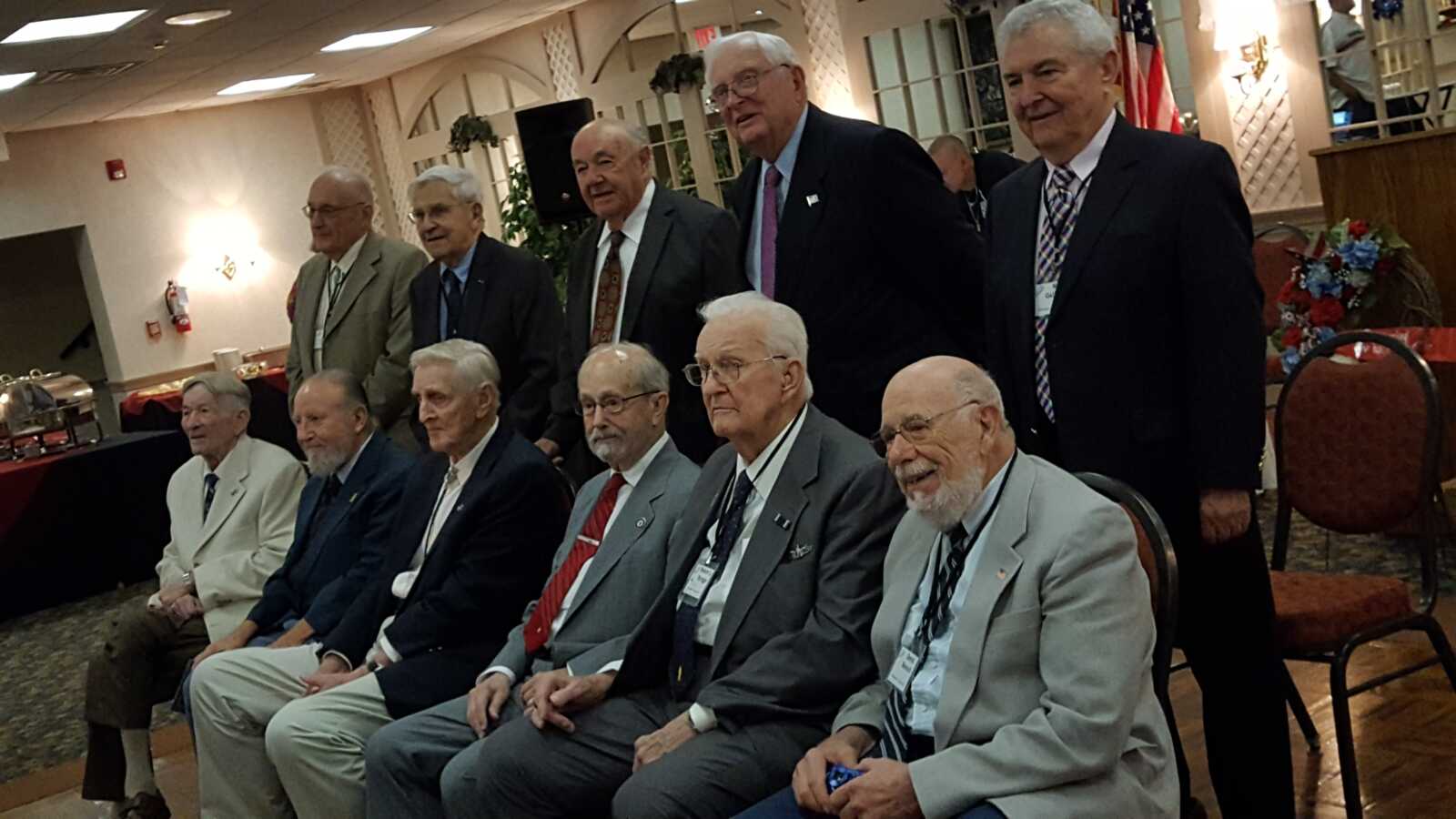
He went to USS Franklin reunions whenever he could.
“It was a time to reflect with others who shared my history aboard the Franklin,” he said.
Gallagher said the Navy shaped who he is, and that he applied the skills he learned there throughout his civilian career and volunteer work. “If circumstances were different, I might have spent my entire career in the military,” he said.
“Our collective memories are short when it comes to war,” Gallagher said. “I wish we could keep those memories so alive that future wars do not keep happening.”
He also had advice for young people, especially those considering the military. He said they should talk to a member of Congress about what it takes to become an officer, and get trained before the choice is made for them.
“Get proper training before you get drafted,” he said. “If your country is heading for war or is already there, get proper training.”
