Editor’s Note: This sponsored column is written by Nick Anderson, beermonger at Arrowine (4508 Lee Highway).

My first experience with Hefeweizen was probably much like many people of my age: a happy hour special ordered because ‘look at that tall glass—that’s a deal,’ served with a wedge of lemon. In those days I thought that was a beautiful thing, and if I’m honest there are some days even now when I still do (don’t tell anyone, though. I’ve got a rep to maintain here). There were a great many things I didn’t know, however. Things I’d learn only with time and experience. To many here in the U.S. though, the classic German Wheat Ale is still that cloudy junk you throw citrus into. Let’s take a few moments today to explore true Hefeweizen, and see if we can’t find the right one for you. Because there is a right Wheat Beer for everyone.

Editor’s Note: This sponsored column is written by Nick Anderson, beermonger at Arrowine (4508 Lee Highway).

Today we’re wrapping up our ABCs of German Lager with a rundown of seasonal and slightly more obscure styles that you may come across, or maybe you’ve seen before but not known what they are. With a brewing tradition as storied and long-reaching as Germany’s there are many regional variations and sub-categories, but for today’s purposes we’re going to look at the ones you’re most likely to run into. Let’s start with perhaps the most famous seasonal beer in the world:


Editor’s Note: This sponsored column is written by Nick Anderson, beermonger at Arrowine (4508 Lee Highway).

Last week we looked at the most common forms of traditional German Lager found today. This week we’re going to run through some of the maltier and stronger styles of Lager out there, and look at examples of each that shouldn’t be too difficult to come by.


Editor’s Note: This periodic sponsored Q&A column is written by Adam Gallegos of Arlington-based real estate firm Arbour Realty. The views and opinions expressed in the column are those of the author and do not necessarily reflect the views of ARLnow.com. Please submit follow-up questions in the comments section or via email.

How similar is the TV show Million Dollar Listing to real estate in Arlington?


Editor’s Note: This sponsored column is written by Nick Anderson, beermonger at Arrowine (4508 Lee Highway).

For our first week of German beer style exploration, we’re going to take a look at what is probably the most popular style of beer in the world — the German-style Lager. Lager has a long and fascinating history. The word Lager itself is actually medieval German for “cellar,” as it was in the caves and storehouses where these beers were originally made. The bottom-fermenting yeast that makes a Lager ferments and conditions at lower temperatures, and as a result the beers they made adopted the name of where they were most commonly brewed.


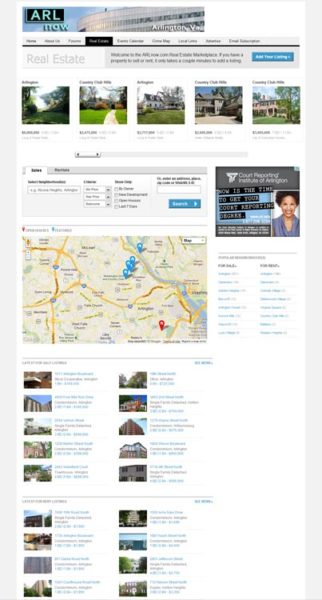
Unlike national real estate websites, our real estate section is focused exclusively on Arlington, and is searchable by more than three dozen popular local neighborhoods. You can can also search for sales or rentals by price, zip code, address, number of bedrooms, open houses, new construction, sale by owner, etc.

Currently, we have more than 700 house and condo sales listed and more than 200 house, condo and apartment rentals listed.


Editor’s Note: This sponsored column is written by Nick Anderson, beermonger at Arrowine (4508 Lee Highway).

After our tour of beer styles common to most of the world, we’ve arrived at the beers of Germany. Germany has one of the richest and most celebrated beer histories in the world; it’s perhaps the country most responsible for establishing beer’s presence all over the world. German beer isn’t without controversy, however. I can attest to the decline of interest in German beers over the past few years among American craft beer drinkers, and as a result have stopped stocking them as much as I once did. I hear both sides of this; from those who love German beer and wish I had more to offer, and those who perceive German beer as boring or too traditional in the era of beer experimentation. Today, before getting into the specific German styles as we normally would, we’re going to look at the law that both established German beer and in many eyes holds its development back in the modern era: the Reinheitsgebot.


Editor’s Note: This periodic sponsored Q&A column is written by Adam Gallegos of Arlington-based real estate firm Arbour Realty. The views and opinions expressed in the column are those of the author and do not necessarily reflect the views of ARLnow.com. Please submit follow-up questions in the comments section or via email.

A reader asks: How should I go about choosing a Realtor to sell my house?


Editor’s Note: This sponsored column is written by Nick Anderson, beermonger at Arrowine (4508 Lee Highway).

People often ask me about ‘what’s next’ in craft beer. What will be the next big thing? The next hot brewer, or brewery, or style? In all honesty I can only offer guesses, but I think there’s something building here that no one may quite be expecting, and it may turn out to be a great force in beer here in America: the emergence of Italian craft beers and their potential influence on food-pairing in gastropubs and (increasingly) in fine-dining restaurants here in the States. With a rich craft beer scene spearheaded by brewers who came up during the 90s, it’s easy to make the joke that these beers are arriving on ‘Italian time.’


The eight-story complex, developed with financial assistance from Arlington County and the Virginia Housing Development Authority, sits above the Church at Clarendon, which recently celebrated its re-opening. An adjoining building houses the county’s largest daycare center.

The development contains 46 market rate apartments, and 70 affordable housing units. The units, which the developer calls “boutique apartments,” range from studios to three bedrooms. According to the complex’s website, prices run from $2,125 per month to $3,170 per month, with affordable units going for 60 percent of the cost to those who qualify.


View More Stories