

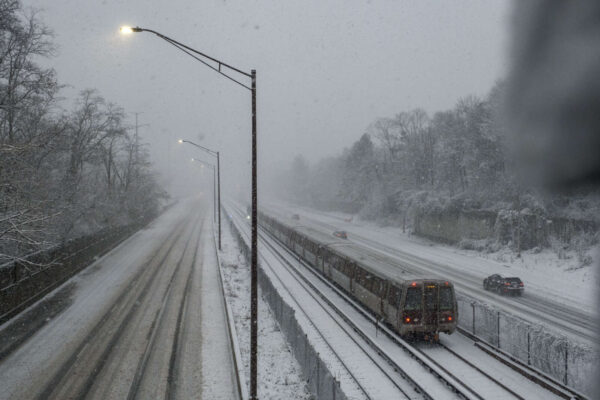
The Falls Church City Council is preparing to vote on a region-wide proposal to increase annual spending for Metro by $460 million every year.
On Monday, Feb. 2, Council members are slated to discuss a request from the Metropolitan Washington Council of Governments (COG) and Washington Metropolitan Transit Authority (WMATA) to formally support the DMV Moves funding proposal to augment Metro service.
A Council vote in support of the proposal is expected at the Feb. 9 meeting. Arlington, Loudoun, and Fairfax counties have already approved resolutions in support of the funding plan, adopted by the COG and WMATA board last fall.
“We plan to go to all 24 jurisdictions” that make up the metro area, COG deputy executive director Kanathur Srikanth said at the Wednesday (Jan. 21) meeting of the region’s Transportation Planning Board (TPB).
Falls Church is the last Northern Virginia jurisdiction on the schedule, but City Council approval is all but guaranteed.
“It’s what other jurisdictions have done,” Council member Laura Downs said at a Jan. 21 agenda-setting session among Council members and staff.
The 49-page DMV Moves plan calls for an additional $460 million in annual spending, starting before fiscal 2029, to be split among Virginia, Maryland and D.C.
Each of the three jurisdictions has the power to decide how to raise the funding. The Virginia General Assembly is currently considering whether, and how, to pay the commonwealth’s share.
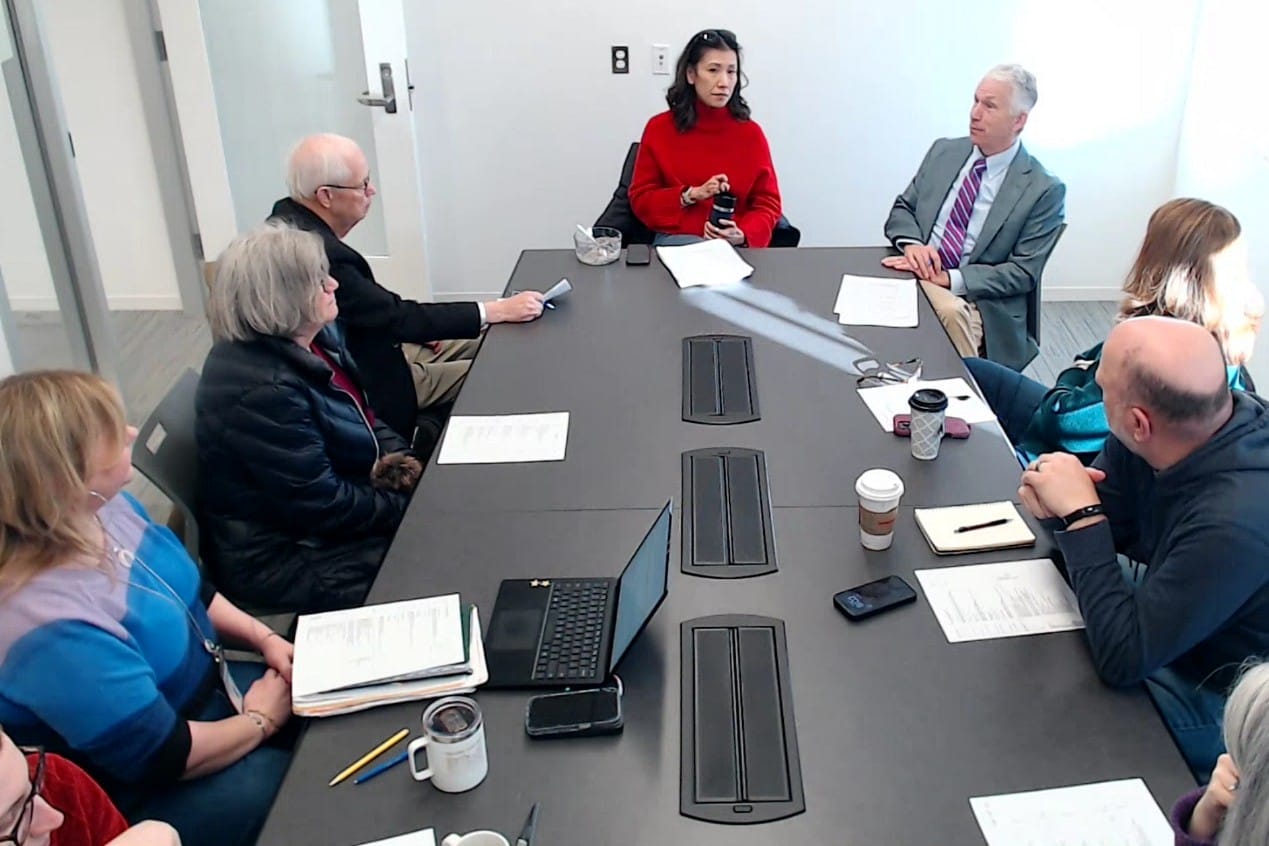
Status update set on tree-canopy proposal: Also at the Feb. 2 work session, Council members are expected to be briefed on proposed changes to an updated zoning ordinance related to tree-canopy requirements on new commercial development in the city.
On Feb. 9, the measure will be formally introduced, with a public hearing and potential adoption currently set for March 9.
During the drafting process, city staff learned that state law includes a mandate that developers be allowed to make cash contributions in lieu of meeting minimum tree-canopy requirements in local ordinances.
“We’ll talk about that and a few other changes to the ordinance,” City Manager Wyatt Shields said.
Council members last March directed staff to begin considering changes to tree-canopy rules for new commercial development.
At the time, Council members opted not to consider changes related to trees in residential development. The door was left open for future consideration after any changes on the commercial side.
At the March 2025 meeting, lead city arborist Charles Prince estimated Falls Church’s overall tree canopy at 48% — higher than in Arlington or Alexandria, but slightly below the regional goal of 50% being sought by the Metropolitan Washington Council of Governments.
Teens ‘with strong backs’ sought for snow-removal efforts: Falls Church offers a snow-clearing initiative that has a decidedly small-town feel to it.
The Falls Church Community Center maintains a list of local youth offering snow-removal services. Currently, however, there are only three youth offering snow-removal services on the list.
“It’s gone way down,” City Manager Wyatt Shields said at a recent Council agenda-setting session.
Shields suggested the city might try to rebuild the list by encouraging “teens with strong backs” to offer their services.
The discussion took place prior to this weekend’s winter storm, which hit Falls Church with several inches of ice on top of 4 to 5 inches of snow.
Before the storm hit, city officials announced activation of snow-emergency routes. Vehicles parked on those streets were subject to towing in order to improve plowing efficiency.
More than two dozen stretches of roadway are designated snow-emergency routes in Falls Church.
