


More park space, improved traffic flow and better emergency-vehicle access are among the key desires of the Arlington View community.
Those concerns were outlined to County Board members on March 17, as the Board formally accepted an updated neighborhood plan that will guide future county planning efforts. It marks the first update to the original Arlington View Neighborhood Plan, which, when adopted in 1965, was the first of its kind in the county.
In a survey conducted as part of the new plan’s development, residents in the 450-home neighborhood said they appreciated its location, diversity, sense of community and relative affordability.
“All of those are changing rapidly,” said Carter Echols, an Arlington View resident who helped lead development of the new plan.
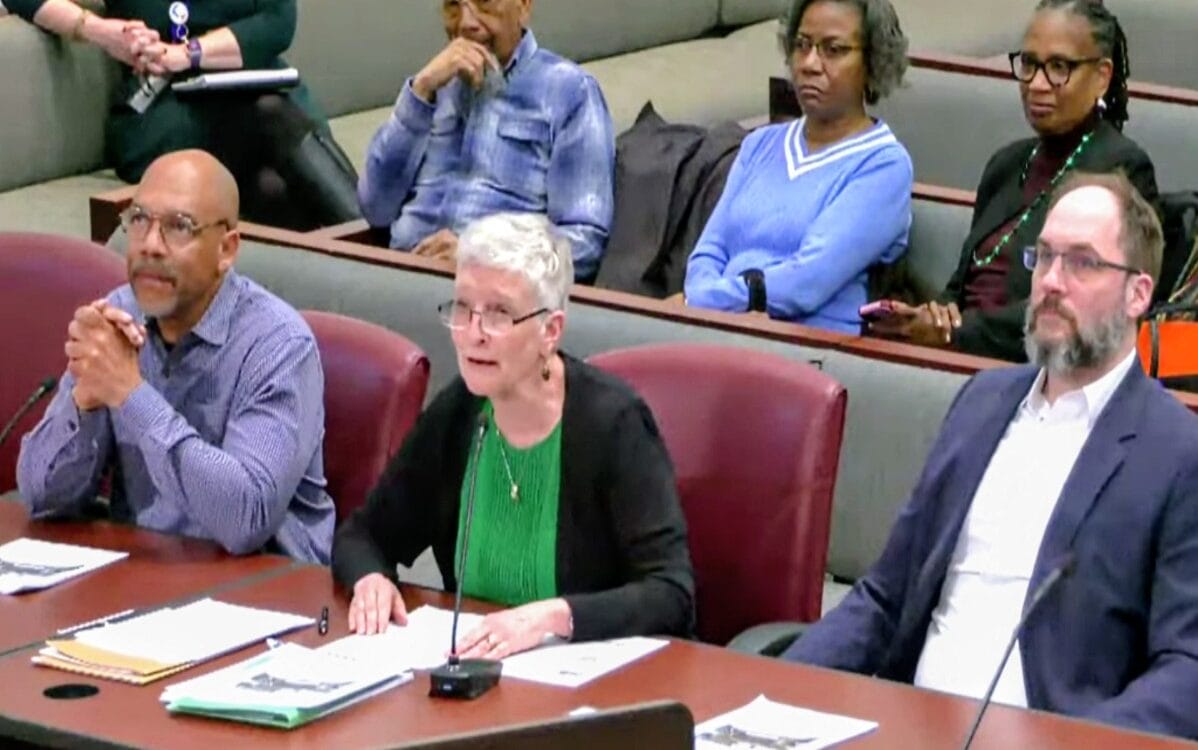
She was joined at the March 17 meeting by current Arlington View Civic Association president Evan Henry and former president Ron Greene.
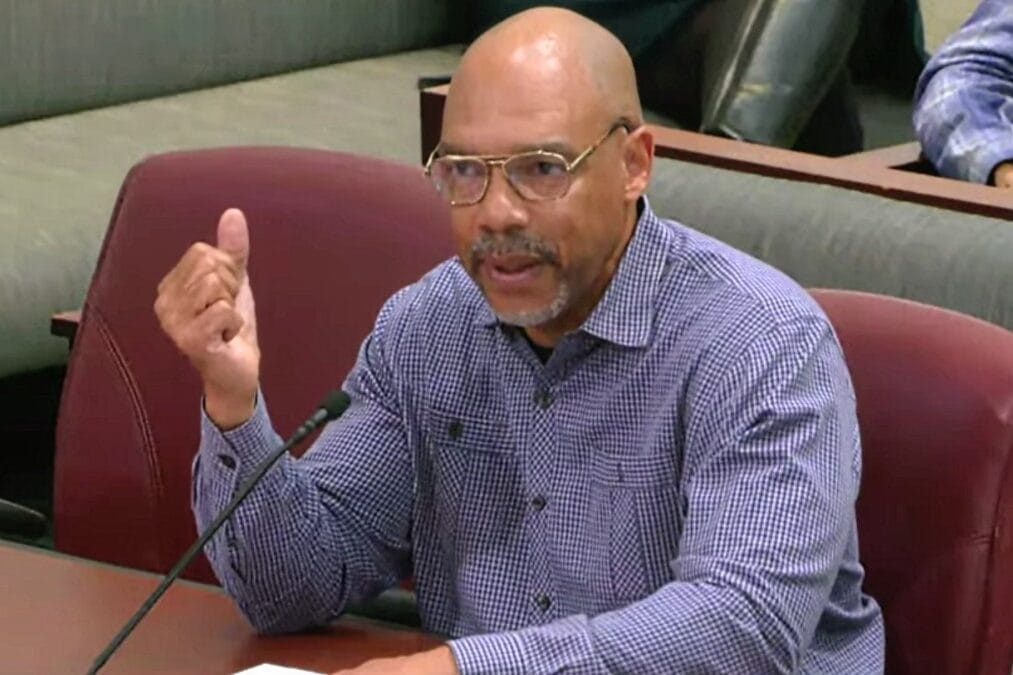
Greene said that while the plan helps identify areas of concern and opportunity, it is no substitute for viewing the situation in person.
“I invite you guys” to walk the community in person, he said. “You don’t get a true idea of what the issues are until you’re on the ground and you see them.”
The Arlington View community is bounded by Columbia Pike on the north, I-395 to the east, Army Navy Country Club on the south and the Columbia Heights neighborhood to the west.
It includes single-family homes, some townhouses and three multifamily properties. Hoffman-Boston Elementary School and Mount Olive Baptist Church are also located in the community, as is the historic Harry W. Gray House.
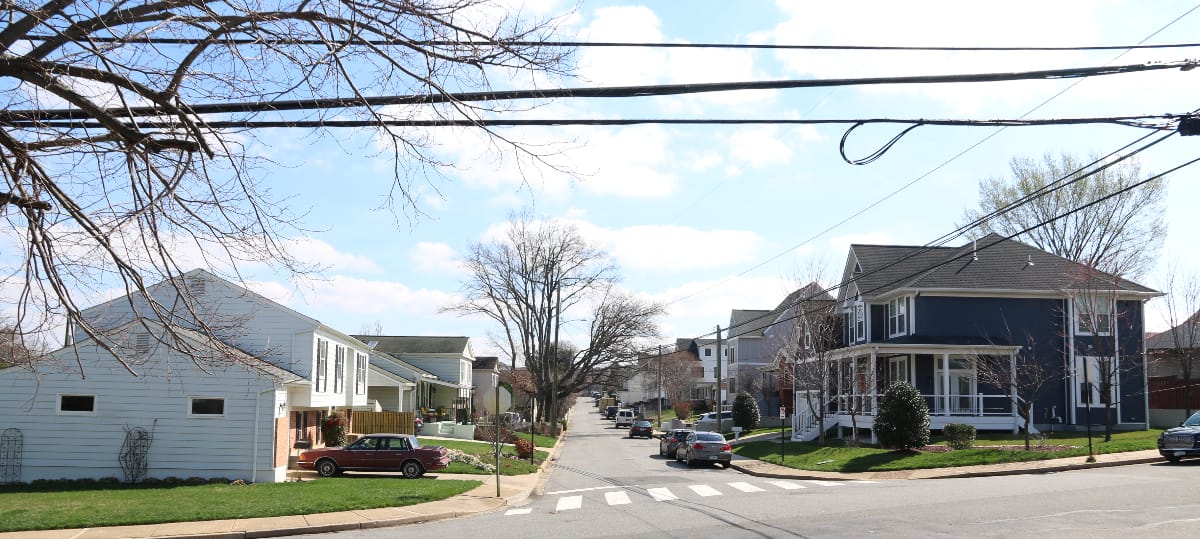
A major concern at the March 17 meeting was a dearth of parks and other open spaces. The fields at the elementary school are in poor shape, and the 0.1-acre Arlington View Park is little more than a strip of land with a steep slope down to S. Queen Street.
“We’re the only established neighborhood that doesn’t have a true park,” Greene said.
Traffic also represents a major concern.
“We are finally getting a light at Columbia Pike and South Rolfe Street that we have wanted for a long time,” Echols told Board members.
Despite that improvement, “the intersection of 12th and Rolfe is pretty much an accident waiting to happen,” as cars regularly ignore stop signs, she said.
The only vehicular access to and from the neighborhood is via Columbia Pike, which raises concerns about emergency-vehicle access, Echols noted.
Other concerns include narrow, broken sidewalks; the need to underground utilities; the desire for more tree canopy on the ramp leading to I-395; and health concerns related to mosquitoes in standing water in watershed areas.
“There’s still much more work to be done,” Board member Julius “JD” Spain, Sr., acknowledged. He said key priorities should be fixing the school fields, expanding park space and addressing tree canopy.
“We’re heading in the right direction, but it does us no good to put out a plan if we don’t have actionable steps,” Spain said.
During the period of housing segregation in Virginia, Arlington View — also known as Johnson’s Hill — was occupied exclusively by Black residents.
Like other historically Black neighborhoods in Arlington, including Halls Hill and Green Valley, Arlington View has seen significant gentrification in recent years, along with some older homes being replaced by larger, far more expensive ones.
The neighborhood benefits from a prime location, with easy access to the Pentagon, National Landing area and downtown D.C.
The Arlington View Neighborhood Conservation Plan was submitted by the community to local leaders in 1965.
“We have spent many days, weeks and months in research, planning, doing statistical analysis, consulting with various departments at the County Court House, holding meeting after meeting and, too, gathering bit by bit information here and there through talking with older residents and former residents of our community,” then-civic association president James Freeman said in an introduction to the 24-page 1965 document.
The revised plan runs 28 pages. It was adopted by the civic association last June, then reviewed by county staff and the Planning Commission.
