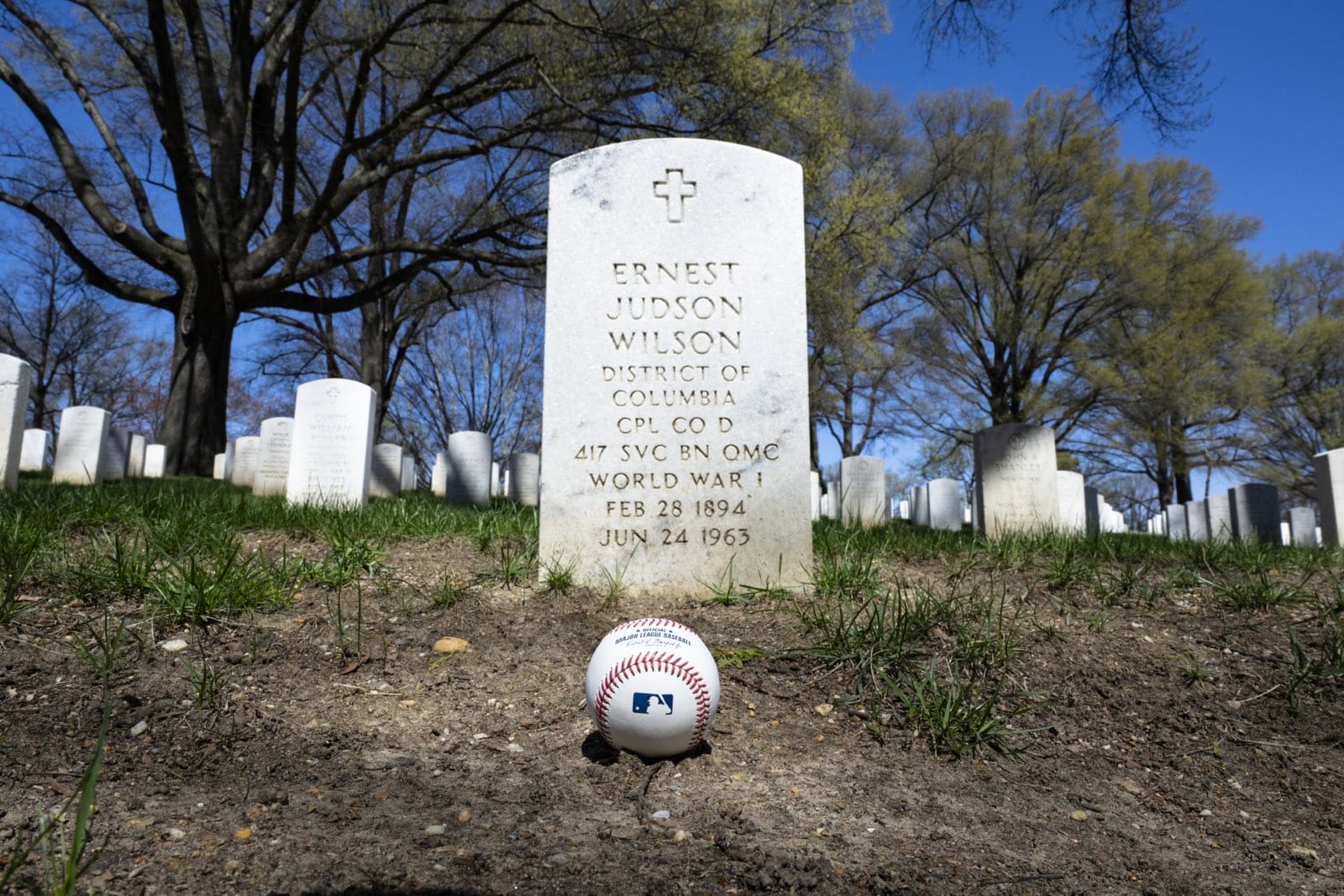
Gravesite of U.S. Army Cpl. Ernest “Jud” Wilson in Section 43 of Arlington National Cemetery, Arlington, Virginia, March 24, 2026. A baseball player and manager in the Negro Leagues, “Jud” Wilson played for the Baltimore Black Sox, the Homestead Grays and the Philadelphia Stars between 1922 and 1945. Known for his powerful hitting style, Wilson finished his career with a lifetime batting average of .351, the fifth highest in Negro League history. Wilson was posthumously elected to the Baseball Hall of Fame in 2006. He served as a corporal in the U.S. Army during World War I. (U.S. Army photo by Elizabeth Fraser / Arlington National Cemetery)
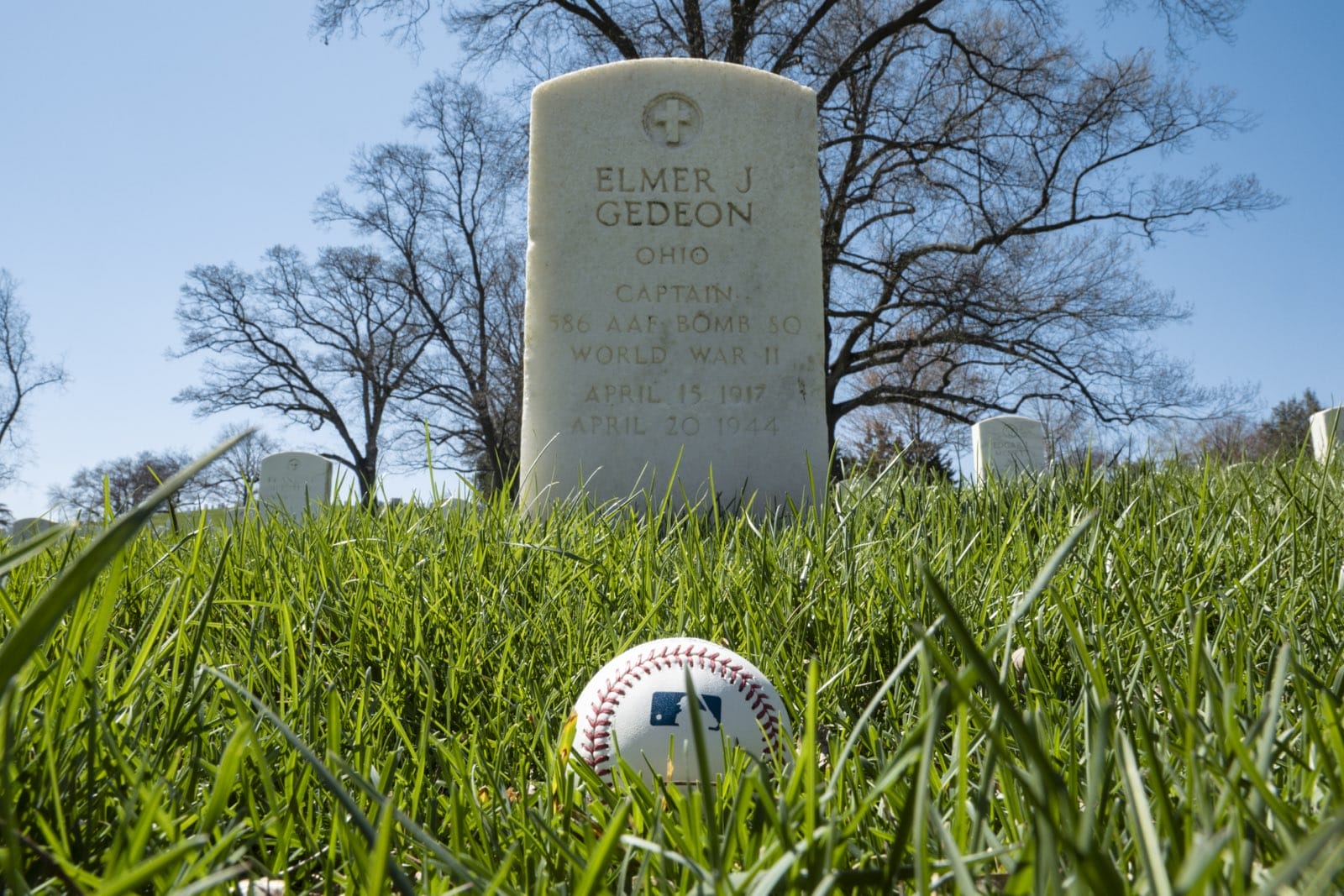
Gravesite of U.S. Army Air ForcesCapt. Elmer Gedeon in Section 34 of Arlington National Cemetery, Arlington, Virginia, March 24, 2026. Gedeon was a professional baseball player, playing for the Washington Senators in 1939. He was also one of only two MLB players killed during WWII, flying several missions in the European Theater of Operations before being shot down over France. (U.S. Army photo by Elizabeth Fraser / Arlington National Cemetery)
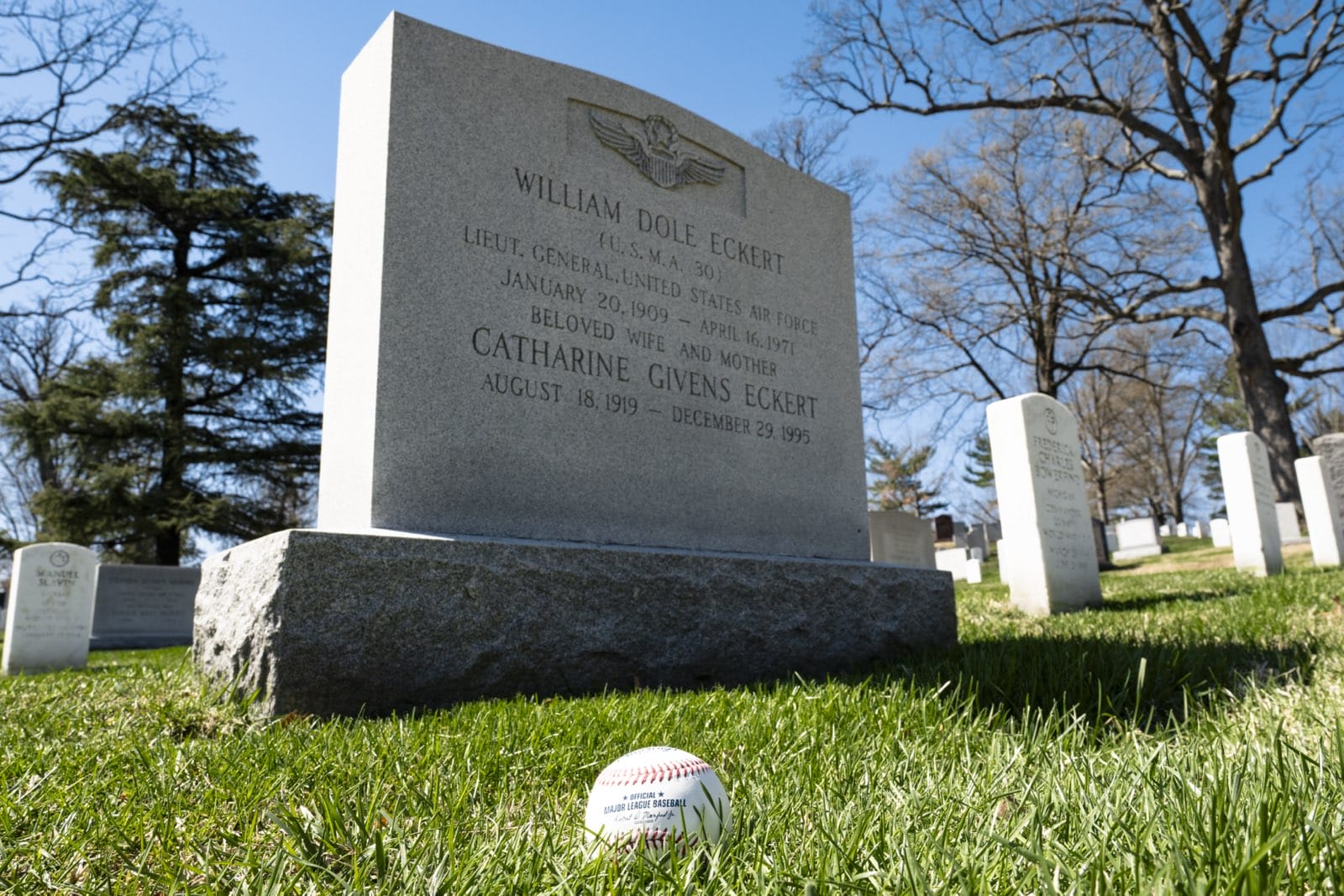
Gravesite of U.S. Air Force Lt. Gen. William Eckert in Section 30 of Arlington National Cemetery, Arlington, Virginia, March 24, 2026. Eckert served as the fourth Commissioner of Major League Baseball from 1965 to 1968. (U.S. Army photo by Elizabeth Fraser / Arlington National Cemetery)
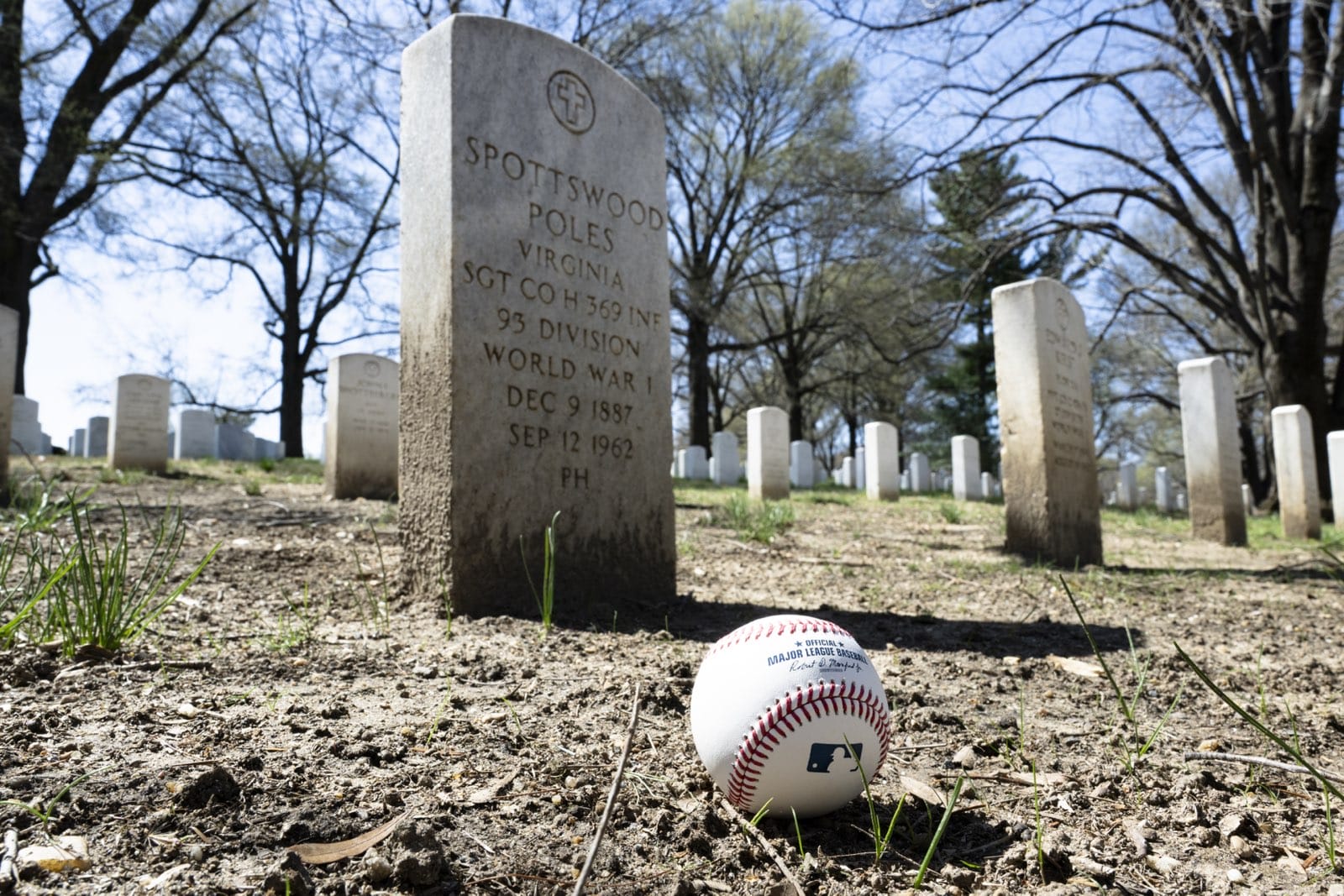
Gravesite of U.S. Army Sgt. Spottswood Poles in Section 42 of Arlington National Cemetery, Arlington, Virginia, March 24, 2026. One of the best Negro League baseball players of the early 20th century, Spottswood “Spot” Poles has been called the “Black Ty Cobb.” Playing for the New York Lincoln Giants, he achieved a batting average of .487 during the 1914 season. In 1917, he enlisted in the U.S. Army’s 369th Infantry Regiment — a primarily Black unit attached to the French army, also known as the “Harlem Rattlers” (their insignia featured a silver rattlesnake). Serving in France during World War I, Sgt. Poles earned five battle stars and a Purple Heart. (U.S. Army photo by Elizabeth Fraser / Arlington National Cemetery)
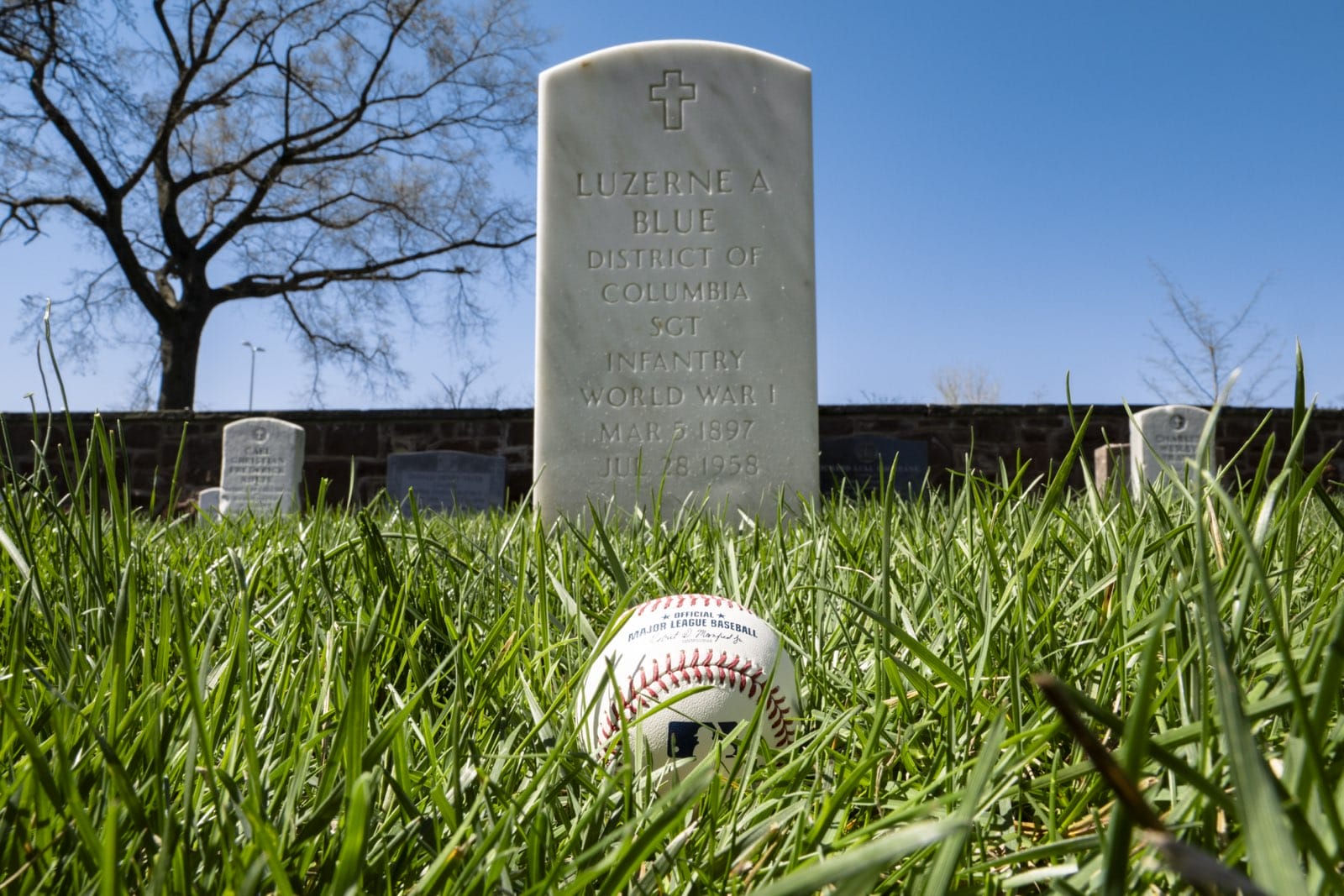
Gravesite for U.S. Army Sgt. Luzerne Blue in Section 15D of Arlington National Cemetery, Arlington, Virginia, March 24, 2026. Serving during WWII and a native of D.C., Blue played professional baseball from 1916 to 1933 including more than a decade in the Major League. His baseball career was interrupted when he was drafted into the Army in 1918. When the war was over, he returned to baseball. He retired with major league stats of 44 home runs and 695 runs batted in. (U.S. Army photo by Elizabeth Fraser / Arlington National Cemetery)
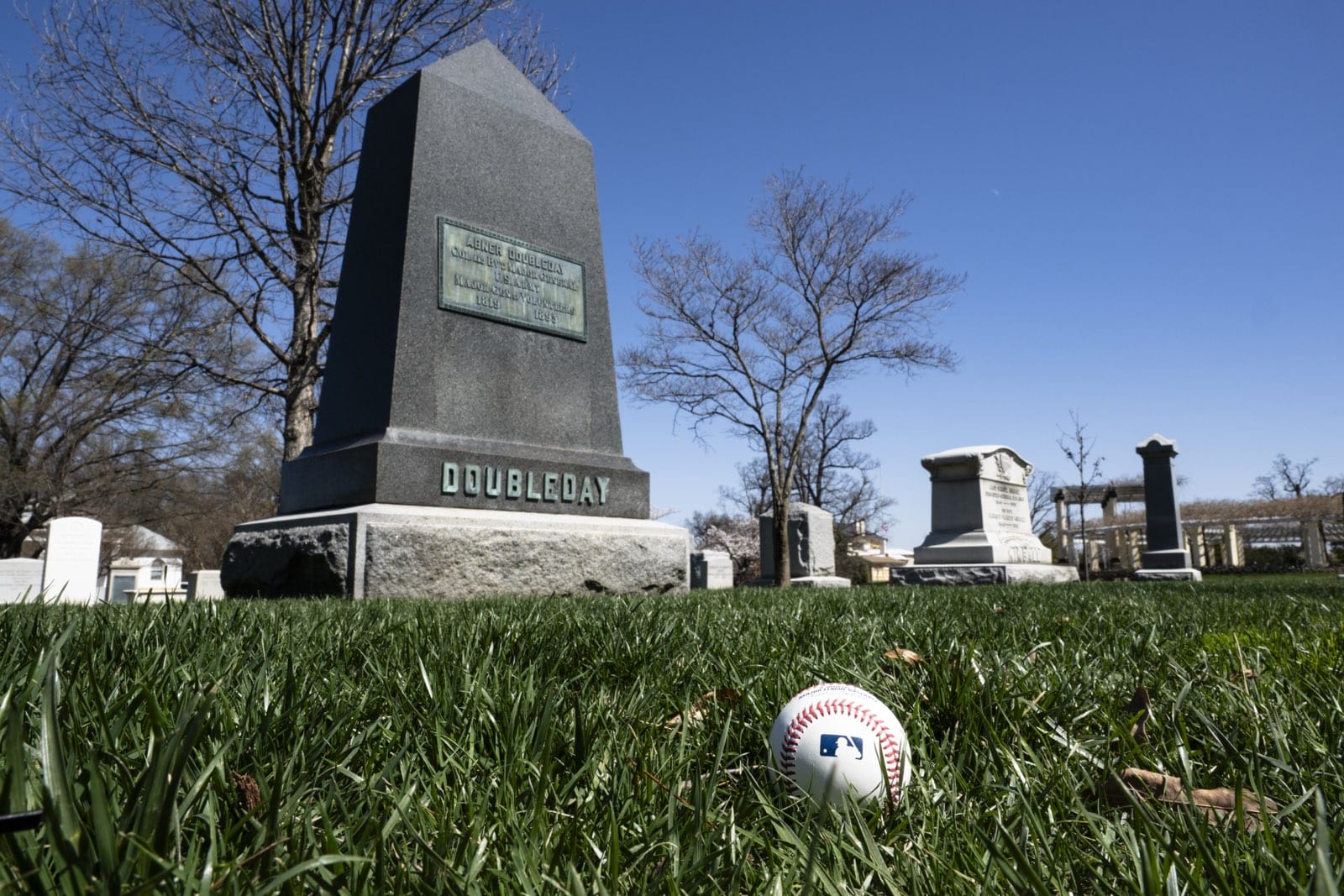
Gravesite of U.S. Army Maj. Gen. Abner Doubleday in Section 1 of Arlington National Cemetery, Arlington, Virginia, March 24, 2026. A career officer in the U.S. Army, Doubleday has often been credited with inventing baseball. This has been debunked as a myth; Doubleday’s papers contain no references to the game, which, historians argue, derives from English ball and bat games. Doubleday’s military record, however, is not disputed. A graduate of West Point, he fought in the Mexican-American War (1846-1848) and in conflicts with Indians during the 1850s. By 1861, he had become second-in-command of the U.S. Army’s garrison at Fort Sumter, South Carolina. After secessionist forces attacked Fort Sumter on the morning of April 12, 1861, he fired the Union’s first cannon shot — thus beginning the Civil War. Promoted to brigadier general in February 1862, Doubleday commanded troops in several major battles, including the Second Battle of Bull Run (August 1862), Antietam (September 1862) and Gettysburg (July 1863). After retiring from the army as a major general, he served as president of the Theosophical Society, a prominent spiritualist organization. (U.S. Army photo by Elizabeth Fraser / Arlington National Cemetery)
The Washington Nationals placed official MLB baseballs on six graves at Arlington National Cemetery this week, honoring servicemembers with ties to the game.
The tradition, now in its third year, recognizes individuals buried at the cemetery who played, led or shaped the game of baseball.
The Nationals provided the baseballs, which were placed at the gravesites of players, a commissioner and a military officer often — if incorrectly — associated with the sport’s invention, according to the team. The gesture comes as the country approaches its 250th anniversary on July 4.
Among those honored are two players with direct ties to baseball in Washington.
Elmer Gedeon played for the Washington Senators before being drafted in 1941. Capt. Gedeon was killed in action in 1944 and was one of two known Major Leaguers to die during World War II, according to the Nationals.
Ernest Judson “Jud” Wilson, a Negro Leagues third baseman, played for the Homestead Grays in D.C. between 1931-32 and 1940-45. Cpl. Wilson served in World War I and was posthumously inducted into the National Baseball Hall of Fame in 2006. He is a member of the Ring of Honor at Nationals Park.
Baseballs were also placed at the graves of Luzerne “Lu” Blue, a Major Leaguer and D.C. native whose career was interrupted when he was drafted during World War I; Abner Doubleday, a major general in the Army of the Potomac who is often mistakenly credited with inventing baseball; William Eckert, a lieutenant general in the U.S. Air Force who served as baseball’s fourth commissioner from 1965 to 1968; and Spottswood “Spot” Poles, a Negro Leagues outfielder who served in the 369th Infantry Regiment — the Harlem Hellfighters — in World War I and earned five battle stars and a Purple Heart.
The Nationals open the 2026 season on the road today (Thursday) against the Chicago Cubs at Wrigley Field, with first pitch set for 2:20 p.m. Right-hander Cade Cavalli, making his first career Opening Day start after overcoming years of injury setbacks, takes the mound for Washington.
The Nationals are coming off a 66-96 season and enter the year with a revamped front office and coaching staff.