


Arlington’s elected officials on the County Board and in Richmond appear to have different ideas on who should shoulder higher costs for Metro service.
As part of an annual legislative work session yesterday (Thursday), Board members pressed legislators to find more money in the state budget for transit. In response, two senior lawmakers asked why Northern Virginia localities refused to use a new revenue tool they had been given.
Jurisdictions across the commonwealth have received legislative authority to seek voter approval for a 1% increase in the sales tax. In most of Virginia, the additional revenue will be reserved for school construction, but Northern Virginia localities can use some or all of the funding for transit.
“We gave it to you for a reason. I hope that you will use it,” Del. Patrick Hope (D-1) told County Board members during the two-hour session discussing the upcoming General Assembly session.
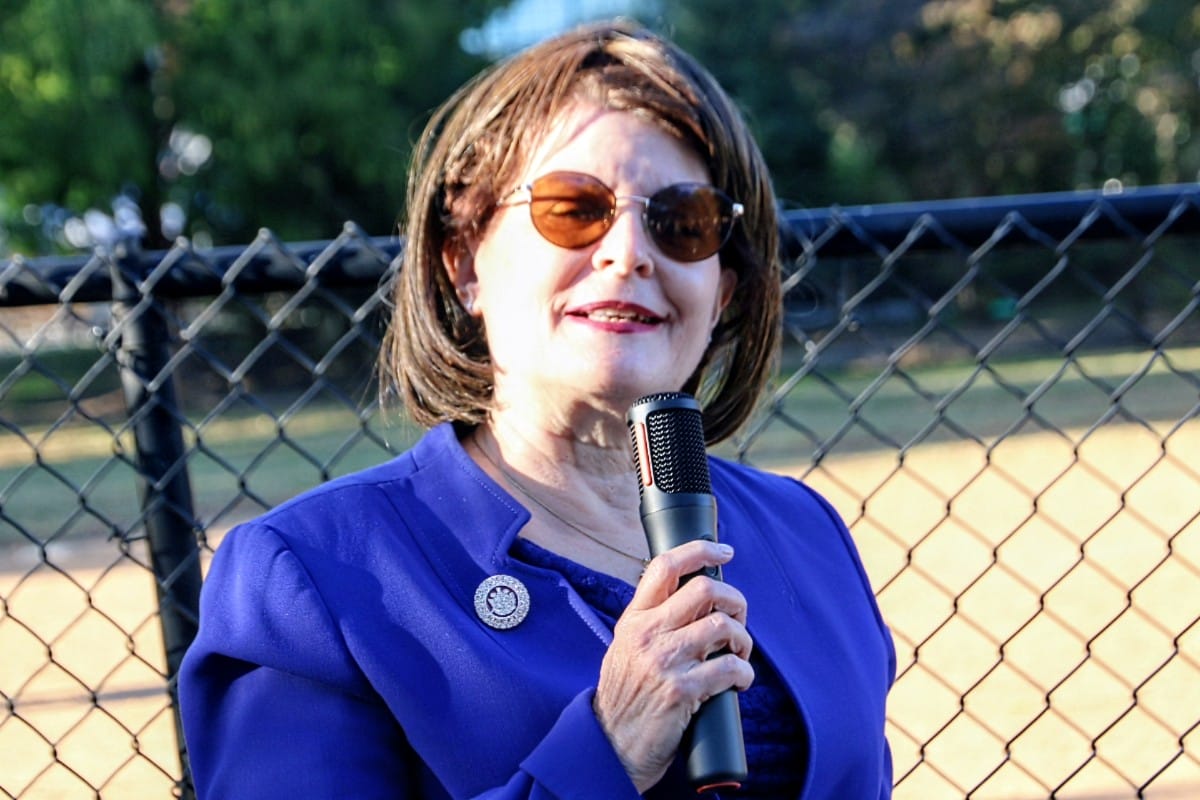
Like Hope, Sen. Barbara Favola (D-40) pushed back on the Board’s request for more Metro funding.
“I believe we will always find a way to find the funding for the state portion, but we are going to want to see what localities are doing,” she said.
Nearly 50 of the state’s 133 cities and counties have sent sales-tax referendums to voters this fall, all related to education. Northern Virginia leaders appear to be working to coordinate their efforts, with either all local jurisdictions holding simultaneous referendums for schools and transit, or none of them doing so.
As a result, there are no sales-tax referendums on the Nov. 3 ballot in the local area.
County Board Chair Matt de Ferranti suggested that it wasn’t Arlington holding up the process.
“I don’t think it’s a grand mystery that other Northern Virginia jurisdictions see this as less of a starter,” he said of the referendum concept.
De Ferranti, who serves on the Northern Virginia Transportation Commission, acknowledged that the lack of referendums poses “a fair question.”
State legislators earlier this year funded some of what the region was seeking in transit funding for two fiscal years. But without changes, local governments across Northern Virginia could be facing significant bills in fiscal year 2029 to support the Metropolitan Washington Area Transit Authority.
County Board member Maureen Coffey, another of Arlington’s representatives on the Northern Virginia Transportation Commission, said the county would be responsible for an additional $80 million in transit funding in fiscal year 2029. That equates to an added 8 cents on the county’s real-estate tax rate.
Local governments should use the referendum option to help address those costs, Hope responded.
“This is a tool we explicitly gave to localities, and carved it out explicitly for transportation in Northern Virginia,” he said.

Under Virginia’s status as a “Dillon Rule” state, its counties, cities and towns effectively exist to support the state government, and have only limited local autonomy. But there needs to be some limit on state legislators passing funding responsibilities down to localities, Board member Susan Cunningham told legislators.
“All the unfunded mandates we’ve been carrying are harder for us to meet,” given current economic conditions, she said.
“I do not want any of the five of you [legislators] to overlook how much we are stretched in Northern Virginia and particularly in Arlington,” Cunningham said. “We don’t have the magic wands we had.”
Favola said that even downstate legislators were beginning to recognize the value of the state government supporting transit funding in Northern Virginia.
“Our colleagues more and more are recognizing the vitality of Northern Virginia and the value of having a good Metro system — [how they] contribute mightily to the economic health of the state,” she said.
Transportation was just one topic raised during the discussion, which was held as Arlington officials are finalizing their 2027 legislative package. Adoption is slated for mid-November.
De Ferranti expressed hope that the county government and legislative delegation would work cohesively in the coming session. That cohesion requires the county government “staying in touch, being clear on our positions, following up on these items where you need detail, because detail really matters in legislation,” he told legislators.
The 2027 General Assembly session convenes in Richmond on Jan. 13 and is expected to last 45 days. All 140 seats — 40 senators and 100 delegates — will be on the ballot next November.
In addition to Hope and Favola, the county’s legislative delegation consists of Sen. Elizabeth Bennett-Parker (D-39), Del. Adele McClure (D-2) and Del. Alfonso Lopez (D-3).
