

County officials are keeping watch as state lawmakers consider the pros and cons of allowing self-driving vehicles on Virginia’s roadways.
“As a locality in a region that likely will see notable deployment of this emerging transportation technology, we want to ensure that public safety remains at the forefront of all decision-making,” County Board Chair Matt de Ferranti told ARLnow.
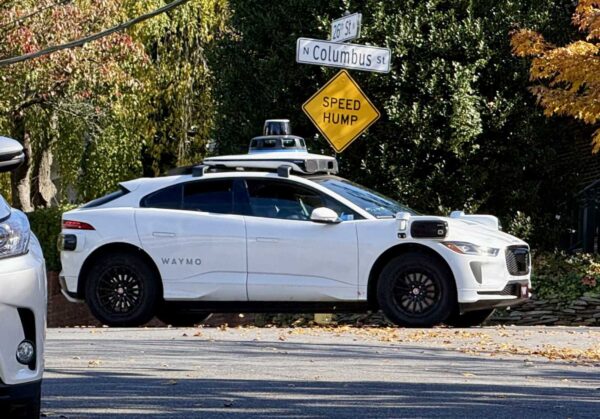
His comments came as manufacturers and operators of autonomous vehicles are pushing for state legislators to draft a regulatory framework in the coming months. Already across Northern Virginia, vehicles from Waymo, with human drivers behind the wheel, have been seen mapping roadways and taking other preparatory steps toward future operation.
Legislation passed in the 2025 General Assembly session to set up an eight-member legislative working group on autonomous vehicles, which met throughout the spring and summer this year to deliver a preliminary report and, this week, a final report that will be forwarded to the legislature.
Earlier this year, additional legislation approved in Richmond directed the panel to also assess workforce impacts, pro and con, of allowing autonomous vehicles access to Virginia roadways.
The panel, which concluded its efforts in September, included three members of the Virginia Senate and five from the House of Delegates. Arlington was not represented on the panel, which also included ex-officio members representing the Virginia State Police, Virginia Department of Transportation and Virginia Department of Motor Vehicles (DMV).
The final report is likely to be used in an attempt to craft legislation on the issue in 2027. Virginia lawmakers convene in Richmond on Jan. 13 and have 45 days to complete their work.
De Ferranti said county staff have been participating as observers as the working group went about its work, “actively monitoring the ongoing discussions.”
“We are still reviewing the recent recommendations” and waiting for public release of the final report, he said.
In some ways, the commonwealth is starting from scratch in its efforts on self-driving vehicles, according to the Virginia Association of Counties:
“Virginia currently has no specific legislation or regulation governing AV testing, permitting or deployment. That means AVs are not expressly prohibited, but there is also no defined framework for how they should operate, who oversees them, what insurance they need to carry, or how law enforcement should interact with them.”
“Most other states expressly permit AV deployment and have determined questions such as which agency has oversight, whether a licensed driver must be present, what liability coverage is required, and whether a law enforcement interaction plan is required. Virginia has none of these answers yet.”
Because Virginia is a “Dillon Rule” state where power is concentrated at the state level, localities likely would have little to no independent authority to regulate autonomous vehicles on their own. State lawmakers will need to decide whether to set the rules through legislation or delegate authority to the DMV to engage in a pilot program.
Waymo has been seeking to gain a foothold in the D.C. area for some time and has already begun building out a facility in Northeast D.C. However, it may face a roadblock under the District’s next mayor, Janeese Lewis George, who has called for tapping the brakes on legalizing autonomous vehicles.
The county’s draft 2027 legislative wish list, set for adoption later this month, includes a brief reference automated vehicles in its five-item list of transportation priorities. De Ferranti said he believed the county will be able to have an impact on final decisions by working with the county’s two state senators and three delegates.
“We look forward to those discussions with our General Assembly [delegation] this session,” he said.
Corrected to note the brief reference to autonomous vehicles in the county government’s legislative package.
