

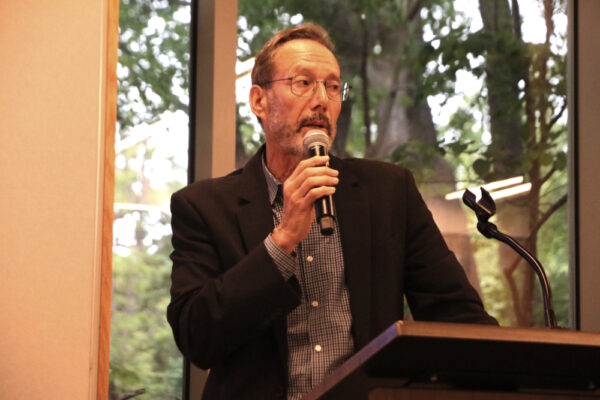
Several former elected officials in Arlington are expressing caution over moving too fast on potential changes to the county’s form of governance.
At issue at the moment is a proposal to form a working group to study possibilities. It has attracted skepticism from former County Board, School Board and General Assembly members advocating for restraint on embarking on change-of-government planning.
The number of former elected officials voicing their concern via correspondence — which is open to public inspection — is unusual, verging on exceptional.
“The need for this whole effort is questionable, and the timing is even more questionable,” former County Board member Jay Fisette wrote to County Board members. Fisette spent 20 years (1998-2017) on the Board, the second-longest tenure in county history.
Mary Margaret Whipple, who served successively on the School Board, County Board and in the Virginia Senate for a cumulative 46 years in office, expressed similar thoughts.
“I guess I come from the school of ‘if it ain’t broke, don’t fix it,'” Whipple wrote.

Their comments came as current Board members are approaching a decision on whether to set up a working group on governance changes. If that happens, Board members will also have to decide who is on the group, how long the group will meet before delivering recommendations, and what its members should consider during deliberations.
Former Del. Bob Brink asked county leaders to consider if any eventual governance changes “fully take into account the potential impact on Arlington Public Schools.”
Structural changes “should be examined thoroughly and undertaken cautiously,” Brink wrote.
Mary Hynes, who served on the School Board and County Board, voiced concern that there is not unanimity among the current County Board members on moving forward.
“Strive for a change that all five of you can support,” she wrote. “The unanimity of Board members sends a strong message to the community about the importance of the work.”
Like Brink, Hynes voiced concerns about impacts on the school system that might be a byproduct of governance changes.
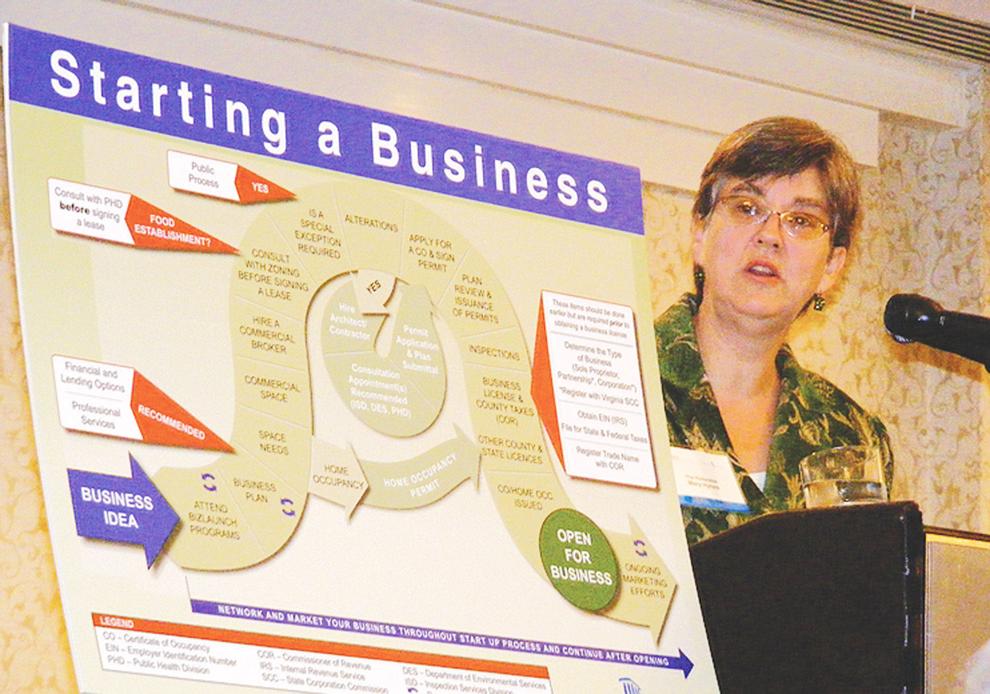
Former School Board member Elaine Furlow said the charter of the task force needed a “tighter focus,” and added her voice to the proposal that city status be part of the deliberations.
Judy Connally, a former member of both the School Board and House of Delegates, was among those asking what problem Arlington leaders were attempting to fix.
To convince the public of the need for any changes, “the rationale should be convincing, and the decision-making process carefully thought out,” Connally said.
Fisette sent Board members a proposed revised “charge” for the task force, which would narrow its scope. His proposal did make one key addition: the possibility of changing Arlington from a county to a city.
Fisette has been a quiet champion of becoming a city for years, arguing that this status would provide more inherent local powers than counties receive while also acknowledging Arlington’s increasing urbanization.
Not all former elected officials have been in opposition to change, however.
“We have a need to do this — let’s get on with it,” said John Vihstadt, the last non-Democrat to serve on the Board (2015-18).

Vihstadt, a Republican-leaning independent, said he supported both the creation of the task force and moving forward with legislation in Richmond to enable governance changes.
The Democratic former elected officials who addressed the topic in letters to the Board said any legislative efforts in Richmond should wait at least until after a task force made its recommendations.
Whipple’s letter to Board members suggested that members of any task force should be given autonomy to chart the panel’s course.
“Personally, I feel the study is unnecessary,” Whipple wrote. “Of course, there is nothing wrong with studying the issue, so long as it isn’t geared to some foregone conclusion.”
County Board members are expected to vote in mid-December on whether to set up the panel.
Currently, Board member Julius “JD” Spain, Sr. appears solidly in favor of moving forward; Board member Matt de Ferranti and Chair Takis Karantonis are leaning in that direction; and Board members Susan Cunningham and Maureen Coffey have expressed strong reservations.
Arlington has been governed by a five-member County Board, elected at-large, since 1932. Previously, the government consisted of a three-member, district-based Board of Supervisors.
Among the ideas that might be considered by a future task force: increasing the number of Board members; moving to a Board composed partly or entirely of district-based elected officials; and making permanent the use of ranked-choice voting to select Board members.
The question of whether the Board chair should be elected separately could also be evaluated. Currently, the chairmanship rotates among Board members on a calendar-year basis.
