

Arlington Public Schools Superintendent Francisco Durán stands behind decisions to keep classrooms shuttered for more than a week after last month’s snowstorm, but acknowledges shortcomings in the school system’s approach.
Durán said he and other school leaders should have done a better job at keeping the community informed on the reasons behind their decisions.
“We can learn from each event,” Durán told School Board members at their Feb. 5 meeting, when he presented a post-mortem review of actions taken following the storm.
“Schools can only open when students and buses can safely reach them,” the superintendent said. “Our priority always is to balance safety with our desire to open schools as quickly as possible.”
In his report, Durán conceded that school officials could have taken a more transparent approach to planning taking place the weekend of Jan. 31-Feb. 1. The decision to keep schools closed on Monday, Feb. 2 seemed to catch many off guard.
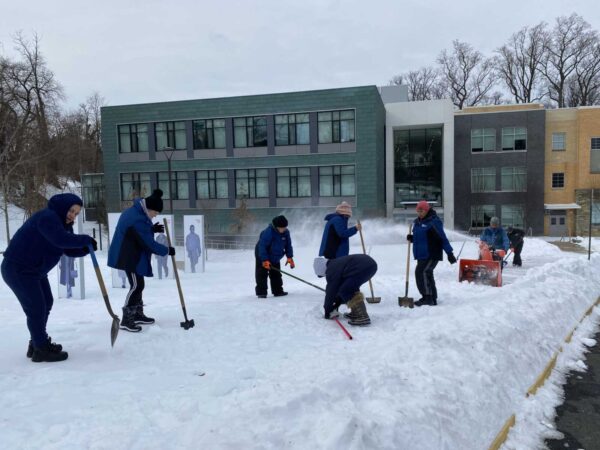
Renee Harber, the school system’s assistant superintendent for facilities and operations, said one of the reasons for the decision was that some school parking lots had not been plowed by that Sunday.
While praising “a tremendous effort” by school personnel to get facilities ready, School Board member Miranda Turner said the decision not to return to school on Feb. 2, and the communication with the community about the reasons, was “not optimal.”
Getting students in classrooms “is essential,” said Turner.
Her board colleague Kathleen Clark said she appreciated that school officials and their county-government counterparts were reviewing the situation, aiming to improve.
“We want to get kids there safely,” she said.
The unusual combination of sleet on top of snow that resulted from the late-January storm caused challenges even after roads were mostly clear.
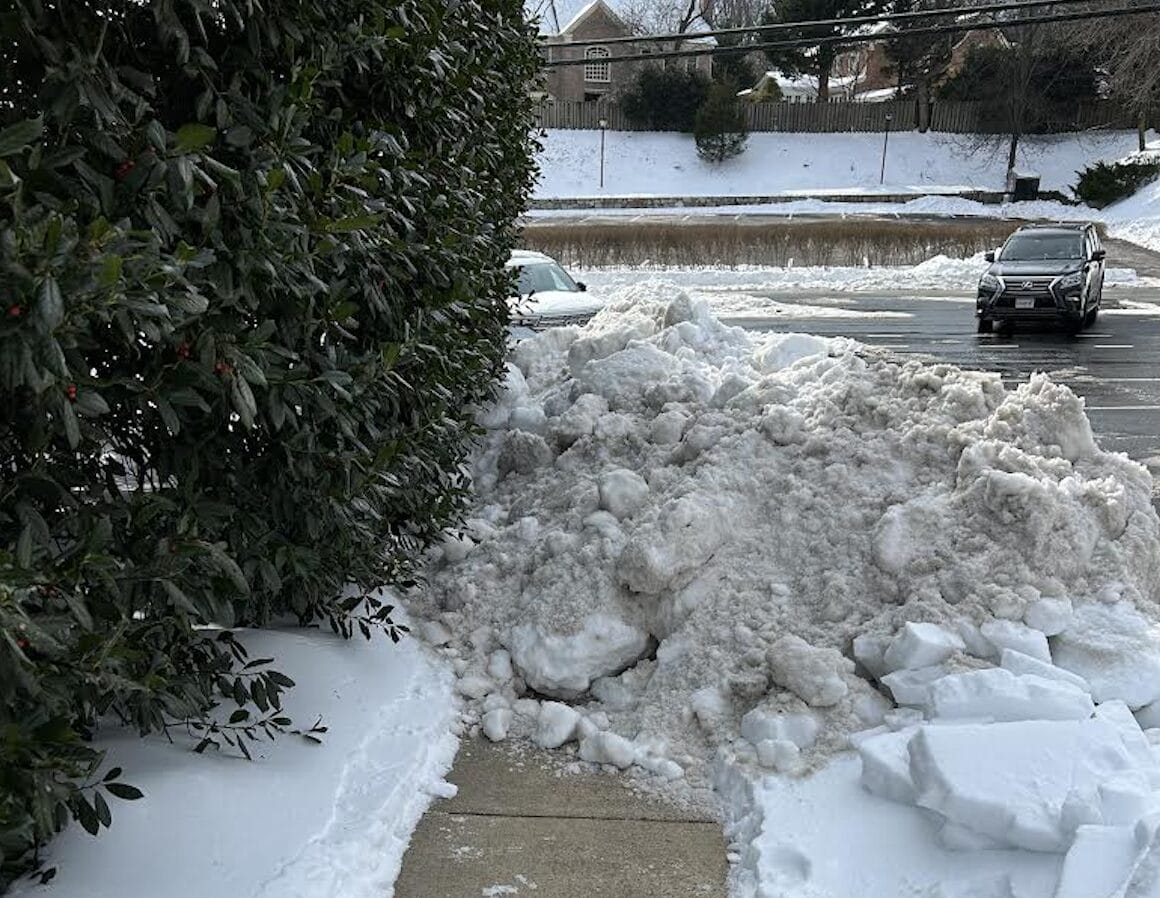
“The sidewalks were the main issue,” School Board member Zuraya Tapia-Hadley said, adding that many bus stops had been turned into mountains of ice after plowing.
In the days after the storm, school officials were inundated with messages from parents, staff and students themselves. Some sought a quicker reopening, others a lengthier delay, Durán said.
During the week after the storm, walkability “continued to be a challenge,” he said.
“It is a true danger to have students walking in the streets during early-morning commutes, often on ice,” he said.
Another challenge: Some students take Arlington Transit buses to and from class, and school officials have no control over these operations. That bus service was offline the first few days of the storm before returning in phases throughout the ensuing week.
Tapia-Hadley also questioned whether changes might be needed to existing county policy that puts the responsibility of clearing sidewalks after storms in the hands of property owners, not the government.
“I’m not sure the solution is having residents clear the sidewalks,” she said.
Despite students losing five days of instruction — Friday, Jan. 30 had been slated as a teacher workday — the school system still has six snow days remaining for elementary school students, and nine days at the secondary level.
If those days are exhausted in the coming weeks, the school system will move to online learning on additional wintry days, rather than extend the school year.
