

Just because a wipe says it’s “flushable,” that doesn’t mean it’s fit for Arlington’s sewage system.
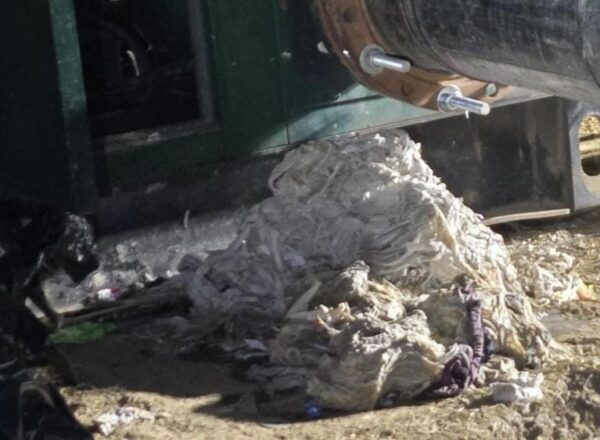
That’s what the county’s Department of Environmental Services is reminding residents after a wad of wipes contributed to a sewage overflow last week at a ruptured sewage pipe upstream from Arlington on the Potomac River.
“‘Flushable’ wipes don’t break down easily despite manufacturer claims,” DES spokesperson Katie O’Brien told ARLnow. “A toilet is designed to remove only human waste and bathroom tissue with each flush. Sending other items down the drain, like wipes, threatens a home’s or business’ plumbing, Arlington’s sanitary sewer system and ultimately the Water Pollution Control Plant, where wastewater is treated before being safely released to the ecosystem.”
Thursday reminder: The toilet is not a trash can. Flush only bodily byproducts and paper from the roll. ANYTHING else is a threat to sanitary sewer lines and the watershed, as seen (and smelled) with the big recent mess in the Potomac. www.arlingtonva.us/Government/P…
— Department of Environmental Services Arlington, Virginia (@arlingtondes.bsky.social) 2026-02-12T16:46:23.757Z
O’Brien added that clogged wastewater pipes can result in sewer backups and spills, cause environmental problems, disrupt traffic and even flood homes and businesses. Her team has been beating this drum for years.
“Responding to pipe emergencies is costly, and preventing sewer backups from wipes blockages saves money,” O’Brien said. “When sewer pipes back up on private property, the homeowner or business owner is responsible for the cleanup.”
An especially dire example of O’Brien’s warnings took place on Super Bowl Sunday at the C & O Canal in Maryland, where DC Water has been responding to a 6-foot-diameter pipe that collapsed shortly before last month’s winter storm.
“A significant overflow” resulted when a period of high sewage flood coincided with several bypass pumps getting taken out of service because they were clogged with non-disposable wipes, DC Water said in a media advisory. The agency estimated that several hundred thousand gallons of wastewater overflowed, causing further pollution in the Potomac about 4 miles upstream from Arlington.
E. coli levels in Arlington’s portion of the river have decreased dramatically over the last few weeks. On Jan. 29, water samples at Fletcher’s Boathouse, across the river from Potomac Overlook Regional Park, reported 14,300 E. coli per 100 milliliters. On Feb. 8, that number was down to 260, compared to 15 upstream from the spill.
Still, the Virginia Department of Health has warned people to avoid contact with a 73-mile stretch of the Potomac River for the time being. Emergency repairs are expected to last for about four to six more weeks.
