

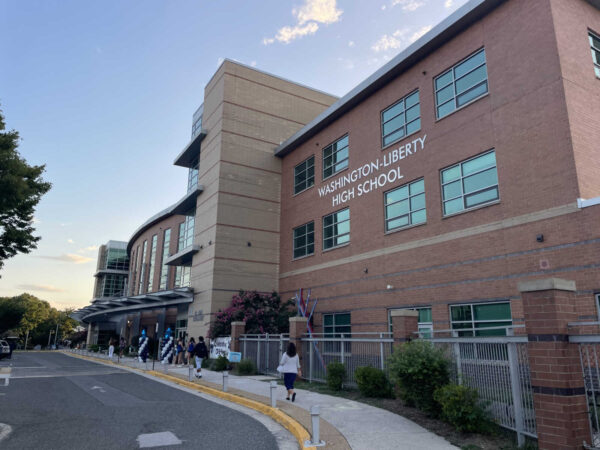
The Arlington School Board is considering a possible change to the daily schedules at local high schools.
Staff laid out possible changes to the current “seven-period block schedule” at a School Board work session on Nov. 18. Options on the table, in addition to maintaining the status quo, include:
- Reverting to a full “anchor” schedule where students take each of their classes every day in 45-minute chunks
- Maintaining the existing block schedule but throwing in the occasional “anchor day” where students rotate through all classes
- Moving to an 8-period block schedule to allow students to take additional elective classes throughout the year
Currently, students at Washington-Liberty, Wakefield and Yorktown High School take a total of seven classes. They attend three classes each day, each lasting 90 minutes, along with a shorter “anchor” class that meets every day, plus a daily advisory period for students to receive support.
Other Arlington high schools operate on a different schedule. Students in the H-B Woodlawn Secondary Program continue to take all classes every day in roughly 45-minute increments.
The Arlington Career Center, in contrast, operates on a variation of the 8-block schedule.
Arlington Community High School and the Langston High School Continuation Program use what is called a 4×4 schedule, where students take the same four classes for 90 minutes each day, allowing them to earn credit for completion in a single semester rather than a full school year.

An 18-member school-system task force considered an array of possibilities, said Leona Smith, the school division’s executive principal.
“We were exploring all options. There was no clear front-runner,” she said.
Darrell Sampson, the school system’s executive director for student services, added:
“There’s a large group of people that feels like our current schedule is meeting the needs of our students. And there are those that really would like, if not every day, at least some days, where students are able to go to every single period on a given day to make sure there is that continuity.”
School Board member Mary Kadera, who as a classroom teacher worked under both block and anchor schedules, was not surprised by the lack of consensus.
“There were strengths and drawbacks to both of those approaches,” she said.
Kimberley Graves, the school system’s chief of school support, said data suggest that achievement does not directly correlate to how the school day is broken up. Other factors have more of an impact on student success, she said.
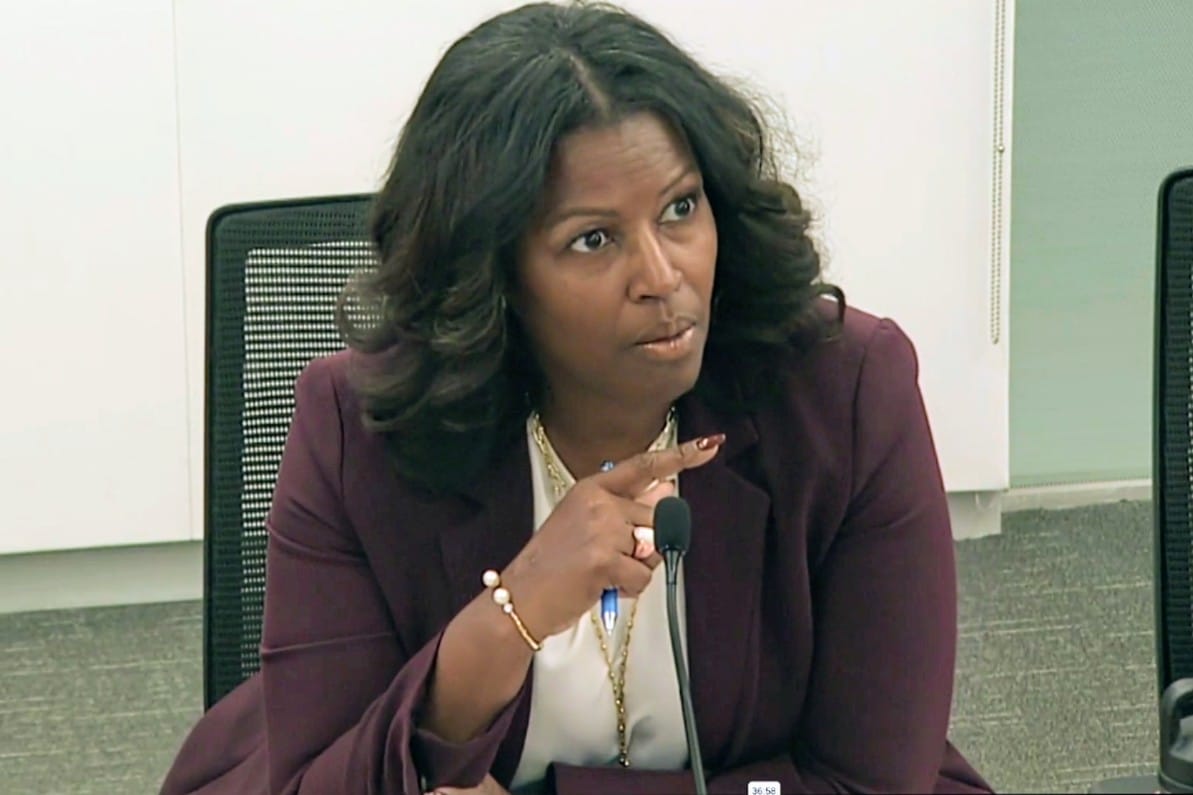
Board member Zuraya Tapia-Hadley recently discussed the schedule situation with students at Washington-Liberty.
“Universally, the students preferred the block scheduling, to my surprise,” Tapia-Hadley said.
Longer classes can go more in-depth, but some students may not have the attention span necessary to process 90 minutes of instruction on a single topic. Certain classes lend themselves better to one format or the other, school administrators said.
Math, they said, often has better outcomes if taught every day.
By going to every class every day, “you get a lot of continuity, it’s predictable for students,” Smith said.
“Some of our students thrive on routine and having that constant connection,” she said.
Parts of the 90-minute work session got into specifics, like how changing the schedules would impact students’ extracurricular activities and their ability to take classes at the Career Center or Arlington Tech. At other points, School Board members pulled the discussion back to the basics.
“What are the problems we’re trying to solve?” asked School Board Chair Bethany Zecher Sutton. Several other Board members hit on variations of the same question in their remarks.
Zecher Sutton and Board colleague Miranda Turner were among those saying that if any change is to be made, it had to be based on firm evidence that student achievement would be improved or at least not negatively impacted.
“It would be useful to have data on some of the tradeoffs,” Turner said.
The current timeline calls for APS administrators to return with proposals in November 2026 as the School Board considers options for the 2027-28 school year.
