


A Wakefield High School senior is among a small group of Arlington students who have spent the past four months gathering feedback from fellow youth about the current state of the school system.
In an April 30 presentation to the School Board, Zach Dawson said there were areas where Arlington Public Schools was meeting students’ needs, but other areas where it was falling short.
“What we found is pretty simple: Students want to feel like they belong,” he said. “Not just attend school, but feel connected to their communities. Not just move through a system, but feel seen within it.”
Dawson was among the first group of “teen ambassadors,” working through the school system and county government to help develop the county’s future Children and Youth Well-being Plan.
Since January, the ambassadors have attended community events, engaging with more than 600 students.
“We kept coming back to one question: What are students actually experiencing? Not what it looks like, not what we assume, but what do students actually feel,” said Dawson, who heads to Howard University in the fall.
Among the concerns raised by students were a lack of transportation to get to youth programs, as well as too much top-down adult planning of those programs.
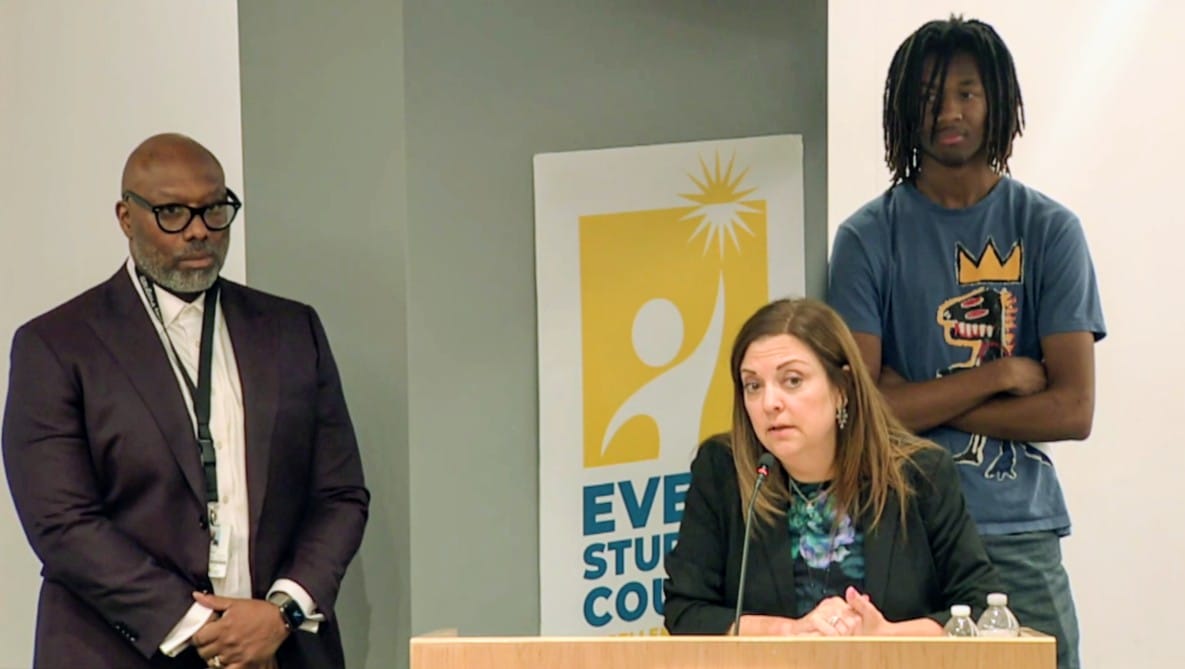
Dawson asked the school system and county government to “give the spaces and let teenagers fill them, so they have a place to build community, a place to build bonds.”
The lack of connection was not just something the ambassadors heard from fellow students. Dawson said he had known it himself.
“My [school] experience was not perfect,” he said. “There have been times when I feel invisible … like I had been placed into a box that didn’t reflect who I truly am.”
School Board Chair Bethany Zecher Sutton said the in-person report added a “personal touch” as development of the Children and Youth Well-being Plan is ongoing.
Responses from students and the broader community will be reflected in the draft plan, Julie Crawford, the school system’s director of Diversity, Equity, Inclusion and Student Support, said.
“The feedback we’ve received from the community has been exceptional,” she said. “We’d expect nothing less in Arlington than great engagement, and we do in fact have that.”
Planning for the new document began last summer, led by the Department of Human Services.
At the kickoff meeting in July 2025, Department of Libraries Director Diane Kresh said having youth’s input was vital in crafting a place centered on reality and focused on the future.
“Our youth are important,” she said. “They are key stakeholders. They are going to be deciding the future.”
Development of the plan will continue over the next year. A draft is expected to be released in the spring of 2027, with County Board and School Board consideration slated for that summer.
At the April 30 meeting, Crawford said that plans call for continuing the teen ambassador program this fall, with three new goals:
- Expanding discussions with students in middle and elementary schools
- Strengthening the presence in underrepresented communities
- Increasing multilingual and “culturally responsive” engagement
Some of this school year’s ambassadors will return next year, while additional students will be recruited to fill spaces of those graduating.
Dawson encouraged students to apply.
“Being a teen ambassador is proof you are a young person who cares about your community and cares about change,” he said.
