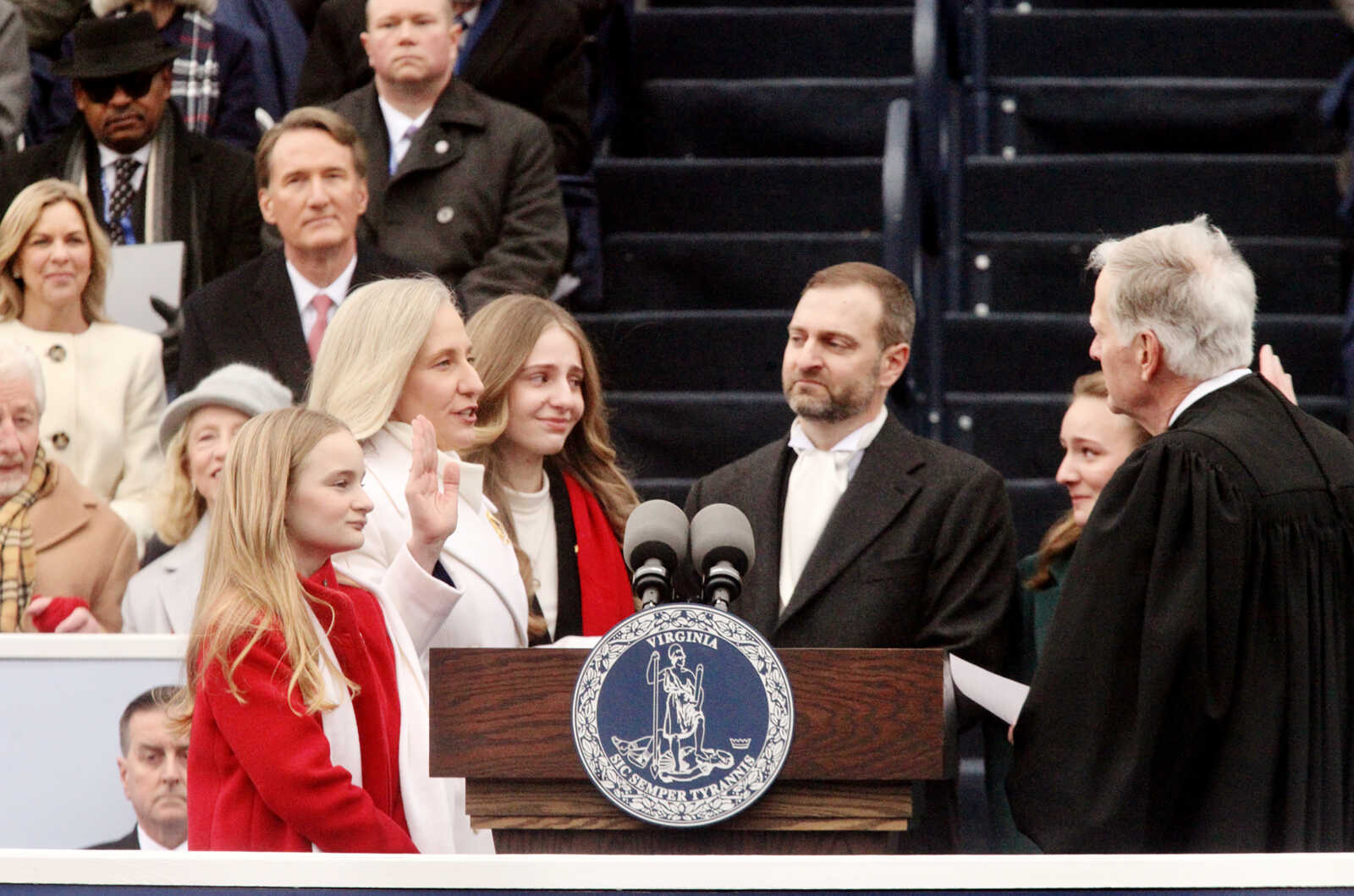
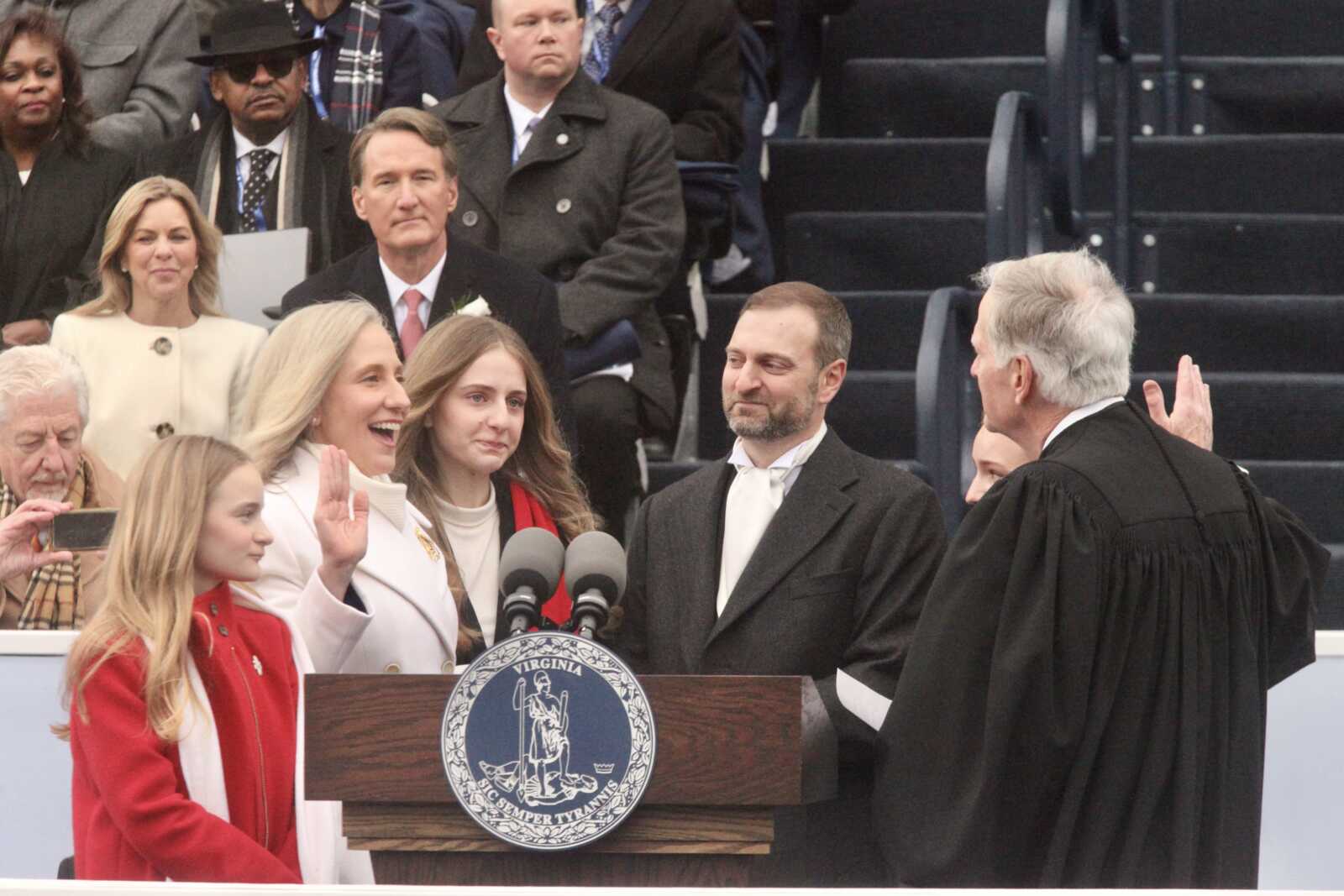
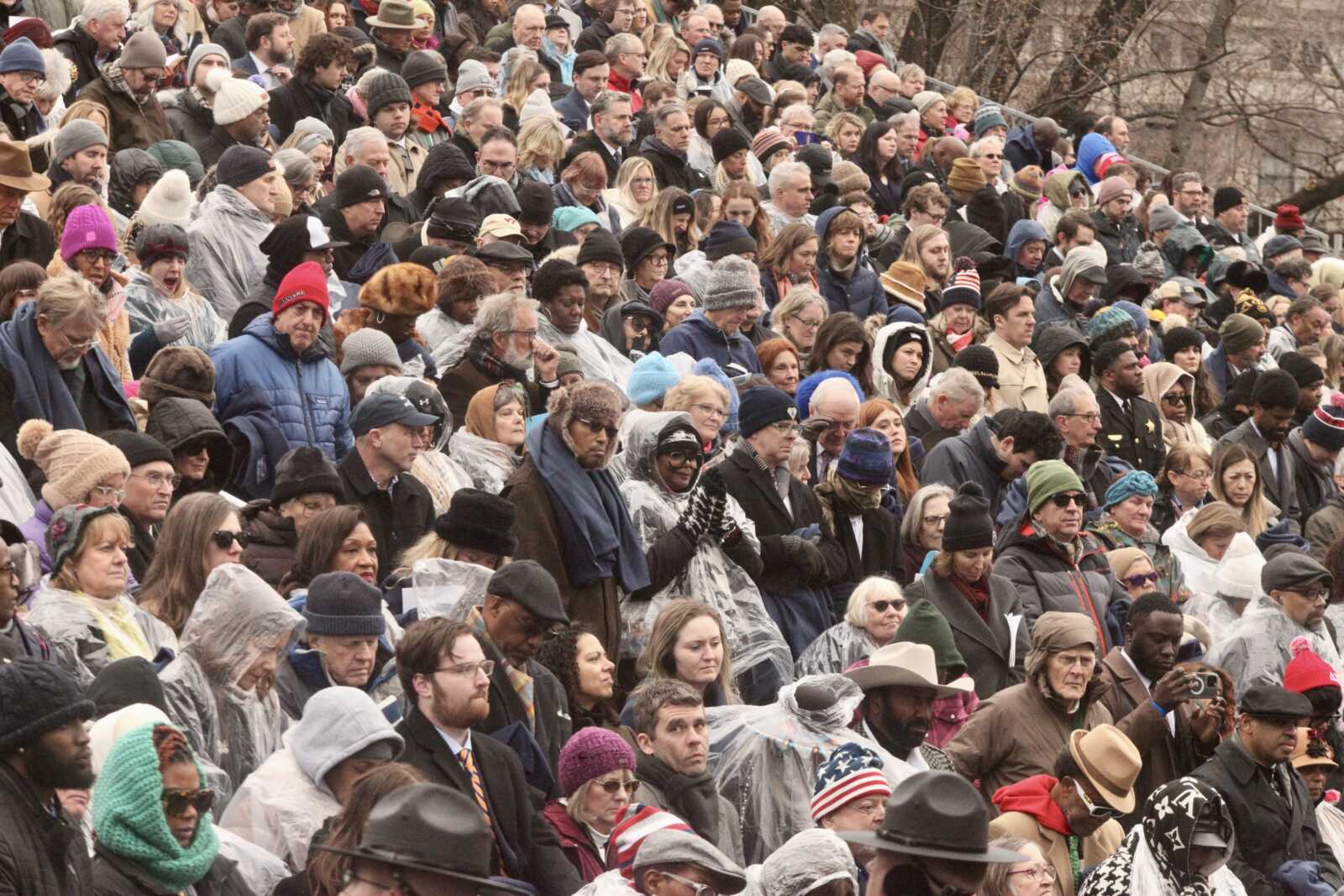
Surrounded by her family, Gov. Abigail Spanberger gets sworn into office, Jan. 17, 2026 (staff photo by James Cullum)
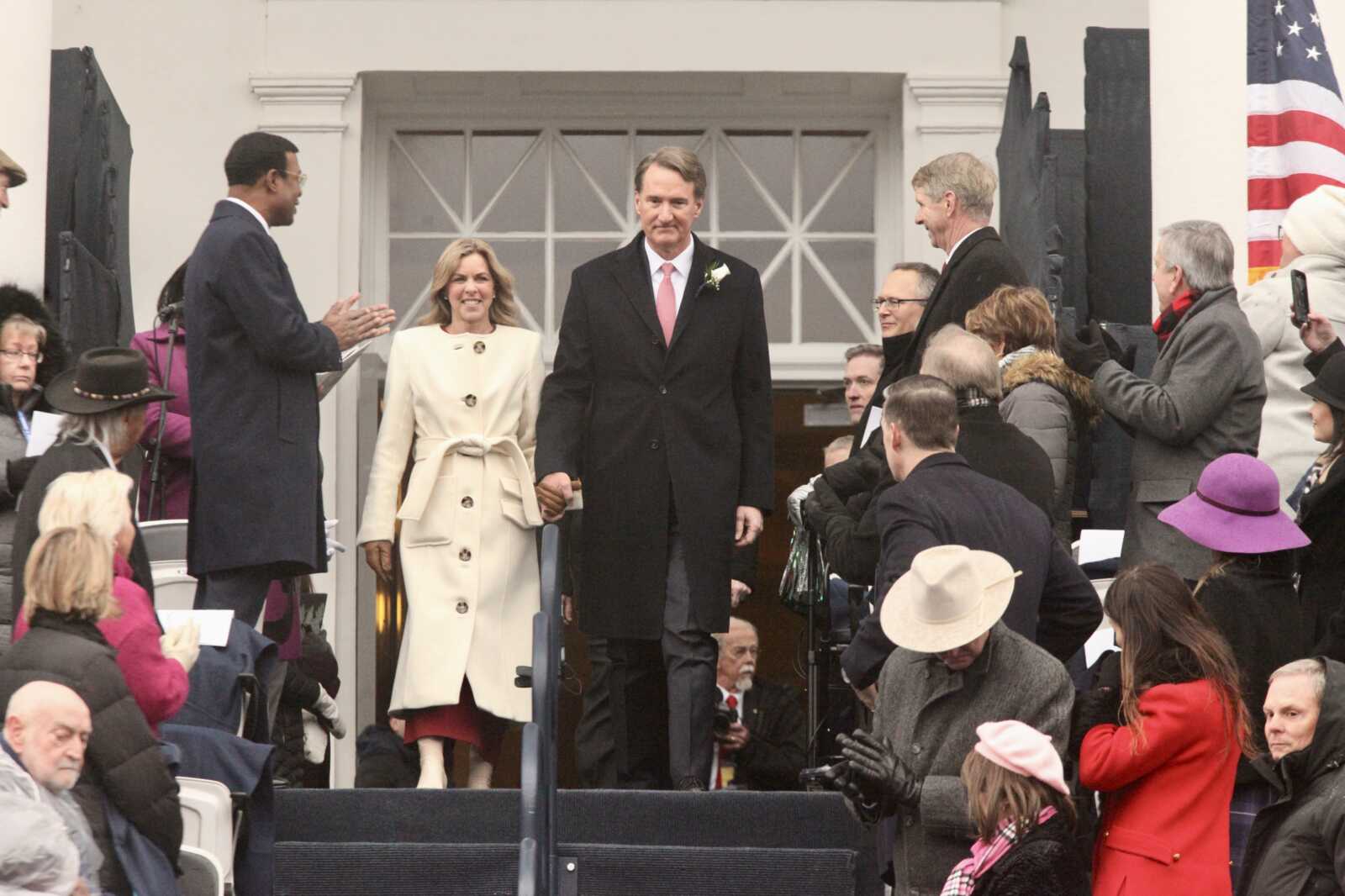
Gov. Glenn Youngkin and his wife, Suzanne, arrive at the inauguration of his successor, Gov. Abigail Spanberger, at the Virginia State Capitol in Richmond, Jan. 17, 2026 (staff photo by James Cullum)
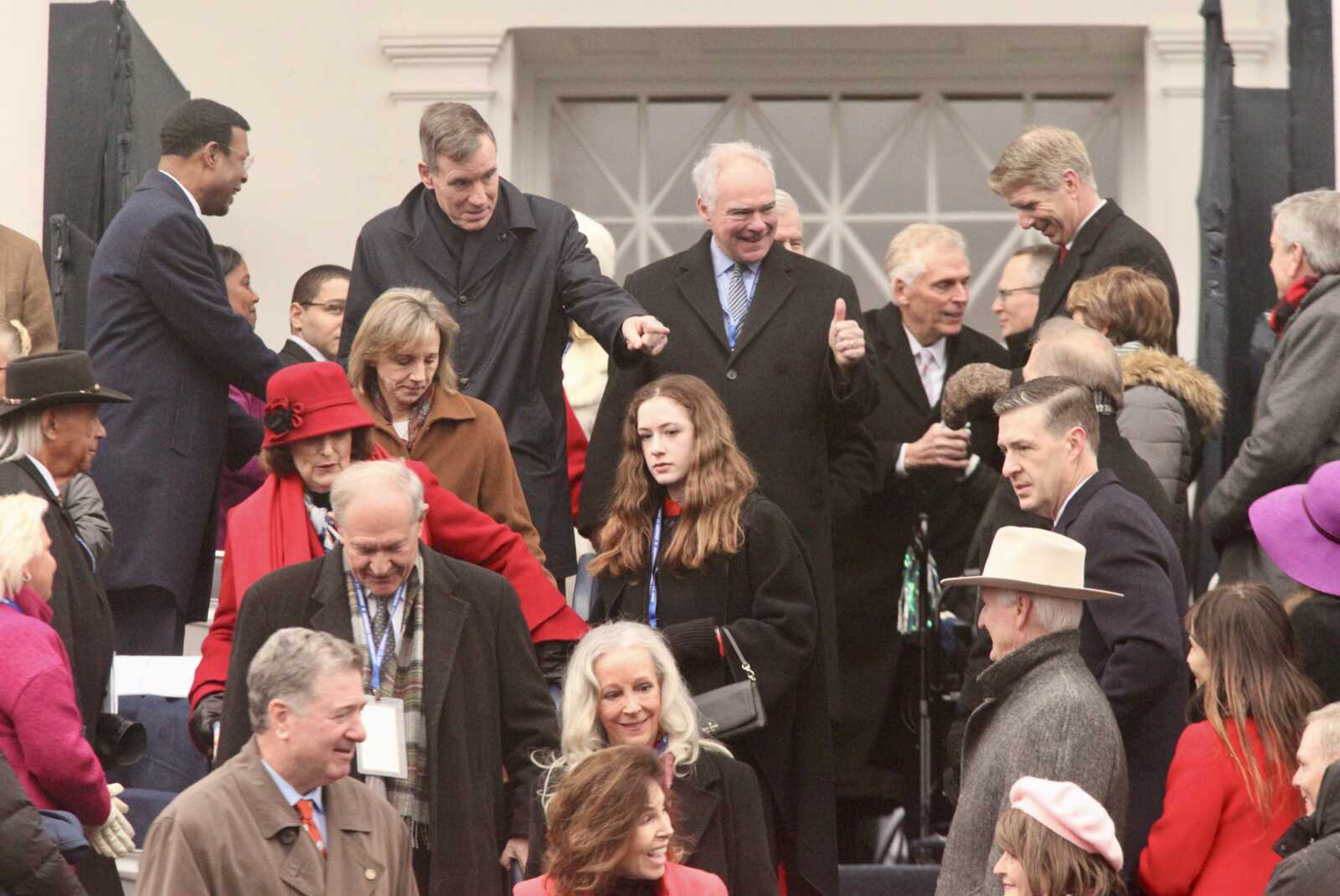
Former Virginia Governors and U.S. Senators Mark Warner (top left) and Tim Kaine at the inauguration of Gov. Abigail Spanberger at the Virginia State Capitol in Richmond, Jan. 17, 2026 (staff photo by James Cullum)
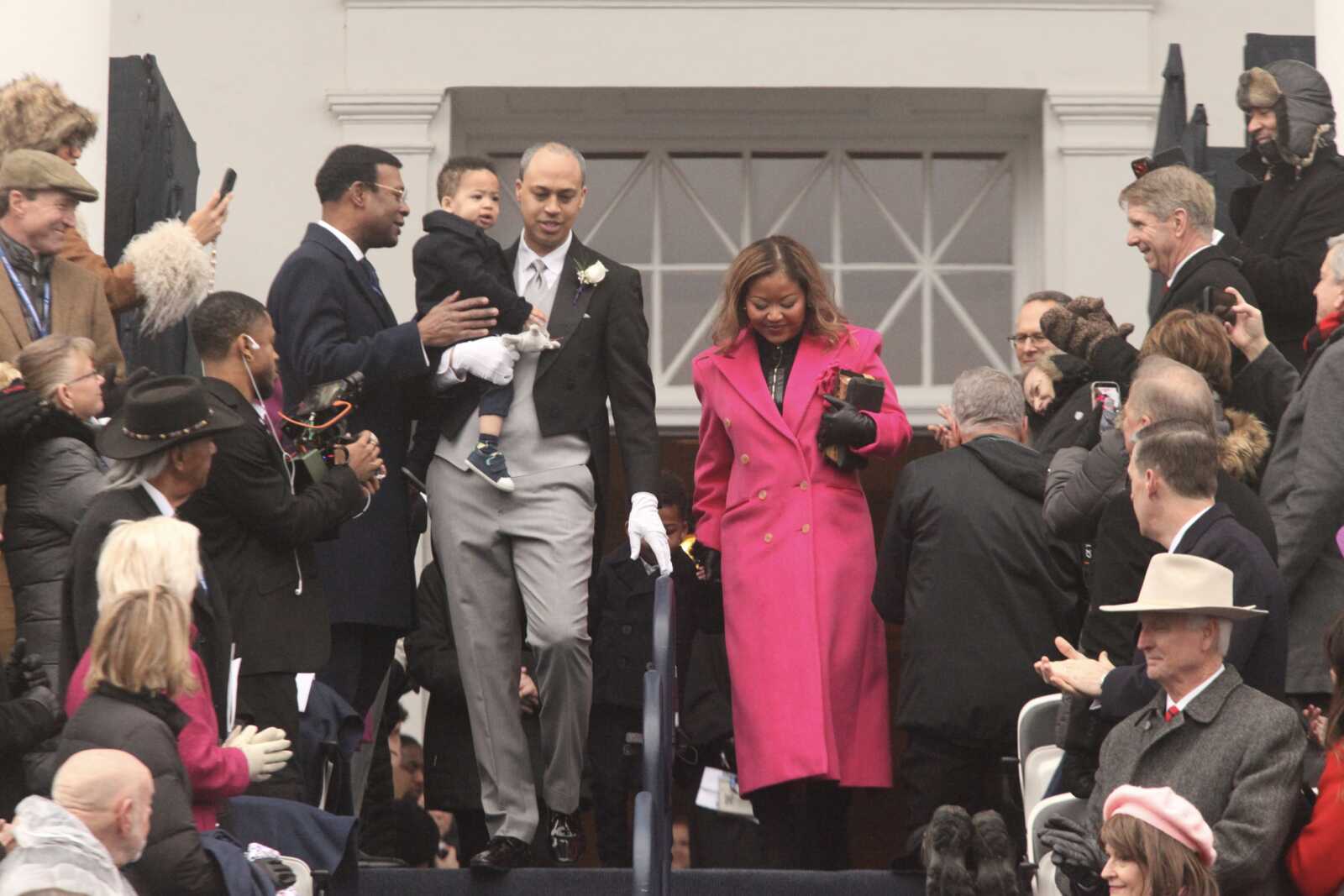
Virginia Attorney Gen.-elect Jay Jones arrives for his inauguration at the Virginia State Capitol, with his children and wife, Mavis, Jan. 17, 2026 (staff photo by James Cullum)
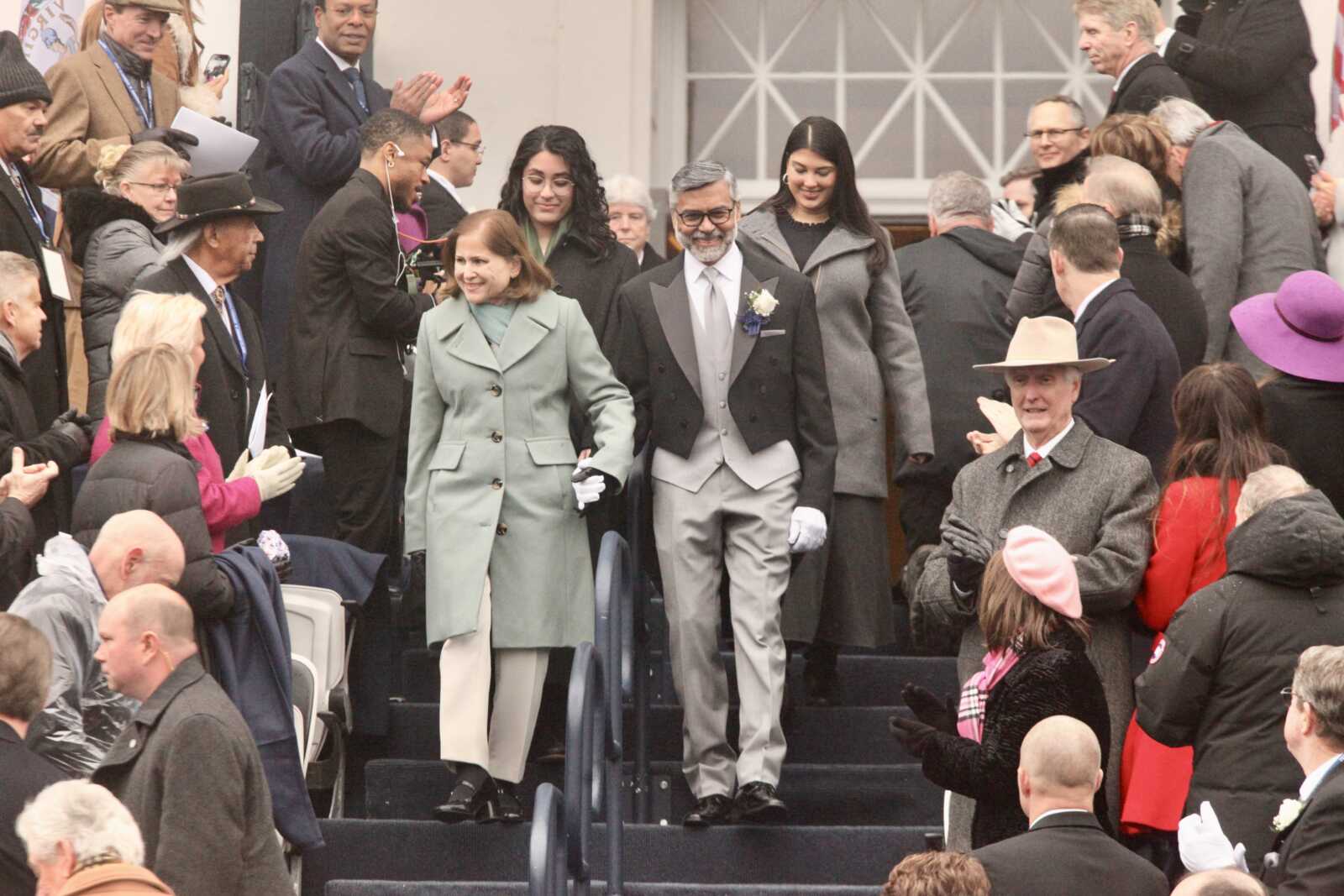
Lt. Gov.-elect Ghazala Hasmi and her family arrive at her inauguration at the Virginia State Capitol, Jan. 17, 2026 (staff photo by James Cullum)
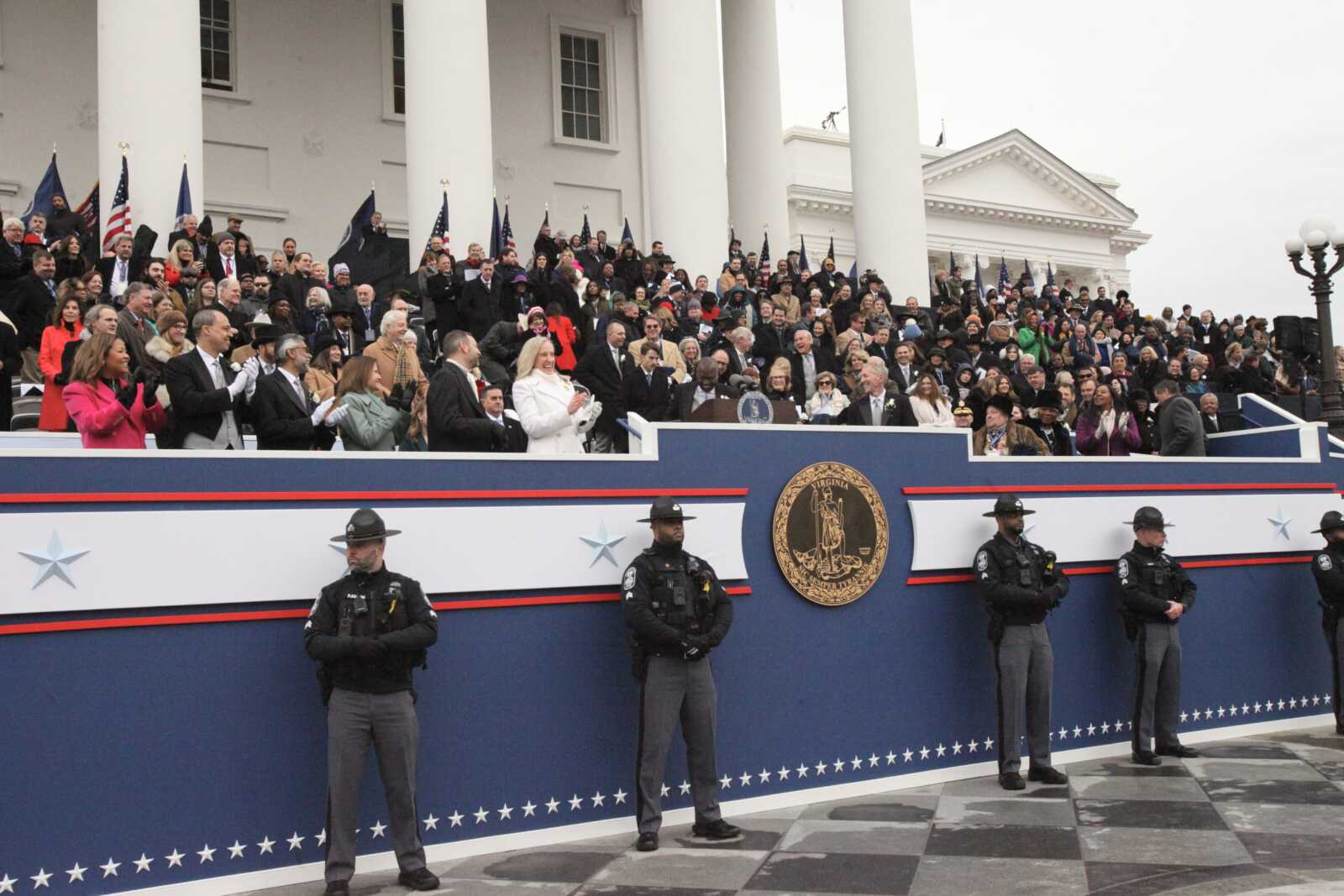
At the inauguration of Gov. Abigail Spanberger, Lt. Gov. Ghazala Hashmi and Attorney Gen. Jay Jones, at the Virginia State Capitol in Richmond, Jan. 17, 2026 (staff photo by James Cullum)
Gov.-elect Abigail Spanberger arrives at her inauguration at the Virginia State Capitol, Jan. 17, 2026 (staff photo by James Cullum)
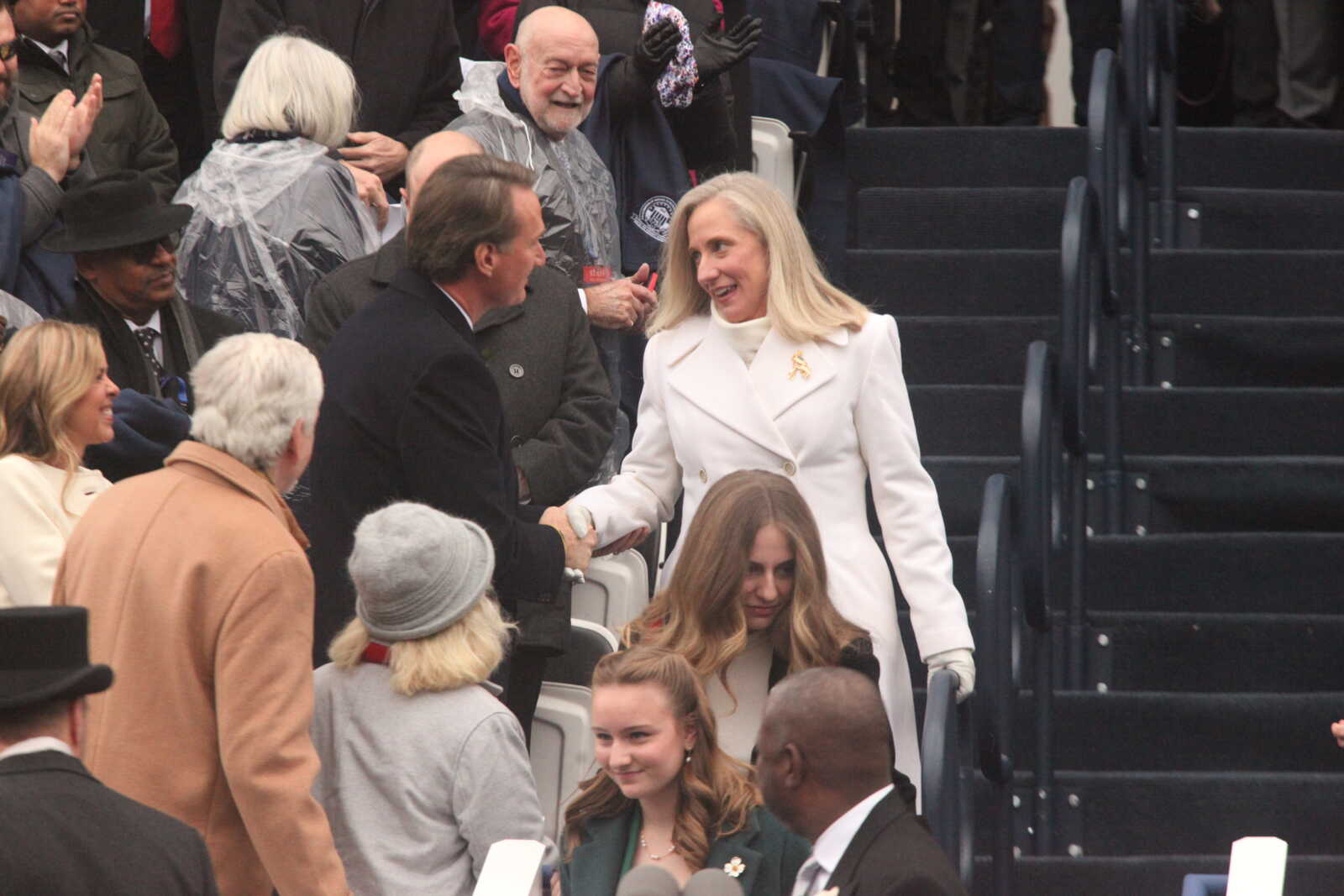
Gov.-elect Abigail Spanberger shakes hands with outgoing Gov. Glenn Youngkin at her inauguration at the Virginia State Capitol, Jan. 17, 2026 (staff photo by James Cullum)
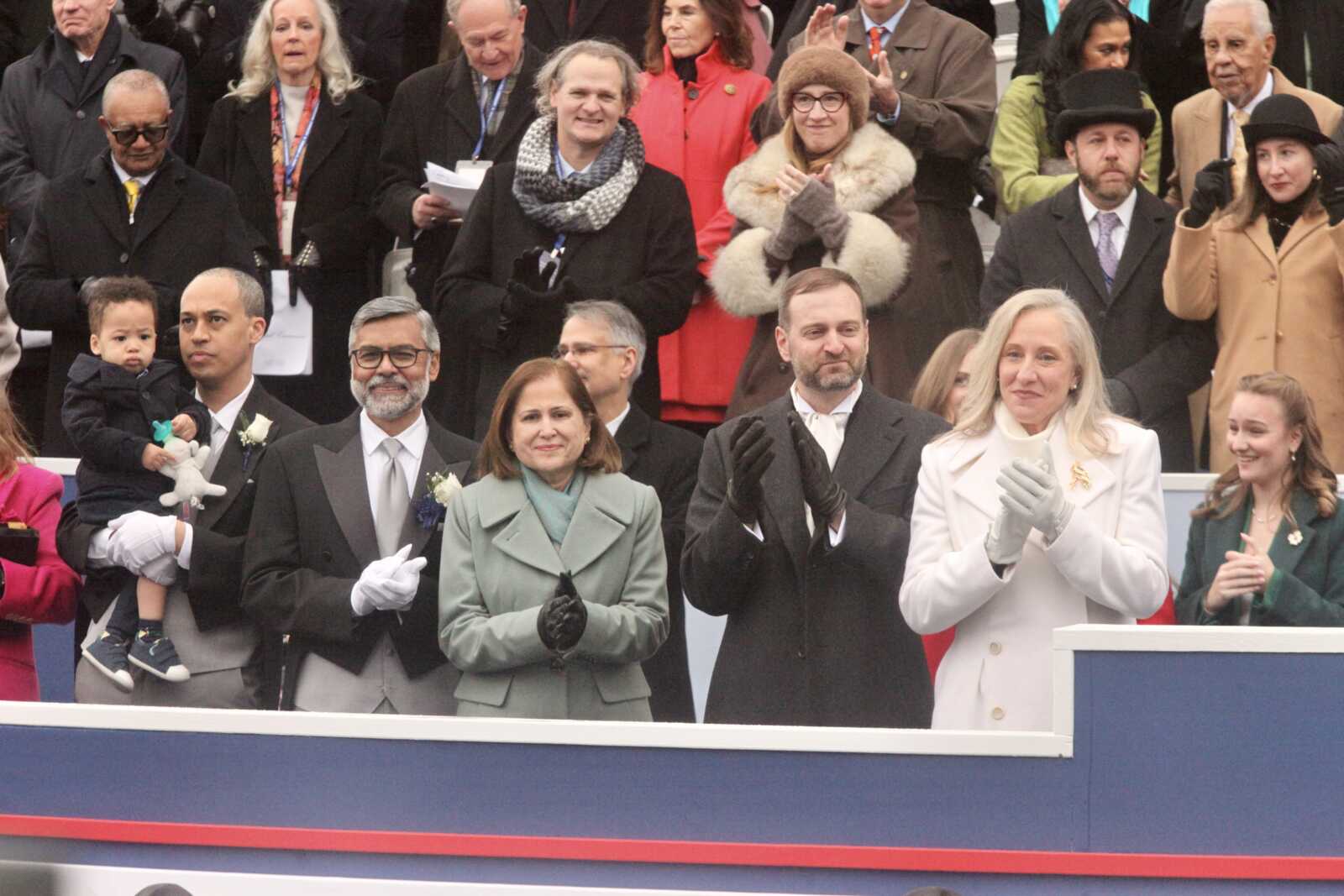
(Left to right) Attorney Gen.-elect Jay Jones, Azhar Rafiq and his wife, Lt. Gov.-elect Ghazala Hashmi, and Adam Spanberger with his wife Gov.-elect Abigail Spanberger at the inaugural at the Virginia State Capitol, Jan. 17, 2026 (staff photo by James Cullum)
Jay Jones is sworn in as Virginia Attorney General by the Hon. Lyn M. Simmons, chief judge of the Norfolk Juvenile and Domestic Relations District Court, Jan. 17, 2026 (staff photo by James Cullum)
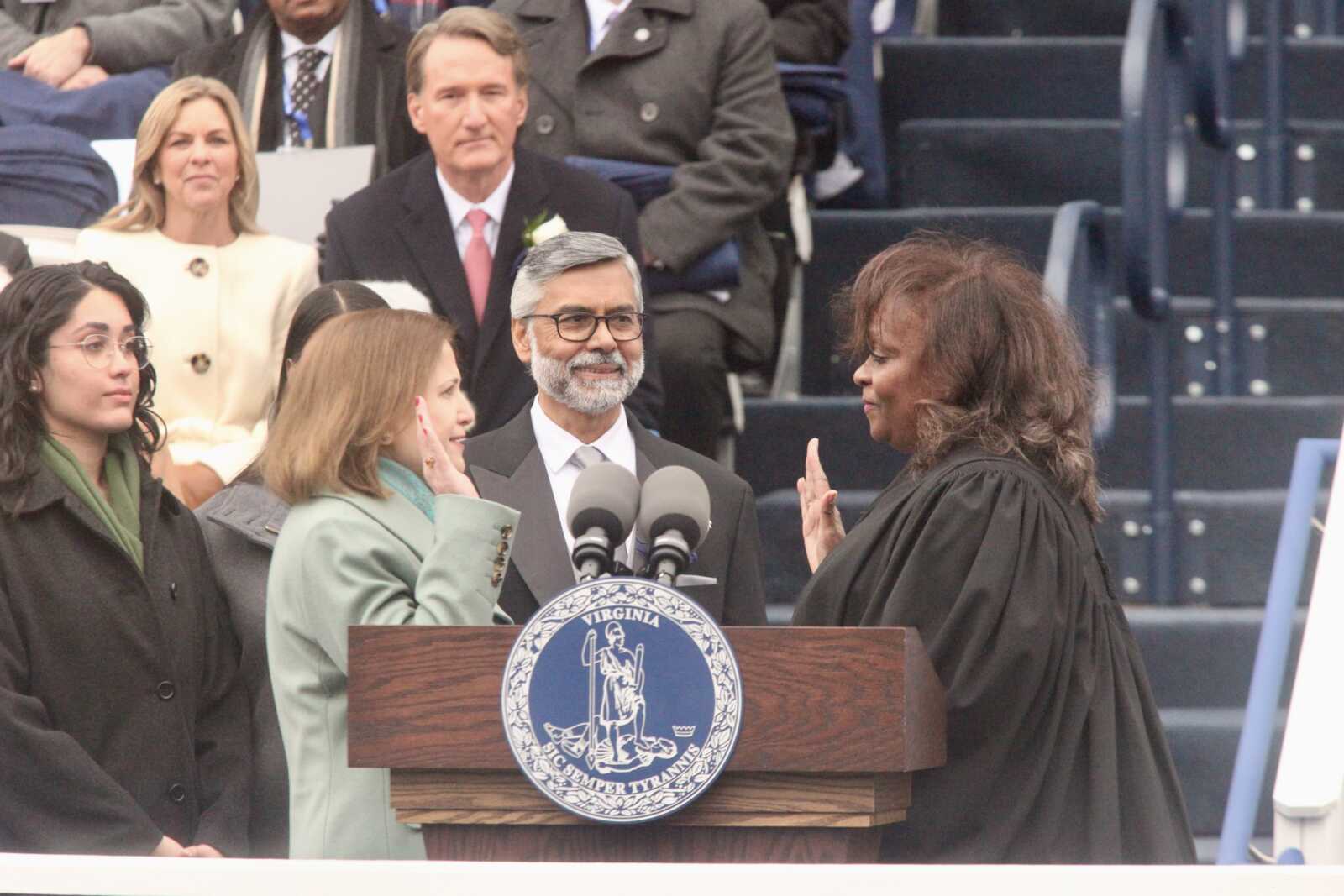
Ghazala Hashmi is sworn in as lieutenant governor by the Hon. Cleo E. Powell, chief justice of the Supreme Court of Virginia, Jan. 17, 2026 (staff photo by James Cullum)
Surrounded by her family, Gov. Abigail Spanberger gets sworn into office, Jan. 17, 2026 (staff photo by James Cullum)
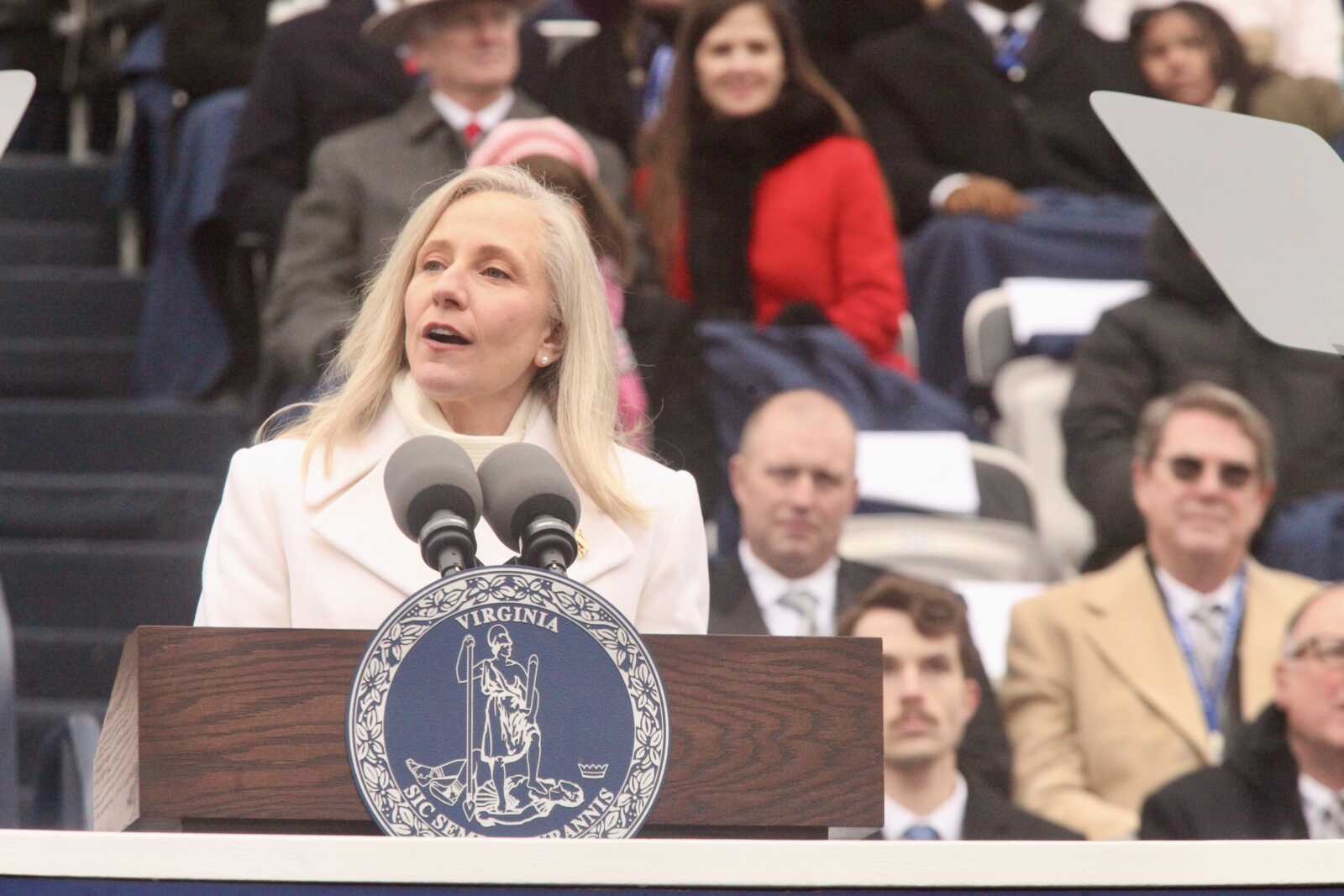
Gov. Abigail Spanberger speaks at her inauguration at the Virginia State Capitol, Jan. 17, 2026 (staff photo by James Cullum)
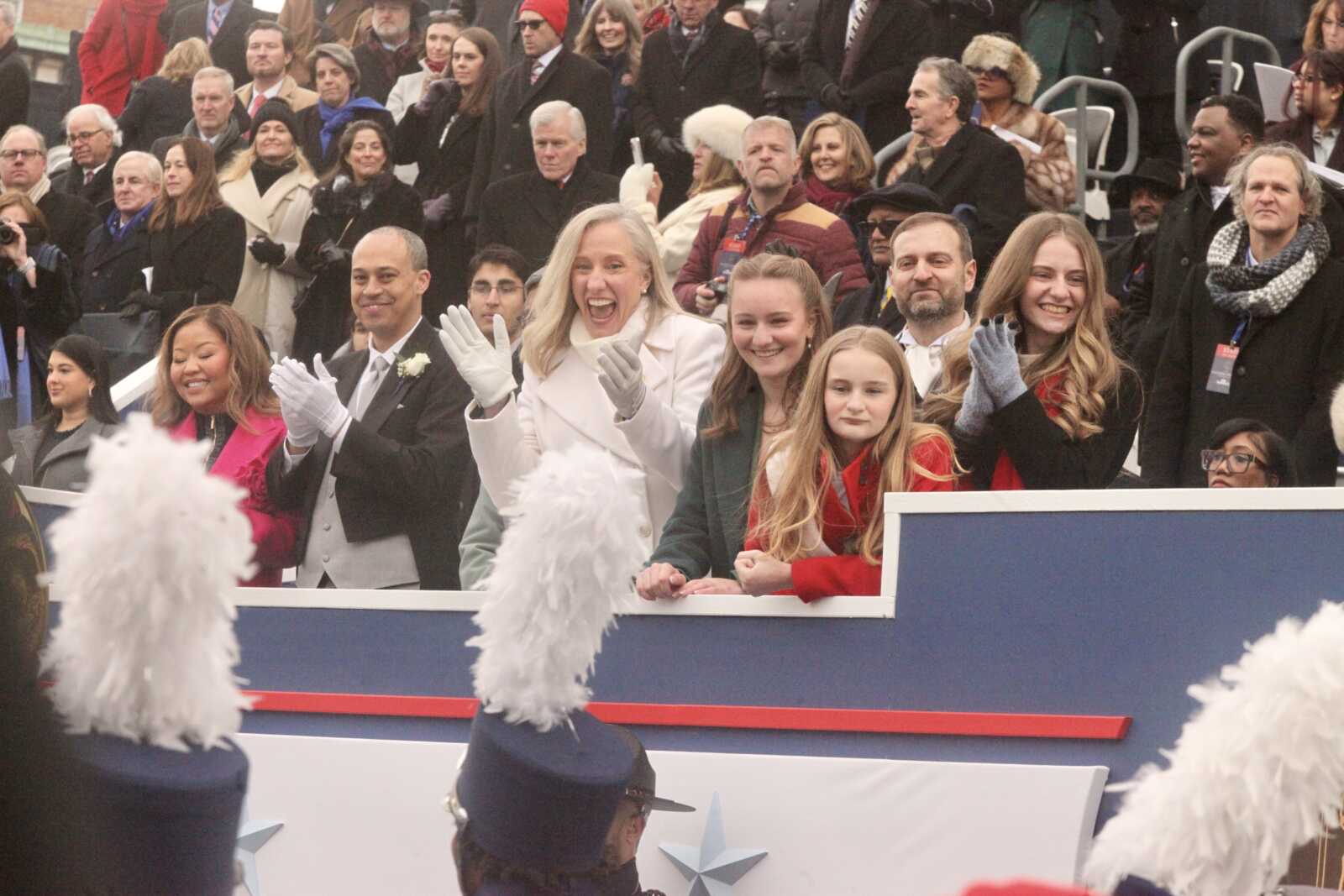
Gov. Abigail Spanberger reacts as the J.R. Tucker High School “Marching Tigers” perform at the Inaugural at the Virginia State Capitol, Jan. 17, 2026 (staff photo by James Cullum)
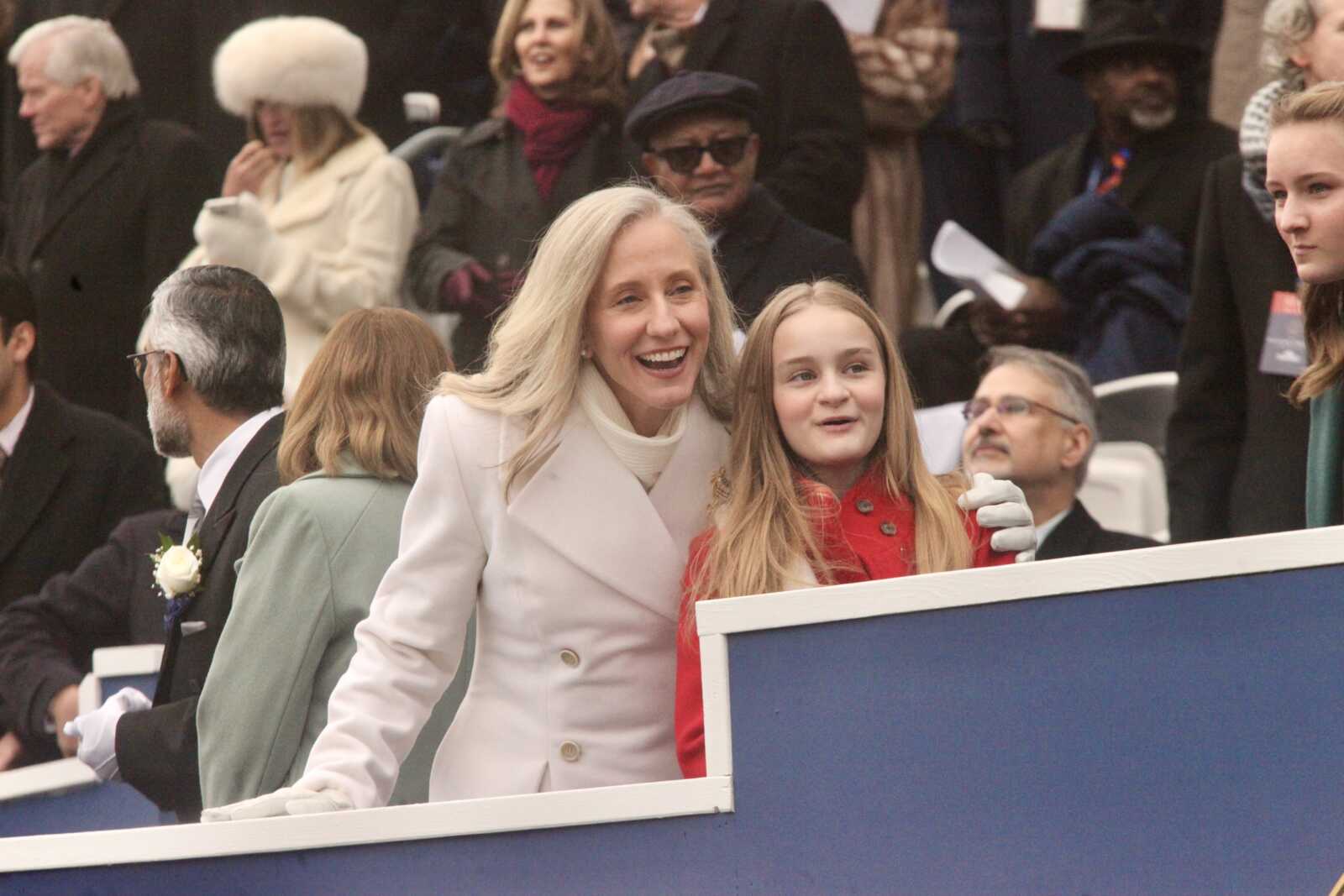
Gov. Abigail Spanberger and her daughter Catherine watch the Inaugural parade at the Virginia State Capitol, Jan. 17, 2026 (staff photo by James Cullum)
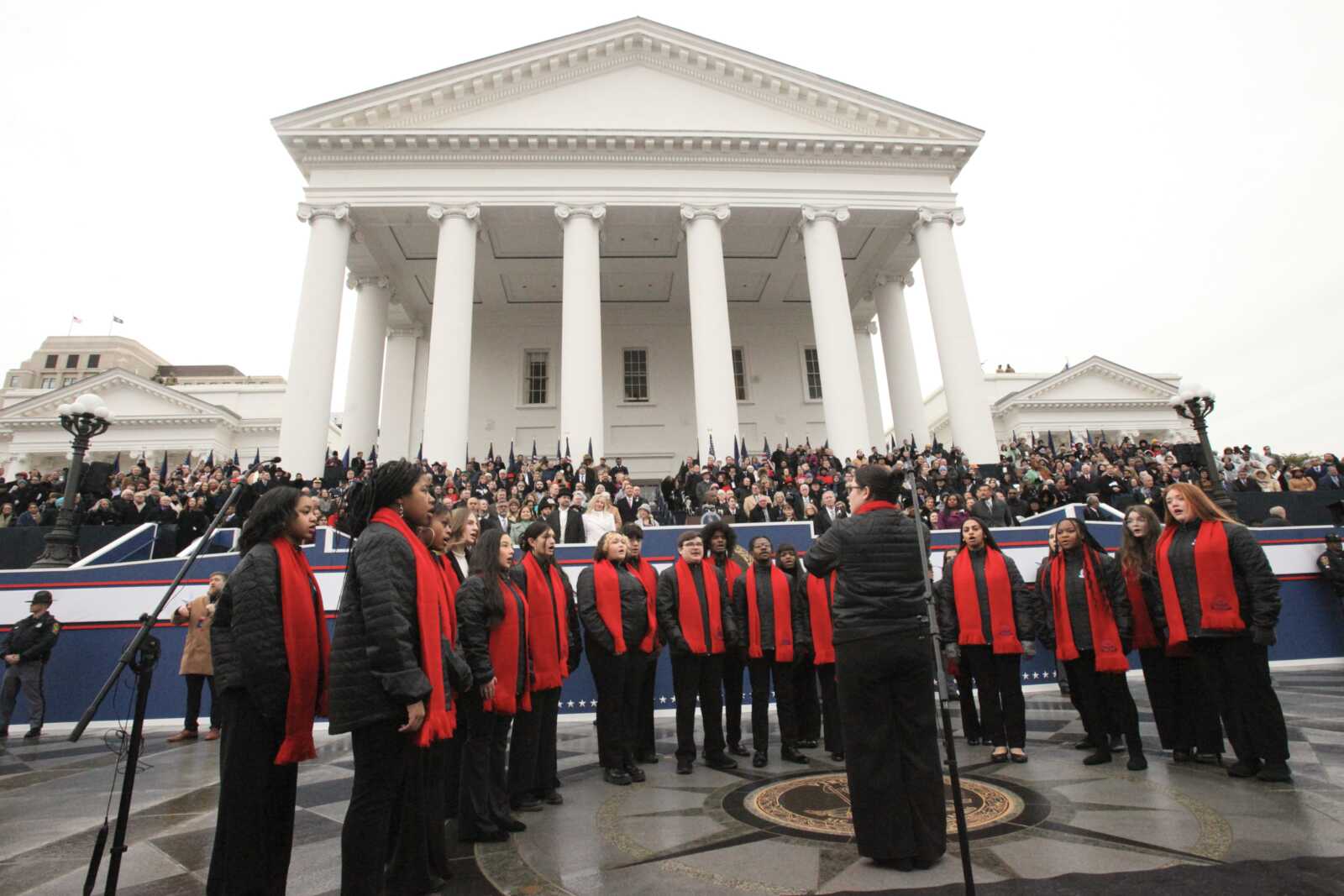
“Shenandoah” is performed by the Hermitage High School Select Treble and Chamber Singers at the inauguration of Gov. Abigail Spanberger, Lt. Gov. Ghazala Hashmi and Attorney Gen. Jay Jones at the Virginia State Capitol, Jan. 17, 2026 (staff photo by James Cullum)
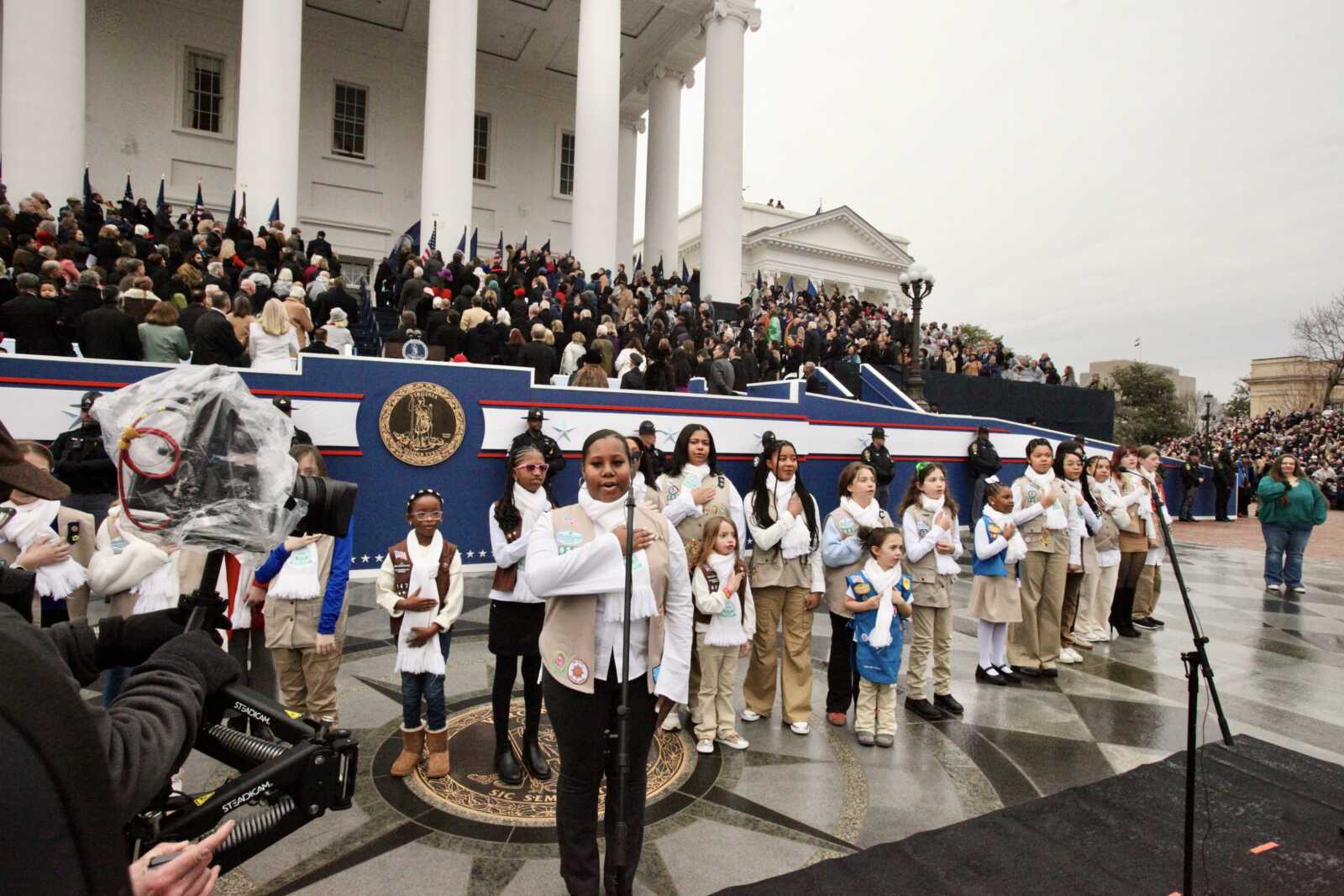
The Girl Scouts of Virginia recite the Pledge of Allegiance at the inauguration of Gov. Abigail Spanberger, Lt. Gov. Ghazala Hashmi and Attorney Gen. Jay Jones, at the Virginia State Capitol in Richmond, Jan. 17, 2026 (staff photo by James Cullum)
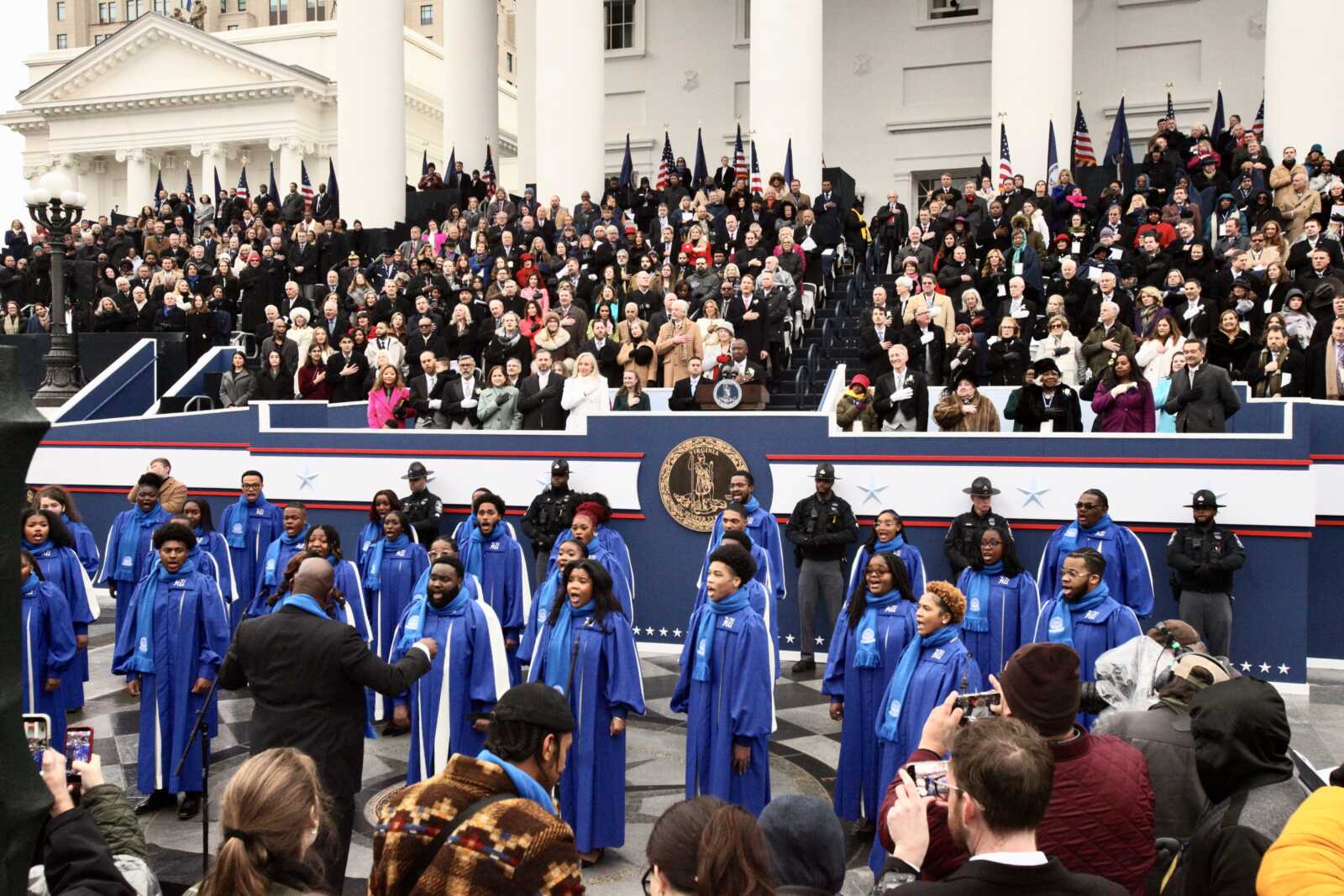
The Hampton University Concert Choir sings the National Anthem at the inauguration of Gov. Abigail Spanberger, Lt. Gov. Ghazala Hashmi and Attorney Gen. Jay Jones, at the Virginia State Capitol in Richmond, Jan. 17, 2026 (staff photo by James Cullum)
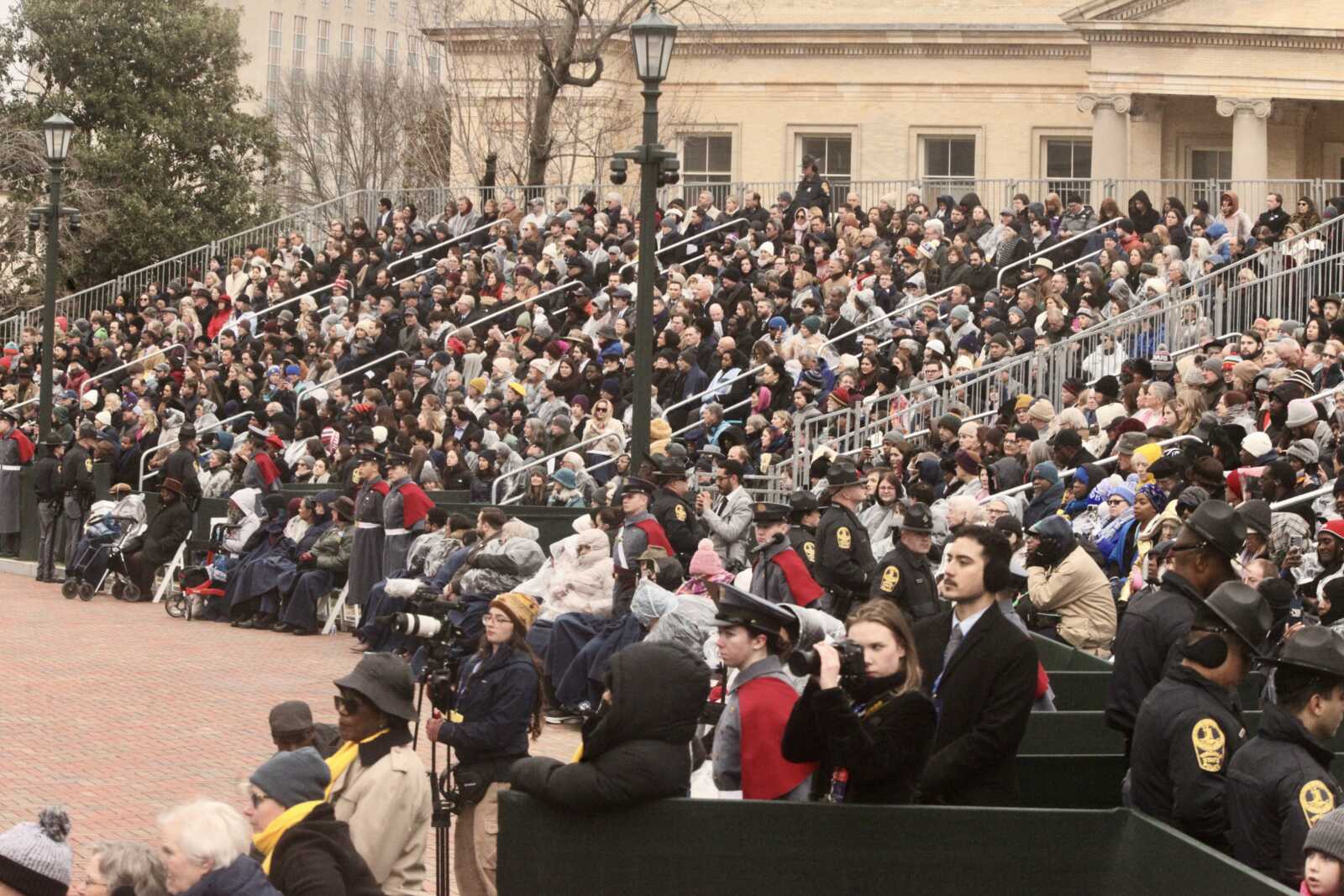
At the inauguration of Gov. Abigail Spanberger, Lt. Gov. Ghazala Hashmi and Attorney Gen. Jay Jones, at the Virginia State Capitol in Richmond, Jan. 17, 2026 (staff photo by James Cullum)
At the inauguration of Gov. Abigail Spanberger, Lt. Gov. Ghazala Hashmi and Attorney Gen. Jay Jones, at the Virginia State Capitol in Richmond, Jan. 17, 2026 (staff photo by James Cullum)
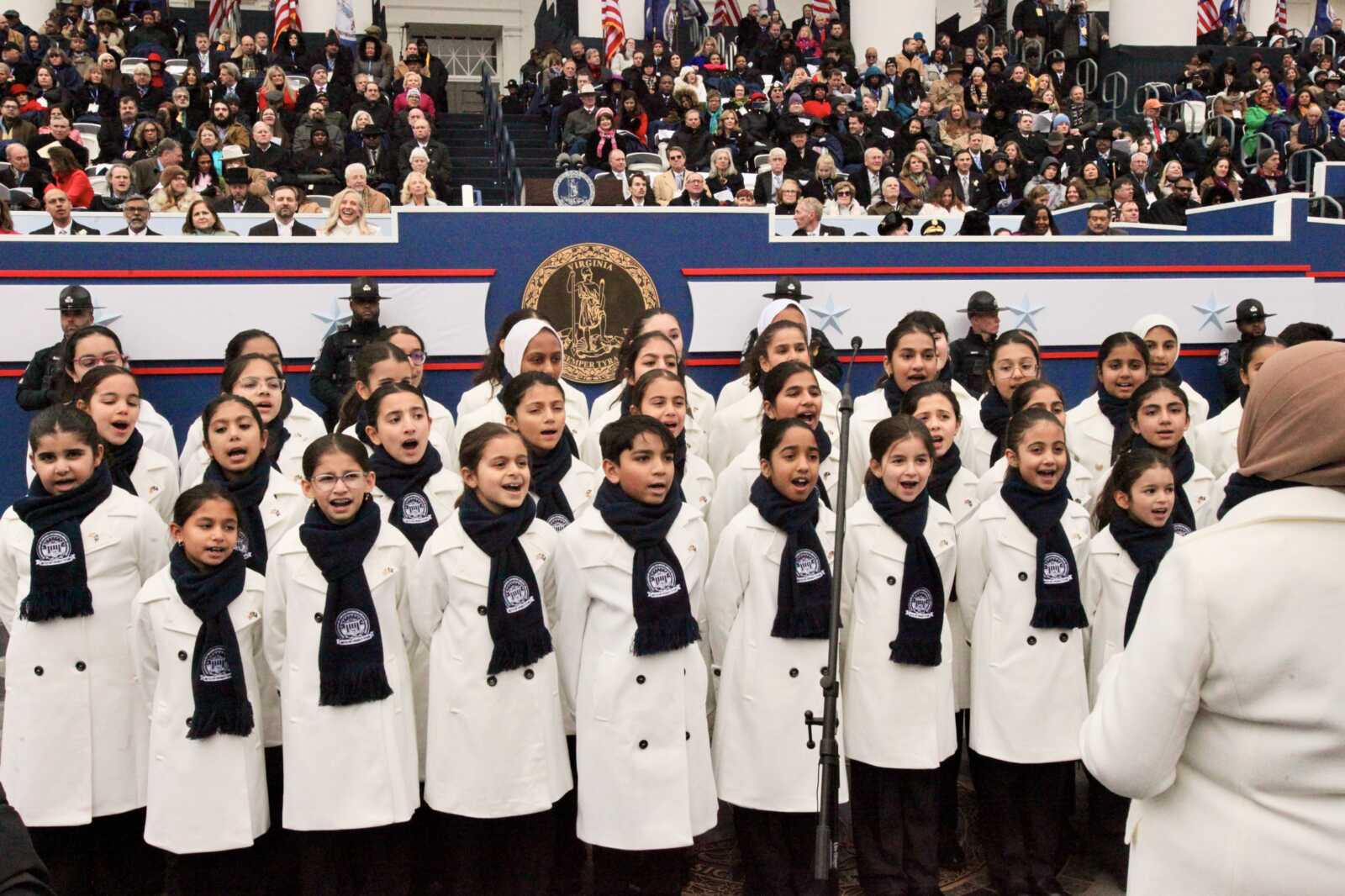
Adams Beat Muslim Children’s Choir sing “This Land Is Your Land” at the inauguration of Gov. Abigail Spanberger, Lt. Gov. Ghazala Hashmi and Attorney Gen. Jay Jones, at the Virginia State Capitol in Richmond, Jan. 17, 2026 (staff photo by James Cullum)
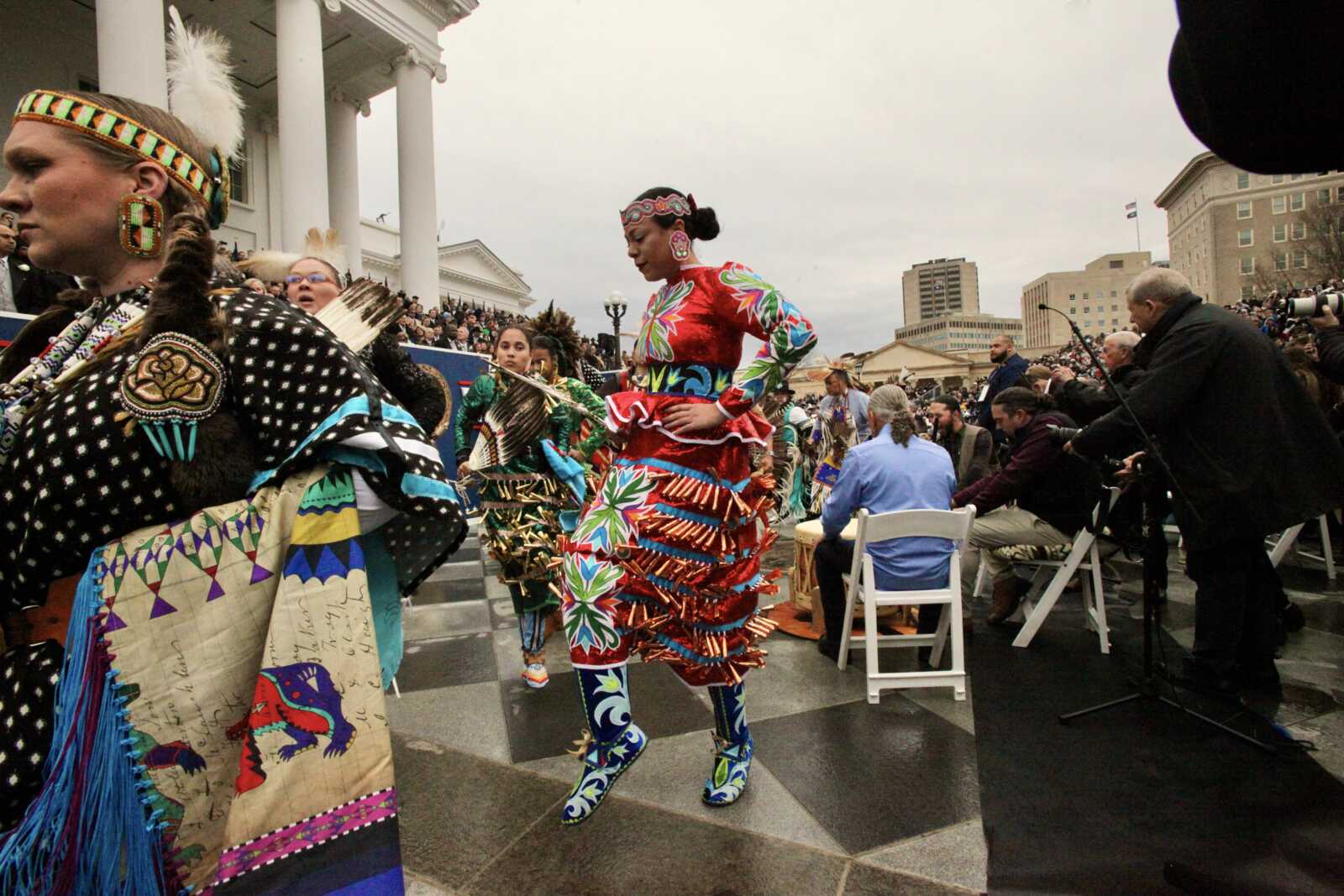
Representatives of Virginia’s Indian tribes dance at the inauguration of Gov. Abigail Spanberger, Lt. Gov. Ghazala Hashmi and Attorney Gen. Jay Jones, at the Virginia State Capitol in Richmond, Jan. 17, 2026 (staff photo by James Cullum)
At the inauguration of Gov. Abigail Spanberger, Lt. Gov. Ghazala Hashmi and Attorney Gen. Jay Jones, at the Virginia State Capitol in Richmond, Jan. 17, 2026 (staff photo by James Cullum)
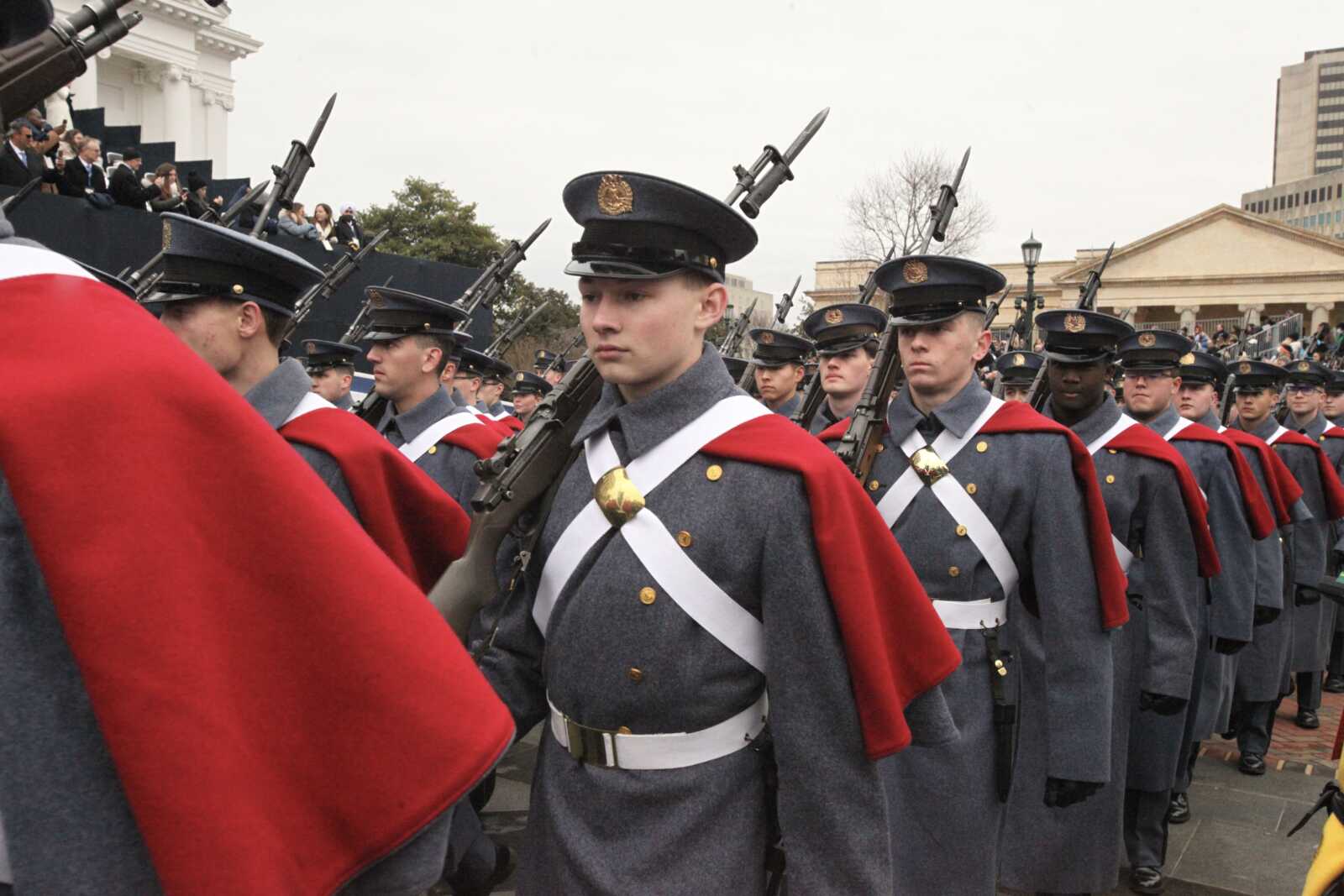
Virginia Military Institute cadets march in the Inaugural parade at the Virginia State Capitol, Jan. 17, 2026 (staff photo by James Cullum)
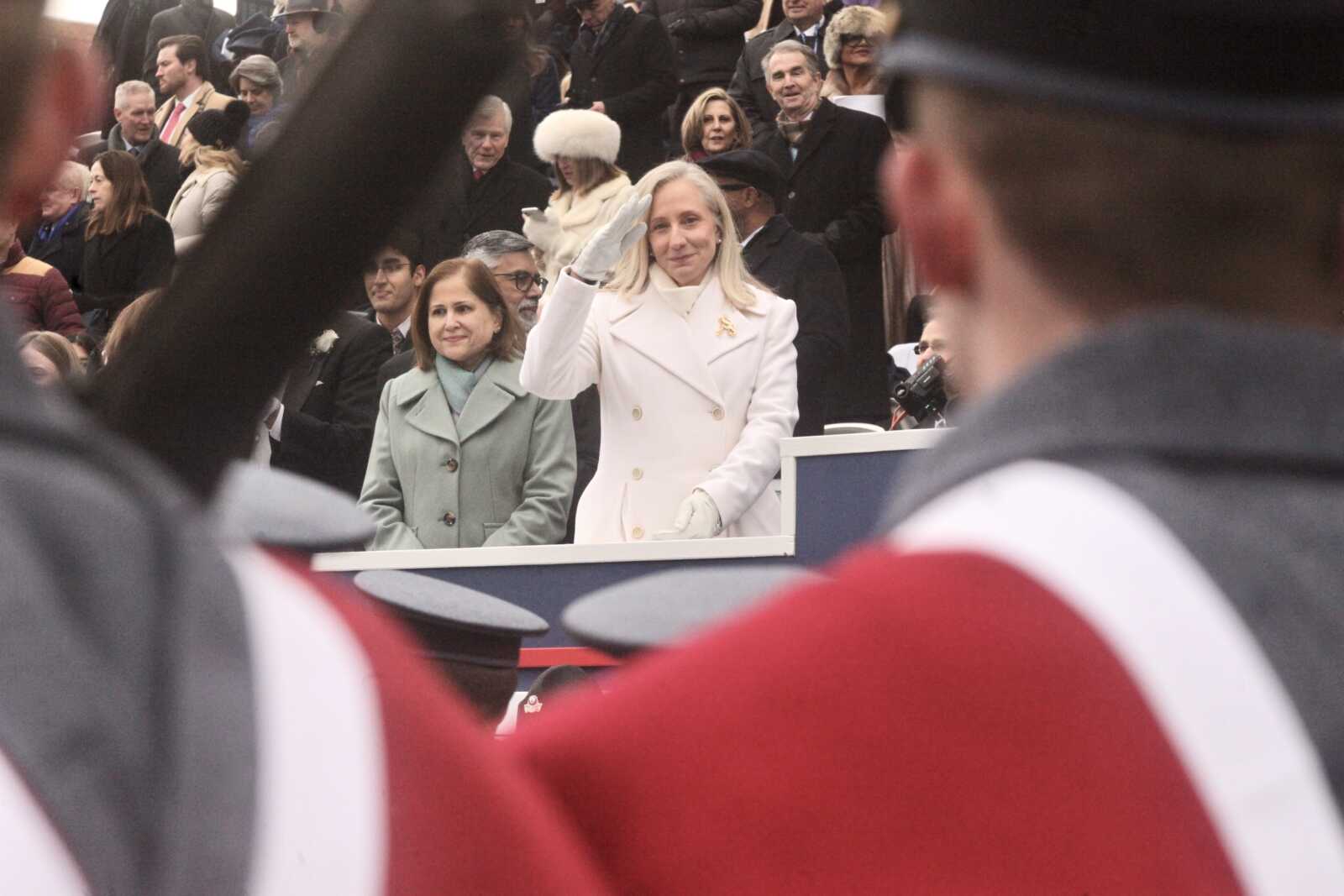
Gov. Abigail Spanberger salutes Virginia Military Institute cadets marching in the Inaugural parade at the Virginia State Capitol, Jan. 17, 2026 (staff photo by James Cullum)
The J.R. Tucker High School “Marching Tigers” perform at the Inaugural at the Virginia State Capitol, Jan. 17, 2026 (staff photo by James Cullum)
Girl Scouts of Virginia march in the Inaugural Parade at the Virginia State Capitol, Jan. 17, 2026 (staff photo by James Cullum)
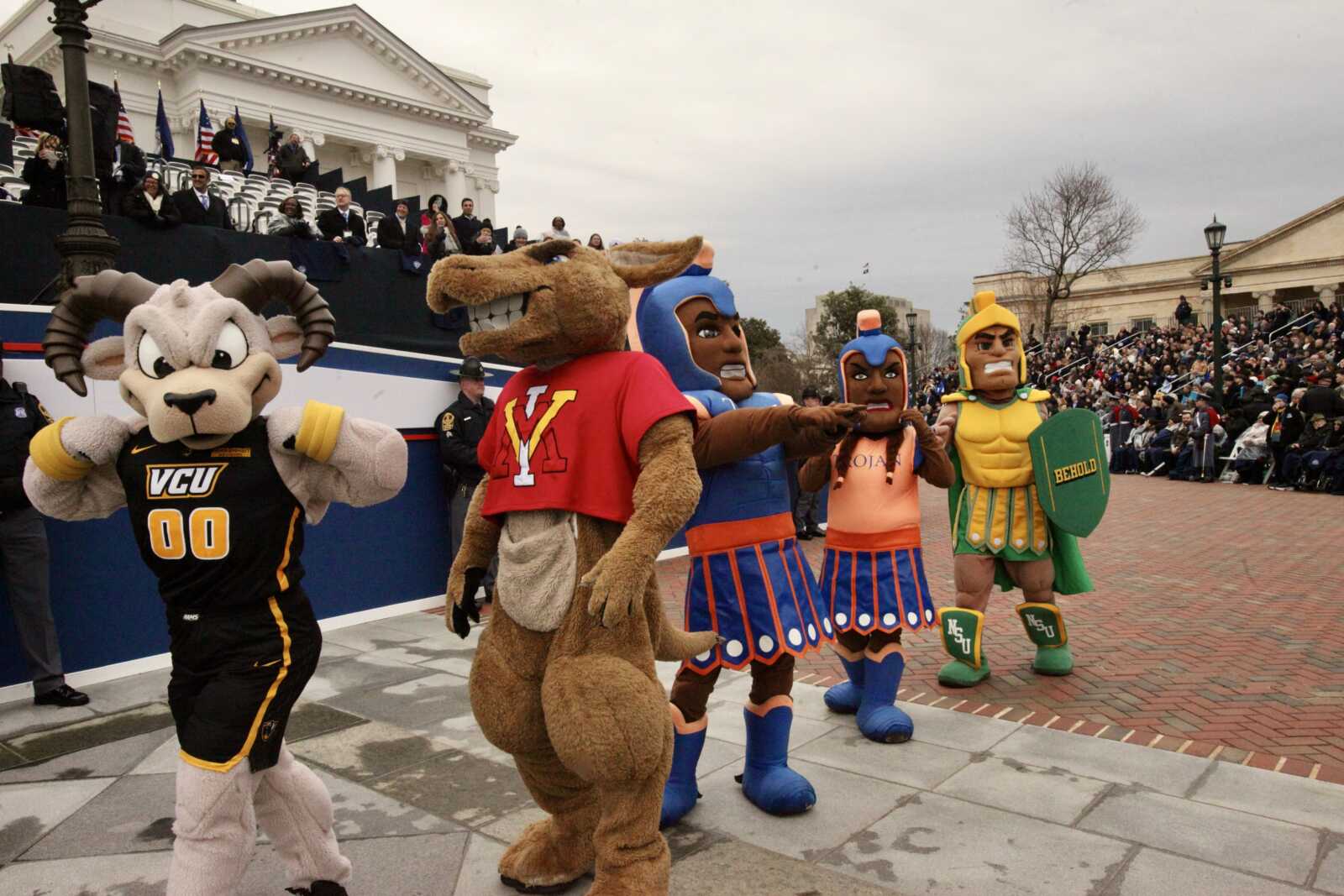
Mascots from Virginia’s public universities march in the Inaugural Parade at the Virginia State Capitol, Jan. 17, 2026 (staff photo by James Cullum)
The Hasang Korean School Dance Team performs at the Inaugural parade at the Virginia State Capitol, Jan. 17, 2026 (staff photo by James Cullum)
Dancers with the All-City Marching Band at the Inaugural parade at the Virginia State Capitol, Jan. 17, 2026 (staff photo by James Cullum)
Diversity Richmond and Virginia Pride march in the Inaugural parade at the Virginia State Capitol, Jan. 17, 2026 (staff photo by James Cullum)
Expomundo USA and the Democratic Latino Organization of Virginia march in the Inaugural parade at the Virginia State Capitol, Jan. 17, 2026 (staff photo by James Cullum)
Gov. Abigail Spanberger and her family at her inaugural ball, Jan. 17, 2026 (staff photo by James Cullum)
Gov. Abigail Spanberger and her husband Adam watch Dave Matthews perform at her inaugural ball, Jan. 17, 2026 (staff photo by James Cullum)
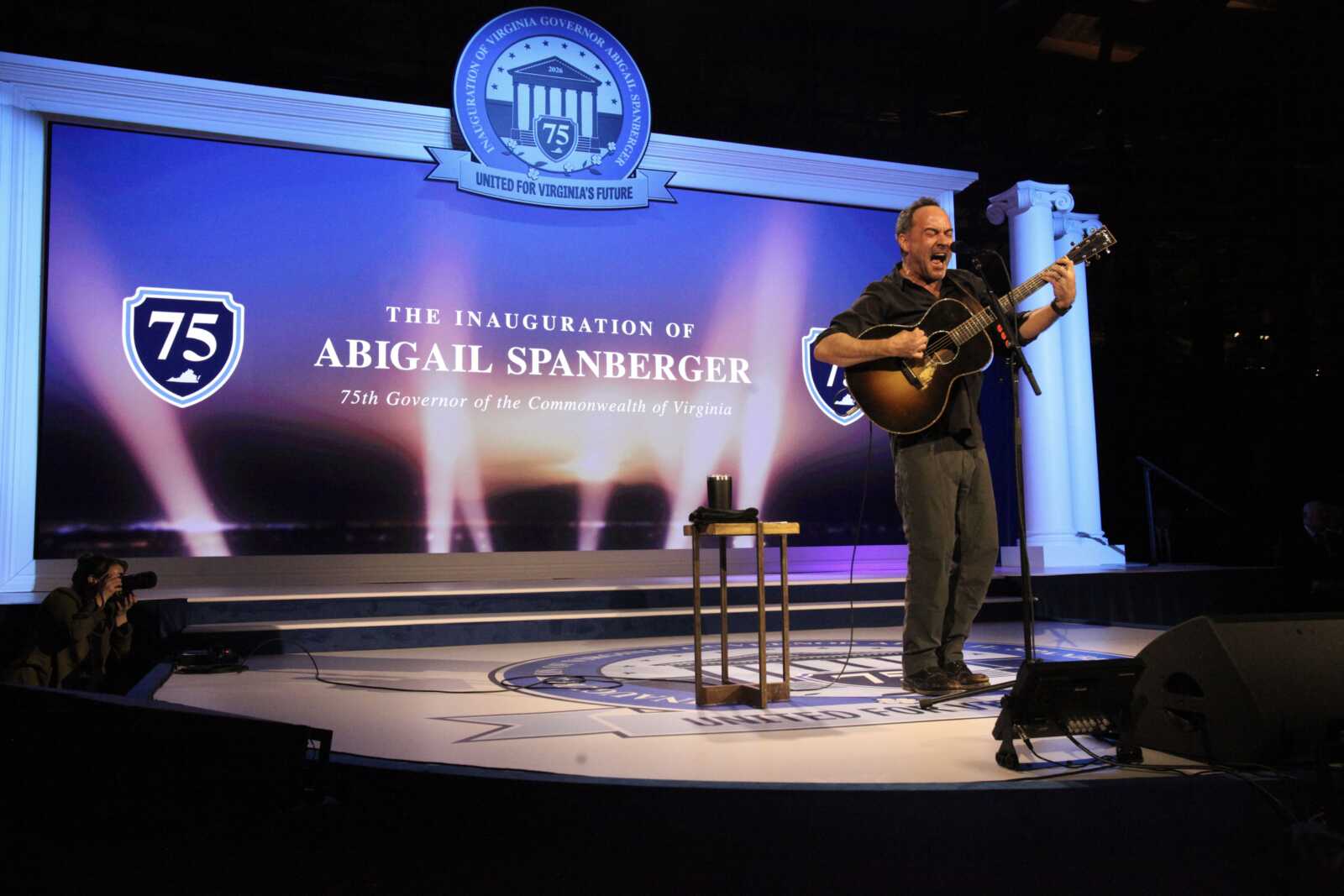
Dave Matthews performs at Gov. Abigail Spanberger’s inaugural ball, Jan. 17, 2026 (staff photo by James Cullum)
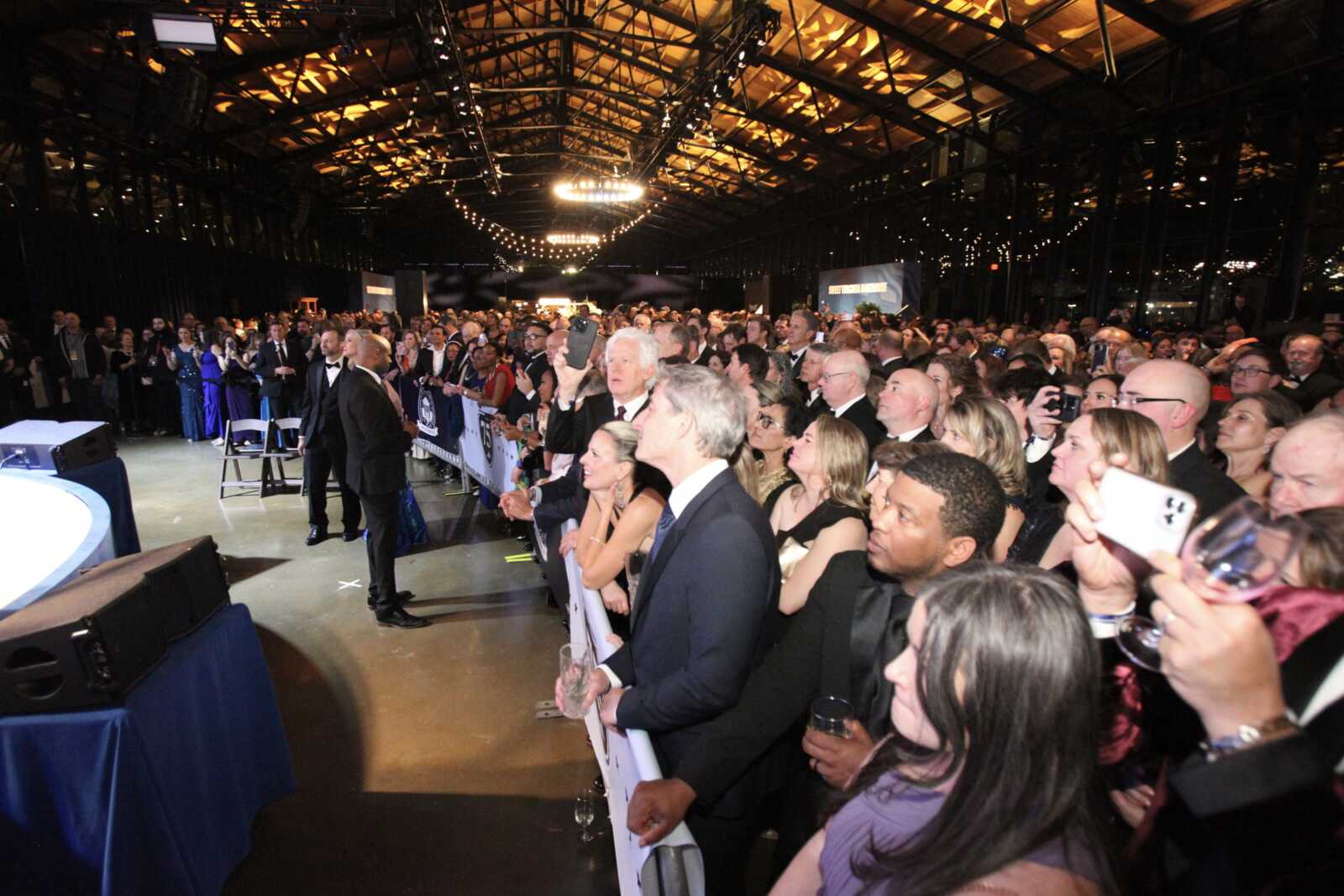
Watching as Dave Matthews performs at Gov. Abigail Spanberger’s inaugural ball at Main Street Station in downtown Richmond, Jan. 17, 2026 (staff photo by James Cullum)
Watching as Dave Matthews performs at Gov. Abigail Spanberger’s inaugural ball at Main Street Station in downtown Richmond, Jan. 17, 2026 (staff photo by James Cullum)
Northern Virginia Democrats were in high spirits at the inauguration of Gov. Abigail Spanberger this weekend, looking toward new opportunities for a variety of bills held back by the previous administration.
Legislators and political observers expect fewer vetoes and more collaboration with Democratic policymakers — including those in Northern Virginia — under Spanberger, a centrist Democrat who emphasized bipartisan solutions to issues like housing and health care costs on the campaign trail and in her inauguration speech.
Under a light drizzle at the foot of the Virginia State Capitol on Saturday, immediately prior to Spanberger taking the oath of office, County Board member Maureen Coffey expressed hope for a wide array of legislation that cleared the General Assembly only to be struck down by Gov. Glenn Youngkin. The Republican vetoed over 400 bills while in office, shattering Democrat Gov. Terry McAuliffe’s previous record of 120.
“It’s a return to the normal rules, that we can have some expected outcomes,” Coffey told ARLnow. “Even if we don’t win every policy fight, we’re all playing by the same rules.”
Democratic political consultant Ben Tribbett told ARLnow that he expects Democrat-supported legislation on topics like gun control, abortion, the environment and schools to return to the governor’s desk with favorable outcomes. Part of what will make this possible, he predicted, is more communication from the governor’s office, providing feedback to reach agreements with the Democrat-controlled General Assembly.
Though many of the possible changes, such as various expanded powers for local governments, will probably be subtle, Tribbett predicts a noticeable effect on the lives of everyday Virginians.
“I think it will be substantive,” he said. “I don’t know how much any one item is going to be, like, a headline. I think it’s a lot of small things that will make a difference in people’s lives.”
Del. Adele McClure (D-2) rattled off a list of bills that she previously advanced, which she hopes will finally make it into law.
She mentioned a fund-matching program for employers who contribute to their employees’ childcare costs, an initiative that she introduced and for which the General Assembly set aside $25 million last year, only for it to fall to Youngkin’s veto pen. Her other past initiatives include bills to expand minimum wage protections for farm laborers, limit convicted domestic abusers’ access to firearms and prevent Virginians from being criminally convicted solely on the basis of court fees.
“I’m extremely excited to bring forward … basically all of my legislation that got vetoed by the governor,” McClure said.
McClure said she also resonated with Spanberger’s emphasis on affordability, which she hopes will translate into stronger worker protections, more resources for unemployed people and more support for housing and eviction prevention. She sees these issues as especially pressing given surging joblessness in Northern Virginia as a result of federal layoffs.
“You don’t just need a job, you need affordability all around — when it comes to health care, when it comes to energy and child care and so much more,” the delegate said.
Sen. Barbara Favola (D-40), the new chair of the Senate Education and Health Committee, added that Congress’ failure to extend enhanced premium tax credits past Jan. 1 and other health care rollbacks under the Big Beautiful Bill place new pressures on Virginians. She hopes that the legislature, together with the Spanberger administration, can help soften the impacts and limit a surge in health care costs across the board.
“The Trump administration has just gutted the affordability aspect of health care,” Favola said. “They’re just thinking, oh, it’s only low-income people or moderate-income people who are affected. We’re all affected by the lack of affordable health care.”
She expects issues around health care, housing and education to dominate the legislative session that began last week.
Spanberger’s victory in November paired with a major blue shift in the Virginia House of Delegates, where Democrats picked up 13 seats for a commanding 64-36 majority. Because of the House’s structure, however, Tribbett said that much of the power still lies with Speaker Don Scott.
“I don’t expect the speaker will have any bills advancing out of the House that the governor doesn’t like, at least at the start,” he said.
While leaders agree that many Democrat-backed bills will stand a much better chance under the new governor, Rob Poggenklass — executive director of Justice Forward Virginia, a non-partisan advocacy group focused on criminal justice reform — said he’s tempering his expectations. At least in his area of expertise, he’s not convinced that legislation that received slim Democratic majorities in 2024 and 2025 will “just fly through” in 2026.
“There’s going to be a very thorough vetting of bills that might not have gotten as thorough of a vetting in 2024 and 2025, when they were assuredly going to be vetoed,” Poggenklass said. “I’m not taking anything for granted.”
Coffey added that she believes many of Northern Virginia’s most pressing problems, like housing costs, are rooted in decades of decisions and lack obvious short-term answers. She called affordability “a tough nut to crack, especially in four years,” but said she’s optimistic about a change in the commonwealth’s trajectory.
“Starting today, getting us on a path that is more sustainable in the long-term — it’s important and it’s necessary, and I’m glad we have a governor who’s going to focus on it,” Coffey said.
Given the impact that federal changes are having on Northern Virginia’s traditionally strong economy, the County Board member said she’s excited about “having a partner in Richmond who understands that and, hopefully, is willing to help us out.”
“Our success as a commonwealth depends on the success of Northern Virginia, and we are happy to help the rest of the commonwealth 99% of the time,” Coffey said. “This is really the 1% where we might need the commonwealth to help us.”
Dan Egitto is an editor and reporter at ARLnow. Originally from Central Florida, he graduated from Duke University and previously reported at the Palatka Daily News in Florida and the Vallejo Times-Herald in California. Dan joined ARLnow in January 2024.