

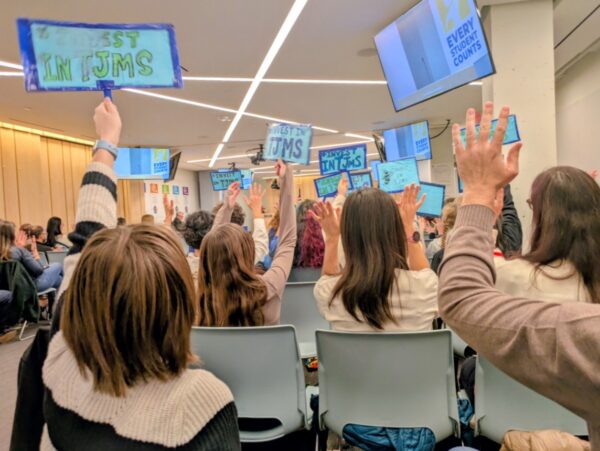
School Board members have increased spending estimates for renovations to Thomas Jefferson Middle School, seeking to strike a balance between different proposals.
Board members voted 5-0 on June 18 to adopt the school system’s fiscal 2027-36 capital improvement plan, setting the stage for an $80 million school-bond referendum in the fall and future referendums down the road.
The final package, which added $20 million in additional funding for infrastructure improvements across Arlington Public Schools, represented “a compromise among a number of competing viewpoints,” said Board member Miranda Turner.
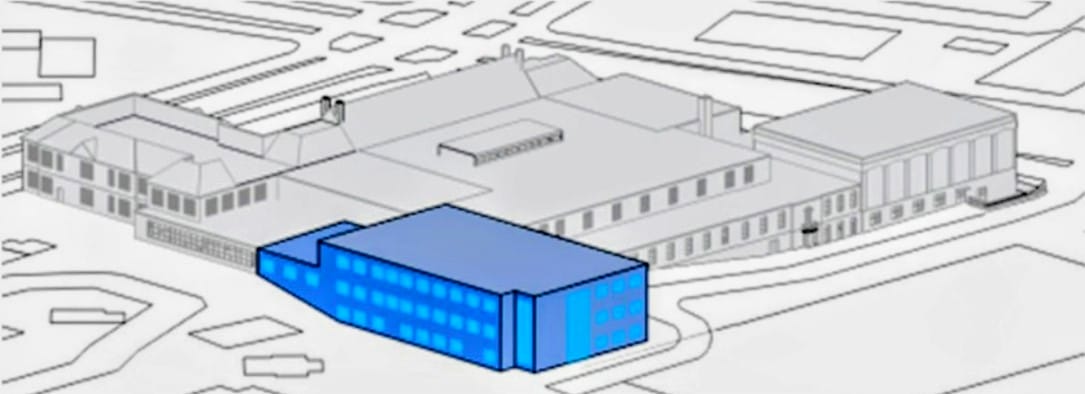
The key decision centered on how to address the 50-year-old Thomas Jefferson building. In the end, Board members set the cost at $142 million with the potential to go up to $147 million.
That’s higher than the $130 million Board members were considering just weeks before, but it is below the proposal from Superintendent Francisco Durán that called for renovations and additions to the school totaling between $167.5 million and $184.9 million.
“It has been a collaborative effort to get to the right balance,” Board Chair Bethany Zecher Sutton said of final decisions.
The compromise represented a partial victory for those who wanted more funding for Thomas Jefferson. But their biggest champion on the School Board — Zuraya Tapia-Hadley — was only modestly satisfied.
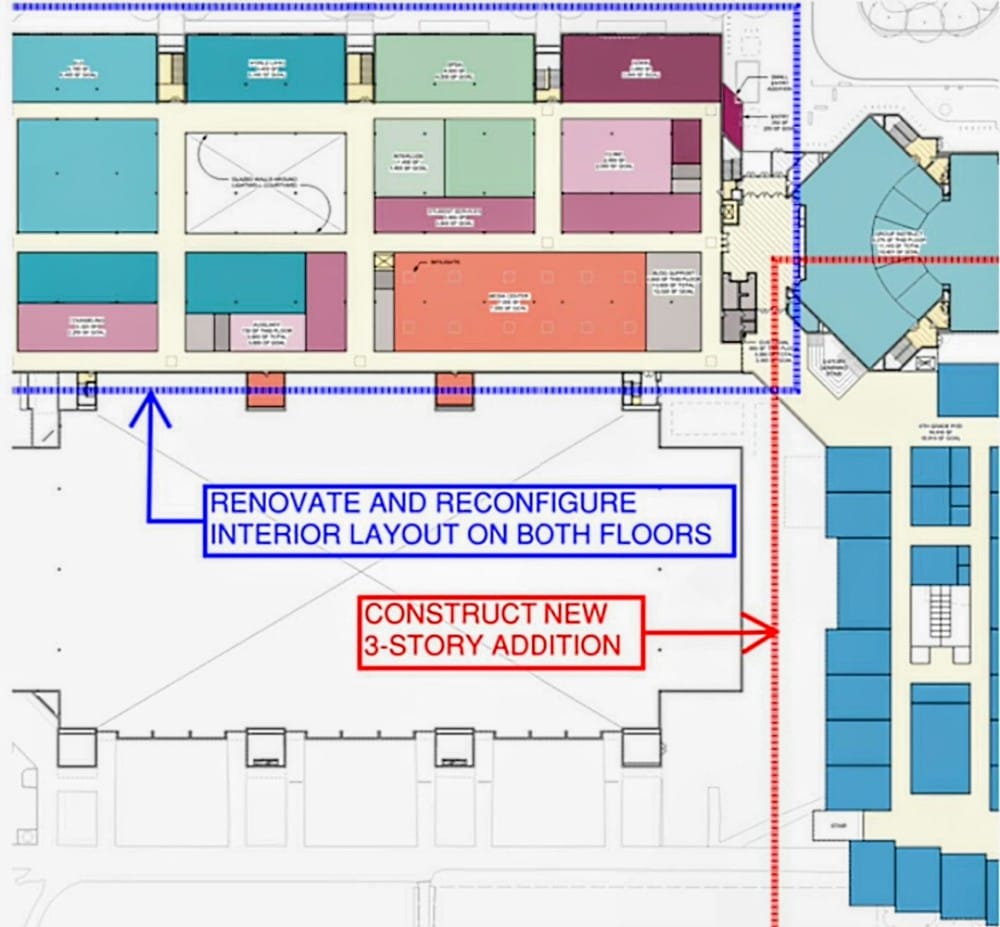
“I do still have some concerns around whether this amount will meet the needs of students attending Thomas Jefferson, to match other facilities that APS has built in the last 10 to 15 years,” said Tapia-Hadley.
Voters will have the final say, with much of the funding for the Thomas Jefferson improvements expected to be placed on a 2028 bond referendum.
Two years later, the school system is likely to seek voter approval for an $80 million upgrade to Swanson Middle School.
Before going to voters, school-bond referendums must first be approved by the County Board and Circuit Court. County action on the school system’s requested $80 million 2026 bond is expected in July.
At their June 18 meeting, Board members reaffirmed plans to spend about $41 million to move Montessori Public School of Arlington into the Arlington Career Center building. The Career Center is being vacated as students move into the Grace Hopper Center this fall.
Adding $20 million to capital funding for infrastructure improvements across the school system was the Board members’ response to concerns about upkeep of existing facilities.
Preventive maintenance “has been deferred far too long,” Board member Monique “Moe” Bryant acknowledged.
“We are looking at every school and facility,” she said.
Board member Kathleen Clark echoed those comments.
“We are aware of the challenges and are looking for ways to fund all of this work,” she said.
The additional funding will be used for projects involving roofs, kitchens, HVAC and electrical systems.
In addition to construction at Thomas Jefferson, Board members voted to spend a separate $11 million on a geothermal heating system for the TJ campus. Board members also directed Durán to evaluate options for financing future projects outside of typical voter-approved bonds.
Budget approved despite uncertainty in state funding: At the same meeting, School Board members unanimously approved an $860.34 million fiscal 2027 budget. The final dollar figure was in line with Durán’s budget proposal, unveiled in March.
The primary source of funding will come from a local transfer of $655.4 million approved early by County Board members.
In Virginia, school boards do not have independent taxing authority and rely largely on their local government and the state government to provide the bulk of the funding.
Zecher Sutton said the one remaining budget variable is the state budget, which remained in flux as final APS budget decisions were being made.
“We are uncertain how much additional state revenue will be received,” she said.
To balance the budget, some money was shifted from reserve funds. Any additional state funding would be used to replenish those funds, with School Board members anticipating a final vote in late July.
For now, “no additional state revenue is assumed,” said Zecher Sutton.
